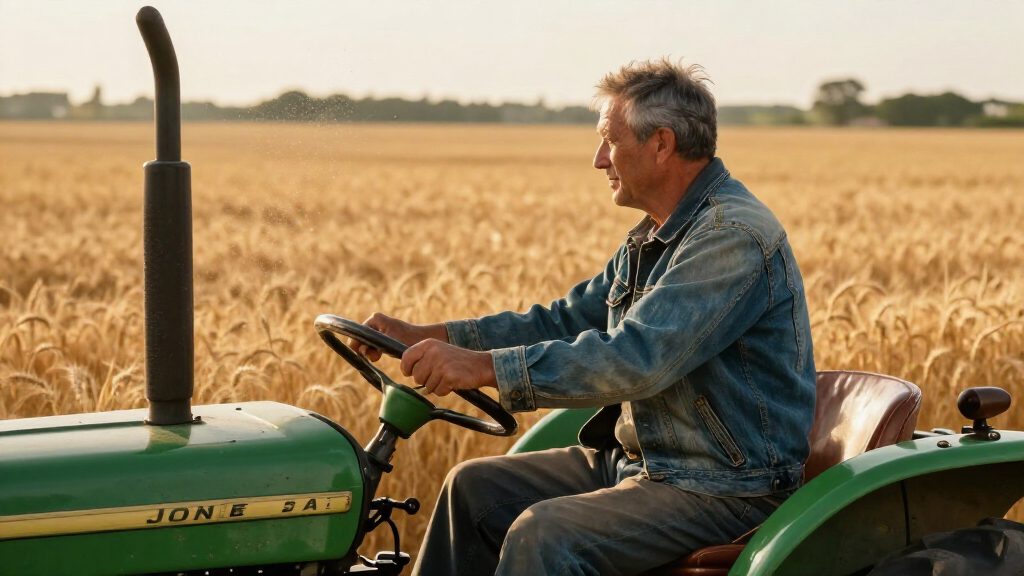

🔍 Read the full analysis: How The Shift To Tractors Changed Animal-Powered Agriculture on ThorstenMeyerAI.com

Get the latest gadgets delivered free with Prime
- Fast, free delivery on millions of items
- Prime Video, Amazon Music and more included
- Member-only deals all year
TL;DR
U.S. farm horses and mules peaked at 26.7 million in 1918, then declined to 3.1 million by 1960 as tractors and other machinery spread. The change freed cropland from growing animal feed and helped reshape farm employment, but the comparison between horses and workers remains an analogy, not a forecast.
U.S. farm horses and mules fell from a peak of 26.7 million in 1918 to 3.1 million in 1960 as tractors and other machinery took over much of their work, according to historical figures compiled by the U.S. Census Bureau and Department of Agriculture. The shift freed land once used to grow animal feed and coincided with a long decline in farm employment, making it a prominent historical comparison in debates about automation and jobs.
The animals were a major part of the farm economy, not simply a source of power. In 1915, about 93 million acres of harvested cropland—more than a quarter of the U.S. total—grew oats, corn and hay to feed horses and mules. The figure was still about 90 million acres in 1920. Unlike a tractor, which uses fuel when operating, a working animal needed feed throughout the year.
Tractors spread rapidly during the following decades. The source’s historical series records about 1,000 tractors in 1910, 246,000 in 1920, 920,000 in 1930 and 4.69 million in 1960. Around 1955, tractors first outnumbered farm horses and mules: 4.35 million tractors compared with 4.31 million animals. The figures come from census and agriculture records with varying dates and counting methods, so they are not perfectly comparable year to year.
By 1960, the farm horse-and-mule count had dropped by almost 90% from its 1918 peak. The source says farmers generally did not retrain or rehome the animals as a group; they stopped breeding replacements, and the working population declined over time. The acreage used to grow their feed fell to about five million acres by 1960. Other machines also changed farm work: combine harvesters rose from about 4,000 on U.S. farms in 1920 to 1.042 million in 1960, alongside the spread of corn pickers, balers and milking machines.
Land and Labor After the Tractor
The shift mattered because it changed both what farms produced and how many people they needed to produce it. Land previously devoted to feed could instead grow crops for people or sale. The source estimates that one U.S. farm worker supplied 7.1 people in 1910, 10.7 in 1940 and 47.1 in 1970. The 1970 estimate includes people abroad supplied through exports.
Farm employment also contracted: the source gives a peak of 13.6 million workers in 1916 and 4.5 million in 1970, while the overall U.S. labor force doubled. Those figures show a large labor shift, but they do not mean every displaced farm worker moved directly into a new machine-related job. The account says employment growth occurred in cities, making migration part of the change. The horse story is relevant to current automation discussions, but its consequences for human workers cannot be inferred from machinery adoption alone.
Popular right now

Hisense 65-inch U6 Pro Mini-LED 4K UHD Smart Fire TV

Ninja Foodi Dual Zone Smart XL Air Fryer, 10 Qt, 6-in-1, Black (DZ550)

TCL 65-Inch T7 Series 4K QLED Smart Google TV, 144Hz (65T7)
As an affiliate, we earn on qualifying purchases.
From Fordson to Mechanized Farms
Tractors existed before the First World War, but early models were heavy and expensive, limiting their usefulness for many farmers. In 1917, Ford launched the Fordson. The Henry Ford museum describes it as a mass-produced, inexpensive lightweight tractor designed for smaller farms; the 100,000th Fordson left the assembly line on February 21, 1920.
The tractor was part of a broader change rather than a single-machine replacement. Combines cut, threshed and cleaned grain in one pass, while other equipment and changes in fertilizer and seed raised farm output. In a 1983 comparison, economist Wassily Leontief likened workers being replaced by machines to horses being replaced by tractors. The source notes that Leontief also identified a major difference: horses could not vote.
Mechanization continues in different forms. The source reports that John Deere introduced a 16-camera autonomy kit for tillage on selected large tractors in February 2025, and that China said about 74% of ploughing, sowing and harvesting was mechanized in 2023. Those are specific, attributed examples, not proof that all farm work is automated or that autonomous equipment can operate across every farm and task.
Limits of the Horse Comparison
The historical counts establish a sharp decline in farm horses and mules, but they do not describe the fate of every animal or worker. The source says farmers stopped breeding replacements; it does not provide a complete record of what happened to individual animals. Employment totals likewise do not trace each former farm worker’s later job, income or location.
The comparison with modern automation remains limited. The source describes autonomous tractor systems as operating in specific settings and reports China’s mechanization figure as a government statement. It does not supply independent verification, a detailed definition of the tasks counted, or evidence that the current technologies will produce employment effects comparable to mechanization in the last century.
Tracking Automation’s Reach
The next question is how quickly automated equipment expands beyond selected operations such as tillage, and whether it can handle more varied farm conditions and tasks. For now, the examples in the source show that farm automation is advancing, but not that it has replaced the full range of agricultural labor.
Further evidence would be needed to compare its effects with the tractor era: adoption rates across farm sizes, changes in labor demand, and where affected workers find employment. The historical record offers a useful case study in technological change, but it cannot by itself predict the outcome for today’s workers.
Key Questions
When did tractors outnumber horses and mules on U.S. farms?
The historical figures put the crossover at around 1955, when the count was about 4.35 million tractors and 4.31 million horses and mules.
How many horses and mules worked on U.S. farms at the peak?
The combined total peaked at 26.7 million on January 1, 1918, including about 21.2 million horses and 5.5 million mules.
How much cropland grew feed for farm animals?
In 1915, about 93 million acres—more than a quarter of harvested U.S. cropland—grew feed for horses and mules.
Did tractors alone reduce farm employment?
No single cause is established by these figures. Tractors and other machinery were part of a broader shift that included combines and other equipment. The source records falling farm employment, but does not trace every job loss to a specific machine.
Does the horse-to-tractor shift predict what AI will do to workers?
Not on its own. The episode is a historical analogy, not a law or a reliable forecast. The source notes that human workers differ from animals in important ways, including political rights and the ability to move into other work.
Source: ThorstenMeyerAI.com