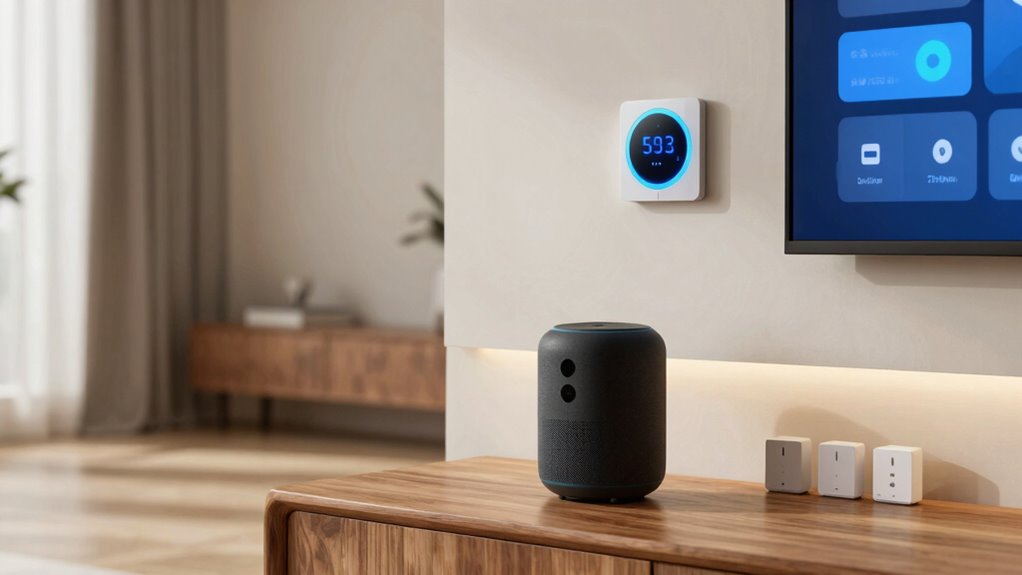

To start with smart home devices that truly help, choose simple options like voice-controlled speakers and hubs to manage lights, thermostats, and cameras. These devices make daily tasks easier and hands-free, while energy monitoring features help you track and reduce power use. Confirm compatibility with platforms like Alexa or Google Assistant for seamless control. Gradually add more devices and automate routines to create a smarter, more efficient home. Keep going to discover how to build your ideal smart setup step by step.

Get the latest gadgets delivered free with Prime
- Fast, free delivery on millions of items
- Prime Video, Amazon Music and more included
- Member-only deals all year
Key Takeaways
- Start with simple, voice-controlled devices like smart speakers to manage your home effortlessly.
- Focus on energy monitoring features to reduce waste and lower utility bills over time.
- Ensure devices are compatible with your preferred smart home platform like Alexa or Google Assistant.
- Gradually expand your system with security, lighting, and automation for increased convenience.
- Use routines to automate multiple tasks, making your smart home more efficient and responsive.
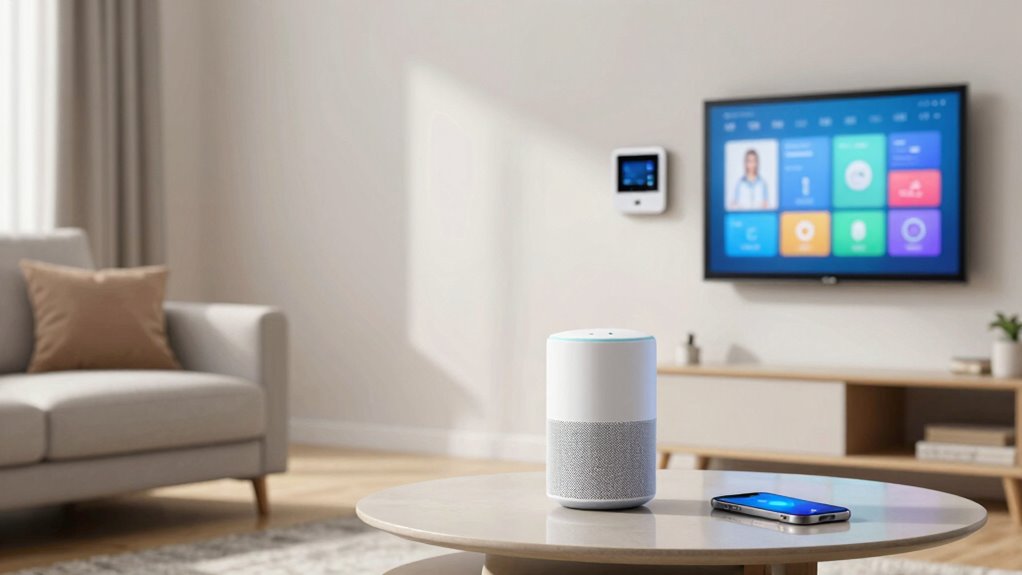
Getting started with smart home devices can feel overwhelming, but it doesn’t have to be complicated. The key is to start simple and focus on features that make your daily life easier, like voice control and energy monitoring. Voice control lets you manage your devices hands-free, which is perfect when you’re busy or not in the mood to fumble with switches. With just a few words, you can turn on lights, adjust the thermostat, or play your favorite music. This hands-free approach not only adds convenience but also makes your home feel more responsive and modern.
Start simple with voice control and energy monitoring to make your smart home more convenient and efficient.
Energy monitoring is another feature that can save you money and help you become more aware of your energy consumption. Smart outlets or plugs with energy monitoring capabilities give you real-time data on how much power your devices use. For example, you can see which appliances are drawing the most energy and adjust your habits accordingly. This not only reduces waste but can also cut down your utility bills over time. Plus, by integrating energy monitoring into your smart home setup, you gain insights that help you make smarter decisions about when and how to use your devices.
Starting with a voice-controlled smart speaker or hub is usually the best way to kick off your journey. These devices act as the central command for your smart home ecosystem. Once set up, you can link other compatible devices, such as smart lights, thermostats, or security cameras, to your voice assistant. This makes controlling everything straightforward—no need to open apps or fiddle with multiple remotes. You simply speak your commands, and your home responds. Plus, many voice assistants support routines, so you can create sequences like “Good morning” to turn on lights, start the coffee maker, and play news updates all at once.
When choosing your first smart devices, look for ones that integrate well with your existing setup. Compatibility is critical to ensure smooth operation. Many devices now work with popular platforms like Amazon Alexa, Google Assistant, or Apple HomeKit. This allows you to build a cohesive system that’s easy to manage and expand over time. As you get more comfortable, you can gradually add more devices that help you save energy, enhance security, or automate routine tasks. Remember, the goal is to create a smarter, more efficient home without feeling overwhelmed. Starting small with voice control and energy monitoring features will set you up for success and make your smart home journey enjoyable.
Additionally, understanding smart home ecosystem concepts can help you choose devices that work seamlessly together and create a more integrated experience.
As an affiliate, we earn on qualifying purchases.
Frequently Asked Questions
Are Smart Home Devices Secure From Hacking?
Smart home devices can be secure from hacking if you take proper precautions. Be aware of potential privacy concerns, and always update your device firmware regularly to patch vulnerabilities. Check device compatibility before purchasing to guarantee they work with your existing security setup. Use strong, unique passwords and enable two-factor authentication whenever possible. These steps help protect your devices and maintain your privacy, making your smart home safer from hackers.
How Much Do Smart Home Devices Typically Cost?
Smart home devices typically cost between $30 and $200, depending on their features and brand. You might pay less for basic voice control smart bulbs or plugs, while advanced security systems or energy-saving thermostats can be pricier. Investing in these devices helps you save energy and money over time, especially when you optimize settings for energy savings. Consider your needs and budget to choose the best devices for your smart home setup.
Can Smart Devices Work Without Wi-Fi?
Surprisingly, some smart devices can work without Wi-Fi through manual setup and offline functionality, but don’t count on them doing everything. You might enjoy basic features, like turning lights on or off, without internet, but more advanced functions will likely require a connection. So, if you love the idea of smart tech working blindly, without Wi-Fi, you’re in for a limited, yet amusing, surprise.
What Are the Best Brands for Smart Home Beginners?
As a beginner, you’ll find brands like Amazon Echo, Google Nest, and Philips Hue are excellent choices because they offer broad device compatibility and seamless voice control integration. These brands work well with various smart devices, making setup easier. They also support popular voice assistants, allowing you to control your home effortlessly. Starting with these brands helps guarantee your smart home system is flexible, user-friendly, and ready to expand as you learn.
Do Smart Home Devices Require Professional Installation?
Nope, you don’t need a professional for smart home setup—you’re the tech wizard here! Most devices, with voice control and device compatibility, are designed for DIY installation. Just follow the simple instructions, connect everything to your Wi-Fi, and you’re golden. If you’re feeling brave, you can even pretend you’re on a home improvement show, but don’t worry; no fancy tools required.
Google Assistant compatible smart hub
As an affiliate, we earn on qualifying purchases.
As an affiliate, we earn on qualifying purchases.
Conclusion
Now that you’ve taken the first step into the world of smart home devices, imagine what’s next. The possibilities are endless—more convenience, security, and control than you ever thought possible. But are you ready to access the true potential of your home? The future is calling, and it’s more connected than ever. Don’t stop here. Your smart home journey is just beginning—wait to see what surprises lie just around the corner.
As an affiliate, we earn on qualifying purchases.
smart home automation starter kit
As an affiliate, we earn on qualifying purchases.
As an affiliate, we earn on qualifying purchases.
Halloween Picks
halloween
As an affiliate, we earn on qualifying purchases.