

To improve your time blocking, start by using digital calendars like Google Calendar to visualize your day. Break tasks into manageable 30-60 minute blocks, and be realistic about how long each takes. Focus on creating a routine that fits your lifestyle, and review your schedule regularly to make adjustments. Remember, consistency is key, and patience helps make this a habit. If you want to discover practical tips and strategies, there’s more to explore below.

Get the latest gadgets delivered free with Prime
- Fast, free delivery on millions of items
- Prime Video, Amazon Music and more included
- Member-only deals all year
Key Takeaways
- Start with manageable time blocks of 30-60 minutes to build consistency and avoid overwhelm.
- Use digital calendars like Google Calendar to visualize and set reminders for your schedule.
- Be realistic about task durations and regularly review and adjust your time blocks.
- Focus on routines that fit your personal workflow and incorporate flexibility for better adherence.
- Maintain patience and consistency to develop time blocking as a sustainable, effective habit.
Have you ever felt overwhelmed by your to-do list and unsure of where to start? It’s a common feeling, especially when your day’s tasks seem to multiply faster than you can check them off. That’s where time blocking comes in—an effective technique to help you regain control over your schedule. For beginners, understanding the basics of time blocking can seem intimidating, but with the right approach, it becomes a powerful productivity hack. The key is to allocate specific blocks of time to different tasks, making your day more structured and manageable. Instead of drifting through your hours aimlessly, you assign each activity a dedicated window, which keeps you focused and minimizes distractions.
To get started, you’ll want to leverage scheduling tools that fit your style. Digital calendars like Google Calendar or Outlook are popular because they sync across devices and send reminders. These tools help you visualize your day at a glance, so you know exactly when to work on email, take breaks, or focus on deep work. When you block time, be realistic about how long tasks will take. Overestimating or underestimating can lead to frustration, so start with manageable chunks—say, 30-minute or 60-minute blocks—and adjust as you go. Remember, the goal isn’t perfection but creating a routine that works for you. Recognizing the importance of time management techniques can further boost your productivity and help you stay on track. Incorporating principles of design thinking can also make your scheduling more innovative and aligned with your personal or professional goals.
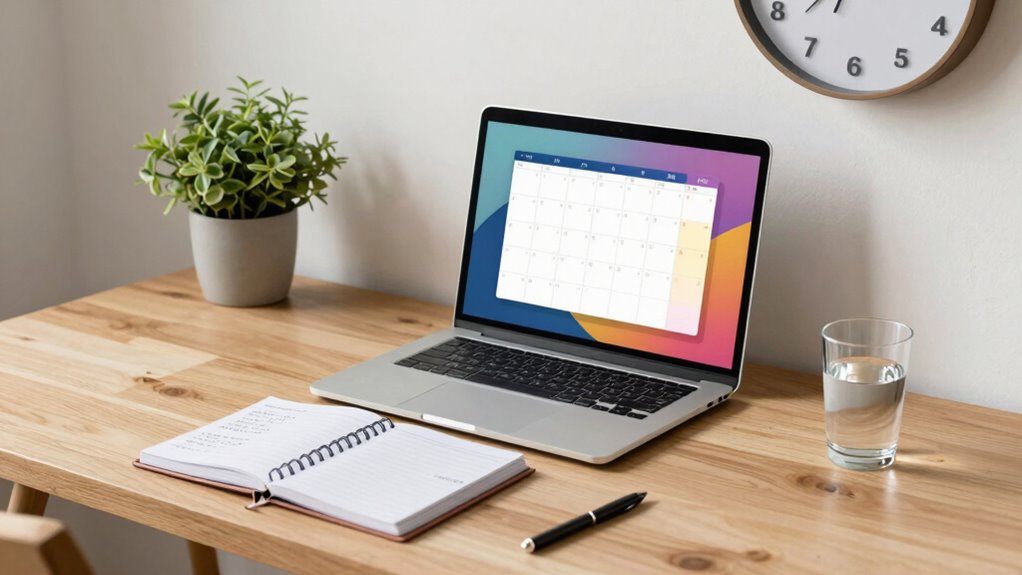
Use digital calendars like Google Calendar to visualize your day and set realistic, manageable time blocks.
As you get comfortable with time blocking, you’ll notice a boost in your focus and efficiency. It helps you avoid multitasking, which can drain your energy and reduce the quality of your work. Instead, you dedicate yourself fully to one task during its block, then move on to the next. Over time, you’ll develop a rhythm that suits your workflow. Remember, consistency is key—so stick with your schedule, review it regularly, and tweak it as needed. Developing a mindful approach to your routines can also enhance your overall effectiveness and well-being. With patience and practice, time blocking becomes second nature, transforming chaos into clarity and making every minute count. Understanding biodiversity and conservation principles can even inspire you to create a more balanced and sustainable lifestyle that aligns with your productive routines.
Popular right now

TCL 85 Designer Series QD-Mini LED TV (Model 85A400U) with Google Smart TV

Ninja DualZone Smart Air Fryer, 10 Qt, 6-in-1, DZ950

LG 85-inch QNED75B Mini LED Smart TV Bundle with HDMI and CPS Protection Plan
As an affiliate, we earn on qualifying purchases.
Frequently Asked Questions
How Do I Handle Unexpected Interruptions During Scheduled Blocks?
When unexpected interruptions happen, use distraction management by calmly evaluating whether the interruption is urgent. Apply interruption strategies like quickly jotting down tasks to revisit later or using a designated break to handle distractions. Communicate your schedule clearly to others, so they understand when you’re in a focused block. Flexibility is key—adjust your plan as needed without losing momentum, and return to your tasks with a clear mind.
Can Time Blocking Improve Productivity for Highly Flexible or Spontaneous Tasks?
Did you know that 70% of workers find flexibility challenges hinder their productivity? Time blocking can still boost your efficiency, even for spontaneous tasks. By reserving short, flexible buffer periods within your schedule, you can adapt to sudden needs without sacrificing focus. This approach helps you manage spontaneous tasks better, ensuring you stay productive while maintaining the flexibility needed for unpredictable situations.
What Tools or Apps Are Best for Managing Time Blocks Effectively?
You should use digital calendars like Google Calendar or Outlook, which allow you to schedule and adjust time blocks easily. Pair them with productivity apps such as Todoist or Notion to keep track of tasks within your blocks. These tools help you stay organized, set reminders, and visualize your day. By integrating digital calendars with productivity apps, you can manage your time blocks more effectively and stay flexible when needed.
How Often Should I Review and Adjust My Time Blocks?
You should regularly revisit your time blocks to keep your schedule on track. Aim for a daily review to guarantee your time blocking consistency stays strong and to catch any needed adjustments early. This helps you stay aligned with your goals and adapt to life’s surprises. By making daily reviews a habit, you’ll find it easier to refine your schedule, stay productive, and maintain a sense of control over your day.
Is Time Blocking Suitable for Team Projects or Only Individual Tasks?
Time blocking is highly suitable for team projects because it enhances team collaboration and streamlines task delegation. When you schedule specific blocks for shared tasks, everyone stays aligned and understands their responsibilities. It also encourages accountability, as team members know when to focus on collaborative efforts. By combining time blocks with clear delegation, you can boost productivity and guarantee that your team works cohesively toward common goals.
Conclusion
As you master time blocking, remember it’s like steering a ship through calm and stormy seas—your schedule becomes the steady compass guiding you forward. Embrace each day as a blank canvas, painting it with focus and intention. With practice, you’ll find your rhythm, turning chaos into clarity. Just like a seasoned sailor trusts their instincts, trust your newfound skills to navigate life’s currents—your journey to better time management has only just set sail.