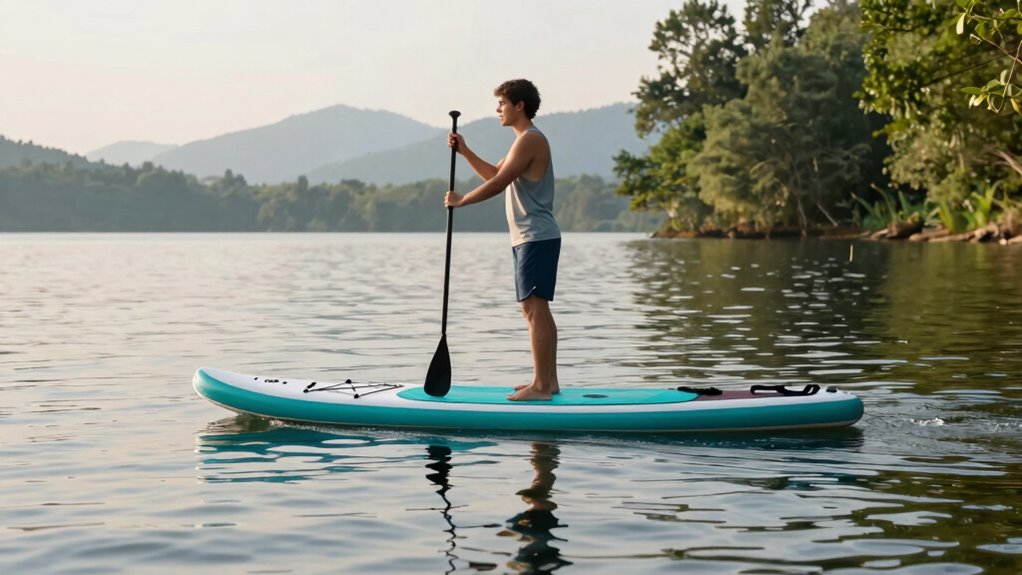

To feel stable faster, choose a larger, wider paddle board designed for beginners, typically around 10-11 feet long and 30-34 inches wide. These boards provide more stability and balance, helping you feel confident as you learn. Inflatable boards are a good option if you need easy storage and portability. Paying attention to size and material makes a big difference in your comfort and control. Keep exploring to discover more tips for a seamless start on the water.

Get the latest gadgets delivered free with Prime
- Fast, free delivery on millions of items
- Prime Video, Amazon Music and more included
- Member-only deals all year
Key Takeaways
- Choose a wider board (typically 30-34 inches) for increased stability and balance.
- Opt for a longer board (10-11 feet) to improve buoyancy and ease of standing.
- Select a moderately thick board (around 4-6 inches) for better support and stability.
- Match board size to your skill level, favoring larger boards for beginners.
- Consider water conditions—flat, calm waters benefit from larger, more stable boards.
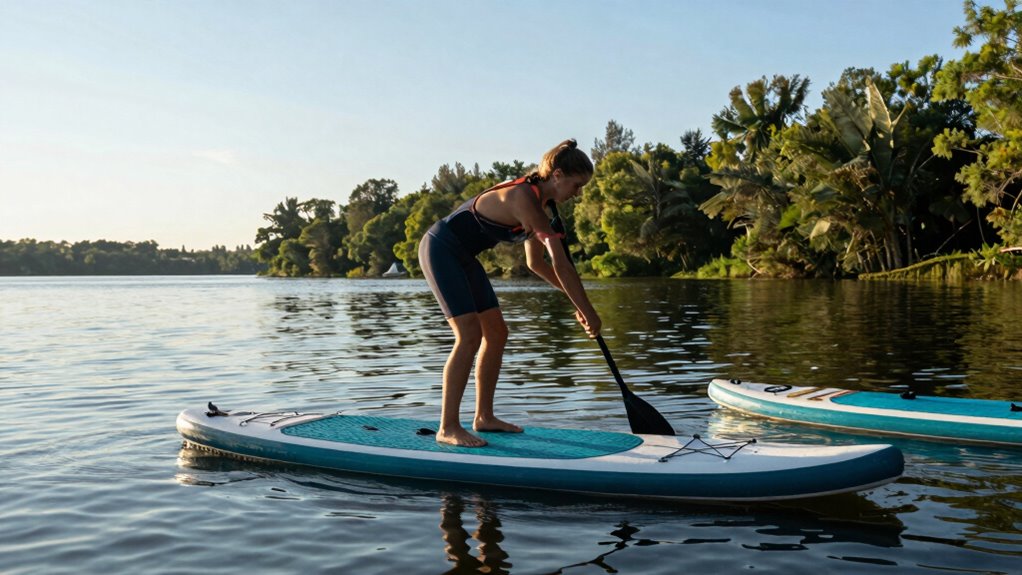
Are you unsure how to choose the right paddle board size? It can feel overwhelming with so many options out there, but focusing on what helps you feel stable faster is the best approach. The size of your paddle board influences your balance, comfort, and confidence on the water, especially as a beginner. A board that’s too small might feel unstable, while a larger one can give you that extra sense of security you need to start paddling with confidence.
Choosing the right paddle board size boosts stability, confidence, and comfort for beginners on the water.
When selecting your paddle board, consider the paddle board materials, as these impact both the weight and durability of your board. Foam, epoxy, and inflatable boards each have their advantages. Inflatable boards are lightweight and easy to store, making them perfect if you’re limited on storage solutions. They’re also less prone to dings, which can help you avoid instability caused by damage. Hard boards made from epoxy or fiberglass tend to be stiffer and more responsive, but they’re often heavier and less portable. Whichever material you choose, guarantee the board isn’t too heavy for you to carry comfortably, especially if storage solutions are limited at your home or on your boat.
Storage solutions play a significant role in your choice as well. If you have limited space, an inflatable paddle board might be your best bet because it can be deflated and stored in a small bag or closet. On the other hand, if you have a dedicated storage rack or garage space, a hard board can be a stable, long-term investment. Proper storage helps maintain your paddle board’s shape and performance, which directly affects your stability on the water. A warped or damaged board won’t give you the confidence you need, especially as a beginner. Additionally, appropriate storage practices can extend the lifespan of your paddle board and ensure it remains stable and reliable for your paddling adventures. Proper care and paddle board maintenance are essential for keeping your board in optimal condition and ensuring consistent performance. Considering paddle board materials in your decision can also influence your overall stability and ease of use. Choosing the right board size also plays a crucial role in feeling more secure as you learn. Moreover, paying attention to overall board dimensions**** can improve your balance and make your paddling experience more enjoyable.
Popular right now

LG 85-inch QNED75B Mini LED Smart TV Bundle with HDMI and CPS Protection Plan

KitchenAid Artisan 5-Quart Tilt-Head Stand Mixer, KSM150PS, Almond Cream

KitchenAid Artisan 5-Qt Tilt-Head Stand Mixer, Cardamom
As an affiliate, we earn on qualifying purchases.
Frequently Asked Questions
How Does Water Type Affect Paddle Board Size Selection?
You should consider water depth and wave conditions when choosing your paddle board size. In shallow waters, a shorter board offers better maneuverability, while deeper waters let you opt for a longer, more stable board. Calm lakes or flat water allow for smaller boards, but choppy or wave-filled conditions call for larger, more stable boards. Matching your board size to water type guarantees better balance and confidence as you paddle.
Can Weight Distribution on the Board Influence Stability?
Yes, weight distribution on the board influences stability. When your center of gravity is evenly balanced and your weight is well-distributed across the board, you’ll find it easier to stay upright and maintain balance. Proper balance distribution keeps your center of gravity low and centered, making the paddle board feel more stable under you. Focus on distributing your weight evenly to improve your control and confidence on the water.
Is a Larger Board More Difficult to Transport?
Think of a larger board as a hefty sailboat; it’s more impressive but takes more effort to move. Yes, a bigger board can be more challenging to transport due to its weight and size. Consider board portability and storage when choosing, especially if you have limited space or plan to carry it often. Smaller boards are easier to store and handle, making your paddleboarding experience more convenient.
How Does Paddle Length Impact Beginner Stability?
A longer paddle increases your leverage, making it easier to maintain balance and improving your stability. When you use a paddle of the right length, you can paddle more efficiently, which boosts your confidence and stability on the water. Proper paddle length helps you make smoother strokes, reducing wobbling and making your experience more stable. Ultimately, choosing the right paddle length enhances your stability improvement as a beginner.
Are There Specific Size Recommendations for Children or Smaller Adults?
Think of choosing a paddle board like fitting shoes; smaller feet need a different fit. For children or smaller adults, choose boards around 7 to 9 feet long with a narrower width for better control. Consider child safety and size recommendations, ensuring the board isn’t too heavy or wide, which can compromise stability. This tailored fit helps them feel confident, stable, and safe on the water, just like a perfect pair of shoes.
Conclusion
Choosing the right paddle board size is like finding the perfect dance partner—it helps you glide smoothly and feel confident on the water. When you pick a board that’s just right, it cradles you like a gentle wave, making stability come naturally. Before long, you’ll be riding the water with the grace of a seagull soaring effortlessly. Trust your size choice, and watch your confidence blossom like flowers in spring.