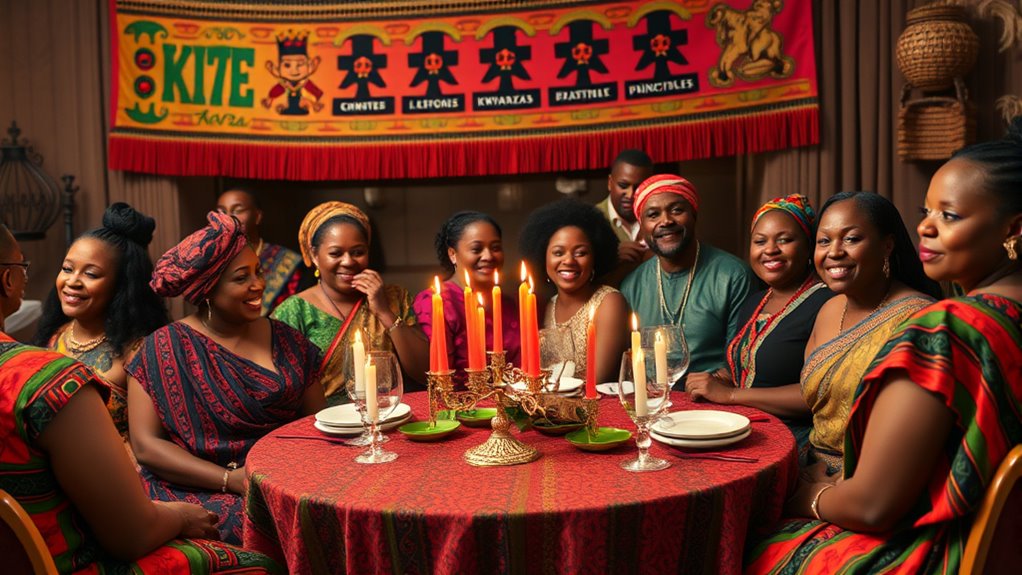

During Kwanzaa, you celebrate African heritage by gathering with family and community to honor seven guiding principles called Nguzo Saba, like unity and self-determination. You light candles on the kinara, share stories, sing songs, and enjoy special foods that connect you to cultural traditions. Decorations like African symbols and vibrant cloths emphasize pride and history. These customs help reinforce resilience and collective identity, and there’s much more to discover as you explore each tradition further.
Key Takeaways
- Kwanzaa is based on the Nguzo Saba, seven principles guiding community, self-determination, unity, and cultural pride.
- Candle lighting during Kwanzaa symbolizes each principle, accompanied by recitations and storytelling.
- Celebrations include sharing a communal meal (Karamu), music, dance, poetry, and traditional decorations.
- Cultural customs emphasize passing down African heritage through symbols, storytelling, and traditional attire.
- The holiday reinforces resilience, pride, and collective progress by honoring African history and achievements.
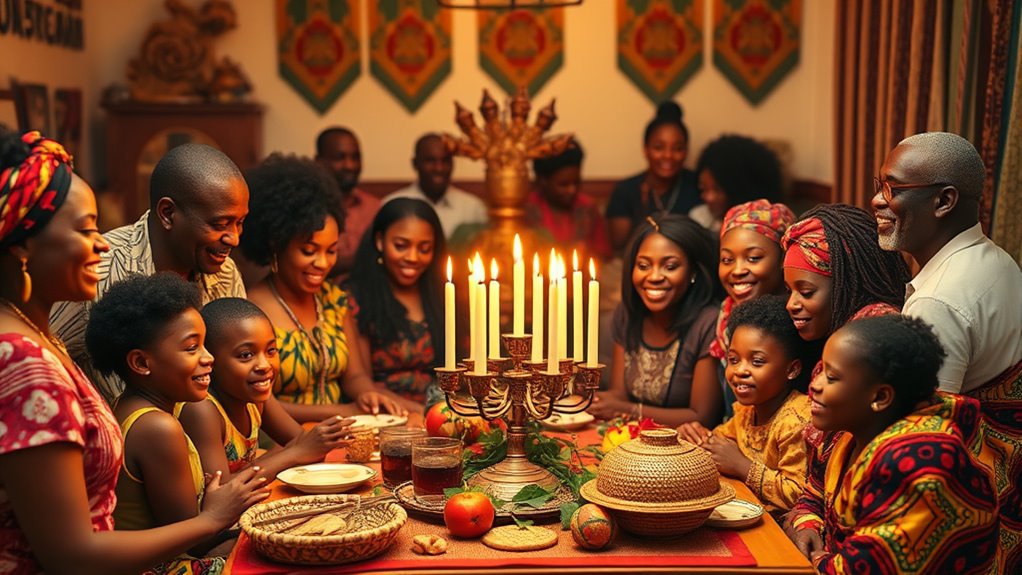
Have you ever wondered how Kwanzaa brings communities together to celebrate African heritage and culture? This holiday isn’t just about lighting candles or sharing meals; it’s rooted in a rich history significance that emphasizes unity, self-determination, and collective progress. Established in 1966 by Dr. Maulana Karenga, Kwanzaa was created during a period of social upheaval to reconnect African Americans with their ancestral roots and cultural customs. Its origins are deeply tied to the Black liberation movement, aiming to foster pride and cultural awareness. Each element of Kwanzaa pays homage to African traditions, yet it’s adapted to modern contexts, making it a meaningful bridge between past and present.
Kwanzaa unites communities through African traditions, emphasizing pride, cultural roots, and collective progress since 1966.
As you observe Kwanzaa, you’ll notice that its core principles are reflected in the customs and rituals that define the celebration. The lighting of the kinara, a seven-branched candleholder, symbolizes the Nguzo Saba—seven principles meant to guide individual and community growth. These principles—such as Umoja (unity) and Kujichagulia (self-determination)—are more than just words; they serve as a call to action, inspiring you to strengthen bonds within your community and honor your cultural heritage. The lighting of candles, with each representing a principle, is accompanied by recitations, songs, and storytelling that reinforce these values. Incorporating elements like nutritious foods during the celebration helps to sustain energy and vitality for ongoing community efforts.
Cultural customs during Kwanzaa often include sharing a communal meal called the Karamu, where family and friends gather to celebrate history and achievements. Traditional foods, music, dance, and poetry are integral to this gathering, helping to pass down stories and cultural knowledge from generation to generation. These customs foster a sense of belonging and remind you of the importance of collective identity. Decorations often feature symbols like the flag of Africa, woven mats, and vibrant cloths, all of which honor African artistry and history.
Participating in Kwanzaa’s customs allows you to connect more deeply with African traditions while acknowledging the struggles and triumphs of your ancestors. The holiday’s history significance reminds you that celebrating heritage isn’t just about honoring the past; it’s about empowering yourself and your community today. By embracing its cultural customs, you help keep alive a movement rooted in resilience, pride, and unity. Kwanzaa is more than a holiday; it’s a reaffirmation of cultural identity and a celebration of shared history that continues to inspire generations.
Frequently Asked Questions
How Did Kwanzaa Originate and Who Founded It?
You might be surprised to learn that Kwanzaa originated in 1966, founded by Dr. Maulana Karenga during a cultural revival movement. He created it to reconnect African Americans with their African roots and promote unity. This celebration emphasizes principles like unity, self-determination, and collective work, helping you honor your heritage and strengthen community ties through meaningful traditions rooted in African cultural practices.
Are Kwanzaa Celebrations Recognized Internationally?
Imagine a candle flickering in a room filled with diverse voices—that’s how Kwanzaa’s global recognition shines. While primarily celebrated in the United States, its cultural significance resonates worldwide, especially among African diasporas. Countries like Canada and the UK acknowledge its importance, and online communities share its principles. This international awareness highlights Kwanzaa’s role in fostering understanding and celebrating African heritage across borders.
Can Non-African Americans Participate in Kwanzaa?
Yes, you can participate in Kwanzaa as a non-African American. The celebration encourages interfaith participation and cultural exchange, making it inclusive for everyone interested in learning about and honoring its principles. By joining in, you show respect, support, and a genuine interest in understanding African heritage and traditions. Your involvement can foster unity and promote cultural appreciation, enriching your perspective while honoring the spirit of Kwanzaa.
What Are Common Kwanzaa Gifts and Their Significance?
You might think Kwanzaa gift giving is just about presents, but it’s more symbolic than that. Common gifts include books, artwork, and items that promote cultural pride, education, and community. These symbolic presents honor the principles of Kwanzaa, like unity and self-determination. Giving meaningful gifts encourages reflection on heritage, growth, and shared values, strengthening bonds and fostering a deeper understanding of the celebration’s purpose.
How Does Kwanzaa Compare to Other Cultural Festivals?
You’ll notice that Kwanzaa emphasizes cultural principles and community, making it unique among festivals. Compared to others, it shares cultural similarities like honoring heritage and fostering unity, but it also highlights festival diversity by focusing on African roots and principles. While holidays like Christmas or Hanukkah often center on religious themes, Kwanzaa’s emphasis on cultural identity and social values sets it apart, creating a meaningful celebration rooted in heritage.
Conclusion
As you embrace the spirit of Kwanzaa, remember it’s like tending a garden—nurturing principles and traditions that grow stronger each year. By celebrating unity, self-determination, and community, you help weave a vibrant tapestry of heritage and hope. Let these principles be the guiding stars on your journey, illuminating the path toward a more connected and conscious future. In doing so, you become part of a living legacy that blooms with pride and resilience.