To determine whether your home needs a humidifier or dehumidifier, check your indoor humidity levels. If your space feels dry, with static, dry skin, or coughs, a humidifier can help. If you notice mold, condensation, or dampness, a dehumidifier is likely needed. You’ll also want to take into account your climate and room size. Want to find out which device suits your home best? Keep exploring for expert advice.

Get the latest gadgets delivered free with Prime
- Fast, free delivery on millions of items
- Prime Video, Amazon Music and more included
- Member-only deals all year
Key Takeaways
- Determine your home’s humidity level: dry air suggests a humidifier, damp air indicates a dehumidifier.
- Signs like mold, condensation, or dry skin help identify if you need moisture addition or removal.
- Consider your climate: dry regions benefit from humidifiers, humid areas require dehumidifiers.
- Match device capacity to room size for effective and energy-efficient moisture control.
- Maintaining optimal indoor humidity (30-50%) improves comfort and prevents health or property issues.
As an affiliate, we earn on qualifying purchases.
Do You Need a Humidifier or Dehumidifier? How to Decide
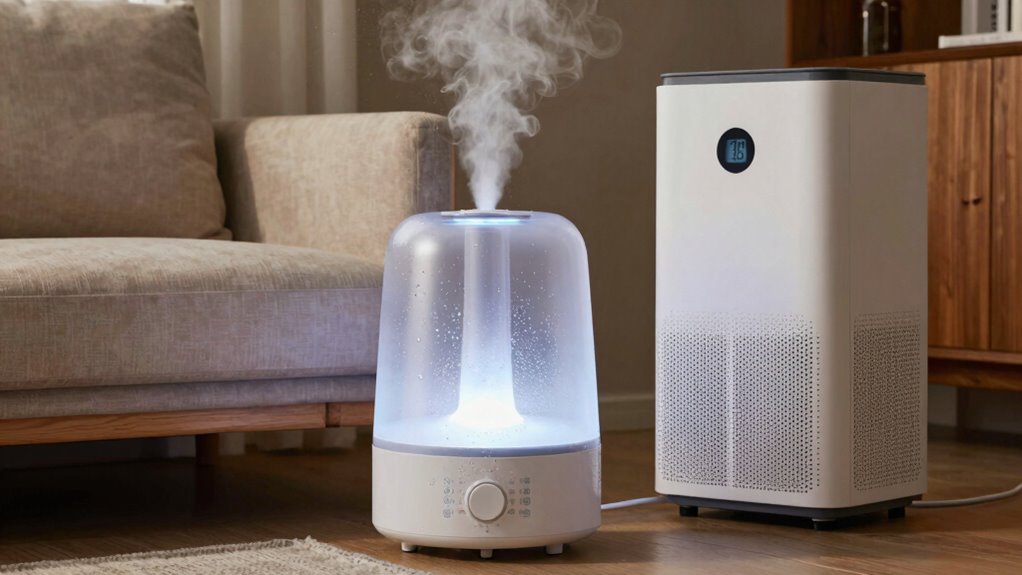
Deciding whether you need a humidifier or dehumidifier depends on your home’s specific humidity levels. If your air feels dry, you might notice increased static, dry skin, or respiratory discomfort, indicating a need for a humidifier. Conversely, if your space feels damp, has mold, or you see condensation, a dehumidifier can improve air quality and reduce health risks. Both devices influence your home’s energy efficiency—using the right one guarantees you’re not wasting electricity. Proper humidity control helps maintain a healthier environment, preventing issues caused by too much or too little moisture. Recognizing indoor air quality as an important aspect of overall comfort can also influence your indoor climate choices, especially if outdoor pollution impacts your home’s air quality. Additionally, understanding the natural balance of moisture in your home can help prevent the need for excessive device use and promote a more sustainable living environment. By evaluating your home’s current air quality and moisture levels, you can choose the device that best supports comfort and energy savings, creating a healthier, more balanced living space.
As an affiliate, we earn on qualifying purchases.
How Do Moisture Control Devices Keep Your Home Comfortable?
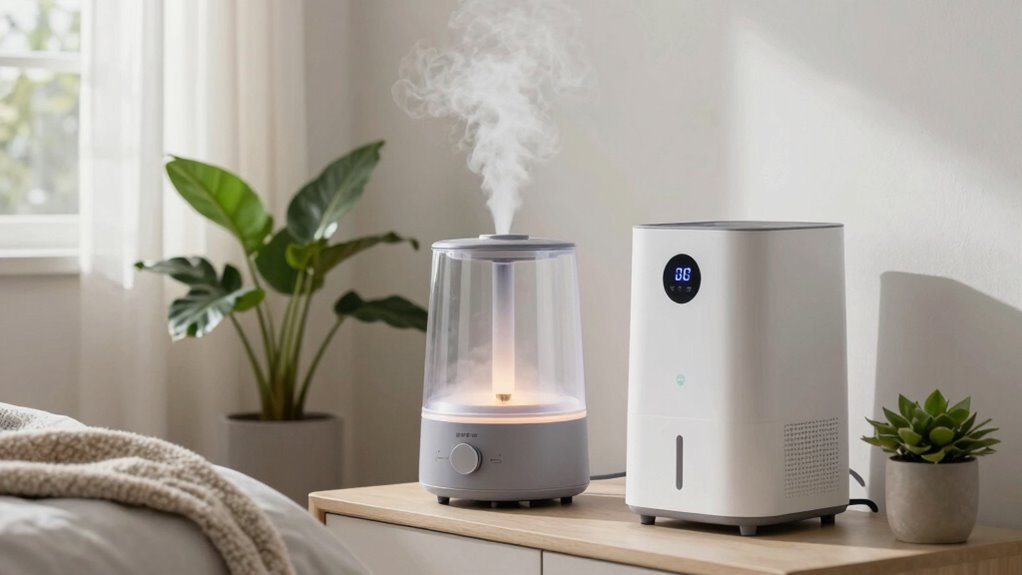
Moisture control devices like humidifiers and dehumidifiers work by adjusting the humidity levels in your home, directly influencing your comfort. When humidity is balanced, your air quality improves because mold, dust mites, and allergens are less likely to thrive. Proper moisture levels also help prevent issues like dry skin or condensation on windows. These devices enhance energy efficiency by reducing the need for heating or cooling to compensate for humidity problems. For example, a dehumidifier can make a hot, sticky room feel cooler and more comfortable without cranking up the AC. Similarly, a humidifier adds moisture to dry air, making your home feel warmer naturally. Maintaining indoor air quality through proper humidity levels is essential for a healthier living environment. Additionally, controlling moisture can help reduce energy consumption by optimizing your home’s climate control. Understanding the effects of humidity on your home can help you choose the right device for your needs. Proper moisture levels also contribute to preventing mold growth, which is a common concern in humid environments. Overall, moisture control devices create a more comfortable environment while supporting better air quality and efficient energy use.
As an affiliate, we earn on qualifying purchases.
Signs You Need a Humidifier or Dehumidifier
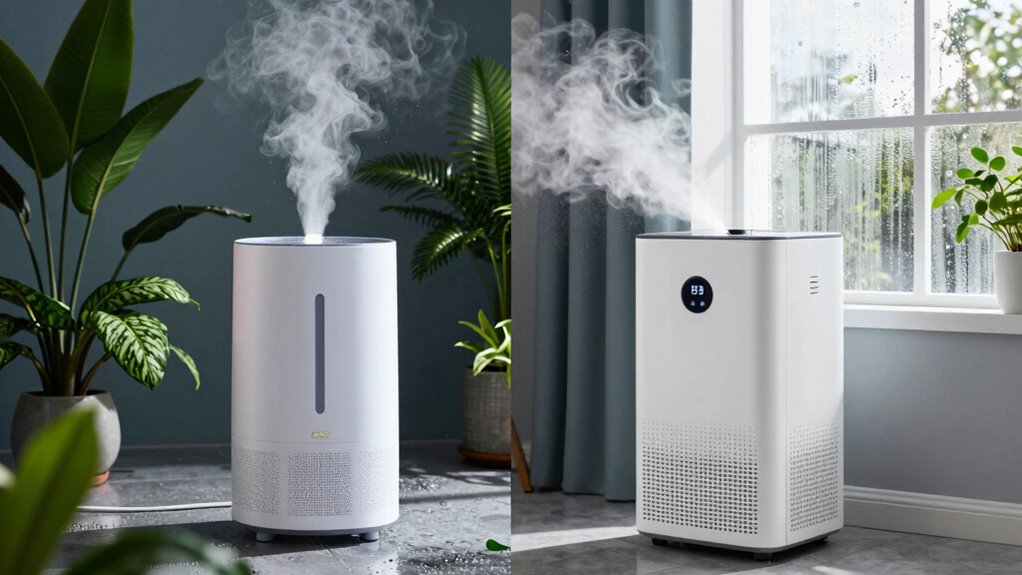
If you notice a persistent dry throat or skin, your home’s humidity level might be too low. On the other hand, excessive mold or condensation could indicate humidity that’s too high. Recognizing these signs helps you decide whether a humidifier or dehumidifier is needed. Monitoring your air quality can also provide helpful insights into your home’s humidity balance. Additionally, using proper clothing and adjusting indoor ventilation can help manage humidity levels more effectively.
Persistent Dry Throat or Skin
Have you noticed your skin feels unusually dry or your throat is persistently scratchy, even when you’re staying hydrated? These signs often point to an imbalance in humidity levels. Low humidity can cause dry skin and throat irritation, making you feel uncomfortable. To visualize this, consider the table below:
| Humidity Level | Common Symptoms | Recommended Solution |
|---|---|---|
| Very Low | Dry skin, throat irritation | Use a humidifier |
| Low | Slight dryness, cough | Use a humidifier |
| Ideal | Comfort, no dryness | Maintain current level |
| High | Moisture buildup, mold | Use a dehumidifier |
| Very High | Excess moisture, condensation | Use a dehumidifier |
Balancing humidity helps alleviate these issues, improving your comfort. Maintaining proper indoor humidity levels is essential for overall health and well-being. Additionally, understanding the recommended humidity levels can help you take proactive steps to maintain a healthy indoor environment. Proper humidity control can also support respiratory health and prevent the growth of mold and bacteria, which thrive in imbalanced conditions.
Excessive Mold or Condensation
Excessive mold growth or condensation on windows and walls is a clear sign that the humidity levels in your home are off balance. High humidity creates a perfect environment for mold, which can compromise your air quality and worsen allergy symptoms. If you notice persistent dampness or mold, a dehumidifier can help reduce moisture, preventing health issues and improving air quality. Conversely, if your home feels dry and you see static or cracking walls, a humidifier can add necessary moisture, easing allergy relief and comfort. Proper storage systems and ventilation can also play a role in managing indoor humidity levels effectively. Addressing these signs promptly ensures a healthier indoor environment. Balancing humidity levels not only protects your home but also supports your overall well-being by reducing allergens and mold spores in the air. Understanding how temperature treatments like humidifiers and dehumidifiers influence indoor comfort can help you make informed decisions for your space. Additionally, being aware of indoor air quality factors can guide you in choosing the right device for your needs. Maintaining proper air circulation can further enhance the effectiveness of humidity control devices. Adequate ventilation is essential for preventing excess moisture buildup and promoting a healthier living space.
As an affiliate, we earn on qualifying purchases.
What Factors Should You Think About Before Buying?
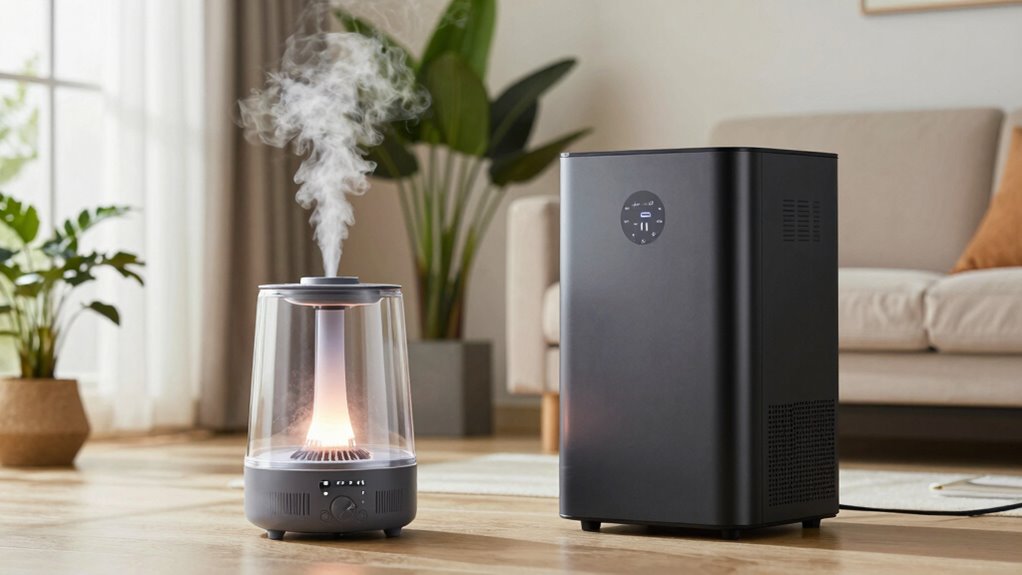
Before choosing a humidifier or dehumidifier, consider your room size to guarantee the device can handle the space effectively. Think about your ideal humidity level to select a unit that maintains comfort without overdoing it. These factors help you find the right device for your specific needs and environment.
Room Size Compatibility
Thinking about room size is essential when choosing a humidifier or dehumidifier, as the right device needs to match the space you want to control. If you select a device with insufficient capacity, it won’t be effective, and if it’s too powerful, you’ll waste energy and money. To determine the best fit, consider your room’s size and the device’s capacity. Use this table to help:
| Room Size | Recommended Device Capacity |
|---|---|
| Small (up to 150 sq ft) | Low-capacity unit (1-2 gallons) |
| Medium (150-300 sq ft) | Moderate-capacity unit |
| Large (300-600 sq ft) | High-capacity unit |
| Very Large (600+ sq ft) | Multiple units or a high-capacity device |
Matching your room size with the right capacity guarantees ideal performance. Additionally, room size compatibility plays a crucial role in ensuring your device’s effectiveness and energy efficiency. Properly matching device capacity to room size helps optimize performance and minimize unnecessary energy consumption, especially when considering air purifiers and their maintenance needs. Recognizing airflow capacity is also vital to ensure the device functions properly within your space.
Furthermore, taking into account room layout can influence how well the device distributes humidity or dryness throughout the space, ensuring consistent comfort.
Humidity Level Needs
Choosing the right device isn’t just about room size—your ideal humidity level plays an essential role as well. You should consider the recommended indoor humidity range (generally 30-50%) to maintain good indoor air quality and comfort. Too high or low humidity can lead to health issues, mold, or dust mites. Think about these factors before buying:
- How the current indoor air quality feels—dry or damp?
- The climate in your area—humid or dry?
- Energy efficiency of the device—saving on utility bills?
- The specific humidity needs of your household, especially if anyone has allergies or respiratory concerns.
- Understanding humidity control mechanisms can help you choose the most effective device for your needs. For example, knowing how humidifiers and dehumidifiers operate can aid in selecting the appropriate device for your environment.
Balancing these factors guarantees you select a device that keeps your home’s humidity at a healthy, energy-efficient level.
How to Choose the Best Humidifier or Dehumidifier for Your Climate

Your climate plays a crucial role in determining whether you should opt for a humidifier or a dehumidifier. If you live in a dry area, a humidifier can improve air quality by adding moisture, making the environment more comfortable and reducing respiratory issues. Conversely, if your climate is humid, a dehumidifier helps remove excess moisture, preventing mold and mildew growth. When choosing, consider energy efficiency—look for models with energy-saving features to reduce long-term costs. Additionally, assess your home’s specific needs; a high-capacity device may be necessary for larger spaces or extreme conditions. Matching your device to your climate ensures peak performance, better air quality, and energy savings, helping you maintain a healthy, comfortable home year-round.
Troubleshooting Your Moisture Device Problems

When a humidifier or dehumidifier stops working properly, troubleshooting can often resolve the issue quickly without professional help. Start by checking for power source issues—ensure the device is plugged in and the outlet works. Next, inspect the air filter; if it’s dirty or clogged, replace or clean it to improve airflow and performance.
Here are some quick steps:
- Confirm the device is securely plugged in and the circuit breaker isn’t tripped
- Clean or replace the air filter if it’s dirty
- Check for any visible damage or loose wires
- Reset the device if it has a reset button or unplug it for a few minutes
Addressing these common issues often restores proper function.
Frequently Asked Questions
Can a Single Device Serve as Both a Humidifier and Dehumidifier?
A single device typically can’t serve as both a humidifier and dehumidifier because they perform opposite functions. Dual function appliances do exist but usually focus on combined moisture control, like HVAC systems with integrated humidity management. These systems can adjust humidity levels but are more complex and costly. For precise control, it’s better to use dedicated humidifiers and dehumidifiers tailored to your home’s specific needs.
How Energy-Efficient Are Humidifiers Compared to Dehumidifiers?
Think of humidifiers and dehumidifiers as fuel-efficient cars—some sip energy while others guzzle. Generally, humidifiers tend to use less energy than dehumidifiers, making them more cost-efficient. A small humidifier might only consume about 20 watts, while larger dehumidifiers can use over 500 watts. So, if you’re concerned about energy consumption and cost efficiency, a humidifier usually offers a more economical choice.
Are There Health Risks Associated With Improper Use of These Devices?
Yes, improper use of humidifiers and dehumidifiers can pose health hazards. If you don’t clean these devices regularly, mold and bacteria can grow, leading to respiratory issues or allergies. Device malfunction, like over-humidifying or drying out the air excessively, can also cause health problems. To stay safe, follow manufacturer instructions, maintain proper humidity levels, and clean your devices routinely to prevent health risks.
How Often Should I Clean or Replace My Moisture Control Device?
You should clean your moisture control device at least once a week during regular use to ensure peak performance. Follow the manufacturer’s maintenance routines, including replacing filters or descaling parts as needed. Regular cleaning prevents mold and bacteria buildup, extending device longevity. If you notice reduced efficiency or unusual odors, clean or replace components sooner. Proper upkeep ensures your device works effectively and lasts longer, saving you money and ensuring healthier indoor air quality.
Do Different Room Sizes Require Different Types or Sizes of Devices?
Yes, different room sizes require different types or sizes of devices. For larger rooms, you need a humidifier or dehumidifier with higher capacity to guarantee proper moisture control. Check the device compatibility with your room size by reviewing the coverage area specified by the manufacturer. Smaller devices work well for compact spaces, but for bigger rooms, choose a model designed to handle the larger volume effectively.
Conclusion
Choosing between a humidifier and dehumidifier can feel like steering through a labyrinth, but remember, your home’s comfort depends on the right moisture level. Think about your climate, signs of excess or dryness, and your needs before making a decision. Whether you’re battling the dampness of a swamp or the dryness of a desert, selecting the proper device guarantees cozy, healthy living. As they say in the good old days, “a well-balanced home is a happy home.”
Halloween Picks
halloween
As an affiliate, we earn on qualifying purchases.