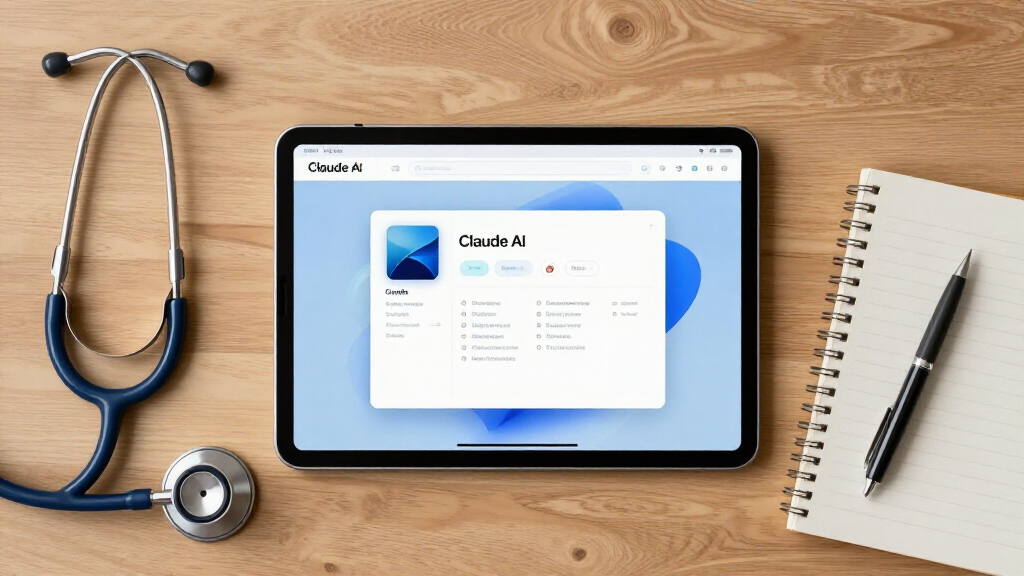

📊 Full opportunity report: Icon Inks Partnership With Anthropic To Launch Claude In Clinical Trials on ThorstenMeyerAI.com — validation score, market gap, and execution plan.

Get the latest gadgets delivered free with Prime
- Fast, free delivery on millions of items
- Prime Video, Amazon Music and more included
- Member-only deals all year
TL;DR
Icon has announced a partnership with Anthropic to deploy its Claude AI system in clinical trials. The specific applications, rollout schedule, and data protections remain unconfirmed. This marks a significant step toward integrating generative AI into regulated research processes.
Icon has signed a partnership with Anthropic to deploy the company’s Claude AI system in clinical trials, marking a move to incorporate generative AI into regulated research environments. The announcement confirms the deal but does not specify which trials, tasks, or deployment timelines are involved. This development could influence trial efficiency and administrative workflows, but operational details are still pending.
The agreement connects Icon’s clinical trial operations with Anthropic’s Claude AI technology, though neither party has disclosed which specific Claude model will be used or which trials will be involved. The announcement does not specify whether Claude will assist with document handling, data retrieval, or workflow support, nor does it clarify if the AI will interact with patient data or regulatory records.
Financial terms, scope, and whether the deployment will be limited to pilot phases or expanded to broader use remain undisclosed. Additionally, there is no information on validation procedures, human oversight, or controls governing AI outputs, which are critical in regulated environments. The next steps will depend on further disclosures about pilot results, validation, and operational protocols.
Potential Impact of AI on Clinical Trial Operations
This partnership signifies a notable shift toward integrating generative AI into the regulated processes of clinical research. If successful, Claude could streamline administrative tasks, reduce processing times, and lower costs for trial management. However, the lack of detailed validation, oversight, and data protection measures raises questions about the safety, accuracy, and regulatory compliance of AI-assisted workflows in sensitive environments.
The move highlights a broader industry trend of adopting AI to improve efficiency in complex, data-intensive research settings, but it also underscores the need for rigorous validation and oversight to ensure patient safety and data integrity.
portable external monitor for medical professionals
As an affiliate, we earn on qualifying purchases.
As an affiliate, we earn on qualifying purchases.
Background on AI in Clinical Trials
Generative AI has been increasingly explored for use in healthcare and research, primarily for document generation, summarization, and administrative support. Companies like Anthropic develop advanced language models, but their deployment in regulated environments remains limited. Icon, a clinical research organization, has been exploring AI to enhance trial management, but this is among the first known partnerships explicitly linking Claude to clinical trial operations.
Previous efforts in AI-assisted research have focused on lower-risk tasks, with regulators emphasizing validation and oversight. The current agreement signals a potential shift toward broader AI integration, contingent upon successful validation and compliance with regulatory standards.
wireless earbuds for healthcare workers
As an affiliate, we earn on qualifying purchases.
As an affiliate, we earn on qualifying purchases.
Unconfirmed Details About Deployment Scope
It remains unclear which specific clinical trials will incorporate Claude, what tasks the AI will perform, and how outputs will be validated and overseen. Details on data privacy, security measures, and whether the deployment will be limited or broad are also not yet available. The timing of the rollout and performance benchmarks are still to be announced.
rugged laptop backpack for clinical trials
As an affiliate, we earn on qualifying purchases.
As an affiliate, we earn on qualifying purchases.
Next Steps in AI Deployment and Validation
Further disclosures are expected to clarify the scope of Claude’s deployment, including pilot results, validation protocols, and operational controls. Regulatory agencies and trial sponsors will likely scrutinize the system’s accuracy, safety, and data handling procedures before broader adoption. The upcoming months will reveal whether Claude can deliver measurable improvements in trial efficiency while maintaining compliance and safety standards.
AI-powered clinical trial management software
As an affiliate, we earn on qualifying purchases.
As an affiliate, we earn on qualifying purchases.
Key Questions
What specific tasks will Claude perform in clinical trials?
The announcement does not specify which tasks Claude will handle, such as document management, data retrieval, or workflow support. Details are still pending.
Will Claude make medical or clinical decisions?
There is no confirmed information that Claude will make medical or patient-care decisions. Its role appears to be limited to administrative or operational support, subject to oversight.
Which trials or therapeutic areas will use Claude?
The specific trials, sponsors, or phases involved in the deployment have not been disclosed. Further details are expected in upcoming updates.
How will patient data be protected in this AI deployment?
The announcement does not specify data privacy or security measures. Clarification on data handling, retention, and access controls will be necessary before widespread use.
When will Claude begin active deployment in trials?
The timing of the rollout has not been announced. Future disclosures will likely include pilot results and phased implementation plans.
Source: ThorstenMeyerAI.com
Halloween Picks
halloween
As an affiliate, we earn on qualifying purchases.