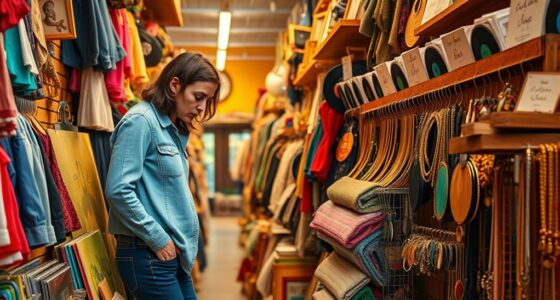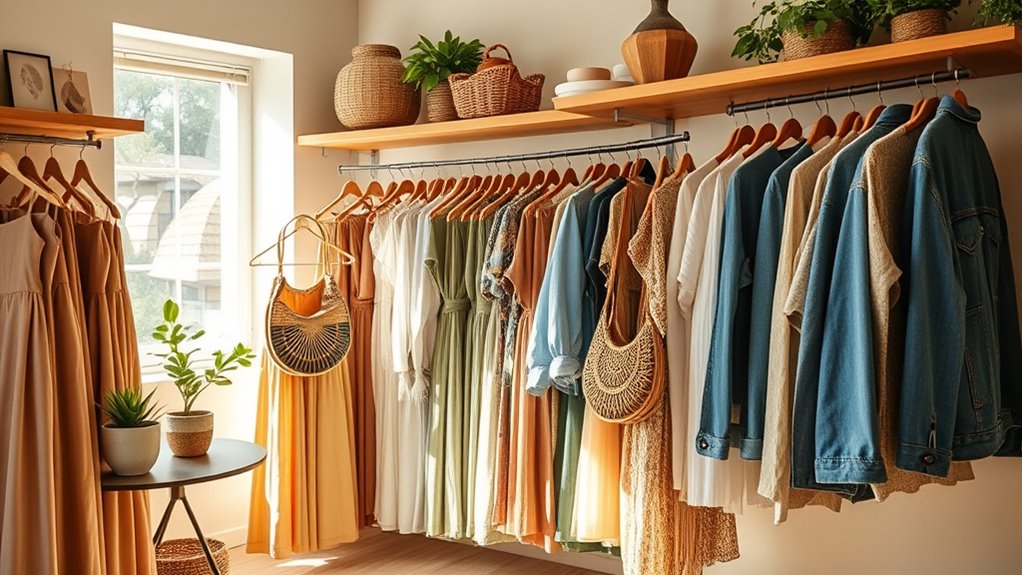

To build a sustainable wardrobe, focus on choosing ethical fashion brands that prioritize environmentally friendly sourcing and fair labor practices. Opt for quality over quantity to make your clothes last longer, and support brands with transparent supply chains. Incorporate thrift shopping and clothing swaps to reduce waste and demand for new productions. Making conscious choices reflects your values and helps promote industry change—keep exploring to discover more ways to create a responsible wardrobe.
Key Takeaways
- Prioritize investing in high-quality, durable clothing to extend lifespan and reduce waste.
- Research and choose brands committed to ethical practices with transparency and certifications like Fair Trade or GOTS.
- Opt for sustainable materials such as organic cotton, recycled fabrics, and hemp to lower environmental impact.
- Practice proper garment care to maintain clothing quality and increase longevity.
- Embrace thrift shopping and clothing swaps to minimize demand for new, environmentally damaging production.

Have you ever wondered if your clothing choices could make a difference beyond just style? The truth is, they can. Every piece you buy carries a story—about how it was made, who made it, and the impact it has on the planet. When you prioritize ethical fashion, you’re supporting brands that focus on sustainable sourcing and fair labor practices. These principles aren’t just buzzwords; they’re the backbone of a more responsible fashion industry. Sustainable sourcing means choosing materials that are environmentally friendly, such as organic cotton, recycled fabrics, or hemp. These materials require fewer resources like water and pesticides, reducing the ecological footprint of your wardrobe. By selecting clothing made from sustainable sources, you’re helping to conserve ecosystems and promote responsible farming practices. Fair labor practices, on the other hand, ensure that workers are paid fairly, work in safe conditions, and aren’t exploited. When you buy from brands committed to fair labor, you’re supporting workers’ rights and helping to combat the often hidden injustices behind fast fashion. It’s about making conscious choices that reflect your values. But how do you identify these brands? Start by doing a little research—look for certifications like Fair Trade or GOTS (Global Organic Textile Standard). These labels indicate that the company adheres to strict standards for ethical sourcing and fair treatment of workers. Many brands today are transparent about their supply chains, sharing details about where and how their products are made. Supporting these brands encourages more companies to adopt ethical practices, creating a ripple effect across the industry. Investing in quality over quantity is another way to build a sustainable wardrobe. Instead of buying cheap, disposable clothing, opt for well-made pieces that last longer. This reduces waste and the environmental impact associated with constantly replacing worn-out garments. Additionally, taking care of your clothes properly extends their lifespan, further decreasing your fashion footprint. Thrift shopping and swapping clothes with friends are also effective ways to reduce demand for new production, which often involves environmentally damaging processes and labor abuses. In fact, exploring options like top anime films can inspire you to make more mindful choices in other areas of your life, including fashion. Ethical fashion isn’t about perfection; it’s about making better choices where you can. By being mindful of sustainable sourcing and fair labor practices, you actively contribute to a more equitable and eco-friendly fashion industry. Your wardrobe becomes a reflection of your values—stylish, yes, but also responsible. Every purchase becomes an opportunity to support positive change, proving that fashion can be both beautiful and ethical. So, next time you’re shopping, remember: your choices matter more than you think, and they can help build a more sustainable, fairer world for everyone.
Frequently Asked Questions
How Can I Identify Genuinely Ethical Fashion Brands?
You can identify genuinely ethical fashion brands by checking for certifications to trust, like Fair Trade or GOTS, which verify ethical practices. Look for transparency in sourcing—brands that openly share details about their supply chain and production processes. Do some research on their labor practices and environmental impact. If a brand is committed to honesty and holds reputable certifications, it’s likely genuinely ethical and worth supporting.
What Are the Environmental Impacts of Fast Fashion?
Fast fashion considerably harms the environment by causing environmental pollution through the release of toxic chemicals and waste into water and soil. It also accelerates resource depletion as brands often overconsume water, energy, and raw materials to keep up with rapidly changing trends. Your choice to buy less and opt for sustainable brands helps reduce these impacts, protecting the planet for future generations.
How Do Ethical Fashion Choices Affect Clothing Durability?
When you choose ethical fashion, you typically get clothing with better fabric lifespan and stitching quality. These garments are designed to last longer, so you don’t have to replace them as often. This durability not only saves you money but also reduces waste. Your conscious choices mean you’re supporting brands that prioritize quality over quantity, making your wardrobe more sustainable and eco-friendly in the long run.
Can Sustainable Fashion Be Affordable for Everyone?
Absolutely, sustainable fashion can be affordable for everyone if you get creative with cost-effective options and affordability strategies. You might find incredible deals on secondhand stores, swap clothes with friends, or shop during sales. Thrift stores and online marketplaces are treasure troves for stylish, eco-friendly pieces without breaking the bank. With a little effort, building a sustainable wardrobe becomes a fun, budget-friendly adventure that everyone can enjoy.
What Are the Best Ways to Recycle or Repurpose Old Clothes?
You can recycle or repurpose old clothes by trying simple upcycling techniques like turning shirts into tote bags or patchwork quilts. Additionally, participate in clothing donation programs to give your garments a second life. Get creative by dyeing or embellishing items, or even transforming them into new accessories. These methods help reduce waste and extend the life of your wardrobe, making your fashion choices more sustainable and eco-friendly.
Conclusion
Now that you know the importance of ethical fashion, are you ready to make a change? Building a sustainable wardrobe isn’t just about choice—it’s about impact. Every conscious decision you make can ripple outward, shaping a better future for our planet and its people. But the real question remains: will you take that first step today, knowing that your next wardrobe upgrade could be the start of something bigger? The choice is yours—what will you choose?