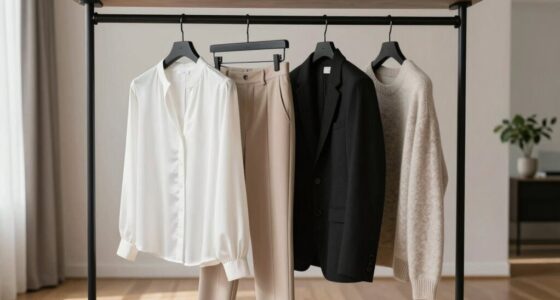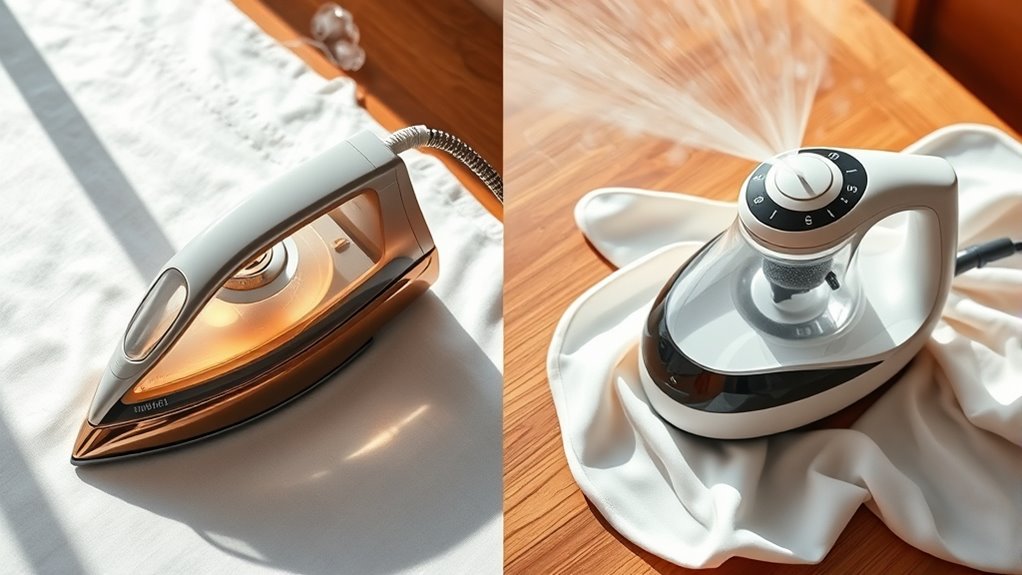
Choosing between an iron and a steamer depends on your fabric and desired look. An iron is best for crisp, polished finishes on sturdy fabrics like cotton or linen, while a steamer offers a gentle touch suitable for delicate materials like silk or velvet. Steaming is quick and reduces the risk of damage, but an iron provides sharp creases when needed. To get the most out of both, understanding their differences can help you care for your clothes better.

Get the latest gadgets delivered free with Prime
- Fast, free delivery on millions of items
- Prime Video, Amazon Music and more included
- Member-only deals all year
Key Takeaways
- Steaming is gentler, ideal for delicate fabrics and reducing fabric damage; ironing offers sharper creases and a polished finish.
- Use an iron for crisp collars, cuffs, and structured garments; steamers are better for quick refreshes and casual, relaxed looks.
- Steaming minimizes heat contact, making it safer for sensitive textiles like silk or velvet, while ironing provides precise pressing.
- Ironing delivers a more polished, formal appearance with sharp creases, whereas steaming creates a softer, natural look.
- Both tools are valuable; choose based on fabric type and desired finish to maintain garment quality and appearance.
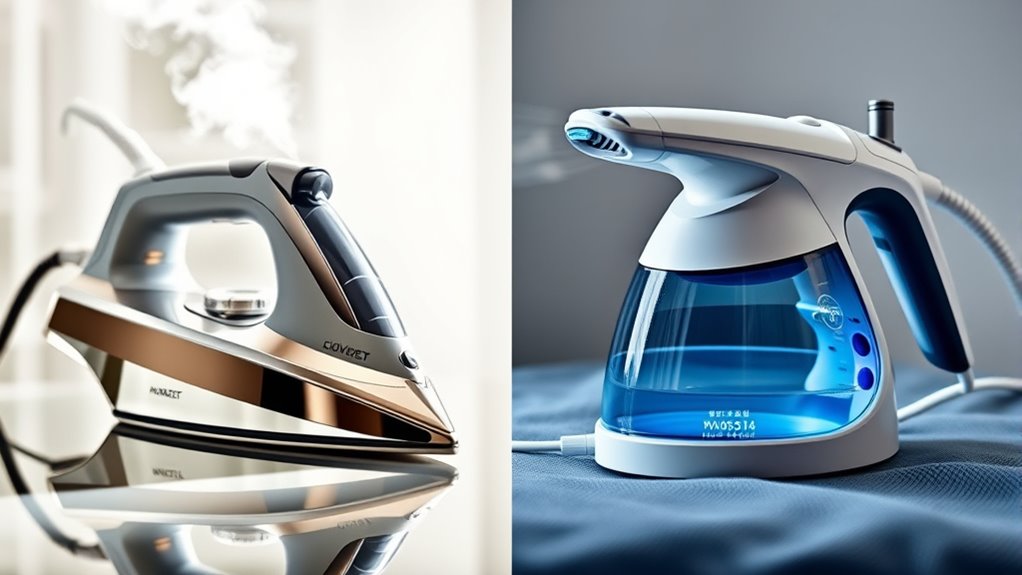
When you steam, the goal is to lift wrinkles without flattening or compressing the fabric too much. For thicker or stiffer fabrics, like denim or heavy cotton, steaming can loosen fibers, making wrinkles easier to smooth out with less risk of scorch marks or shiny spots. On delicate materials, steaming is often preferred because it minimizes direct contact and heat, reducing chances of burning or shining. The key to effective steaming is maintaining the right distance—usually a few inches—between the steamer head and your fabric and using slow, deliberate passes to ensure even coverage. Additionally, proper fabric care techniques can extend the life of your clothes and keep them looking their best. While irons excel at creating sharp creases and pressed finishes, steaming provides a more relaxed, natural look, often preferred for casual wear or garments that need gentle handling. When you’re working with mixed fabrics or items that combine different textures, steaming can be a safer, more versatile option. For example, you can easily refresh a silk blouse or a velvet dress with steaming, whereas using an iron might risk crushing or shiny patches. Conversely, if you’re preparing pants or shirts that require crisp collars, cuffs, or pleats, an iron’s direct heat and pressure deliver a more polished appearance. Ultimately, your choice depends on fabric types and the steaming techniques you prefer. If you want quick, smooth results on sturdy fabrics, an iron is your best bet. But if you’re after a gentle, quick refresh on delicate or mixed textiles, a steamer offers a safer, more flexible solution. Understanding your fabrics and mastering steaming techniques ensures you’ll keep your wardrobe looking its best without damaging your clothes.
As an affiliate, we earn on qualifying purchases.
Frequently Asked Questions
Which Device Is Faster for Quick Touch-Ups?
When considering quick touch-ups, a steamer is usually faster because it heats up quickly and easily removes wrinkles without needing an ironing board. This efficiency helps preserve fabric longevity since steam is gentler and less likely to damage delicate fibers. An iron may take longer due to setting up and pressing, but it can be more effective for stubborn wrinkles. Overall, for speed and wrinkle removal efficiency, a steamer is your best bet.
Can Steamers Damage Delicate Fabrics?
Like a gentle rain, steaming can refresh your fabrics, but it does come with risks. Steaming risks include potential damage to delicate fabrics if you’re not careful, making fabric safety a concern. While steamers are generally safe, improper use might cause water spots or weaken fibers. Always test on hidden areas first and use the right settings to avoid damaging delicate fabrics, ensuring your clothes stay pristine.
Are Steamers Effective on Heavy, Wrinkled Clothing?
You’ll find steamers effective on heavy, wrinkled clothing because their steam penetration can reach deep into fabric fibers, loosening stubborn wrinkles. While they may take a bit longer than irons, steamers deliver powerful fabric penetration, making them suitable for bulky or heavily wrinkled garments. Just make certain you use enough steam and hold the steamer close to the fabric for maximum steam penetration, smoothing out even the most stubborn creases.
Do Irons or Steamers Save More Energy?
You’re wondering if irons or steamers save more energy. Generally, steamers are more energy-efficient because they use less power during operation and heat up faster. Irons tend to have higher power consumption due to their heating plates and pressing mechanisms. If you want to reduce energy use, choosing a steamer can be a smarter option, as it consumes less power and heats quickly, saving both energy efficiency and time.
Which Option Is Better for Travel Convenience?
When considering travel convenience, steamers often come out on top. They’re lightweight, portable, and easier to pack, providing quick touch-ups without taking up much storage space. You can easily carry a steamer in your bag or suitcase, making it ideal for on-the-go use. Irons tend to be bulkier and require a stable surface, making steamers the better choice for portable convenience and storage ease during travel.
As an affiliate, we earn on qualifying purchases.
Conclusion
Choosing between an iron and a steamer depends on your needs, but think of it like choosing a paintbrush—you’ll pick what suits your style best. An iron offers crisp, professional results for stubborn wrinkles, while a steamer’s gentle touch is perfect for delicate fabrics. Consider your wardrobe and lifestyle, and you’ll make the right call. Whichever you choose, both tools can keep your clothes looking fresh and neat, like a well-choreographed dance.
As an affiliate, we earn on qualifying purchases.
garment steamer for delicate fabrics
As an affiliate, we earn on qualifying purchases.
As an affiliate, we earn on qualifying purchases.
Halloween Picks
halloween
As an affiliate, we earn on qualifying purchases.