
If you’re looking for the best smart thermostats of 2025 to keep your home cozy and energy-efficient, I’ve found some top options. Models from Ecobee, Sensi, Honeywell, and Amazon offer seamless smart home integration, sleek designs, and customizable features. They support various HVAC systems, saving you money while maximizing comfort. Whether you prefer touchscreens, voice control, or advanced sensors, there’s a perfect choice for you. Keep going to discover more options that fit your needs.
Key Takeaways
- Compatibility with major smart home platforms ensures seamless automation and remote control for optimal comfort.
- Features like auto-scheduling, occupancy detection, and geofencing help maintain a cozy home efficiently.
- Modern designs with responsive touchscreens and customizable interfaces enhance user experience.
- ENERGY STAR-rated models deliver significant energy savings while maintaining consistent indoor temperatures.
- Easy DIY installation with clear guidance and compatibility with various HVAC systems makes setup straightforward.
ecobee Smart Thermostat Essential, Wi-Fi Programmable Thermostat

If you’re looking for a smart thermostat that combines energy efficiency with easy installation, the ecobee Smart Thermostat Essential is an excellent choice. It’s Energy Star certified and compatible with Siri, Alexa, Google Assistant, and Apple HomeKit, making it versatile for any smart home setup. The color LCD touchscreen and touchpad control make adjusting settings simple, while features like auto-away, auto-scheduling, and fan control help optimize comfort and savings. Designed for wall mounting, it supports most 24 VAC HVAC systems, with options for battery power or a Power Extender Kit if needed. Setup is quick through the app, and long-term updates keep it running smoothly.
Best For: homeowners seeking an energy-efficient, easy-to-install smart thermostat compatible with multiple voice assistants and smart home systems.
Pros:
- Energy Star certified, capable of saving up to 23% annually on heating and cooling costs.
- Compatible with popular smart home ecosystems like Apple HomeKit, Google Assistant, Alexa, and Siri.
- Simple DIY installation with a user-friendly app setup, no C-wire needed when using the Power Extender Kit.
Cons:
- May require technical support or HVAC panel opening for older or complex systems.
- Limited to most 24 VAC HVAC systems; not compatible with some specialized or proprietary systems.
- Some users report minor issues with initial setup or connectivity, though overall satisfaction is high.
Sensi Smart Thermostat with Wi-Fi and Alexa Compatibility
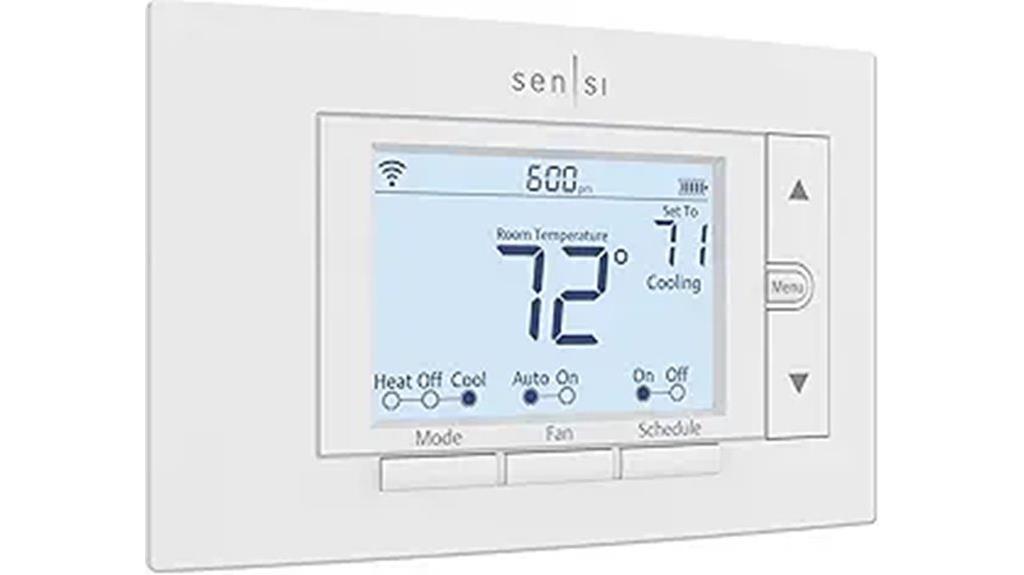
The Sensi Smart Thermostat with Wi-Fi and Alexa Compatibility stands out for homeowners seeking an easy-to-install, energy-efficient climate control solution that integrates seamlessly with popular voice assistants. It works with most residential HVAC systems, often without needing a C-wire, making DIY installation simple. Features like auto changeover, fan control, and a backlit 5-inch display enhance usability. ENERGY STAR-certified, it helps save around 23% on energy costs through scheduling and remote access. The mobile app allows remote adjustments and system monitoring, while smart maintenance alerts keep your HVAC running smoothly. Overall, it’s a reliable, user-friendly thermostat with high customer satisfaction.
Best For: homeowners seeking an easy-to-install, energy-efficient smart thermostat compatible with voice assistants and most residential HVAC systems.
Pros:
- Easy DIY installation with no C-wire required in most cases.
- ENERGY STAR-certified, offering significant energy savings through scheduling and remote access.
- Compatible with popular voice assistants like Alexa, Google Assistant, SmartThings, and Vera.
Cons:
- Slight delay (20-25 seconds) between temperature change and HVAC activation.
- Limited usage data, primarily only daily runtime, which may not suit users needing detailed insights.
- Some users report compatibility issues with Bixby and occasional setting delay concerns.
ecobee Smart Thermostat Enhanced Programmable Wifi Thermostat
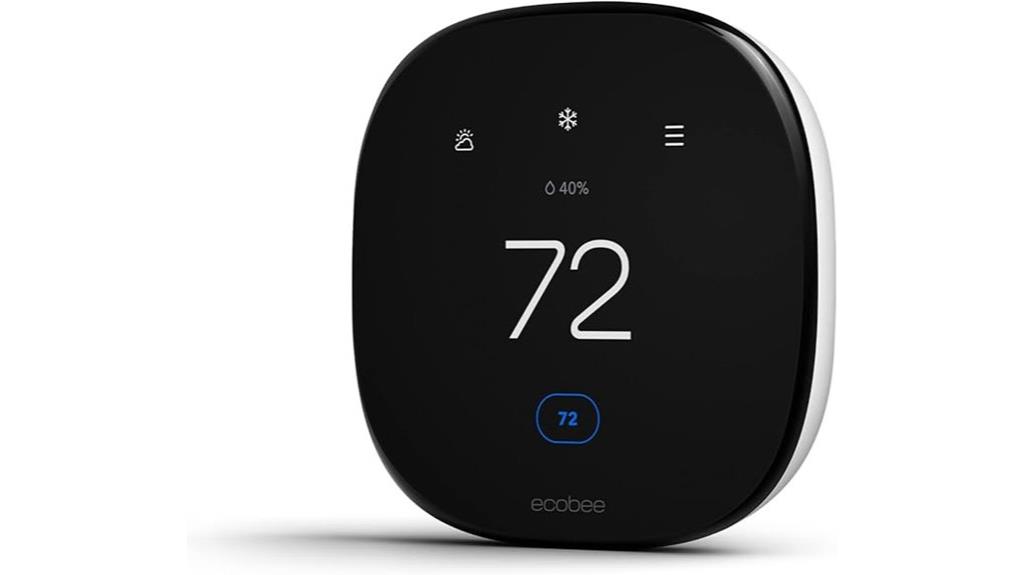
For homeowners seeking a reliable, energy-saving smart thermostat that’s easy to install and compatible with most HVAC systems, the ecobee Smart Thermostat Enhanced offers an excellent solution. It automatically adjusts temperatures based on occupancy, sleep, and away modes, saving up to 26% annually. Compatible with most 24 VAC systems and featuring the Power Extender Kit (PEK), it’s suitable even without a C-wire. Its intuitive touchscreen, app control, and integration with platforms like Alexa, Google Assistant, and Apple HomeKit make it versatile. With SmartSensor support and Eco+ features, it guarantees consistent comfort and efficiency, making it a top choice for modern, connected homes.
Best For: homeowners seeking a reliable, energy-efficient smart thermostat that is easy to install and compatible with most HVAC systems, including those without a C-wire.
Pros:
- Automates temperature adjustments to increase energy savings up to 26% annually.
- Compatible with a wide range of HVAC systems and smart home platforms like Alexa, Google Assistant, and Apple HomeKit.
- Features an intuitive touchscreen, app control, and SmartSensor support for enhanced comfort and flexibility.
Cons:
- Installation can be challenging without proper wiring knowledge, especially if a C-wire is absent.
- Some users report issues with display visibility in narrow hallways or website login persistence.
- Pricing and model availability may vary; sourcing the correct model requires careful verification.
Amazon Smart Thermostat
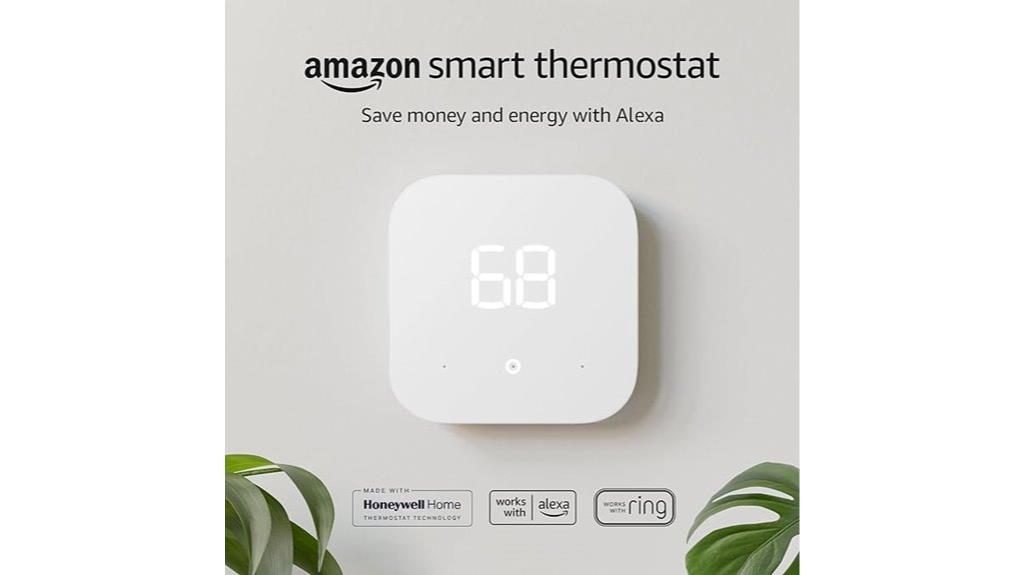
Someone looking for an affordable yet reliable smart thermostat will find the Amazon Smart Thermostat a practical choice, especially if they already use Alexa-enabled devices. Released in 2021, it’s compatible with most 24V HVAC systems, including force air, heat pumps, and radiant boilers, but not with high-voltage systems like electric baseboard heat. It’s ENERGY STAR certified, saving about $50 annually, and eco-friendly with Gold certification. Easy to install, it connects via Wi-Fi and can be controlled through Alexa, voice commands, or the app. Its sleek design and automation features make it a cost-effective upgrade for smarter, more efficient home comfort.
Best For: homeowners with existing Alexa devices seeking an affordable, easy-to-install smart thermostat to improve home comfort and energy efficiency.
Pros:
- Easy to install and set up, typically within 30-60 minutes
- Compatible with most 24V HVAC systems, including force air, heat pumps, and radiant boilers
- Integrates seamlessly with Alexa for voice control and automation features
Cons:
- Not compatible with high-voltage systems like electric baseboard heat
- Occasional app crashes on older Android devices can hinder scheduling and control
- Lacks a built-in microphone, requiring an Alexa-enabled device for voice commands
ecobee Smart Thermostat Premium with Sensors

If you’re looking to maximize energy efficiency and home comfort, the ecobee Smart Thermostat Premium with Sensors stands out as an excellent choice. It can save up to 26% annually on heating and cooling costs and is ENERGY STAR certified. The thermostat detects open windows or doors for five minutes, pausing HVAC to save money and reduce environmental impact. SmartSensors optimize temperature in key rooms, eliminating hot or cold spots. It supports scheduling vacation holds and is compatible with solar systems. Plus, it offers advanced air quality monitoring, smart security features, occupancy sensing, and voice control options, making it a versatile, eco-friendly addition to any smart home.
Best For: homeowners seeking to maximize energy efficiency, improve home comfort, and integrate smart security and air quality monitoring in their connected home.
Pros:
- Saves up to 26% annually on heating and cooling costs, ENERGY STAR certified.
- Supports advanced features like occupancy sensing, air quality monitoring, and smart security alerts.
- Compatible with various HVAC systems and integrates seamlessly with voice assistants like Alexa, Google, and Apple HomeKit.
Cons:
- Installation may require additional components like the Power Extender Kit for certain homes.
- Some features, such as Siri integration, require an Apple Home Hub for full functionality.
- The device’s advanced features and app customization may have a learning curve for new users.
Sensi Lite Smart Thermostat
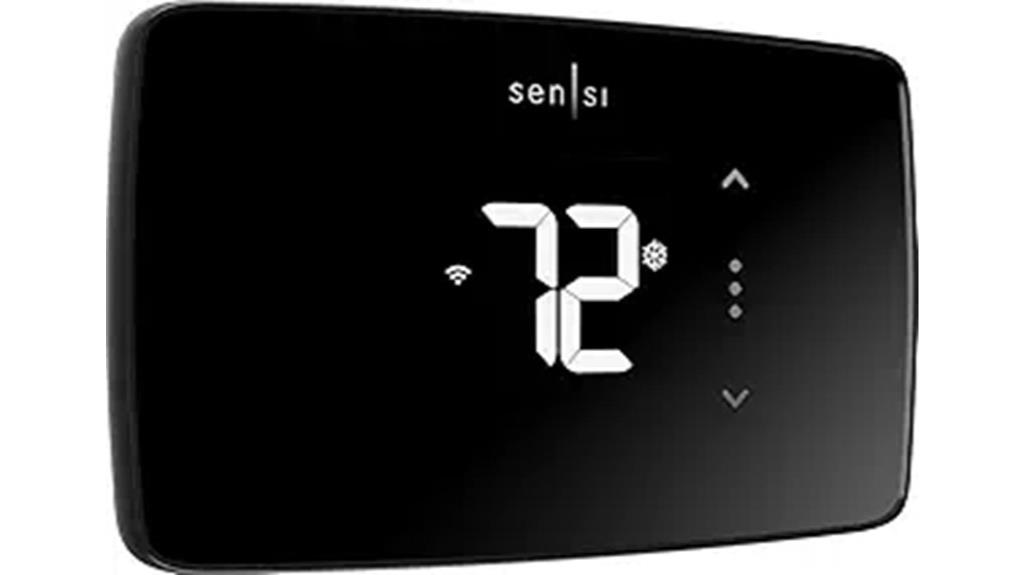
The Sensi Lite Smart Thermostat stands out as an ideal choice for homeowners seeking an easy-to-install, energy-efficient device with remote control capabilities. It’s Energy Star certified, Wi-Fi enabled, and designed for DIY setup, taking most users about 10 minutes. The bright LCD display and app control make managing your home’s temperature simple from anywhere. Compatible with Alexa, Google Assistant, and SmartThings, it supports automatic and programmable schedules. While some users experience Wi-Fi connectivity hiccups, especially after power outages, the device’s sleek design, energy savings, and privacy-conscious features make it a solid option for basic HVAC setups. It’s perfect for those wanting a straightforward, smart thermostat.
Best For: homeowners seeking an easy-to-install, energy-efficient smart thermostat with remote control and basic HVAC compatibility.
Pros:
- Easy DIY installation with clear instructions and built-in level
- Remote management via app on Android and iOS devices
- Energy-saving features and compatibility with popular voice assistants like Alexa and Google Assistant
Cons:
- Occasional Wi-Fi connectivity issues, especially after power outages or battery changes
- Limited functionality for complex HVAC systems or those without a C-wire
- Long wait times for customer support and potential setup challenges in older wiring configurations
meross Smart WiFi Thermostat with Voice Control
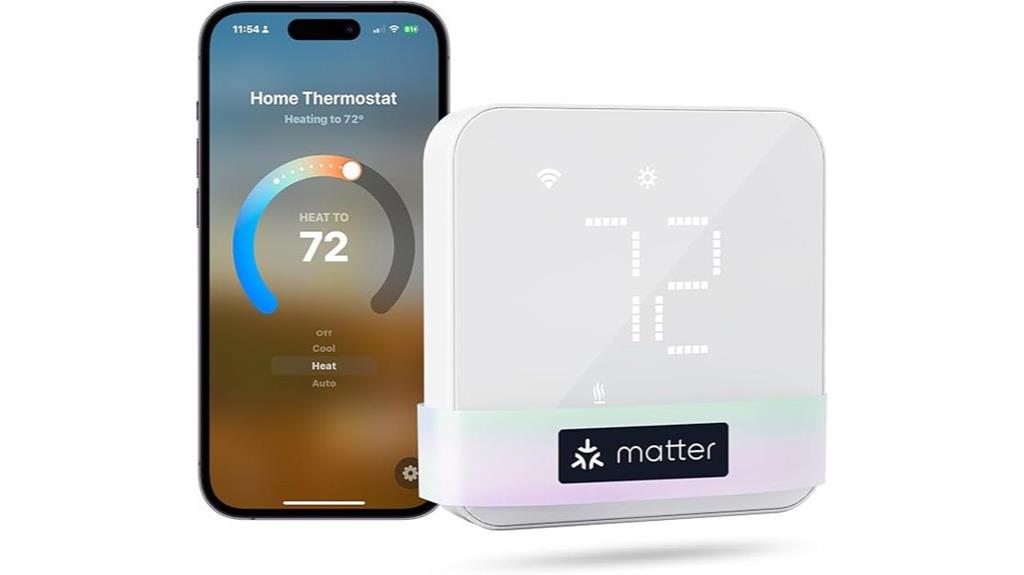
The meross Smart WiFi Thermostat with Voice Control stands out for users seeking versatile compatibility and easy installation in their smart homes. Supporting 95% of HVAC systems, including heat pumps and conventional setups, it’s perfect for most homes—except electric baseboard heaters. It requires a C-wire, but a meross adapter can help if needed. With Matter support and integration with Apple Home, Alexa, Google Assistant, and SmartThings, it offers seamless voice control and remote management via app. Its sleek design, scheduled routines, energy monitoring, and user-friendly setup make it a reliable, affordable choice for maintaining comfort and efficiency.
Best For: homeowners seeking a versatile, easy-to-install smart thermostat compatible with most HVAC systems and integrated with popular smart home platforms.
Pros:
- Supports 95% of HVAC systems, including heat pumps and conventional setups, making it highly versatile.
- Seamless integration with Matter technology and compatibility with Apple Home, Alexa, Google Assistant, and SmartThings for voice and remote control.
- User-friendly design with easy app setup, scheduling, energy monitoring, and a sleek modern appearance.
Cons:
- Not compatible with electric baseboard heaters.
- Requires a C-wire for installation; a meross adapter might be needed if absent.
- Limited to Wi-Fi networks at 2.4GHz, which may affect connectivity in some environments.
RTH9585WF1004 Wi-Fi Smart Color Thermostat
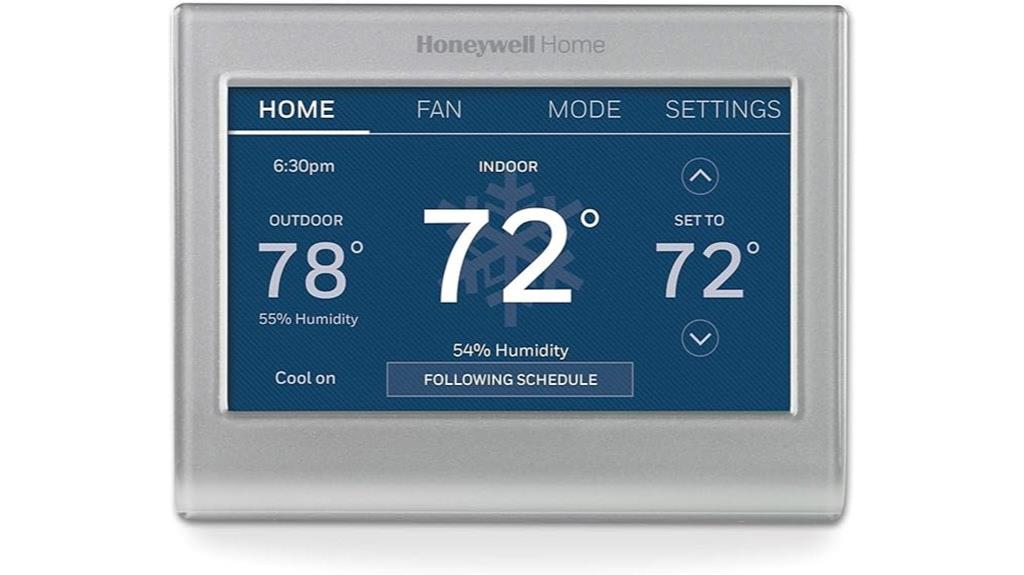
For homeowners seeking a customizable and easy-to-use smart thermostat, the RTH9585WF1004 Wi-Fi Smart Color Thermostat stands out. Its vibrant, color-changing display allows you to match your décor effortlessly, and the bright touchscreen makes navigation simple. With 7-day programming, you can set flexible schedules that fit your routine or take advantage of utility peak rates. Certified by Energy Star, it helps lower energy use with monthly reports and tips, plus potential rebates. It’s compatible with various heating systems and integrates seamlessly with Alexa for voice control. Remote access via Wi-Fi keeps you in command from anywhere, making this thermostat both practical and stylish.
Best For: homeowners seeking a customizable, easy-to-use smart thermostat that integrates seamlessly with smart home systems and offers energy-saving features.
Pros:
- Vibrant, customizable color display that matches décor effortlessly
- 7-day programmable scheduling for flexible routines and peak rate savings
- Compatible with various heating systems and supports remote access via Wi-Fi
Cons:
- Requires a C-wire for installation, which may not be available in all homes
- Not compatible with electric baseboard heating (120-240V)
- May involve additional costs for installation or compatibility upgrades
Emerson Sensi Touch Wi-Fi Smart Thermostat

If you’re seeking a smart thermostat that combines sleek design with easy DIY installation, the Emerson Sensi Touch Wi-Fi Smart Thermostat is an excellent choice. Its large 4.3-inch color touchscreen looks modern and is available in black, white, or silver. It supports control via app, voice commands, and is compatible with Alexa, Google Assistant, and Apple HomeKit. The setup is straightforward, with step-by-step app instructions and built-in leveling. It’s Energy Star certified, saving about 23% on energy, and includes features like auto changeover and geofence technology. Overall, it’s reliable, user-friendly, and perfect for upgrading your home’s comfort effortlessly.
Best For: homeowners seeking a stylish, easy-to-install smart thermostat that offers reliable remote control and energy savings.
Pros:
- Sleek, modern design with a large 4.3-inch color touchscreen display.
- Easy DIY installation with step-by-step app guidance and built-in leveling.
- Compatible with Alexa, Google Assistant, and Apple HomeKit for voice control.
Cons:
- Requires a common (C) wire for installation, which may not be present in all systems.
- Initial setup issues such as Wi-Fi connectivity or calibration may occur but are typically resolvable.
- Calibration of temperature sensors can take up to a day before full accuracy is achieved.
Google Nest Thermostat, Smart WiFi Thermostat
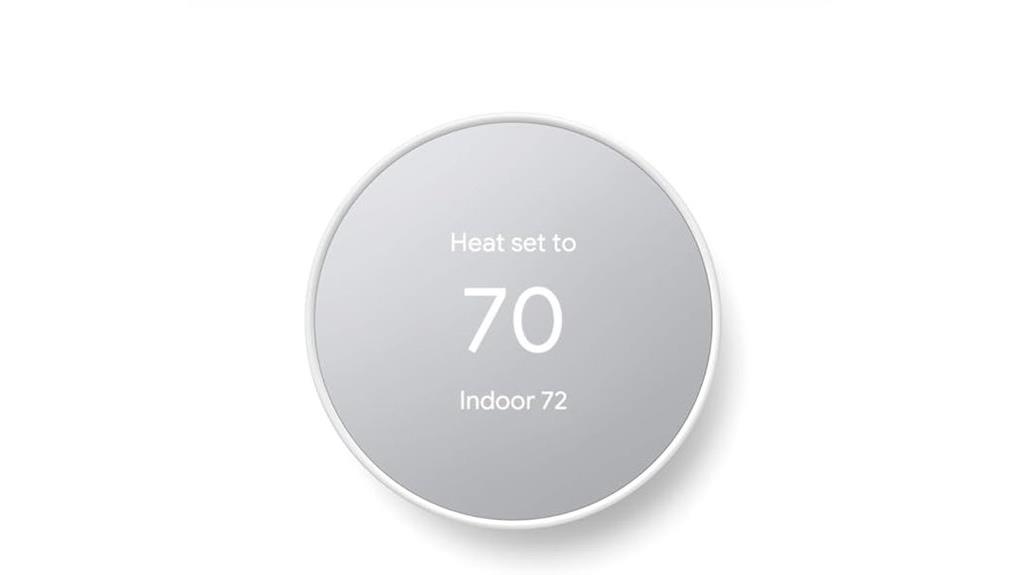
Anyone looking to reduce energy bills without sacrificing comfort will appreciate the Google Nest Thermostat’s smart features. It’s ENERGY STAR certified and works with most systems, even those without a C wire, though some setups may need an extra power accessory. With Wi-Fi connectivity, I can control it remotely via my smartphone or tablet, making adjustments on the go. It automatically lowers heating or cooling when I’m away, saving energy. Plus, its system monitoring alerts me to potential issues, helping maintain efficiency. The sleek design and compatibility with Google Assistant and other smart devices make it a versatile, user-friendly choice for keeping my home cozy and energy-smart.
Best For: homeowners seeking an energy-efficient, easy-to-control smart thermostat compatible with a wide range of heating and cooling systems.
Pros:
- ENERGY STAR certified, promoting energy savings and efficiency
- Wi-Fi connectivity allows remote control via smartphones or tablets
- Monitors HVAC system health and provides maintenance alerts
Cons:
- Lacks a lock feature to prevent unauthorized adjustments
- Some system setups, like heating-only or zone-controlled systems, may require additional accessories or a C wire
- Limited interface options without a dedicated lock or manual control features
Google Nest Learning Thermostat (4th Gen, 2024) with Temperature Sensor

The Google Nest Learning Thermostat (4th Gen, 2024) with Temperature Sensor stands out as an ideal choice for homeowners who want a sleek, intelligent thermostat that seamlessly adapts to their routines. Its polished Obsidian finish and large touchscreen display make it both stylish and easy to read from across the room. The thermostat learns your preferences over time, automatically adjusting settings to save energy—up to 12% on heating and 15% on cooling. Compatible with most 24V systems and supporting voice control via Google Assistant, Alexa, or Siri, it offers simple installation and convenient remote management through the Google Home app.
Best For: homeowners seeking a modern, intelligent thermostat with sleek design and energy-saving capabilities that easily integrates into existing smart home systems.
Pros:
- Elegant, minimal design with a large, clear touchscreen display for easy readability
- Learns user routines to automatically optimize comfort and reduce energy bills
- Compatible with most 24V systems and supports voice control via major platforms
Cons:
- Potential wiring compatibility issues, especially with the 4th generation model in certain systems or regions
- Setup can be challenging if wiring or voltage requirements are not met, leading to errors
- Support quality varies, and troubleshooting wiring or power issues may be difficult for some users
RTH8800WF2022 T5 WiFi Smart Thermostat

The RTH8800WF2022 T5 WiFi Smart Thermostat excels for homeowners seeking a user-friendly, customizable device that seamlessly integrates with popular smart platforms like Alexa, Google Assistant, and Apple HomeKit. I appreciate its 7-day programmable schedule, geofence technology, and auto modes that optimize comfort and energy savings. It’s ENERGY STAR certified, helping reduce bills with monthly reports and tips. Installation is straightforward, but compatibility depends on having a C-wire, especially with oil systems. While some users report connectivity issues, overall, it offers reliable control, easy smartphone access, and a sleek touchscreen that makes managing home temperatures simple and effective.
Best For: homeowners seeking a user-friendly, customizable smart thermostat that integrates easily with Alexa, Google, and Apple HomeKit to enhance comfort and energy efficiency.
Pros:
- Easy to install and operate with a sleek touchscreen interface
- Compatible with multiple smart home platforms for seamless control
- Helps reduce energy bills through scheduling, auto modes, and ENERGY STAR certification
Cons:
- Requires a C-wire for proper installation, which may not be available in all systems
- Some users experience connectivity issues or software quirks
- Certain features can be hidden in setup menus, making them less intuitive to access
Honeywell Home Smart Thermostat, WiFi Compatible
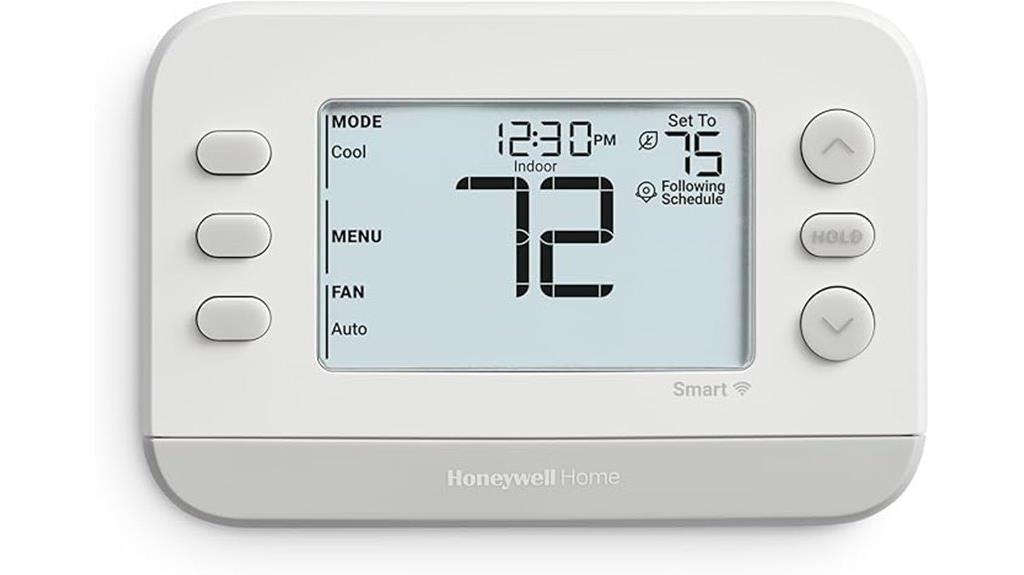
If you’re looking for a reliable smart thermostat that seamlessly integrates with your existing smart home devices, the Honeywell Home Smart Thermostat with WiFi compatibility is an excellent choice. It works well with Amazon Alexa, Google Assistant, and Apple HomeKit, offering flexible scheduling, app control, and demand response features. Its LCD display and interchangeable decorative accents let you customize its look. Installation is straightforward if you have a C-wire, and setup via the First Alert app is generally smooth. Customers praise its ease of use and reliable connectivity, though some experience initial WiFi or app setup hiccups. Overall, it’s a solid, affordable option for remote control and smart home integration.
Best For: homeowners seeking a reliable, customizable, and easy-to-integrate smart thermostat compatible with major voice assistants and smart home platforms.
Pros:
- Easy installation and straightforward setup, especially with existing C-wire
- Compatible with Amazon Alexa, Google Assistant, and Apple HomeKit for seamless voice control and automation
- Customizable display and scheduling options, including various time formats and aesthetic accents
Cons:
- Initial WiFi and app setup can be challenging for some users
- Limited advanced scheduling flexibility and manual adjustments may be necessary
- Basic controls once integrated with Apple HomeKit, with limited automation options
Honeywell T6 Pro Smart Thermostat with 5-Year Warranty
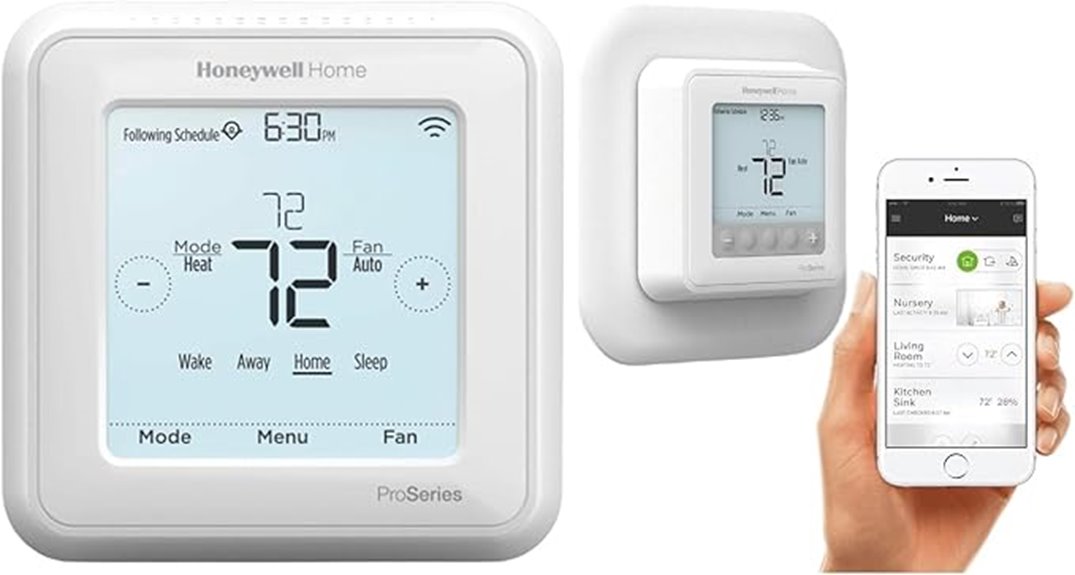
Looking for a smart thermostat that combines reliability with advanced features? The Honeywell T6 Pro Smart Thermostat with a 5-year warranty is a solid choice. It supports up to 3 heat/2 cool heat pump or 2 heat/2 cool conventional systems, with a sleek Wi-Fi touchscreen for easy control. Compatible with Apple HomeKit and Alexa, it integrates seamlessly into your smart home setup. Its flexible scheduling, geofence technology, and learning capabilities adapt to your lifestyle, while remote control via the Honeywell app offers convenience. Backed by a 5-year warranty, it’s designed for modern homes seeking energy efficiency and reliable performance.
Best For: homeowners seeking a reliable, feature-rich smart thermostat compatible with popular smart home platforms and energy-efficient for modern living.
Pros:
- Supports multiple HVAC system configurations including heat pump and conventional setups
- Seamless integration with Apple HomeKit, Amazon Alexa, and remote app control
- Flexible scheduling, geofence technology, and learning capabilities for customized comfort
Cons:
- Installation may be complex for some users, requiring professional assistance
- Occasional compatibility issues with certain HVAC systems reported by users
- Larger dimensions may require careful wall space planning during installation
Vine Thermostat with Touchscreen and WiFi Compatibility
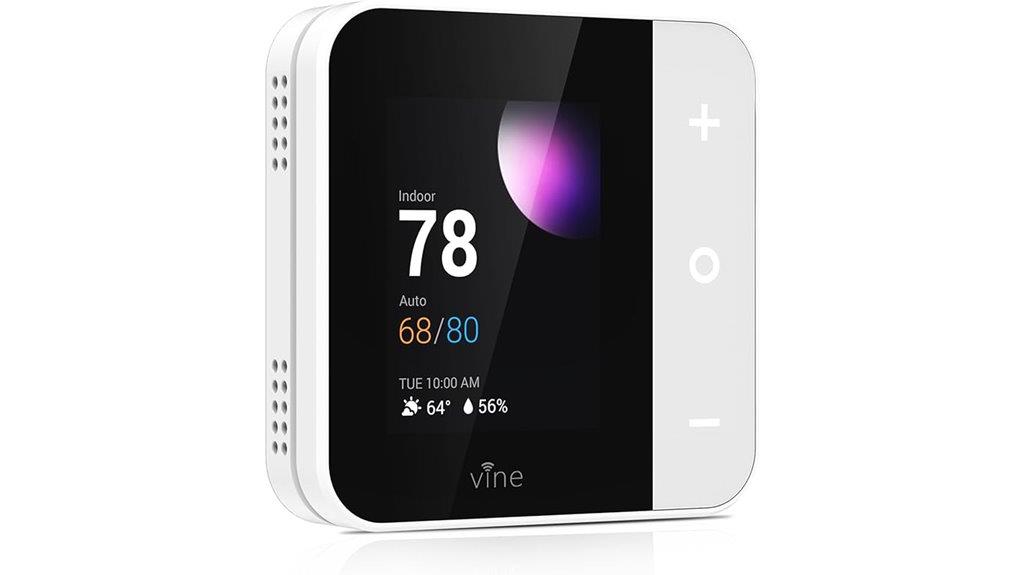
For homeowners seeking a sleek, user-friendly smart thermostat that seamlessly integrates with popular voice assistants and mobile apps, the Vine Thermostat with Touchscreen and WiFi Compatibility stands out. It features a 2.8-inch color touchscreen with LCD backlight and modern square design, offering control via touch, app, or voice. Compatible with Alexa, Google Assistant, Android, iOS, and the Smart Life app, it’s easy to install—usually in under 20 minutes—and supports most HVAC systems with a C-wire. Its functions include scheduling, auto modes, geofencing, energy savings, and remote control. Overall, it’s a versatile, energy-efficient option that combines style and convenience.
Best For: homeowners looking for a stylish, easy-to-install smart thermostat with voice and app control that is compatible with most HVAC systems.
Pros:
- Modern 2.8-inch touchscreen with LCD backlight offers intuitive control and sleek design
- Supports a wide range of voice assistants and mobile apps, including Alexa, Google Assistant, Android, and iOS
- Easy installation process typically completed in under 20 minutes with comprehensive setup guidance
Cons:
- Some users have experienced initial temperature calibration issues requiring firmware updates
- Temperature accuracy may vary initially, affecting optimal climate control until adjustments are made
- App operation and connectivity can occasionally be problematic without firmware updates or support assistance
Factors to Consider When Choosing Smart Thermostats

When choosing a smart thermostat, I take into account how effectively it functions with my HVAC system and how straightforward it is to install. I also seek features that integrate seamlessly with my smart home configuration and assist in conserving energy. Finally, I focus on the user interface to make certain it’s easy and intuitive to operate.
Compatibility With HVAC Systems
Ensuring your smart thermostat is compatible with your HVAC system is essential for a smooth installation and peak performance. First, check that it supports your system type—whether it’s forced air, a heat pump, boiler, or electric baseboard—by reviewing the manufacturer’s compatibility list. Next, verify if your home’s wiring includes a C-wire, as many smart thermostats need it for proper power, especially in systems without dedicated power sources. Also, confirm that the thermostat supports your specific configurations, like multi-stage heating or dual-fuel setups, to unlock full functionality. Additionally, verify the communication protocols (Wi-Fi, Zigbee, Z-Wave, Matter) align with your existing smart home ecosystem for seamless integration. Consulting online checkers or HVAC professionals can help confirm compatibility without additional wiring or adapters.
Ease of Installation
Choosing a smart thermostat that’s easy to install can save you time and frustration. Many models are designed for DIY setups, providing clear instructions and mounting hardware to make the process straightforward. Compatibility with your existing wiring, especially the presence of a C-wire, is key to a smooth installation and reliable operation. Some thermostats include built-in levels and wire labels, helping you wire and mount correctly. Keep in mind that installation complexity varies depending on your HVAC system; systems without a C-wire might need adapters or kits. To ensure a hassle-free experience, I recommend reading user reviews and manufacturer guides to confirm the thermostat’s ease of installation for your specific setup. This way, you can enjoy smart comfort without the headache.
Smart Home Integration
Smart home integration is a crucial factor to contemplate because it determines how well your thermostat communicates with your existing smart devices and platforms. I look for compatibility with popular systems like Alexa, Google Assistant, Apple HomeKit, and Samsung SmartThings to guarantee smooth control and automation. Voice control is a huge plus, allowing me to change settings hands-free through my smart speaker. Many thermostats also serve as hubs, coordinating routines across various devices for a more seamless smart home experience. Remote access via mobile apps lets me monitor and adjust my thermostat anytime, anywhere. Compatibility with protocols like IFTTT and Matter expands automation possibilities, enabling customized triggers and inter-device communication. Prioritizing integration makes managing my smart home simpler, more efficient, and more responsive.
Energy Saving Features
Energy-saving features are key to getting the most out of a smart thermostat. These features can cut energy use by up to 26% through auto-scheduling, occupancy detection, and adaptive temperature adjustments. Many models include geofencing, which uses your phone’s location to turn heating or cooling up or down when you’re home or away, preventing waste. Energy modes like Eco+ or SmartEnergy optimize HVAC operation by considering occupancy, weather, and routines, maximizing savings. Real-time energy reports and tips help me spot inefficiencies and make smarter adjustments. Additionally, compatibility with utility rebate programs and demand response allows controlled energy use during peak times. These features not only lower bills but also support eco-friendly living.
User Interface Design
A user-friendly interface is essential when selecting a smart thermostat, as it directly impacts how easily I can adjust and manage my home’s climate. An intuitive display with clear visuals and simple controls makes setup and daily use straightforward. Touchscreens with responsive menus let me quickly access scheduling, temperature changes, and system settings without hassle. Customizable display options, like themes and layout, help me tailor the interface for better readability and personal preference. Additionally, physical buttons or knobs should be tactile and easy to operate, especially if I’m in low light or have limited dexterity. A well-organized, clutter-free interface ensures I can swiftly navigate and manage my home’s climate, making the thermostat both functional and enjoyable to use.
Frequently Asked Questions
How Do Smart Thermostats Improve Energy Efficiency and Reduce Utility Bills?
Smart thermostats improve energy efficiency by learning my schedule and adjusting the temperature accordingly, so I don’t waste energy heating or cooling when I’m not home. They also allow me to set specific temperatures remotely, preventing unnecessary energy use. With features like occupancy sensors and usage reports, I can optimize my system, which helps me save on utility bills while maintaining a comfortable home environment effortlessly.
Are Smart Thermostats Compatible With All Home Heating and Cooling Systems?
You might be surprised, but not all smart thermostats play nice with every heating or cooling system. I’ve found that most modern systems are compatible, especially if you choose a versatile model. However, some older or specialized setups could need additional wiring or adapters. I recommend checking your system’s compatibility first or consulting a professional to guarantee seamless integration, so you enjoy all the smart benefits without a hitch.
What Security Features Do Smart Thermostats Offer to Protect User Data?
Smart thermostats prioritize security by offering features like encrypted data transmission, secure Wi-Fi connections, and regular firmware updates to patch vulnerabilities. I also appreciate their multi-factor authentication options and the ability to control access through user permissions. These features help protect my data from hacking and ensure my home’s climate control remains safe and private. It’s reassuring to know my information stays protected while I enjoy the convenience.
Can Smart Thermostats Be Integrated With Existing Smart Home Ecosystems?
Yes, smart thermostats can be integrated with existing smart home ecosystems. I’ve found that most models work seamlessly with popular platforms like Amazon Alexa, Google Assistant, and Apple HomeKit. This means I can control my thermostat through voice commands or apps, and it syncs effortlessly with other smart devices. Integration makes managing my home’s climate more convenient, saving energy and enhancing comfort without needing multiple apps or complicated setups.
How Easy Is It to Install and Set up a Smart Thermostat for Beginners?
Installing and setting up a smart thermostat is surprisingly straightforward for beginners. I found that most models come with clear, step-by-step instructions, and many offer smartphone apps that guide you through the process. Usually, it involves turning off your power, removing the old thermostat, and connecting a few wires. Once installed, I just downloaded the app, followed the prompts, and I was ready to start controlling my home’s temperature remotely.
Conclusion
Choosing the right smart thermostat means finding one that fits your needs, your budget, and your lifestyle. Whether you prioritize seamless compatibility, advanced features, or user-friendly design, there’s a perfect option out there for you. So, take your time, weigh your options, and make a choice that keeps your home cozy, your energy bills low, and your peace of mind high. Because a smart thermostat isn’t just a device — it’s your home’s best companion.