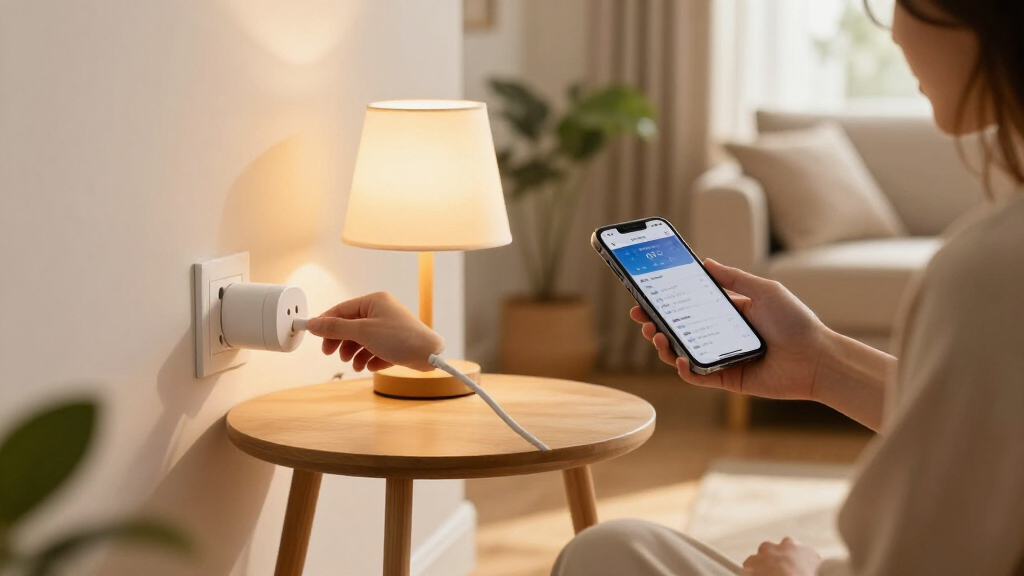

Smart home smart plugs are the cheapest way to make dumb appliances connected, but the gap between the best and worst options is bigger than the price tags suggest. The TP-Link Tapo P125M Matter Smart Plug Mini earns the top spot because Matter support makes it work across Alexa, Google Home, and Apple Home without locking you into one ecosystem. If you want maximum outlets per dollar, the Kasa EP10 4-Pack delivers reliable scheduling and a mature app, while the Amazon Smart Plug is the easiest setup for anyone fully committed to Alexa. The main tradeoffs in this category: ecosystem lock-in versus flexibility, Matter versus older Wi-Fi-only plugs, and multi-pack pricing versus single-plug polish. Keep reading for the full breakdown of all 15 plugs and which one fits your home.
Complete the kit


Key Takeaways
- Matter support was the single biggest differentiator in this lineup — only the Tapo P125M and amazon.com/dp/B089DR29T6?tag=elfysworld-20&ascsubtag=dc-1102467″ target=”_blank” rel=”nofollow sponsored noopener”>amazon.com/dp/B0C36WXGP1?tag=elfysworld-20&ascsubtag=dc-1102467″ target=”_blank” rel=”nofollow sponsored noopener”>Linkind plugs work natively across all three major ecosystems, which future-proofs them as your smart home grows.
- Kasa dominated on app maturity and reliability across four different listings, with more consistent scheduling and remote response than the GHome, Govee, and EIGHTREE alternatives.
- The Amazon Smart Plug and Amazon Basics 4-Pack only make sense inside a fully Alexa household — they lack Google Home and Apple Home support that cheaper third-party plugs include.
- Several products on this list are duplicates under different pack sizes (Kasa EP10, HS103, GHome, EIGHTREE), so the real decision is often about count and ecosystem, not model.
- None of the 15 plugs require a hub, but GHome and EIGHTREE plugs only connect on 2.4GHz networks, which causes setup headaches on newer mesh routers that the Kasa and Tapo plugs handle more gracefully.
| TP-Link Tapo P125M Matter Smart Plug Mini (3-Pack), White |  | Best Overall | Model: Tapo P125M | Pack Size: 3 plugs | Max Load: 15A / 1800W | VIEW LATEST PRICE | See Our Full Breakdown |
| GHome Smart Plug – WiFi Smart Outlet with Alexa & Google Home Compatibility |  | Best Budget Single Plug | Operating Voltage: 120V | Max Wattage: 1200W | Connectivity: 2.4GHz Wi-Fi, Bluetooth | VIEW LATEST PRICE | See Our Full Breakdown |
| Kasa Smart Plug Ultra Mini 15A (EP10) – Smart Home Wi-Fi Outlet |  | Best for Beginners | Max Current: 15A / 1800W | Connectivity: 2.4GHz Wi-Fi | Compatibility: Amazon Alexa, Google Assistant | VIEW LATEST PRICE | See Our Full Breakdown |
| Linkind Matter Smart Plug | 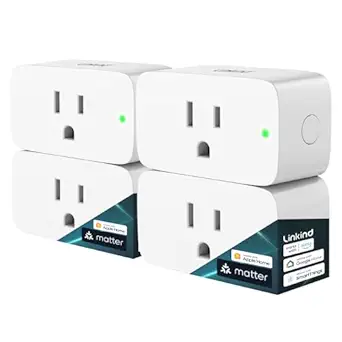 | Best Premium Safety Features | Power Capacity: 1800W / 15A | Connectivity: 2.4GHz Wi-Fi, IPv6 | Protocol: Matter | VIEW LATEST PRICE | See Our Full Breakdown |
| Kasa Smart Plug Ultra Mini 15A (4-Pack), EP10P4 | 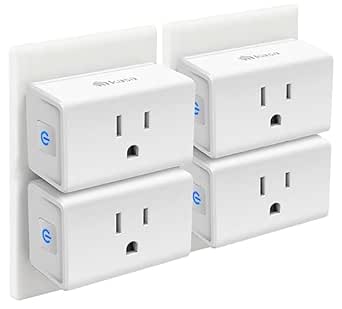 | Best Value Multi-Pack | Model: EP10P4 | Quantity: 4 plugs | Max Load: 15A | VIEW LATEST PRICE | See Our Full Breakdown |
| Govee Smart Plug, WiFi Outlet Compatible with Alexa & Google Assistant, 4 Pack |  | Best for Govee Ecosystem Households | Amperage: 10A | Max Power: 1200W | Voltage: 120V | VIEW LATEST PRICE | See Our Full Breakdown |
| GHome Smart Plug, WiFi Smart Plugs that Work with Alexa and Google Home | 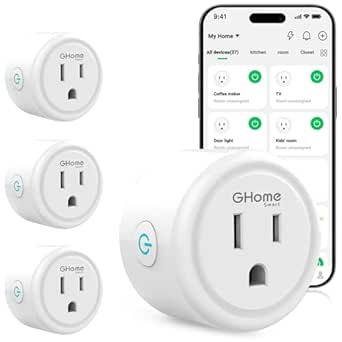 | Best App Flexibility Pick | Connectivity: Bluetooth or WiFi (2.4GHz only) | Voice Assistants: Alexa, Google Assistant (via app linking) | Compatible Apps: GHome, Smart Life, Tuya | VIEW LATEST PRICE | See Our Full Breakdown |
| Amazon Smart Plug, Works with Alexa, Simple Setup, Endless Possibilities |  | Best for Alexa-Only Households | Amperage: 15A max | Voltage: 120VAC, 60Hz | Connectivity: 2.4GHz WiFi (802.11 b/g/n) | VIEW LATEST PRICE | See Our Full Breakdown |
| EIGHTREE 15A Smart Plug (4 Pack), Works with Alexa & Google Home | 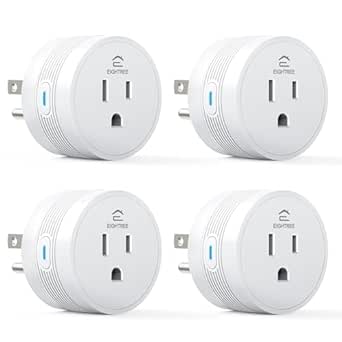 | Best Value for High-Power Appliances | Amperage: 15A | Max Power: 1800W | Operating Voltage: 120V | VIEW LATEST PRICE | See Our Full Breakdown |
| Amazon Basics Smart Plug, Alexa-Enabled, 4-Pack, White |  | Best Budget Alexa Multi-Pack | Quantity: 4-pack | Compatibility: Alexa only | Connectivity: 2.4GHz WiFi | VIEW LATEST PRICE | See Our Full Breakdown |
| Kasa Smart Plug HS103P4, Smart Wi-Fi Outlet, 4-Pack |  | Best Overall | Wattage: 1800 watts | Voltage: 120 VAC | Connectivity: 2.4GHz Wi-Fi | VIEW LATEST PRICE | See Our Full Breakdown |
| EIGHTREE Smart Plug WiFi Outlet, 4-Pack |  | Best Value 4-Pack | Operating Voltage: 120 volts | Wattage: 1800 watts | Connectivity: Wi-Fi (2.4GHz only) | VIEW LATEST PRICE | See Our Full Breakdown |
| GHome Smart Plug – WiFi Smart Outlet with Timer | 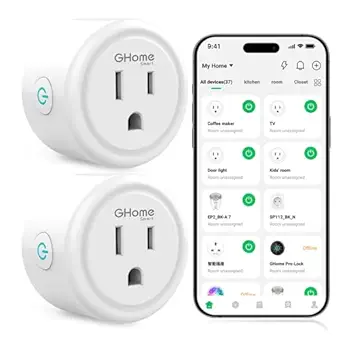 | Best for Multi-App Flexibility | Operating Voltage: 120 volts | Wattage: 1200 watts | Connectivity: Wi-Fi (2.4GHz only) | VIEW LATEST PRICE | See Our Full Breakdown |
| Kasa Smart Plug HS103P2 (2-Pack) |  | Best Starter Pair | Model: HS103P2 | Connectivity: 2.4GHz Wi-Fi | Voltage: 120 VAC | VIEW LATEST PRICE | See Our Full Breakdown |
| GHome Smart Plug Mini (4 Pack) | 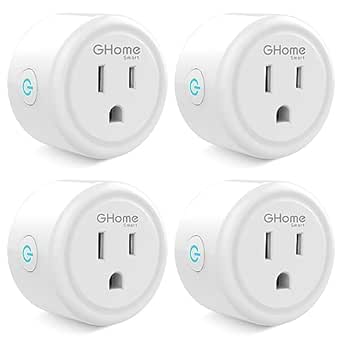 | Best Compact Pick | Voltage: 120V | Amperage: 10A | Plug Type: Type B | VIEW LATEST PRICE | See Our Full Breakdown |
| smart home smart plug | Connectivity | Hub Required |
|---|---|---|
| TP-Link Tapo P125M Matter Smar | 2.4GHz Wi-Fi, Bluetooth | — |
| GHome Smart Plug | 2.4GHz Wi-Fi, Bluetooth | No |
| Kasa Smart Plug Ultra Mini 15A | 2.4GHz Wi-Fi | No |
| Linkind Matter Smart Plug | 2.4GHz Wi-Fi, IPv6 | Yes for major platforms (AiDot app works hub-free) |
| Kasa Smart Plug Ultra Mini 15A | — | — |
| Govee Smart Plug | Bluetooth or WiFi (2.4GHz only) | No |
| GHome Smart Plug | Bluetooth or WiFi (2.4GHz only) | No |
| Amazon Smart Plug | 2.4GHz WiFi (802.11 b/g/n) | No |
| EIGHTREE 15A Smart Plug | 2.4GHz WiFi, Bluetooth (setup) | — |
| Amazon Basics Smart Plug | 2.4GHz WiFi | No |
| Kasa Smart Plug HS103P4 | 2.4GHz Wi-Fi | — |
| EIGHTREE Smart Plug WiFi Outle | Wi-Fi (2.4GHz only) | — |
| GHome Smart Plug | Wi-Fi (2.4GHz only) | — |
| Kasa Smart Plug HS103P2 | 2.4GHz Wi-Fi | — |
| GHome Smart Plug Mini | — | No |
More Details on Our Top Picks
TP-Link Tapo P125M Matter Smart Plug Mini (3-Pack), White
This 3-pack earns the top spot because it solves the problem most smart plugs create: platform lock-in. With native Matter support, a single plug works cleanly across Apple Home, Alexa, Google Home, and SmartThings, which the Kasa EP10 simply cannot match with its Alexa-and-Google-only approach. The local LAN control is the other standout — lights and appliances keep responding even when the internet drops, a reliability feature the GHome plug lacks. Bluetooth onboarding also makes first-time setup faster than QR-code-only Matter rivals like the Linkind. The tradeoffs are real but manageable: it’s 2.4GHz Wi-Fi only, and buyers without a Matter-compatible hub or controller lose the multi-platform advantage that justifies picking it over cheaper options.
Pros:- Matter support works across all four major smart home platforms
- Local LAN control keeps plugs working during internet outages
- Compact housing leaves the second outlet free
- Quick Bluetooth-based onboarding
Cons:- 2.4GHz Wi-Fi only — no 5GHz support
- Full feature set requires a Matter-compatible hub or controller
Best for: Multi-platform smart home households — especially Apple Home users or anyone mixing Alexa and Google devices under one roof
Not ideal for: Buyers who only use Alexa and don’t plan to switch platforms — the Kasa EP10 delivers similar day-to-day performance without needing a Matter controller
- Model:Tapo P125M
- Pack Size:3 plugs
- Max Load:15A / 1800W
- Connectivity:2.4GHz Wi-Fi, Bluetooth
- Protocol:Matter
- Compatible Platforms:Apple Home, Alexa, Google Home, Samsung SmartThings
- Safety Certification:UL Certified, flame-retardant design
- Warranty:2-year limited
Our verdict“The smartest pick for anyone building a mixed-ecosystem smart home that needs to survive platform changes and internet outages.”
GHome Smart Plug – WiFi Smart Outlet with Alexa & Google Home Compatibility
For buyers who just need one inexpensive plug rather than a multi-pack, this GHome unit covers the basics without demanding a hub or an ecosystem commitment. It handles voice control through Alexa, Google Assistant, and SmartThings, plus scheduling, timers, and group control — features that put it ahead of the Amazon Smart Plug, which locks you into Alexa exclusively. Flexibility extends to the app side too, since it works with GHome, Smart Life, or Tuya. The compromises show up in power handling: at 1200 watts, it carries less headroom than the Kasa EP10‘s 1800W rating, so space heaters and high-draw appliances are off the table. Setup also runs through the GHome app before linking to your voice assistant, an extra step that less patient buyers will notice.
Pros:- No hub required for setup or daily use
- Works with three voice ecosystems including SmartThings
- Group control and family sharing built in
- Flexible app support across GHome, Smart Life, and Tuya
Cons:- 1200W max load is lower than the 15A/1800W standard elsewhere in this roundup
- Requires initial setup in the GHome app before connecting Alexa or Google
Best for: First-time buyers or renters who want one cheap, no-hub plug for a lamp, fan, or coffee maker
Not ideal for: Owners of high-wattage appliances like space heaters or air conditioners — the 1200W ceiling is lower than most rivals
- Operating Voltage:120V
- Max Wattage:1200W
- Connectivity:2.4GHz Wi-Fi, Bluetooth
- Compatible Devices:Amazon Alexa, Google Assistant, SmartThings
- Control Methods:App, remote, touch, voice
- Certifications:ETL, FCC listed
- Hub Required:No
Our verdict“A sensible low-commitment entry point for light-duty devices, as long as you stay under its lower power ceiling.”
Kasa Smart Plug Ultra Mini 15A (EP10) – Smart Home Wi-Fi Outlet
If the idea of Matter controllers and hubs sounds like homework, the Kasa EP10 strips smart plugs down to their most frictionless form. Plug it in, connect to 2.4GHz Wi-Fi through the well-regarded Kasa app, and it just works with Alexa or Google Assistant — no hub, no account juggling across three apps like the GHome plug sometimes requires. Compared with the Tapo P125M, it gives up Matter and Apple Home support, but plenty of households run only one assistant and never miss them. The full 15A/1800W rating also means it can safely run a space heater or humidifier, unlike lower-wattage budget plugs. The main limitation is that single-unit purchase: outfitting several rooms means the 4-pack version is the better arithmetic.
Pros:- Genuinely simple setup with no hub required
- Full 15A/1800W capacity handles high-draw appliances
- Mature Kasa app with scheduling and countdown timers
- UL certified with a 2-year warranty
Cons:- Alexa and Google Assistant only — no Apple Home or SmartThings support
- 2.4GHz Wi-Fi only
- Single-plug packaging makes multi-room expansion pricier
Best for: Smart home newcomers with Alexa or Google who want plug-and-play setup and one trustworthy app
Not ideal for: Apple Home households or anyone planning a multi-platform setup — no Matter, no HomeKit, no path to either
- Max Current:15A / 1800W
- Connectivity:2.4GHz Wi-Fi
- Compatibility:Amazon Alexa, Google Assistant
- Control Methods:App, voice, scheduling
- Certification:UL certified
- Hub Required:No
- Warranty:2 years
Our verdict“The easiest on-ramp into smart plugs for single-assistant households that value simplicity over flexibility.”
Linkind Matter Smart Plug
Where the Tapo P125M wins on polish, the Linkind wins on protection. Beyond the usual 1800W/15A rating, it adds short-circuit and overload protection plus fire-resistant housing, making it the pick for unattended devices like aquarium heaters or garage freezers where a failure mode matters. Like the Tapo, it supports Matter across Apple Home, Alexa, Google Home, and SmartThings, with offline LAN control when the internet dies. Its distinctive quirk is the AiDot app route: you can run it without a Matter hub, but doing so means using a less familiar app ecosystem rather than staying inside Apple Home or the Alexa app. Compared with the Kasa EP10, the safety layer and platform breadth are real upgrades — if you’re willing to accept a slightly rougher software experience and the 2.4GHz-only limit.
Pros:- Overload and short-circuit protection beyond standard plugs
- Matter support across all major platforms
- Offline LAN control without internet
- Fire-resistant materials with FCC certification
Cons:- Requires a Matter-certified hub for major platform control
- AiDot app route is clunkier than Kasa or Tapo alternatives
- 2.4GHz Wi-Fi only
Best for: Owners of unattended or higher-risk devices — freezers, heaters, pumps — who want overload and short-circuit protection
Not ideal for: Buyers who want the most polished app experience — AiDot is less refined than Kasa or Tapo software
- Power Capacity:1800W / 15A
- Connectivity:2.4GHz Wi-Fi, IPv6
- Protocol:Matter
- Compatible Platforms:Apple Home, Alexa, Google Home, SmartThings, AiDot
- Safety Features:Overload protection, short-circuit protection, fire-resistant housing
- Certification:FCC certified
- Hub Required:Yes for major platforms (AiDot app works hub-free)
Our verdict“The choice when electrical protection matters as much as convenience — ideal for devices running while you’re away.”
Kasa Smart Plug Ultra Mini 15A (4-Pack), EP10P4
This 4-pack is where cost-per-outlet math works in your favor, and unlike many budget bundles from Govee or EIGHTREE, it carries UL certification and Kasa’s consistently reliable app. The ultra-compact housing genuinely leaves the second wall outlet usable — a small thing that matters enormously once you’ve stacked two plugs on one socket. Feature-wise it edges past its sibling the EP10 single by adding SmartThings support and Away Mode, which randomly toggles lights to make an empty house look occupied. It also works with both the Kasa and Tapo apps, a nice bridge if you later add Matter-era Tapo gear. The limitations are familiar: 2.4GHz-only Wi-Fi, a 15A ceiling that rules out some heavy appliances, and no Apple Home support — for that, the Tapo P125M remains the answer.
Pros:- Best cost-per-plug path in the Kasa lineup
- Away Mode simulates occupancy for security
- Works with Alexa, Google Assistant, and SmartThings
- Ultra-compact body keeps the second outlet free
Cons:- 2.4GHz Wi-Fi only
- 15A limit excludes some high-power appliances
- No Apple Home or Matter support
Best for: Households outfitting multiple rooms at once who want dependable scheduling and security automation without per-plug subscriptions
Not ideal for: Apple Home users or anyone with a 5GHz-only mesh network — neither is supported here
- Model:EP10P4
- Quantity:4 plugs
- Max Load:15A
- Wi-Fi:2.4GHz
- Voice Assistants:Alexa, Google Assistant, Samsung SmartThings
- Automation Features:Scheduling, timers, Away Mode
- Certifications:UL, FCC, IC, RoHS
- Operating Temperature:32°F to 104°F
- Warranty:2 years
Our verdict“The most practical bundle for bulk smart-plug adoption — reliable, safe, and feature-rich for everything short of HomeKit.”
Govee Smart Plug, WiFi Outlet Compatible with Alexa & Google Assistant, 4 Pack
This 4-pack stands out for its dual Bluetooth and WiFi connectivity, which gives it a reliability edge over WiFi-only options like the Amazon Basics 4-Pack — if your router hiccups, the Bluetooth fallback keeps nearby control working. Compared with the EIGHTREE 15A 4-Pack, though, the Govee is limited to 10A/1200W, so it handles lamps, fans, and humidifiers well but should not be trusted with space heaters or air fryers. The Govee Home app supports scheduling and group control, which matters if you’re automating a whole room rather than a single device. The tradeoff is ecosystem lock-in of a mild kind: everything routes through Govee’s app rather than the more widely supported Smart Life platform, and 5GHz networks are off the table.
Pros:- Bluetooth plus WiFi connectivity for a more stable connection
- Group control unifies multiple plugs in the Govee Home app
- Compact housing leaves the second outlet usable
- No hub required and works with Alexa and Google Assistant
Cons:- 10A/1200W rating excludes high-power appliances
- Locked to the Govee Home app rather than Smart Life or Tuya
Best for: Govee smart light owners who want one app controlling plugs, strips, and bulbs together
Not ideal for: Anyone running high-wattage appliances like heaters or air fryers — the 10A ceiling is too low
- Amperage:10A
- Max Power:1200W
- Voltage:120V
- Connectivity:Bluetooth or WiFi (2.4GHz only)
- Voice Assistants:Alexa, Google Assistant
- Certifications:ETL, FCC
- Quantity:4-pack
- Hub Required:No
Our verdict“The right pick if you already own Govee lights and want plugs that live in the same app without adding another platform.”
GHome Smart Plug, WiFi Smart Plugs that Work with Alexa and Google Home
What separates this GHome plug from nearly everything else in this lineup is multi-app compatibility: it works with the GHome app, Smart Life, and Tuya, so you can slot it into an existing Tuya-based setup instead of adopting yet another platform. That flexibility beats the Amazon Smart Plug, which is welded shut inside the Alexa ecosystem. Setup is also friendlier than average thanks to Bluetooth-assisted pairing, a small thing that removes the most frustrating step of smart plug ownership. The catches are real: it’s 2.4GHz only, and voice control requires connecting through the app first — it will not link directly to Alexa or Google Home, which trips up buyers expecting instant pairing. Compared with the Govee 4-Pack, it trades Govee’s polished scheduling UI for broader third-party integration.
Pros:- Works with GHome, Smart Life, and Tuya apps for ecosystem flexibility
- Bluetooth-assisted setup simplifies first-time pairing
- Group control and family sharing built in
- Scheduling and random timer modes for lamps and holiday lights
Cons:- 2.4GHz WiFi only
- Cannot connect directly to Alexa or Google Home — app setup is mandatory first
Best for: Smart Life or Tuya app users who want to add plugs without fragmenting their setup across platforms
Not ideal for: Buyers who want zero app setup — voice assistants won’t link until the plug is configured through the app first
- Connectivity:Bluetooth or WiFi (2.4GHz only)
- Voice Assistants:Alexa, Google Assistant (via app linking)
- Compatible Apps:GHome, Smart Life, Tuya
- Features:Scheduling, timers, group control, device sharing
- Hub Required:No
- Color:White
Our verdict“The pick for anyone already invested in the Tuya/Smart Life world who wants plugs that just blend in.”
Amazon Smart Plug, Works with Alexa, Simple Setup, Endless Possibilities
No plug in this roundup is easier to set up. Amazon’s zero-touch Wi-Fi simple setup means an Echo-owning household can have this running in under a minute — a genuine advantage over the GHome Smart Plug, which demands app configuration before voice control will even link. It also auto-reconnects after power and Wi-Fi outages, a reliability detail cheaper plugs often fumble. But the tradeoff is severe: it is Alexa-exclusive, with no Google Home, SmartThings, or Matter support, so if you ever switch assistants this plug becomes a dumb outlet adapter. At 15A it does outmuscle the Govee 10A 4-Pack for heavier loads like coffee makers. Buyers should also note it’s a single plug, so multi-room projects add up quickly compared with the 4-packs elsewhere in this guide.
Pros:- Fastest setup in the lineup with zero-touch Alexa pairing
- 15A rating handles coffee makers and higher-draw appliances
- Automatically reconnects after power or Wi-Fi outages
- Compact body keeps the second outlet free
Cons:- Alexa-only — no Google, SmartThings, or Matter support
- Sold as a single unit, making multi-room setups more expensive
Best for: Households with an Echo device that want plug-and-play setup with no third-party app
Not ideal for: Google Home or Apple Home users, or anyone who wants future Matter compatibility
- Amperage:15A max
- Voltage:120VAC, 60Hz
- Connectivity:2.4GHz WiFi (802.11 b/g/n)
- Voice Assistants:Alexa only
- Size:3.2 x 1.5 x 2.2 inches
- Hub Required:No
- Warranty:1-year limited
- Use:Indoor only
Our verdict“If Alexa runs your home and you value setup simplicity over flexibility, this is the one to buy — everyone else should keep shopping.”
EIGHTREE 15A Smart Plug (4 Pack), Works with Alexa & Google Home
This is the plug to buy when wattage matters. At 15A/1800W, it safely runs air fryers, heaters, and coffee makers that would overload the Govee 10A 4-Pack — and it does so in a compact 1.2-inch body that fits behind furniture where bulkier plugs fail. Its ecosystem reach is also wider than the Amazon Basics 4-Pack: Alexa, Google Home, and SmartThings are all supported through the Smart Life app, so you’re not locked to one assistant. The Smart Life platform itself is a strength, since it’s one of the most mature third-party ecosystems with reliable scheduling and sunrise/sunset automation. The compromises are familiar ones — 2.4GHz WiFi only — plus the fact that Bluetooth is used just for setup, not ongoing control, unlike the always-available Bluetooth on the Govee.
Pros:- 15A/1800W rating handles high-power appliances safely
- Works with Alexa, Google Home, and SmartThings
- Compact 1.2-inch design fits crowded outlets and tight spaces
- FCC and ETL certified with no hub required
Cons:- 2.4GHz WiFi only, no 5GHz support
- Bluetooth is setup-only, not a fallback control method
Best for: Buyers automating high-draw appliances like air fryers, heaters, or coffee makers on a budget
Not ideal for: SmartThings-averse buyers or anyone wanting ongoing Bluetooth control when WiFi drops
- Amperage:15A
- Max Power:1800W
- Operating Voltage:120V
- Connectivity:2.4GHz WiFi, Bluetooth (setup)
- Compatibility:Alexa, Google Assistant, SmartThings
- App:Smart Life
- Certifications:FCC, ETL
- Quantity:4-pack
Our verdict“The best combination of power handling, ecosystem breadth, and price in this batch — ideal for appliance automation.”
Amazon Basics Smart Plug, Alexa-Enabled, 4-Pack, White
This 4-pack is the pragmatic middle ground between the single Amazon Smart Plug and third-party alternatives: you get the same frictionless Alexa-first experience — including zero-touch linking — but at multi-pack economics, with everything managed in the Alexa app and no third-party app download at all. That single-app simplicity is genuinely rare; the GHome Smart Plug requires app setup before voice linking, and the EIGHTREE 4-Pack routes through Smart Life. Schedules, routines, and sunrise/sunset automation all work well for lighting scenes. The obvious limitation is the same one facing the Amazon Smart Plug: Alexa exclusivity. No Google Home, no SmartThings, no Matter — this is a commitment to Amazon’s ecosystem. Wi-Fi is 2.4GHz only, and unlike the EIGHTREE, the power rating is standard rather than heavy-duty, so treat heaters as off-limits.
Pros:- Zero-touch linking with no third-party app required
- Multi-pack value for outfitting multiple rooms
- Supports schedules, routines, and sunrise/sunset automation
- Compact design leaves adjacent outlets free
Cons:- Alexa-only with no Google Home or Matter support
- Limited to 2.4GHz Wi-Fi networks
Best for: Alexa households outfitting several rooms at once who want one app and no setup headaches
Not ideal for: Mixed-ecosystem homes or anyone who might switch to Google Home — Alexa is the only option here
- Quantity:4-pack
- Compatibility:Alexa only
- Connectivity:2.4GHz WiFi
- Hub Required:No
- App:Alexa app
- Features:Schedules, routines, sunrise/sunset automation
- Color:White
Our verdict“The easiest way to put Alexa control in four rooms at once, provided you’re certain Amazon is your long-term assistant.”
Kasa Smart Plug HS103P4, Smart Wi-Fi Outlet, 4-Pack
This 4-pack from Kasa earns the top spot because it removes nearly every friction point that trips up first-time smart plug buyers. Setup happens entirely through the Kasa app, which connects directly to Alexa and Google Home without a third-party middleman — a sharper experience than the EIGHTREE or GHome plugs, which funnel you through the Smart Life or GHome app before voice control works. The 15-amp, 1800-watt rating means it can handle heavier loads like space heaters and humidifiers, where the 1200-watt GHome options fall short. Scheduling, countdowns, and remote control from anywhere are all handled cleanly, and UL certification backs the safety story. The tradeoff: these are full-sized plugs that can block a second outlet, unlike the slimmer GHome Mini, and 2.4GHz-only Wi-Fi limits compatibility with mesh networks that split bands automatically.
Pros:- Direct Kasa app integration with Alexa and Google Home, no intermediary app required
- 15A/1800W rating handles demanding appliances like heaters and humidifiers
- Scheduling, timers, and countdown automation included
- UL certified for safety
Cons:- Full-size housing can block an adjacent outlet
- 2.4GHz Wi-Fi only, which complicates setup on some mesh networks
Best for: Households building out a multi-room smart home who want reliable high-capacity plugs with the least setup hassle
Not ideal for: Buyers with tight outlets or power strips — the full-size body will cover neighboring sockets, making the compact GHome Mini a smarter fit
- Wattage:1800 watts
- Voltage:120 VAC
- Connectivity:2.4GHz Wi-Fi
- Compatible Devices:Alexa, Google Home, Smartphone
- Certification:UL certified
- Quantity:4-pack
Our verdict“If you want a four-pack you can install once and never think about again, this is the safest and most capable choice in the lineup.”
EIGHTREE Smart Plug WiFi Outlet, 4-Pack
EIGHTREE’s 4-pack makes sense for buyers outfitting several rooms on a budget without dropping down to an underpowered plug. The 15-amp rating matches the Kasa HS103P4’s capacity, so you’re not sacrificing load handling for savings the way you would with the 10-amp GHome Mini. Setup gets a boost from Bluetooth-assisted pairing through the Smart Life app, and the round compact housing sits tighter against the wall than Kasa’s full-size design. The real tradeoff is software: unlike the Kasa plugs, which talk to Alexa and Google directly, these must first be registered in Smart Life, adding a step that less patient households will notice. SmartThings support is a genuine plus over Kasa, though, and the 2.4GHz-only limitation is the same constraint nearly every plug in this roundup carries.
Pros:- Full 15A/1800W capacity matches pricier plugs
- Bluetooth-assisted setup simplifies pairing
- SmartThings support in addition to Alexa and Google Home
- Compact round design fits tight spaces
Cons:- Requires Smart Life app registration before voice control works
- 2.4GHz Wi-Fi only, no 5GHz support
Best for: Budget-conscious buyers who need four full 15A plugs for lamps, fans, and coffee makers across multiple rooms
Not ideal for: Anyone who wants the shortest possible setup path — the mandatory Smart Life registration makes first-time configuration clunkier than Kasa’s direct app
- Operating Voltage:120 volts
- Wattage:1800 watts
- Connectivity:Wi-Fi (2.4GHz only)
- Compatible Devices:Alexa, Google Home, SmartThings
- Control Method:Remote and voice-activated
- Certifications:ETL, FCC
- Quantity:4-pack
Our verdict“A sensible mid-pack pick when you need four capable plugs and don’t mind one extra setup step to get there.”
GHome Smart Plug – WiFi Smart Outlet with Timer
This single GHome plug stands apart on one unusual strength: it works with three different apps — GHome, Smart Life, and Tuya. That flexibility matters if you’ve already standardized on one ecosystem, since you can fold this plug into an existing Tuya or Smart Life setup instead of running yet another app alongside it, something neither the Kasa HS103P2 nor the Amazon Smart Plug can match. Voice control through Alexa and Google Assistant covers the hands-free side, and the touch control on the plug itself gives you a physical fallback that pure-app plugs lack. The catch is capacity: at 1200 watts, it’s rated well below the 1800-watt Kasa and EIGHTREE options, so high-draw appliances are off the table. And like the GHome Mini, it must first be claimed in the GHome app before it will link to voice assistants.
Pros:- Compatible with GHome, Smart Life, and Tuya apps for ecosystem flexibility
- Physical touch control on the plug body
- Scheduling and timer functions for energy savings
- ETL and FCC listed, no hub required
Cons:- 1200W rating limits it to lighter loads
- Must connect through the GHome app before linking to Alexa or Google Home
- 2.4GHz Wi-Fi only
Best for: Smart home tinkerers already invested in the Tuya or Smart Life ecosystem who want a plug that slots into their existing app
Not ideal for: Owners of power-hungry devices — the 1200W ceiling rules out space heaters, some AC units, and large kitchen appliances
- Operating Voltage:120 volts
- Wattage:1200 watts
- Connectivity:Wi-Fi (2.4GHz only)
- Control Method:App, Remote, Touch, Voice
- Compatible Apps:GHome, Smart Life, Tuya
- Certifications:ETL, FCC Listed
- Color:White
Our verdict“The right single plug for ecosystem loyalists on Tuya or Smart Life — skip it if you need to switch anything heavier than a lamp or fan.”
Kasa Smart Plug HS103P2 (2-Pack)
The 2-pack version of Kasa’s HS103 is the low-commitment entry point into smart plugs, built for the buyer who wants to test the waters with a lamp and a fan before committing to a full house rollout. You get the same direct Kasa-to-Alexa/Google integration and the same 15-amp capacity as the 4-pack HS103P4, just in a smaller box — which makes it a better first purchase than the Amazon Smart Plug if you’re not fully locked into the Alexa ecosystem, since this one also speaks fluent Google Assistant. Scheduling and countdown timers handle the usual automation. Drawbacks mirror the bigger pack: the plug body is wide enough to crowd a neighboring outlet, and 2.4GHz-only networking can frustrate owners of newer routers that combine bands under one network name.
Pros:- Same direct Alexa and Google Home integration as the larger Kasa 4-pack
- Full 15A rating suitable for most household appliances
- Straightforward setup through the Kasa app
- UL certified for safety
Cons:- Plug-in design can block adjacent outlets
- 2.4GHz Wi-Fi only, incompatible with 5GHz networks
Best for: First-time smart home buyers who want to try two plugs before scaling up to a whole-home setup
Not ideal for: Anyone already planning to automate four or more outlets — buying two of these packs costs more upfront than the HS103P4 4-pack
- Model:HS103P2
- Connectivity:2.4GHz Wi-Fi
- Voltage:120 VAC
- Max Amperage:15A (resistive)
- Plug Type:Type B
- Certification:UL certified
- Quantity:2-pack
Our verdict“The ideal trial-size purchase — Kasa reliability and capacity without paying for plugs you may not need yet.”
GHome Smart Plug Mini (4 Pack)
Size is the whole argument here. Measuring roughly 2 by 2 by 1 inches, the GHome Mini sits far closer to the wall than the chunkier Kasa HS103, which means both outlets stay usable on a standard duplex wall plate — a genuine advantage in kitchens and behind furniture where space is at a premium. A 4-pack at this size covers a lot of ground discreetly, and group control in the GHome app lets you toggle an entire room’s worth of plugs at once. The price of that footprint is capacity: the 10-amp, 1200-watt rating is the lowest in this batch, ruling out heaters and anything with a motor surge. Setup also runs through the GHome app first — the same extra step as its single-plug sibling — before Alexa or Google Home can take over. Bluetooth pairing at least softens the initial connection process.
Pros:- Genuinely compact housing leaves adjacent outlets free
- Group control for switching multiple plugs at once
- Bluetooth-assisted pairing over 2.4GHz Wi-Fi
- ETL and FCC certified
Cons:- Lowest power rating in the lineup at 10A/1200W
- Requires GHome app setup before voice assistant linking
- No 5GHz Wi-Fi support
Best for: Apartment dwellers and anyone with crowded outlets who need low-profile plugs for lamps, chargers, and small electronics
Not ideal for: Buyers switching high-wattage gear — at 10A/1200W, this is the least powerful plug in the roundup and shouldn’t carry heating or cooling loads
- Voltage:120V
- Amperage:10A
- Plug Type:Type B
- Network:2.4GHz Wi-Fi + Bluetooth
- Certifications:ETL, FCC
- Dimensions:2″D x 2″W x 1″H
- Pack Size:4 plugs
- Hub Required:No
Our verdict“The pick when outlet real estate matters more than raw power — just keep heaters and big appliances off it.”
How We Picked
I ranked these smart home smart plugs on four buyer-facing criteria. Ecosystem flexibility came first: Matter-ready plugs scored higher than Wi-Fi-only plugs tied to a single app, because most households eventually mix Alexa, Google, or Apple devices. App quality and reliability came second — a smart plug is only as good as its scheduling engine, remote response time, and how often it drops off the network, and Kasa’s Tapo and Kasa apps have a track record the smaller brands can’t match. Setup friction was third, including 2.4GHz-only limitations, QR-code pairing, and how forgiving each plug is with mesh Wi-Fi systems.
The final criterion was value per outlet, which is why multi-packs dominate the middle of the ranking. Where two listings are essentially the same plug in different pack sizes, I treated them as one decision point and ranked them together rather than pretending they’re distinct products. Safety certifications (UL, ETL, FCC) acted as a floor rather than a differentiator — every plug here meets baseline standards, so rankings reflect what actually separates them in daily use.
| smart home smart plug | Hub Required |
|---|---|
| TP-Link Tapo P125M Matter Smar | — |
| GHome Smart Plug | No |
| Kasa Smart Plug Ultra Mini 15A | No |
| Linkind Matter Smart Plug | Yes for major platforms (AiDot app works hub-free) |
| Kasa Smart Plug Ultra Mini 15A | — |
| Govee Smart Plug | No |
| GHome Smart Plug | No |
| Amazon Smart Plug | No |
| EIGHTREE 15A Smart Plug | — |
| Amazon Basics Smart Plug | No |
| Kasa Smart Plug HS103P4 | — |
| EIGHTREE Smart Plug WiFi Outle | — |
| GHome Smart Plug | — |
| Kasa Smart Plug HS103P2 | — |
| GHome Smart Plug Mini | No |
Factors to Consider When Choosing Smart Home Smart Plugs
Before picking a smart plug, it helps to understand what actually causes buyer regret in this category. Most disappointment comes from ecosystem mismatches, Wi-Fi surprises, and buying the wrong number of plugs — not from plug quality itself.Matter, Wi-Fi, and Ecosystem Lock-In
The biggest mistake buyers make is picking a plug for today’s setup instead of tomorrow’s. A plug that only works with Alexa becomes dead weight the moment you add a Google Nest hub or switch to Apple Home. Matter-certified plugs like the Tapo P125M and Linkind work across all three platforms plus Samsung SmartThings, and they’ll keep working as standards evolve. Wi-Fi-only plugs aren’t obsolete — they’re often cheaper and perfectly reliable — but you should confirm they list support for every assistant you currently use or might use within two years. Also check whether a plug requires the manufacturer’s cloud account even when controlled locally; some cheaper brands route every command through their servers, which adds lag and a privacy tradeoff you didn’t sign up for.
2.4GHz vs. 5GHz and Router Compatibility
Nearly every budget smart plug in this category connects only to a 2.4GHz Wi-Fi band, and this is where most setup failures happen. Newer mesh routers often combine both bands under one network name, which can confuse the plug’s pairing process entirely. Before buying, check whether your router lets you temporarily split bands or has a dedicated IoT setting — many modern routers do, and it solves the problem in seconds. Kasa and Tapo plugs tend to handle band-steering better than lesser-known brands, which is one reason they rank higher despite similar specs. If you live in a dense apartment building, also consider that the 2.4GHz band is crowded, and plugs in far corners of your home may struggle with dropouts that no app update can fix.
Amperage, Size, and Outlet Real Estate
Most plugs here are rated 15 amps, which covers lamps, fans, humidifiers, and coffee makers — but not space heaters, hair dryers, or anything with a motor that draws heavy startup current. Overloading a smart plug isn’t just a malfunction risk; it’s a fire risk, so always check the wattage label on the appliance before plugging in. Physical size matters more than people expect: ultra-mini designs like the Kasa EP10 and GHome Mini leave the second outlet in a standard wall plate free, while bulkier plugs block it entirely. If you’re outfitting a power strip, note that oversized plugs will crowd out neighbors, and most manufacturers advise against using smart plugs on surge-protected strips because they can interfere with pairing.
Energy Monitoring: When It’s Worth Paying For
Some smart plugs report real-time energy usage, and it’s a feature people either love or never open. It genuinely pays off if you want to find energy-hungry appliances, verify a device actually turned off, or track a freezer that’s cycling too often. For simple on/off automation of lamps and fans, energy monitoring adds cost and app complexity with little daily benefit. In this lineup, the Tapo P125M includes monitoring while most of the budget 4-packs skip it — a reasonable split, since multi-packs usually go behind furniture where nobody checks the data. If monitoring matters, buy one or two capable plugs for high-draw appliances rather than upgrading an entire multi-pack.
Schedules, Timers, and Away-Mode Logic
The real value of a smart plug is automation you set once and forget, and scheduling quality varies more between brands than any spec sheet reveals. Look for sunrise/sunset triggers (no manual clock changes twice a year), random on/off “away mode” that mimics occupancy for vacations, and countdown timers that turn devices off after a set runtime. Kasa’s app leads this lineup on automation depth, while some budget brands only offer basic fixed-time schedules. Another overlooked question: does the plug remember its schedule when the internet drops? Locally executed schedules keep working during outages; cloud-dependent ones don’t. If your automations are security-related, that difference matters.
Buying the Right Quantity Without Overbuying
Multi-packs dominate this category because the per-plug price drops sharply, but buying eight plugs when you need three is money sitting in a drawer. A practical approach: start with a 4-pack for your highest-value spots — typically a lamp, a fan, a coffee maker, and one appliance you always forget to unplug. Live with those for a month, then expand only where automation actually changed your routine. Single and 2-pack options like the Kasa HS103P2 make sense for testing a brand before committing to its ecosystem across your whole home. Also resist mixing too many brands: juggling four different apps for four different plug families erases most of the convenience that made you buy them.
Frequently Asked Questions
Do I need a smart home hub to use these smart plugs?
No — every plug on this list connects directly to your home Wi-Fi and works through its own app plus a voice assistant, so no hub is required. That said, a hub becomes useful if you expand beyond plugs into bulbs, locks, and sensors, because hubs like SmartThings or an Echo with a built-in Zigbee radio can coordinate scenes across brands. Matter-compatible plugs like the Tapo P125M give you flexibility either way: they work standalone over Wi-Fi today and can join a Matter controller later for local, faster automation. The practical takeaway is that you shouldn’t buy a hub just for plugs, but choosing Matter-ready plugs now keeps the hub option open without extra cost.
Can smart plugs control any appliance, like heaters or air conditioners?
Only within their amperage rating, and this is where buyers get into trouble. The 15-amp plugs in this lineup handle roughly 1,800 watts, which covers lamps, fans, humidifiers, coffee makers, and most TVs — but not space heaters, hair dryers, irons, or large window AC units that draw more, especially at startup. Exceeding the rating can overheat the plug and creates a genuine fire hazard, not just a malfunction. For heavy appliances, look for purpose-built high-amperage smart plugs or a smart relay installed at the breaker. Also avoid plugging anything with a motor into a plug rated below its startup surge, even if the running wattage seems to fit.
Will smart plugs still work if my Wi-Fi or internet goes down?
It depends on how the schedule is executed, and this varies by brand more than by price. If the plug stores its schedule locally, on/off times keep firing during an internet outage and you can still toggle it manually from home over your local network. If the schedule lives in the manufacturer’s cloud, an outage stops all automation even though the physical button still works. Kasa and Tapo plugs generally handle local execution well, which is part of why they rank highly here. If your automations matter for security — making the house look occupied while you’re away — read the fine print on offline behavior before buying, not after a blackout teaches you the hard way.
Is Matter support worth choosing over a cheaper Wi-Fi plug?
If you already own devices across multiple ecosystems or plan to keep building your smart home, yes — Matter plugs cost only slightly more and eliminate the lock-in that makes older plugs frustrating. A Matter plug responds to Alexa, Google Home, Apple Home, and SmartThings without separate configurations, and updates arrive through the standard rather than each vendor’s app. The catch: if you’re a single-assistant household with no plans to change, a proven Wi-Fi plug like the Kasa EP10 does everything you need for less per outlet. Treat Matter as insurance against ecosystem changes rather than a feature that improves daily use today.
Why does my smart plug keep disconnecting, and can I fix it?
The most common cause is a weak 2.4GHz signal — all the budget plugs in this roundup use that band only, and it gets congested in apartments or crowded neighborhoods. Moving your router closer, splitting your 2.4GHz and 5GHz bands into separate network names, or enabling your router’s IoT mode usually fixes chronic dropouts. Another frequent culprit is the plug losing power after a firmware update halfway through, so avoid unplugging a plug right after setup. If one specific plug drops while others on the same network stay connected, the fault is usually that unit’s placement or hardware, and swapping it to a nearer outlet will tell you which. Persistent problems across a whole brand usually point to overcrowded cloud servers rather than your network.
Conclusion
The right pick depends less on specs and more on your ecosystem and how many outlets you’re filling. For best overall, the TP-Link Tapo P125M 3-Pack wins on Matter support, energy monitoring, and an app that won’t fight you — it’s the plug I’d build a new smart home around. For best value, the Kasa EP10 4-Pack delivers dependable scheduling and mature software at the lowest cost per reliable outlet. The Linkind Matter Smart Plug is the best premium-ecosystem alternative if you want Matter flexibility without the Tapo ecosystem. For beginners, the Amazon Smart Plug offers the most frictionless setup imaginable — as long as Alexa is your only assistant. And for whole-home coverage on a tight budget, the GHome and EIGHTREE 4-packs cover the outlets the bigger brands can’t reach affordably, provided your router plays nice with 2.4GHz devices. Match the plug to the assistant you actually use, buy the pack size you actually need, and the rest of the decision makes itself.