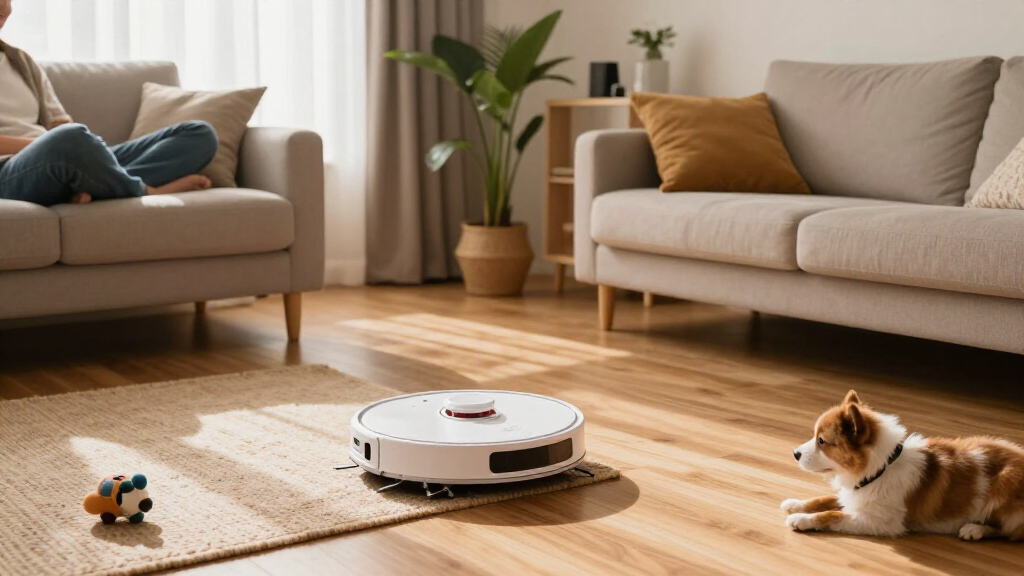

Robot vacuum cleaners in 2026 span a huge range: basic bump-and-go sweepers under $150, mid-range LiDAR models with mopping, and flagship units with self-emptying docks, auto-washing mop pads, and up to 18,500Pa of suction. The Roborock Qrevo S Pro stands out as the best overall pick for its unmatched suction and fully automated maintenance, while the Tikom G8000 Max and eufy 11S Max represent the best value in mid-range and budget tiers respectively. The core tradeoff you’ll face is price versus automation — cheaper models clean well but need daily attention, while premium models nearly run themselves. Pet owners should prioritize suction and brush design; apartment dwellers can skip the bulky self-empty docks. Keep reading for the full breakdown of all 15 models and which one fits your home and budget.

Get the latest gadgets delivered free — and shop member deals
- Fast, free delivery on millions of items
- Access to Prime Big Deal Days deals on October 6–7
- Prime Video, Amazon Music and more included
Complete the kit


Key Takeaways
- Roborock dominated the comparison, claiming four of the fifteen slots, with the Qrevo S Pro taking best overall thanks to 18,500Pa suction and a dock that empties dust, washes mop pads, and dries them with hot air.
- True automation, not raw suction, is what separates premium picks — the Qrevo S Pro and Roomba Plus 515 Combo both reduce hands-on maintenance to roughly once a month, while sub-$200 models like the ILIFE V2 and eufy 11S Max need daily bin emptying.
- The budget tier proved surprisingly capable on hard floors: the eufy 11S Max and E8S cleaned nearly as well as models costing twice as much, but they lack mapping, so expect random coverage and no room-by-room control.
- Mopping is the weakest link across most mid-range combos — the Tikom G8000 Max, ROPVACNIC S1, and Roborock Q7 series drag a wet pad rather than applying pressure, so only buyers with light dust needs should weigh mopping heavily at this tier.
- Shark‘s self-emptying trio (AV2511AE, AV2501S, AV2110S) offers the best dust-collection consistency in the lineup, but none mop, making them the strongest choice for carpet-heavy homes that don’t want a combo unit.
| Roborock Q7 L5 Robot Vacuum and Mop Combo |  | Best for Mapped, Multi-Floor Cleaning | Suction power: 8,000 Pa | Navigation: LiDAR | Water tank capacity: 270 ml | VIEW LATEST PRICE | See Our Full Breakdown |
| Tikom G8000 Max Robot Vacuum and Mop Combo |  | Best for Low-Clearance Furniture | Suction power: 5,000 Pa | Runtime: Up to 150 minutes | Dustbin capacity: 450 ml | VIEW LATEST PRICE | See Our Full Breakdown |
| E8S Robot Vacuum and Mop with 6500Pa Suction |  | Best for Long Eco Runs | Maximum suction: 6,500 Pa | Suction modes: Eco 800 Pa, Standard 1,600 Pa, Strong 3,000 Pa, Max 6,500 Pa | Maximum runtime: 200 minutes in Eco mode | VIEW LATEST PRICE | See Our Full Breakdown |
| ROPVACNIC S1 Robot Vacuum and Mop Combo |  | Best for Adjustable Mopping | Suction power: 5,200 Pa | Suction settings: Three levels | Water adjustment: Four levels | VIEW LATEST PRICE | See Our Full Breakdown |
| Shark AI Ultra Robot Vacuum with 60-Day Self-Emptying Base, Black (AV2511AE) |  | Best for Less Frequent Emptying | Model: AV2511AE | Base capacity: Up to 60 days of dirt and debris | Runtime: Up to 90 minutes | VIEW LATEST PRICE | See Our Full Breakdown |
| Roborock Q7 M5+ Robot Vacuum and Mop |  | Best for Pet Hair and Low-Maintenance Cleaning | Suction power: 10,000Pa | Navigation: PreciSense LiDAR | Dust bag capacity: 2.7L | VIEW LATEST PRICE | See Our Full Breakdown |
| Shark AV2501S AI Ultra Robot Vacuum with Matrix Clean and Self-Empty Base |  | Best for Allergy-Conscious Homes | Navigation: Matrix Clean with 360° LiDAR mapping | Self-empty base capacity: Up to 30 days of dirt and debris | Filtration: HEPA; captures 99.97% of dust and allergens down to 0.3 microns | VIEW LATEST PRICE | See Our Full Breakdown |
| Roborock Robot Vacuum and Mop with LiDAR Navigation and Self-Emptying Dock |  | Best for Long-Run Time | Suction power: 10,000Pa | Navigation: PreciSense LiDAR | Dust bag capacity: 2.7L | VIEW LATEST PRICE | See Our Full Breakdown |
| Roborock Qrevo S Pro Robot Vacuum and Mop (2026), 18,500Pa Suction |  | Best Premium All-in-One Dock | Suction power: 18,500Pa | Dock dust bag capacity: 2.7L; stated for 7–9 weeks | Mop washing temperature: 167°F | VIEW LATEST PRICE | See Our Full Breakdown |
| ILIFE V2 Robot Vacuum Cleaner, White |  | Best Simple Starter Robot | Model: V2 | Color: White | Cleaning modes: Auto clean, spot clean, edge clean | VIEW LATEST PRICE | See Our Full Breakdown |
| iRobot Roomba 105 Vac Robot Vacuum |  | Best Trusted Brand Pick | Navigation: ClearView LiDAR | Cleaning System: 3-Stage Cleaning | Suction Power: 70x more power-lifting suction vs. Roomba 600 series | VIEW LATEST PRICE | See Our Full Breakdown |
| iRobot Roomba Plus 515 Combo Robot Vacuum and Mop with AutoWash Dock |  | Best Premium All-in-One | Suction Power: 20,000 Pa | Mopping: DualClean Mop Pads with SmartScrub | Mop Pad Lift: 10 mm | VIEW LATEST PRICE | See Our Full Breakdown |
| Shark Navigator Robot Vacuum with 30-Day Self-Emptying Base (AV2110S) |  | Best Low-Maintenance Value | Model: AV2110S | Navigation: LiDAR SmartPath mapping | Self-Empty Capacity: Up to 30 days, bagless | VIEW LATEST PRICE | See Our Full Breakdown |
| eufy 11S Max Robot Vacuum Cleaner | 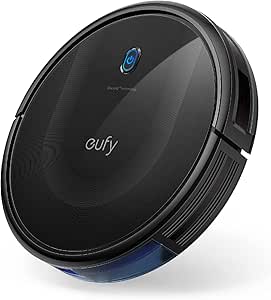 | Best Simple and Slim | Profile Height: 2.85 inches | Runtime: Up to 100 minutes on hardwood floors | Suction Adjustment: BoostIQ adjusts suction within 1.5 seconds | VIEW LATEST PRICE | See Our Full Breakdown |
| H6 Pro Robot Vacuum and Mop, Self-Emptying, 6000Pa Suction, LiDAR Navigation |  | Best Long-Run Budget Hybrid | Suction Power: 6000 Pa | Function: 3-in-1 sweep, vacuum, and mop | Navigation: 360° LiDAR with multi-level mapping | VIEW LATEST PRICE | See Our Full Breakdown |
| robot vacuum cleaner | Navigation | Suction power |
|---|---|---|
| Roborock Q7 L5 Robot Vacuum an | LiDAR | 8,000 Pa |
| Tikom G8000 Max Robot Vacuum a | — | 5,000 Pa |
| E8S Robot Vacuum and Mop with | Gyro and inertial | — |
| ROPVACNIC S1 Robot Vacuum and | — | 5,200 Pa |
| Shark AI Ultra Robot Vacuum wi | 360° LiDAR mapping with Matrix Clean | — |
| Roborock Q7 M5+ Robot Vacuum a | PreciSense LiDAR | 10,000Pa |
| Shark AV2501S AI Ultra Robot V | Matrix Clean with 360° LiDAR mapping | — |
| Roborock Robot Vacuum and Mop | PreciSense LiDAR | 10,000Pa |
| Roborock Qrevo S Pro Robot Vac | — | 18,500Pa |
| ILIFE V2 Robot Vacuum Cleaner | — | — |
| iRobot Roomba 105 Vac Robot Va | ClearView LiDAR | 70x more power-lifting suction vs. Roomba 600 series |
| iRobot Roomba Plus 515 Combo R | LiDAR mapping with obstacle recognition | 20,000 Pa |
| Shark Navigator Robot Vacuum w | LiDAR SmartPath mapping | — |
| eufy 11S Max Robot Vacuum Clea | — | — |
| H6 Pro Robot Vacuum and Mop | 360° LiDAR with multi-level mapping | 6000 Pa |
More Details on Our Top Picks
Roborock Q7 L5 Robot Vacuum and Mop Combo
The Roborock Q7 L5 suits homes where mapped routes and room-by-room control matter more than a self-emptying dock. Its LiDAR navigation, multi-floor maps, and no-go zones let owners set boundaries across levels, while 8,000 Pa suction and anti-tangle brushes support mixed floors and hair-prone rooms. Compared with the Tikom G8000 Max, the Q7 L5 offers stronger stated suction and multi-floor mapping; Tikom gives you a separate dustbin and water tank, which makes its combo setup less awkward to handle. The Roborock’s integrated tank and dustbin are the main compromise, and it only supports 2.4 GHz Wi-Fi. Choose it for controlled, scheduled cleaning across a mapped home, but skip it if easy separation of vacuum debris and mop water is a priority.
Pros:- LiDAR mapping supports multi-floor maps and no-go zones
- 8,000 Pa stated suction for carpet and hard-floor pickup
- Anti-tangle brushes are designed to reduce hair wrap
- App and voice controls support scheduling
Cons:- Integrated dustbin and water tank can make emptying and refilling less convenient
- Wi-Fi support is limited to 2.4 GHz
- No self-emptying dock is listed
Best for: Owners of multi-level homes who want mapped rooms, no-go zones, and scheduled vacuum-and-mop runs
Not ideal for: Buyers who want a separate dustbin and water tank or whose home network uses only 5 GHz Wi-Fi
- Suction power:8,000 Pa
- Navigation:LiDAR
- Water tank capacity:270 ml
- Battery life:150 minutes
- Noise level:60 dB
- Filter:Washable
- Controls:App, buttons, and voice
- Wi-Fi:2.4 GHz
Our verdict“Pick the Q7 L5 if mapped multi-floor control matters more to you than a separate tank setup or self-emptying.”
Tikom G8000 Max Robot Vacuum and Mop Combo
At 2.99 inches tall, the Tikom G8000 Max is the lineup’s low-clearance pick for homes where dust gathers beneath sofas and cabinets. Its separate 450 ml dustbin and 300 ml water tank also make the vacuum-and-mop arrangement easier to manage than the Roborock Q7 L5’s integrated part. Tikom’s 5,000 Pa suction and 150-minute runtime cover routine hard-floor and short- or medium-pile carpet cleaning, with automatic recharging when its battery runs low. The tradeoff is navigation: its listed anti-collision and anti-fall sensors do not provide the LiDAR mapping and multi-floor control offered by the Q7 L5. High-pile carpet is another weak fit, and its 45 dB noise level may be noticeable during quiet periods. I’d choose it for clearance and flexible controls, not detailed map-based routines.
Pros:- 2.99-inch profile can fit beneath more furniture
- Separate dustbin and water tank simplify vacuum-and-mop upkeep
- Up to 150 minutes of runtime with automatic recharging
- App, remote, voice, and button controls
Cons:- High-pile carpets may be difficult for it to clean
- Sensor-based navigation lacks the listed LiDAR mapping of the Roborock Q7 L5
- Its 45 dB noise level may be noticeable during quiet cleaning
Best for: Pet owners with low-clearance furniture, mostly hard floors, and short- or medium-pile rugs
Not ideal for: Homes with high-pile carpets or buyers who want LiDAR maps and room-specific boundaries
- Suction power:5,000 Pa
- Runtime:Up to 150 minutes
- Dustbin capacity:450 ml
- Water tank capacity:300 ml
- Height:2.99 inches
- Noise level:45 dB
- Filter:HEPA
- Cleaning modes:Spot, edge, zigzag, and manual
Our verdict“Choose the G8000 Max if fitting under furniture and keeping vacuum and mop containers separate matter more than mapped navigation.”
E8S Robot Vacuum and Mop with 6500Pa Suction
The E8S makes the most sense for buyers who value long, lower-power runs: its stated 200-minute runtime applies in Eco mode, which uses 800 Pa suction. Four suction levels let owners raise power when needed, up to 6,500 Pa, but the product data does not tie that maximum to the same runtime. Compared with the ROPVACNIC S1, the E8S gives a clearer range of suction settings and a stated coverage area of up to 1,290 square feet; ROPVACNIC instead lists four water settings for more adjustment while mopping. The E8S uses gyro and inertial navigation with zigzag routes, rather than the Roborock Q7 L5’s LiDAR mapping and multi-floor maps. Its 200 ml water tank is modest, and app Wi-Fi is limited to 2.4 GHz.
Pros:- Up to 200 minutes of runtime in Eco mode
- Four suction levels, including a 6,500 Pa maximum
- Zigzag, spot, and edge cleaning modes
- Returns to its dock when cleaning is complete or battery is low
Cons:- The 200-minute runtime is specified for 800 Pa Eco mode
- Gyro and inertial navigation lacks the LiDAR mapping listed for the Roborock Q7 L5
- 200 ml water tank capacity is smaller than the Tikom G8000 Max’s 300 ml tank
Best for: Owners of larger open-plan homes who want extended Eco-mode runs and adjustable suction
Not ideal for: Buyers who need detailed LiDAR maps, higher-power long runs, or a larger mop-water capacity
- Maximum suction:6,500 Pa
- Suction modes:Eco 800 Pa, Standard 1,600 Pa, Strong 3,000 Pa, Max 6,500 Pa
- Maximum runtime:200 minutes in Eco mode
- Coverage:Up to 1,290 sq. ft.
- Dustbin capacity:300 ml
- Water tank capacity:200 ml
- Navigation:Gyro and inertial
- Wi-Fi compatibility:2.4 GHz only
Our verdict“The E8S fits buyers who want long Eco runs and adjustable suction, provided they can do without LiDAR room maps.”
ROPVACNIC S1 Robot Vacuum and Mop Combo
The ROPVACNIC S1 is the lineup’s clearest fit for buyers who want to tune how much water a robot uses on different hard floors. Its four water settings and three suction levels offer more stated adjustment than the Roborock Q7 L5, which lists a 270 ml water tank but no adjustable water levels. The S1 also combines app scheduling and Alexa or Google Assistant control with a brush design intended to reduce pet-hair tangles. That makes it a practical choice for recurring hard-floor cleanup, with support for low-pile carpets as well. The tradeoff is that its reach is harder to judge: the supplied data gives neither battery runtime nor dustbin capacity. And while it can automatically return to recharge, the details do not list LiDAR mapping or multi-floor maps like the Q7 L5. I’d favor it for water control over map detail.
Pros:- Four water settings provide mop adjustment
- Three suction levels offer cleaning control
- App scheduling and Alexa or Google Assistant control
- Brush design is intended to reduce pet-hair tangles
Cons:- No battery runtime is provided in the product data
- Dustbin capacity is not specified
- Only low-pile carpet compatibility is listed
Best for: Households with mixed hard floors that need adjustable mop water and scheduled cleaning
Not ideal for: Buyers who need confirmed runtime, dustbin capacity, or mapped cleaning for multiple floors
- Suction power:5,200 Pa
- Suction settings:Three levels
- Water adjustment:Four levels
- Cleaning functions:Vacuuming and mopping
- Floor compatibility:Wood, hard floors, and low-pile carpets
- Controls:Smartphone app, Alexa, and Google Assistant
- Charging:Automatic return to recharge
- Brush design:Dual rotating side brushes; no-entanglement design
Our verdict“Choose the S1 if adjustable water flow for hard floors is your priority and the missing capacity details are acceptable.”
Shark AI Ultra Robot Vacuum with 60-Day Self-Emptying Base, Black (AV2511AE)
The Shark AI Ultra is the only pick in this batch with a listed bagless self-emptying base, designed to hold up to 60 days of dirt and debris. That shifts routine upkeep away from frequent bin emptying, while 360° LiDAR mapping, Matrix Clean grid-pattern navigation, and recharge-and-resume support larger automated runs. Compared with the Roborock Q7 L5, Shark adds the self-emptying base but has a shorter stated runtime of up to 90 minutes and no listed mopping function. Its details focus on vacuuming carpets and hard floors, making it a better match for buyers who want unattended debris collection than for anyone seeking a combo cleaner. The product information also conflicts on whether mopping is included, so I would not buy it expecting that function without confirming the package contents.
Pros:- Bagless base is designed to hold up to 60 days of debris
- 360° LiDAR mapping supports whole-home navigation
- Matrix Clean uses a grid-pattern cleaning approach
- Recharge-and-resume support continues a cleaning run after charging
Cons:- Runtime is listed as up to 90 minutes
- Mopping inclusion is unclear in the supplied product details
- The self-emptying base requires space alongside the robot
Best for: Pet-owning households that want mapped vacuuming and fewer manual bin-emptying sessions
Not ideal for: Buyers seeking a robot mop, longer stated runtime, or certainty about included mopping hardware
- Model:AV2511AE
- Base capacity:Up to 60 days of dirt and debris
- Runtime:Up to 90 minutes
- Navigation:360° LiDAR mapping with Matrix Clean
- Controls:SharkClean app, Amazon Alexa, and Google Assistant
- Cleaning surfaces:Carpets and hard floors
- Included:Robot vacuum, XL self-empty base, side brush, and filter
- Color:Black
Our verdict“Pick the Shark AI Ultra for mapped vacuuming with less frequent emptying, after confirming the package contents if mopping matters.”
Roborock Q7 M5+ Robot Vacuum and Mop
The Q7 M5+ combines strong 10,000Pa suction with a dock that can hold debris for up to 7–9 weeks, making it a practical pick for homes where pet hair builds up between cleanings. Its LiDAR mapping supports orderly room coverage, while the anti-tangle brush design can reduce hair-wrap cleanup. Compared with the Shark AV2501S, it adds mopping and a longer stated dust-bag interval; the Shark instead offers HEPA filtration and a bagless base. The Q7 M5+’s three water-flow settings give hard floors a light mop, but they require manual adjustment for different surfaces. App control also requires 2.4GHz Wi-Fi, which may rule it out for households using only a 5GHz network.
Pros:- 2.7L dock bag is rated for up to 7–9 weeks of cleaning
- 10,000Pa suction is suited to carpets, debris, and pet hair
- Anti-tangle brush design can reduce hair-wrap maintenance
- LiDAR mapping supports organized multi-room cleaning
Cons:- App control supports 2.4GHz Wi-Fi only
- Water flow needs manual adjustment for different floor types
Best for: Pet owners who want mapped vacuuming, occasional mopping, and fewer trips to empty the dock
Not ideal for: Households with only 5GHz Wi-Fi or buyers who want mopping settings to adjust automatically by floor type
- Suction power:10,000Pa
- Navigation:PreciSense LiDAR
- Dust bag capacity:2.7L
- Stated self-emptying interval:Up to 7–9 weeks
- Mopping:Three adjustable water-flow settings
- Anti-tangle design:JawScrapers main brush and hair-resistant side brush
- App connectivity:Roborock App; 2.4GHz Wi-Fi only
Our verdict“Choose the Q7 M5+ if you want strong pet-hair pickup and occasional mopping with a long-emptying interval, and can use 2.4GHz Wi-Fi.”
Shark AV2501S AI Ultra Robot Vacuum with Matrix Clean and Self-Empty Base
The AV2501S puts HEPA filtration and repeated grid-pattern cleaning ahead of mopping features. Its base holds up to 30 days of debris, and the filter is specified to capture 99.97% of dust and allergens down to 0.3 microns. That makes it a better fit for buyers focused on dust containment than the Roborock Q7 M5+, which offers a longer stated emptying interval and a mop but does not list HEPA filtration. Matrix Clean and 360° LiDAR help the Shark cover rooms in planned passes, while Recharge and Resume supports larger homes. The tradeoff is a shorter maximum runtime of 120 minutes and a dock that needs floor space; it also lacks the Q7 M5+’s mopping function.
Pros:- HEPA filtration captures 99.97% of dust and allergens down to 0.3 microns
- Matrix Clean makes multiple passes over debris
- Recharge and Resume supports cleaning larger areas
- Voice control works with Amazon Alexa and Google Assistant
Cons:- Maximum listed runtime is 120 minutes per charge
- Self-empty base requires dedicated floor space
- Does not include mopping
Best for: Allergy-conscious households that want mapped vacuuming, voice control, and filtered debris storage
Not ideal for: Buyers who need a mop or want a self-emptying interval longer than the stated 30 days
- Navigation:Matrix Clean with 360° LiDAR mapping
- Self-empty base capacity:Up to 30 days of dirt and debris
- Filtration:HEPA; captures 99.97% of dust and allergens down to 0.3 microns
- Maximum runtime:Up to 120 minutes
- Voice control:Amazon Alexa and Google Assistant
- Cleaning continuation:Recharge and Resume
- Color:Dark grey
Our verdict“Pick the AV2501S if dust filtration matters more to you than mopping or a longer interval between dock maintenance.”
Roborock Robot Vacuum and Mop with LiDAR Navigation and Self-Emptying Dock
This Roborock pairs 150 minutes of listed battery life with LiDAR mapping, strong suction, and a self-emptying dock, giving it a useful balance for larger homes with mixed flooring. Like the Q7 M5+, it vacuums and mops and uses a 2.7L bag rated for up to 7–9 weeks; this model also lists its runtime and cleaning path width, which can help buyers compare coverage needs. Against the Shark AV2501S, it adds mopping and longer stated battery life, while the Shark’s HEPA filtration is a clearer choice for allergy-conscious buyers. The Roborock’s 2.4GHz-only connectivity may limit setup options, and the stated hands-free interval depends on how often it runs and how much debris it collects.
Pros:- Listed 150-minute battery life suits longer cleaning sessions
- 10,000Pa suction covers hard floors and carpet
- LiDAR mapping supports planned room coverage
- Dock combines a 2.7L bag with vacuuming and mopping
Cons:- Connectivity is limited to 2.4GHz Wi-Fi
- The 7–9 week emptying interval depends on use and debris levels
- No HEPA filtration specification is provided
Best for: Owners of larger mixed-floor homes who want a mapped vacuum and mop with a long listed runtime
Not ideal for: Buyers on 5GHz-only Wi-Fi or those who need verified HEPA filtration
- Suction power:10,000Pa
- Navigation:PreciSense LiDAR
- Dust bag capacity:2.7L
- Stated self-emptying interval:Up to 7–9 weeks
- Battery life:150 minutes
- Cleaning path width:12.8 inches
- Water-flow settings:3
- Noise level:65 dB
- Connectivity:2.4GHz Wi-Fi
Our verdict“Choose this Roborock for longer mapped cleaning sessions across mixed floors if 2.4GHz Wi-Fi is available in your home.”
Roborock Qrevo S Pro Robot Vacuum and Mop (2026), 18,500Pa Suction
The Qrevo S Pro is the most maintenance-focused pick here: its dock empties dust, washes the mops with 167°F water, and dries them with warm air. That setup is a meaningful step beyond the Q7 M5+, whose dock handles dust but leaves mop care to the owner. Its 18,500Pa suction, dual-spin mopping, and anti-tangle brush system also target homes with pets and mixed flooring. Smart obstacle avoidance and a 3.8-inch profile add flexibility, though the height can still prevent it from reaching under some low furniture. The feature-rich dock takes more equipment than a basic self-empty base, and 2.4GHz-only Wi-Fi remains a constraint. Choose it over the simpler Roborock models when automated mop upkeep matters enough to justify the added system complexity.
Pros:- Dock empties dust, washes mops, and dries them with warm air
- 18,500Pa suction is the highest listed among these five products
- Anti-tangle brush system is designed to reduce hair-wrap upkeep
- Listed 55 dB noise level is lower than the other Roborock with a stated noise level
Cons:- 3.8-inch height may not fit under low-clearance furniture
- Wi-Fi supports 2.4GHz only
- More dock functions mean a larger, more involved system than a basic self-emptying model
Best for: Pet-owning households that mop often and want the dock to wash and dry mop pads automatically
Not ideal for: Buyers who want a simpler vacuum-focused setup or have furniture with clearance below 3.8 inches
- Suction power:18,500Pa
- Dock dust bag capacity:2.7L; stated for 7–9 weeks
- Mop washing temperature:167°F
- Mop drying temperature:113°F
- Mop lift height:10mm
- Noise level:55 dB
- Profile height:3.8 inches
- Wi-Fi:2.4GHz only
Our verdict“Choose the Qrevo S Pro if you mop regularly and want automated pad washing and drying alongside strong vacuuming.”
ILIFE V2 Robot Vacuum Cleaner, White
The ILIFE V2 keeps the job simple: it offers auto, spot, and edge cleaning, plus infrared sensors for collision and drop-off protection. Its tangle-free suction design is aimed at pet hair and debris, but the product data does not list suction power, mapping, app control, or a self-emptying dock. That makes it a very different proposition from the Roborock Q7 M5+, which adds room mapping, a mop, and automated bin emptying for buyers who want less hands-on management. The V2’s limited feature set may suit someone who wants basic floor pickup and straightforward modes, but it offers less control over where and when it cleans. Skip it if you need scheduled app cleaning, room-specific maps, or a dock that handles collected dust.
Pros:- Auto, spot, and edge modes provide different basic cleaning patterns
- Tangle-free suction is designed for pet hair and debris
- Infrared anti-collision sensors help detect obstacles
- Anti-fall sensors help avoid drop-offs
Cons:- Product data does not list mapping or room-specific navigation
- App control and scheduling are not specified
- No self-emptying dock is listed
Best for: First-time robot vacuum buyers who want basic cleaning modes and sensor-based drop-off protection
Not ideal for: Pet owners seeking mapped room cleaning, app scheduling, or automatic debris emptying
- Model:V2
- Color:White
- Cleaning modes:Auto clean, spot clean, edge clean
- Suction design:Tangle-free suction
- Obstacle sensors:Infrared anti-collision
- Drop-off protection:Infrared anti-fall sensors
Our verdict“Pick the V2 for straightforward sensor-based cleaning, and choose a mapped model such as the Q7 M5+ if you need more control.”
iRobot Roomba 105 Vac Robot Vacuum
This option stands out for buyers who want LiDAR navigation and row-by-row cleaning from a brand with a long track record, without paying for mopping hardware they may not use. Compared with the eufy 11S Max, the Roomba 105’s ClearView LiDAR mapping means it cleans systematically instead of bouncing around, and the app plus Alexa, Siri, and Google voice control add real scheduling flexibility. The 70x suction lift over the Roomba 600 series translates to noticeably better debris pickup on rugs, though that comparison dates the baseline — newer rivals like the H6 Pro quote absolute 6000Pa figures, making cross-brand comparisons tricky.
The main tradeoffs: it only connects to 2.4 GHz Wi-Fi, which frustrates owners of mesh networks, and there’s no self-emptying dock, so you’ll empty the bin by hand. This pick makes the most sense for vacuum-only households who value navigation over automation extras.
Pros:- LiDAR navigation maps the home and cleans in neat, efficient rows
- Strong suction lift compared with the older Roomba 600 series
- App, voice assistant, and onboard button control options
- Self-charges and automatically resumes after recharging
Cons:- Only supports 2.4 GHz Wi-Fi, which can complicate setup on modern routers
- No self-emptying dock at this level, so bin duty is manual
Best for: Buyers who want dependable LiDAR-mapped vacuuming from an established brand and don’t need mopping or a self-empty dock
Not ideal for: Households that hate emptying a dustbin every few days or run 5 GHz-only Wi-Fi networks
- Navigation:ClearView LiDAR
- Cleaning System:3-Stage Cleaning
- Suction Power:70x more power-lifting suction vs. Roomba 600 series
- Suction Levels:4
- Connectivity:2.4 GHz Wi-Fi
- Voice Assistants:Alexa, Siri, Google Assistant
- Charging:Self-charging with auto-resume
Our verdict“A sensible choice for vacuum-first buyers who want smart navigation from a household name and can live without a self-empty base.”
iRobot Roomba Plus 515 Combo Robot Vacuum and Mop with AutoWash Dock
This model sits at the premium end of the lineup, and the AutoWash Dock is what justifies that position: it empties debris, washes the mop pads, heat dries them at 113°F, and refills water, which means far less hands-on upkeep than the H6 Pro, whose dock handles dust but not pad washing. With 20,000 Pa suction, it also outmuscles every other vacuum-mop hybrid here — the Tikom G8000 Max and E8S class machines trail by a wide margin on paper.
The SmartScrub mop action and 10 mm pad lift before rugs make it genuinely suited to mixed-floor homes with stuck-on messes. The tradeoff is ownership cost and upkeep: docks like this demand ongoing maintenance, replacement dust bags, and pad care, and the listing omits battery life and noise specs, so buyers are trusting the brand on those points. Compared with the Shark Navigator AV2110S, you gain full mopping automation but add a layer of complexity.
Pros:- Vacuums and mops in a single pass with 20,000 Pa suction
- Dock empties debris, washes pads, heat dries, and refills water
- Tangle-free rubber brushes handle pet hair well
- Mop pads lift 10 mm to protect rugs from damp pads
Cons:- Ongoing dock maintenance and replacement dust bag costs
- Battery life and noise levels are not disclosed in the product listing
Best for: Owners of large hard-floor homes with pets who want vacuuming, mopping, and pad maintenance fully automated
Not ideal for: Budget-conscious buyers or anyone unwilling to buy dust bags and maintain a multi-function dock
- Suction Power:20,000 Pa
- Mopping:DualClean Mop Pads with SmartScrub
- Mop Pad Lift:10 mm
- Pad Drying Temperature:113°F heat drying
- Navigation:LiDAR mapping with obstacle recognition
- Dock Functions:Auto-empty, mop washing, heat drying, water refilling
- Included Accessories:DualClean Mop Pads, self-empty dust bag, extra filter, power cord, quick start guide
Our verdict“The most automated option in this roundup — worth it for hands-off hard-floor homes, overkill for anyone who just needs vacuuming.”
Shark Navigator Robot Vacuum with 30-Day Self-Emptying Base (AV2110S)
This pick makes the most sense for buyers whose priority is not thinking about their robot vacuum. The bagless self-emptying base holding 30 days of debris is the headline, and going bagless means no recurring dust bag purchases — a real cost advantage over the Roomba Plus 515 dock. Compared with the Roomba 105, you give up mopping entirely but gain weeks of hands-off operation and a self-cleaning anti-hair-wrap brushroll that spares you the scissors-and-tangle ritual in pet households.
LiDAR SmartPath mapping puts it in the same navigation class as pricier models, supporting no-go zones and targeted cleaning through the SharkClean app. The drawbacks are structural rather than fatal: the app is mandatory for anything beyond basic cleaning, and there’s no mop function at all — unlike the H6 Pro, which bundles sweep, vacuum, and mop for similar convenience. For pure vacuum duty, though, the value equation here is hard to beat.
Pros:- Bagless self-empty base holds up to 30 days of debris with no replacement bags
- LiDAR mapping supports orderly rows, no-go zones, and targeted cleaning
- Anti-hair-wrap brushroll reduces tangled pet hair maintenance
- Recharge-and-resume keeps long cleaning jobs on schedule
Cons:- No mopping function, unlike similarly priced hybrid models
- Maps, schedules, and targeted cleaning all require the SharkClean app
Best for: Pet owners and busy households who want a set-and-forget vacuum with a month between maintenances and no bag purchases
Not ideal for: Anyone who wants mopping capability or prefers avoiding app-based setup and controls
- Model:AV2110S
- Navigation:LiDAR SmartPath mapping
- Self-Empty Capacity:Up to 30 days, bagless
- Brushroll:Self-cleaning with anti-hair wrap
- Floor Compatibility:Carpets, rugs, and hard floors
- Smart Features:App control, scheduling, target cleaning, no-go zones, Alexa and Google voice control
- Included:Robot vacuum, self-empty base, 1 side brush
Our verdict“A strong value for vacuum-only buyers who want maximum time between upkeep sessions without bag costs.”
eufy 11S Max Robot Vacuum Cleaner
In a lineup full of apps and docks, this model earns its place by doing the opposite: no Wi-Fi, no app, no account. You drive it with a remote or onboard buttons, which makes it a fit for technophobes, guest-house setups, or anyone frustrated by connectivity issues like the Roomba 105’s 2.4 GHz-only limitation. The 2.85-inch profile is the slimmest here, sliding under beds and couches where the taller Shark Navigator and dock-dependent models simply can’t reach.
BoostIQ adjusts suction within 1.5 seconds of hitting carpet, and up to 100 minutes of runtime covers a decent floor area. But the honest tradeoffs matter: without mapping, it cleans randomly rather than in rows, so large or complex homes get patchier coverage than any LiDAR model in this guide. There’s no self-emptying either. This option is better suited to apartments and small homes than whole-house deep cleans.
Pros:- Slim 2.85-inch body cleans under low-clearance furniture
- Up to 100 minutes of runtime on hard floors
- BoostIQ automatically boosts suction on carpet within 1.5 seconds
- No app or account needed — remote and buttons only
Cons:- Random navigation without mapping leads to uneven coverage in larger homes
- No Wi-Fi, scheduling, or self-emptying capability
Best for: Apartment dwellers and non-technical users who want a quiet, low-profile vacuum that works straight out of the box
Not ideal for: Large or multi-room homes needing systematic mapped coverage, or anyone who wants app scheduling and self-emptying
- Profile Height:2.85 inches
- Runtime:Up to 100 minutes on hardwood floors
- Suction Adjustment:BoostIQ adjusts suction within 1.5 seconds
- Controls:Remote control and onboard buttons (no Wi-Fi)
- Safety Features:Infrared obstacle sensor and drop-sensing technology
- Charging:Self-recharging
- Brush Design:Single-side brush
- Top Cover:Anti-scratch tempered glass
Our verdict“The pick for simplicity and reach — ideal for small spaces, limiting for large mapped-home cleaning.”
H6 Pro Robot Vacuum and Mop, Self-Emptying, 6000Pa Suction, LiDAR Navigation
This model’s pitch is 3-in-1 convenience at a mid-range price: it sweeps, vacuums, and mops in one pass, with a 3L self-empty station good for up to 90 days hands-free — triple the interval of the Shark Navigator AV2110S‘s 30-day base. Its 150-minute runtime is the longest in this batch, outlasting the eufy 11S Max by 50 minutes, which matters for open-plan homes that can’t be finished in one shorter charge.
Compared with the Roomba Plus 515, you get similar sweep-vacuum-mop logic and multi-floor LiDAR mapping for far less complexity, but with a quarter of the suction and no pad-washing dock. Two honest caveats: the 250 ml dustbin and 310 ml water tank are small for that runtime, and the listing’s typos (‘eqquipped’, ‘samrt’) hint at rushed documentation from a lesser-known brand, though the 2-year warranty softens that risk. The self-empty cycle can also be noisy.
Pros:- 3L self-empty station allows up to 90 days of hands-free cleaning
- Sweeps, vacuums, and mops in a single pass
- 360° LiDAR with multi-floor mapping and no-go zones
- 150-minute runtime with auto-recharge and resume, plus 2-year warranty
Cons:- Small 250 ml dustbin and 310 ml water tank relative to its long runtime
- Listing typos and lesser-known brand suggest rushed quality control
- Self-emptying station can be noisy when cycling the dustbin
Best for: Value-focused buyers in larger homes who want vacuum-plus-mop capability and months between emptying on a budget
Not ideal for: Buyers who prioritize brand reputation and polished documentation, or those sensitive to intermittent dock noise
- Suction Power:6000 Pa
- Function:3-in-1 sweep, vacuum, and mop
- Navigation:360° LiDAR with multi-level mapping
- Self-Empty Capacity:3L station (up to 90 days hands-free)
- Dustbin Capacity:250 ml
- Water Tank Capacity:310 ml
- Runtime:150 minutes
- Controls:Smartphone app, Alexa, Google Assistant
- Warranty:2-year warranty with lifetime technical support
Our verdict“A feature-dense budget hybrid for big homes that want maximum runtime and 90-day emptying, with some brand-risk tradeoff.”

How We Picked
I ranked these fifteen robot vacuum cleaners by weighing cleaning performance, navigation intelligence, automation level, and long-term ownership cost — not just spec sheets. Suction power (measured in Pa) mattered, but only alongside the things that make suction useful: brush design for pet hair, LiDAR mapping for efficient routes, and carpet boost features. I also weighed how much daily effort each model demands, because a vacuum that cleans well but needs its bin emptied after every run defeats the purpose of automation.
The ranking logic favors models that solve a real buyer problem at their price point rather than models with the longest feature list. That’s why the fully automated Qrevo S Pro leads, value-packed mid-rangers like the Tikom G8000 Max and Roborock Q7 M5+ sit in the middle, and simple sweepers like the eufy 11S Max and ILIFE V2 earn their spots as deliberate budget choices — not compromises. Every pick also had to show a meaningful drawback to stay honest: docks that add bulk, mops that underperform, or navigation that limits where a robot can go.
Factors to Consider When Choosing Robot Vacuum Cleaners
Before settling on a specific model, it helps to understand the broader forces shaping this category — and the mistakes buyers make most often. These are the factors I’d weigh before spending anything on a robot vacuum cleaner.Navigation Type Determines Everything
The single biggest quality jump in this category isn’t suction — it’s how a robot knows where it is. Gyroscope and camera-based models (like the E8S and ROPVACNIC S1) clean in semi-random patterns, missing spots and repeating others. LiDAR models like the Roborock Q7 series and H6 Pro build precise floor maps, letting you send the robot to a single room, set no-go zones, and clean in efficient straight lines. The mistake buyers make is paying extra for suction on a dumb navigator: a 6500Pa robot that misses half your floor loses to a 4000Pa robot that covers everything. If your home has multiple rooms and clutter, LiDAR isn’t a luxury — it’s the difference between set-and-forget and daily babysitting.
Self-Emptying Docks: When They’re Worth It
A self-emptying dock means the robot deposits its dust into a larger bag every cleaning cycle, cutting hands-on maintenance to once every 30–60 days. That convenience comes with real costs beyond the sticker price: docks consume floor space (a problem in small apartments), replacement bags are an ongoing expense, and the emptying process is loud. I’d recommend a dock for pet households, allergy sufferers, and anyone with more than 1,500 square feet — the accumulated debris volume justifies it. Skip the dock if you live in a studio or only run the robot weekly; you’ll save $150+ and floor space by emptying a small bin yourself. Note the difference in capacity too: Shark’s 60-day base holds meaningfully more than the 30-day version on the AV2110S.
Mopping: The Feature Buyers Overpay For
Most robot vacuum mops in the mid-range tier are a damp pad dragged across the floor — fine for dust and footprints, useless for dried spills or grout. This is where I see the most buyer regret: people pay extra for ‘vacuum and mop’ branding expecting a replacement for their steam mop. True mopping performance requires downward pressure and pad agitation, which only the premium tier delivers — the Qrevo S Pro’s dual spinning pads and the Roomba Plus 515’s AutoWash dock are the only units in this lineup I’d call genuine moppers. Also check whether the mop pad lifts when crossing carpet; models without this feature will smear dirty water onto your rugs. If your floors are 90% carpet, skip mopping entirely and put the budget toward suction and a self-empty base.
Suction Numbers in Context
Pa (Pascals) ratings have become an arms race, with 2026 flagships like the Qrevo S Pro hitting 18,500Pa — but the numbers need context. Bare floors are cleanable at virtually any suction level; the eufy 11S Max at roughly 2,000Pa handles hardwood as well as anything. Suction matters on carpet, especially medium-pile, and for embedding debris like pet hair and litter. The honest tiers: under 3,000Pa for hard floors only, 4,000–6,000Pa for low-pile rugs and pets, and 8,000Pa+ for thick carpet and heavy shedding. Also weigh brush design — a rubber roller resists hair tangles far better than bristle brushes, which matters more for pet owners than an extra 2,000Pa ever will.
Battery Life, Dock Size, and Home Layout
Runtime specs of 90–180 minutes sound generous, but real-world coverage is lower once carpet boost kicks in and the robot slows. Homes over 2,000 square feet should prioritize models that resume where they left off after recharging — most LiDAR models here do, most budget models don’t. Measure where the dock will live: self-empty bases need clearance on both sides and can’t sit near stairs or in tight corners. Dark floors and black carpet can also defeat cliff sensors on cheaper units, causing shutdowns mid-clean. Finally, check boundary handling — virtual no-go zones (LiDAR models) are far more flexible than physical magnetic strips that older budget robots require.
Ongoing Costs and Software Support
The purchase price is only part of the equation. Budget for consumables: filter and brush replacements every 2–3 months, dock bags monthly, and eventually a battery. App quality varies enormously and directly affects daily satisfaction — Roborock’s and Shark’s apps offer room labeling, schedules, and suction control per zone, while no-name apps can be slow, ad-cluttered, or abandoned after a year. Before buying, check whether the model supports firmware updates and whether the company has a track record of keeping older units supported. A cheap robot with dead software becomes a dumb sweeper fast, which is one reason established brands like Roborock, Shark, and iRobot dominate the top of this ranking despite cheaper clones with similar paper specs.
Frequently Asked Questions
Is a robot vacuum with a self-emptying dock really worth the extra cost?
It depends on debris volume and your tolerance for maintenance. If you have pets, kids, or a home over 1,500 square feet, a dock like the ones on the Shark AV2511AE or Roborock Qrevo S Pro reduces bin duty to once every one to two months, which is the difference between a robot that helps and one that feels like a chore. For small apartments or single-person households, the dock’s bulk, noise, and bag costs outweigh the benefit — you’ll empty a standard bin in ten seconds. The other hidden factor is allergy relief: sealed dock bags trap dust far better than dumping an open bin over the trash. I’d pay the premium for docks that also wash mop pads (like the Roomba Plus 515 Combo), since those eliminate the moldiest, grossest chore in robot ownership.
Do I need LiDAR navigation, or is a cheaper random-navigation robot fine?
LiDAR matters most in homes with multiple rooms, furniture clusters, or areas you want the robot to avoid. A LiDAR model like the Roborock Q7 M5+ or H6 Pro maps your home, cleans in efficient rows, and lets you send it to specific rooms or draw no-go zones around pet bowls. Random-navigation models like the eufy 11S Max still clean — bumping around until they’ve covered most of the floor — and for a single open room, the coverage difference is minor. The real gap is control and efficiency: without mapping you can’t schedule a kitchen-only clean, the robot wastes battery on repeated passes, and it can’t resume intelligently if it needs to recharge. My rule: one or two rooms, save the money; a full home, get LiDAR.
Can a robot vacuum mop actually replace mopping by hand?
Honestly, most cannot — and knowing the difference saves real money. The majority of mid-range combos (Tikom G8000 Max, ROPVACNIC S1, Roborock Q7 series) use a passive pad that wets and wipes, which handles daily dust and light footprints but won’t lift dried spills, kitchen grease, or grout grime. The exceptions in this lineup are the Roborock Qrevo S Pro with dual spinning pads that apply pressure and the Roomba Plus 515 Combo, which agitates while mopping and washes its own pads. Treat most robot mopping as maintenance between deep cleans, not a replacement for them. If your expectation is gleaming floors with zero hands-on work, only the premium tier gets close — and even then, occasional manual mopping is still wise for kitchens and bathrooms.
What suction power do I actually need for pet hair and carpet?
For hard floors with pet hair, almost any modern robot works — even the budget picks here collect hair effectively. The thresholds appear on carpet: low-pile rugs want at least 4,000Pa (E8S, H6 Pro territory) to pull embedded hair out, while medium-to-thick carpet really wants 8,000Pa or more, which is flagship territory like the Qrevo S Pro. Suction alone isn’t the whole story, though — brush design matters as much or more. Rubber or anti-tangle rollers keep long pet hair from wrapping around the brush and strangling it, and models with carpet detection automatically boost power on rugs. If you have a heavy shedder, prioritize an anti-tangle brush plus a self-empty dock over chasing the highest Pa number.
Are budget robot vacuums under $150 worth buying, or will I regret them?
For the right home, budget robots are a genuine bargain rather than a regret. The eufy 11S Max and ILIFE V2 clean hard floors respectably, run quietly, and have fewer parts to break — no app to glitch, no dock to jam. Where the regret kicks in is expectation mismatch: these models don’t map, don’t mop meaningfully, don’t avoid clutter, and need their tiny bins emptied after nearly every run. They suit studios, apartments with mostly hard floors, and buyers who want a daily dust sweep rather than full floor care. If you have carpet, pets, or a multi-room home, the frustration of random navigation and daily emptying usually pushes buyers to upgrade within months — spend the extra money upfront on a LiDAR model and skip the middle step.
Conclusion
After comparing all fifteen models, the Roborock Qrevo S Pro earns best overall — its 18,500Pa suction, dual spinning mops, and dock that empties, washes, and dries make it the most complete hands-off package in the lineup. For best value, the Tikom G8000 Max delivers LiDAR mapping, respectable suction, and app control at a mid-range price, while the eufy 11S Max is the smart budget pick for hard-floor apartments. At the premium automation tier, the Roomba Plus 515 Combo stands out for its AutoWash dock, which handles the grimiest chore in robot ownership. Beginners should start with the Shark Navigator AV2110S or iRobot Roomba 105 — simple setups, reliable brands, and no overwhelming feature set. For specific needs: pet owners with carpet should target the Shark AV2511AE with its 60-day self-empty base, multi-floor homes benefit from the Roborock Q7 M5+‘s mapping and mop lift, and the ROPVACNIC S1 and E8S fill the role of affordable vacuum-mop combos for light-duty floors. Match the automation level to your debris volume and floor type, and any of these picks will earn its spot in your home.
Fall Picks
fall essentials
As an affiliate, we earn on qualifying purchases.