📊 Full opportunity report: How Product Catalogs Can Inspire Reels And TikToks on IdeaNavigator AI — validation score, market gap, and execution plan.

Get the latest gadgets delivered free with Prime
- Fast, free delivery on millions of items
- Prime Video, Amazon Music and more included
- Member-only deals all year
TL;DR
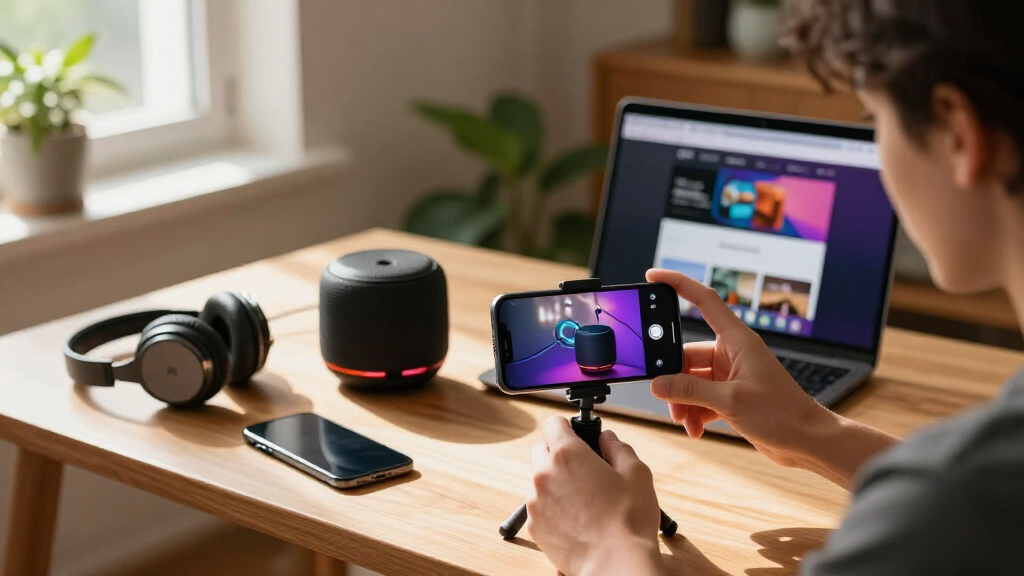
An IdeaNavigator AI proposal suggests using product catalogs to generate faceless videos for TikTok and Instagram Reels, aimed at ecommerce sellers without on-camera talent or large video budgets. It is a concept to test, not a reported launch or proven sales strategy; results would need to be measured against each store’s existing creative.
IdeaNavigator AI has proposed a tool that would turn ecommerce catalog images and product information into faceless videos for TikTok and Instagram Reels, targeting sellers who lack on-camera talent or a video budget. The proposal describes an early-stage business idea, not a launched product or a demonstrated way to increase sales.
The proposed workflow would connect to a seller’s product catalog and create multiple video formats for each item. Suggested options include unboxing-style clips, lifestyle scenes and feature callouts, alongside templates using trending audio. The concept also includes scheduling posts directly to TikTok and Reels.
The intended customer is an ecommerce seller without on-camera talent or production resources. IdeaNavigator AI’s premise is that these businesses may struggle to make short-form video, leaving products less visible in feeds where some consumers discover items. That is the proposal’s rationale, not evidence that a particular seller has lost sales for this reason.
The suggested revenue model is a subscription priced by the number of videos rendered each month. To test demand and performance, the proposal recommends generating videos for 20 stores and comparing paid and organic results with each store’s existing creative, including engagement and conversion changes. No completed test, customer commitments or performance figures are reported.
A Lower-Cost Route to Product Video
If the workflow proves useful, it could give smaller online retailers a way to produce more short-form product content without arranging shoots or hiring on-camera creators. Catalog details could serve as a starting point for several video variations, potentially reducing the effort involved in making a clip for every product.
But cheaper production alone would not establish business value. Sellers would need to know whether generated videos attract viewers, lead to purchases and perform well enough to justify a subscription. Results may differ by product category, audience, platform and the quality of the original catalog material. The proposed 20-store test is therefore central to the idea: it would compare generated work with existing creative rather than assume that more videos produce better outcomes.
There are also practical distinctions between making a video and making an effective one. A clip must present the item accurately and suit the platform and audience. Templates and automated generation could speed up production, but the concept does not provide evidence about how much review or editing sellers would still need.
As an affiliate, we earn on qualifying purchases.
The proposal sits within ecommerce creative automation: using product data and assets to produce marketing materials with less manual work. In this case, the input would be catalog images and specifications, while the intended output is a set of short videos in different styles.
IdeaNavigator AI says video-generation models can produce product footage involving hands, settings and motion from still images and specifications, and argues that this could reduce the cost of faceless content. That is a claim about the opportunity; no model, price, quality benchmark or independent evaluation is identified in the proposal. Its recommendation is to test the resulting videos against existing ads and organic posts before treating the approach as effective.
The outline does not name a software product, provide a release schedule or report that stores have already used such a tool. Its proposed features—including catalog connection, video variations, audio templates and platform scheduling—should be understood as an MVP plan, not confirmed product capabilities.
short form product video creation tools
As an affiliate, we earn on qualifying purchases.
As an affiliate, we earn on qualifying purchases.
Performance and Product Details Unreported
No results are available showing whether catalog-generated clips improve views, engagement, clicks or purchases. The suggested comparison across 20 stores is a proposed test, and the outline gives no baseline, test duration, measurement method or results.
It is also unclear which video-generation systems would be used, how faithfully they could depict products, what human review would be required, or whether the proposed audio templates and direct scheduling would be available in a working tool. The concept does not identify a company building the product, a price for sellers or a launch timeline. Claims that production costs could approach zero are not supported by cost figures in the proposal.
Any performance comparison would need to distinguish paid campaigns from organic posts and account for differences in audience, spend and distribution. Without those details, engagement or conversion changes could not be attributed confidently to the videos themselves.
As an affiliate, we earn on qualifying purchases.
A Store-Level Test Comes First
The next step described in the proposal is to make videos for 20 ecommerce stores and run paid and organic tests against their existing creative. A useful report would state the test period, video formats, comparison method and results for engagement and conversions, while clarifying whether the clips required editing or additional production costs.
Until such evidence or a product announcement is available, sellers can treat the workflow as an idea for experimentation rather than a proven growth channel. The proposal sets out a possible MVP and subscription model, but does not say when or whether either will be built.
Source: IdeaNavigator AI
As an affiliate, we earn on qualifying purchases.
Key Questions
Is a catalog-to-video product available now?
The proposal describes an MVP concept, but does not announce a launched product, developer or release date.
What would the proposed tool create?
It would use catalog images and product details to make faceless video variations, such as unboxing-style clips, lifestyle scenes and feature callouts, with suggested audio templates and scheduling.
Has the approach been shown to increase sales?
No sales or engagement results are provided. The outline recommends testing videos for 20 stores against their existing paid and organic creative.
Who is the idea aimed at?
It is aimed at ecommerce sellers without on-camera talent or a video budget, according to the proposal.
Source: IdeaNavigator AI
Halloween Picks
halloween
As an affiliate, we earn on qualifying purchases.