
🔍 Read the full analysis: Digital Archives And AI: A New Lens On La Citadelle’s 1693 Conflict on ThorstenMeyerAI.com

Get the latest gadgets delivered free with Prime
- Fast, free delivery on millions of items
- Prime Video, Amazon Music and more included
- Member-only deals all year
TL;DR
AI-enhanced digital archives have reconstructed the 1693 siege of La Citadelle, providing new visual and analytical perspectives. The project combines historical fidelity with interactive technology, transforming how we study early modern military conflicts.
Digital archives powered by artificial intelligence have reconstructed the 1693 siege of La Citadelle, offering an interactive visualization of the historic conflict. This project, developed by a team of digital historians utilizing AI, aims to provide scholars and the public with a detailed understanding of the military event that influenced early modern fortress warfare. For more on the original analysis, see La Citadelle — An Anatomy of Siege, 1693.
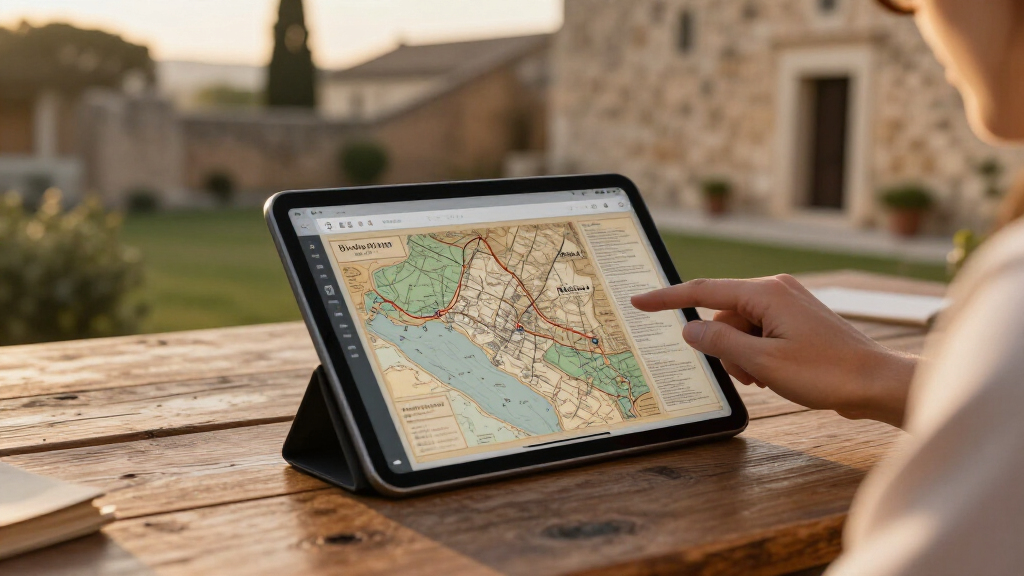
The reconstruction employs a digital platform that simulates the siege using layered SVGs, CSS, and canvas elements, creating a scroll-driven experience. Learn more about interactive historical reconstructions in this digital archive. This approach was guided by an AI workflow that critiques and refines the visual coherence, historical plausibility, and aesthetic quality of the simulation. The project’s core feature is a dynamic, explorable map of La Citadelle, illustrating troop movements, trench digging, artillery fire, and fortress defenses in real time, without static images or external assets.
According to the project team, the digital reconstruction is based on historical research, including siege plans, terrain data, and contemporary accounts. An AI assistant authored a manual to ensure layered architecture and precise interactions, resulting in a scalable, device-agnostic platform that balances educational intent with artistic storytelling. The site employs a restrained color palette and typography inspired by archival materials, enhancing its authenticity and immersive quality. Details on the digital methods used can be found in the original analysis.
While the project has been publicly launched and is accessible online, researchers note that it remains a work in progress. The AI critique process continues to refine accuracy, and additional historical data are being integrated to improve the simulation’s fidelity. The team also plans to incorporate user feedback and expert reviews to further enhance the platform’s educational value.
Transforming Historical Study with Interactive Digital Archives
This development represents an advancement in how historical conflicts are studied and understood. By leveraging AI and digital visualization, the project offers a detailed depiction of the 1693 siege that complements traditional static reconstructions or written accounts. It provides a resource for education, research, and public history, allowing users to explore military tactics, terrain, and siege dynamics in an interactive environment.
For scholars, this technology offers tools for analyzing troop movements, fortification strategies, and battlefield geography with a higher level of detail. For the general public, it provides an accessible visualization of historical events, making complex military actions more tangible through interactive storytelling. The project also demonstrates how AI can support digital history exhibits, potentially informing future reconstructions of similar events.
interactive digital history archives
As an affiliate, we earn on qualifying purchases.
As an affiliate, we earn on qualifying purchases.
Historical Reconstructions and the Rise of AI in Digital History
The siege of La Citadelle in 1693 was a significant event during a period characterized by fortress conflicts and evolving military engineering. Traditional reconstructions relied on static maps, engravings, and written descriptions, which limited engagement and understanding. Recent digital advancements have introduced interactive maps, 3D models, and virtual reconstructions.
However, earlier efforts often faced challenges related to scalability, responsiveness, and accuracy. The integration of AI into digital history projects aims to address these issues by enabling dynamic critiques, iterative improvements, and layered visualizations. This project applies AI-driven workflows to produce a detailed simulation of the La Citadelle siege, rooted in historical research.
It is part of a broader movement exploring how artificial intelligence can enhance scholarly analysis and public engagement with history, making complex events more accessible through interactive media.
“This project demonstrates how AI can support digital history by combining fidelity with interactivity to facilitate engagement and learning.”
— Thorsten Meyer
historical siege visualization software
As an affiliate, we earn on qualifying purchases.
As an affiliate, we earn on qualifying purchases.
Limitations and Future Improvements in AI-Driven Reconstructions
While the project has achieved a high level of visual and historical detail, some uncertainties remain. The accuracy of troop movements and terrain modeling depends on available primary sources, which may be limited or subject to interpretation. The AI critique process is ongoing, and further refinements are needed to improve the fidelity of the simulation as new historical data becomes available.
Additionally, questions remain about how well the platform will scale for broader educational use and how user interactions might influence the accuracy of the reconstruction. The team is actively working to incorporate additional data and feedback from experts to address these issues.
AI-driven historical reconstructions
As an affiliate, we earn on qualifying purchases.
As an affiliate, we earn on qualifying purchases.
Ongoing Development and Broader Application of AI in Digital History
The team plans to expand the platform’s capabilities by integrating more detailed terrain data, enhancing interactive features, and collaborating with historians for validation. Future updates may include more detailed troop and artillery models, as well as immersive virtual reality experiences.
Researchers also intend to apply this AI-driven approach to other historical conflicts, establishing a framework for digital reconstructions. Public access will continue, with updates informed by scholarly input and technological progress.
As an affiliate, we earn on qualifying purchases.
Key Questions
How accurate is the digital reconstruction of the 1693 siege?
The reconstruction is based on available historical sources and AI critique, but some details, such as troop movements and terrain specifics, are still being refined. It provides a detailed approximation rather than a fully definitive model.
Can I explore the reconstruction interactively?
Yes, the platform is designed as an interactive, scroll-driven experience that allows users to explore troop movements, artillery fire, and fortress defenses in detail. It is accessible online and optimized for multiple devices.
What role did AI play in creating this reconstruction?
AI guided the iterative critique process, ensuring visual coherence, historical plausibility, and aesthetic quality. It facilitated the layering and interaction design, supporting the development of a detailed digital model.
Will this project be expanded or updated?
Yes, future updates are planned to incorporate more detailed data, improve interactivity, and extend applications to other historical events, making the platform more comprehensive over time.
Source: ThorstenMeyerAI.com
Fall Picks
fall essentials
As an affiliate, we earn on qualifying purchases.