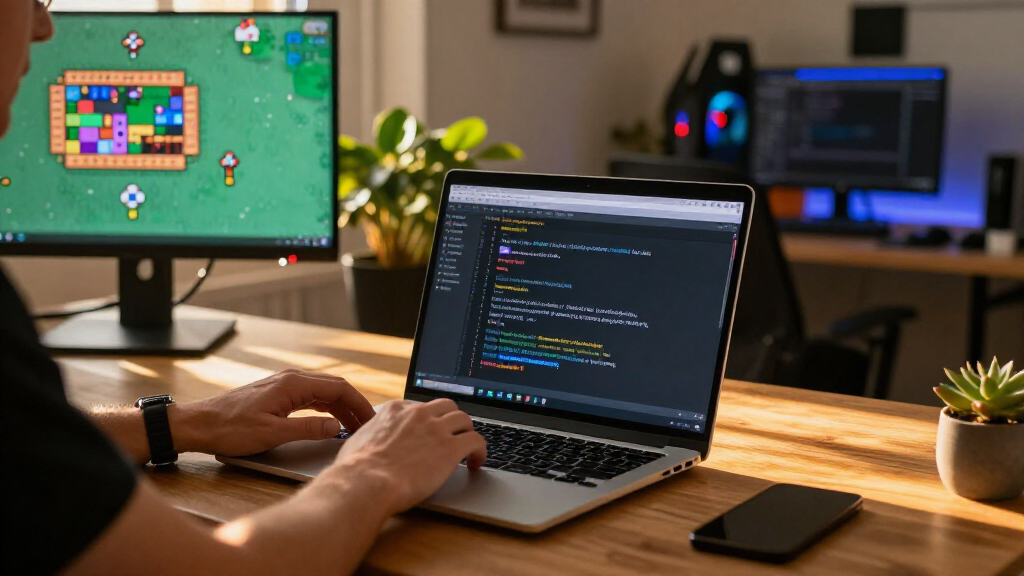

🔍 Read the full analysis: Claude Code Gets Guidance Against Recreating Existing Games on ThorstenMeyerAI.com

Get the latest gadgets delivered free with Prime
- Fast, free delivery on millions of items
- Prime Video, Amazon Music and more included
- Member-only deals all year
TL;DR
A GamesIndustry.biz headline reports that Anthropic added a rule intended to stop Claude Code from recreating existing games. The available information does not include the rule’s text, start date, scope or enforcement method, so its effect on users is not yet known.
Anthropic has added a rule intended to stop its Claude Code coding assistant from recreating existing games, according to a GamesIndustry.biz headline cited in the original report. The change could affect developers using AI to build game prototypes or study familiar titles, but the rule’s wording, scope and enforcement are not provided.
The report establishes only the headline-level description: Anthropic added a rule with the stated aim of preventing Claude Code from recreating games that already exist. It does not include the article’s full text, a link to an Anthropic explanation, or a direct comment from the company. No named spokesperson is quoted, and the source material provides no examples of requests that would be blocked.
As a result, it is not possible to tell whether the rule covers every request mentioning an existing game or only prompts seeking a close reproduction of a particular title. The available account also does not say whether Claude Code will refuse such prompts, redirect users toward a different design, or limit the generated code in some other way. Those distinctions would determine how the restriction affects normal game-development work.
The reported development is a restriction on coding requests, not evidence that Claude Code has stopped producing game-like projects or that any particular output has been prevented. No tests, performance results or user reports are included. The rule’s practical effect therefore remains unverified.
How the Rule Could Affect Game Development
A restriction on recreating existing games could matter to both game developers and rights holders. Developers use coding tools for experiments, prototypes and learning exercises; a rule that blocks close copies may set a boundary around how those tools respond to requests based on named titles. Whether that boundary is useful in practice depends on how Anthropic defines recreation and how consistently Claude Code applies the rule.
The same uncertainty matters for legitimate work. Many games share genres, mechanics and broad design conventions. If the restriction is narrowly aimed at reproducing a specific game’s distinctive content, it may have limited impact on ordinary genre-based prototyping. If it is applied broadly, it could also affect projects that draw on familiar ideas without seeking to copy a particular title. The report does not say where Anthropic draws that line.
The announcement alone does not establish that the rule prevents copying, resolves intellectual-property questions, or changes the rights of game makers. It signals a product limit, but its reach and effectiveness are unknown until the wording and examples are available.
Popular right now

Bose QuietComfort Headphones (2nd Gen), Wireless Over-Ear Noise-Cancelling Headphones, Hazelnut Taupe

Dyson W1 PencilWash Wet and Dry Cleaner with Dok Cordless Wet Floor Cleaner

KitchenAid Artisan 5-Quart Tilt-Head Stand Mixer, Almond Cream
As an affiliate, we earn on qualifying purchases.
What the Available Report Says
The factual basis for this account is limited to a GamesIndustry.biz headline stating that Anthropic added a rule to stop Claude Code recreating existing games. The supplied material does not contain the full article or an accompanying company statement. It also does not identify a specific incident, earlier behavior or product update that prompted the rule.
The account does not establish whether the restriction appears in Claude Code’s system instructions, a broader product policy or another part of the service. Nor does it provide an introduction date or say whether existing users have already encountered changed responses. These gaps mean the development can be described as a reported rule with a stated purpose, but not as a fully documented policy change.
The Rule’s Scope Remains Unknown
The central unanswered question is what Anthropic means by “recreating” an existing game. The available report does not explain whether the rule applies to remakes, fan projects, educational exercises, requests based on a named title, or games that share common mechanics and genre conventions. Without the actual wording, readers cannot assess how those cases are treated.
There is also no information about enforcement or results: whether the assistant refuses, modifies or redirects a request; whether the response depends on the prompt; or how consistently the rule is applied. No public tests or company explanation are provided. The report does not establish whether users have a way to challenge a refusal, or whether Anthropic has measured any effect on outputs.
Awaiting Anthropic’s Explanation
The next useful development would be publication of the rule or a statement from Anthropic describing the requests it covers. Examples of allowed and refused prompts would help developers distinguish a request for a close reproduction from work using familiar genre conventions or general mechanics.
Any assessment of the change should separate its stated purpose from its performance. Public examples or tests could clarify whether Claude Code responds consistently to clearly described requests and whether the restriction blocks permitted prototyping alongside close copies. The available report identifies no announced milestone or date for further information.
Key Questions
What rule did Anthropic add to Claude Code?
A GamesIndustry.biz headline says Anthropic added a rule intended to stop Claude Code from recreating existing games. The rule’s text is not included in the available report.
Does the rule ban all games inspired by existing titles?
That is not established. The available information does not define recreation or explain how the rule treats shared genres, mechanics, remakes or fan projects.
How does Claude Code enforce the rule?
The report does not describe an enforcement method. It is unknown whether Claude Code refuses requests, redirects users or limits its output in another way.
When did the rule take effect?
The effective date is not provided. The available account also does not say whether users have already seen changed responses.
Has the rule been shown to prevent game copying?
No test results or examples are included, so the rule’s practical effectiveness has not been established.
Source: ThorstenMeyerAI.com