
🔍 Read the full analysis: 9 Best Wi-Fi 7 Routers For Faster Home Connectivity In 2027 on ThorstenMeyerAI.com

Get the latest gadgets delivered free with Prime
- Fast, free delivery on millions of items
- Prime Video, Amazon Music and more included
- Member-only deals all year
TL;DR
A comparison of nine Wi-Fi 7 routers puts the TP-Link Archer BE550 first for its balance of tri-band capacity and wired connections. The other picks range from simpler dual-band models to a quad-band gaming router; the right choice depends on household traffic, compatible devices, wired gear and coverage needs.
ThorstenMeyerAI.com’s nine-router comparison names the TP-Link Archer BE550 its best overall Wi-Fi 7 router, citing a combination of tri-band flexibility and wired connections. The list also includes dual-band models for simpler networks and a quad-band gaming-focused option, with the comparison stressing that a router’s fit depends on a household’s devices, layout and wired equipment—not just its Wi-Fi 7 label.
The comparison groups routers by the tradeoffs they offer. The Archer BE550 leads as a balanced choice, while the ASUS ROG Rapture GT-BE98 Pro is positioned for demanding setups that can make use of quad-band capacity and gaming-oriented controls. The TP-Link Archer BE230 is presented as a simpler option for smaller networks. For an earlier-generation comparison, see Wi-Fi 6 router options.
Three other tri-band models—the NETGEAR BE9300, TP-Link BE600 and BE550—are framed as alternatives to weigh against client load, wired needs and network layout. The dual-band group comprises the TP-Link Archer BE400, ASUS RT-BE82U, NETGEAR RS90 and NETGEAR RS140. The source does not supply prices, test results or a detailed specification table for these models. For another look at Wi-Fi 7 options, explore top Wi-Fi 7 routers.
The author says the ranking considers band configuration, wired connectivity and feature set, while treating advertised capabilities as selection clues rather than guarantees. Real-world results can vary with client hardware, placement, building materials, neighboring networks and internet-service speed.
The 9 picks
- 1
 ASUS ROG Rapture GT-BE98 Pro Quad-Band WiFi 7 Gaming RouterView on Amazon →
- 2
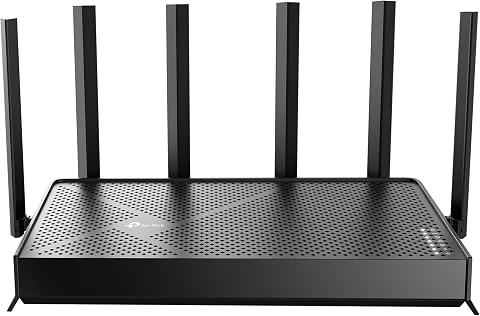 TP-Link Archer BE600 Tri-Band Wi-Fi 7 RouterView on Amazon →
- 3
 NETGEAR Nighthawk BE9300 Tri-Band WiFi 7 RouterView on Amazon →
- 4
 TP-Link Archer BE550 Tri-Band Wi-Fi 7 RouterView on Amazon →
- 5
 NETGEAR Nighthawk RS140 Dual-Band WiFi 7 RouterView on Amazon →
- 6
 ASUS RT-BE82U Dual-Band Wi-Fi 7 RouterView on Amazon →
- 7
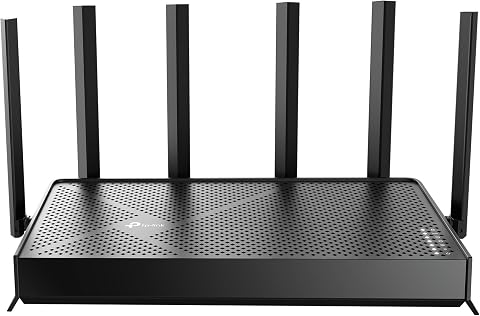 TP-Link Archer BE400 BE6500 Dual-Band Wi-Fi 7 RouterView on Amazon →
- 8
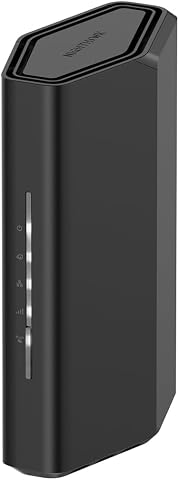 NETGEAR Nighthawk RS90 WiFi 7 Dual-Band RouterView on Amazon →
- 9
 TP-Link Archer BE230 Dual-Band Wi-Fi 7 RouterView on Amazon →
How the Nine Picks Fit Different Homes
The list is useful because Wi-Fi 7 alone does not determine whether an upgrade will help. A household with many active devices or substantial wired equipment may value more bands and ports; a smaller network may not benefit from paying for those extras. A quad-band gaming router can be excessive for a home that does not need its added capacity or controls.
Compatibility also matters. Older devices can connect to a Wi-Fi 7 router, but they do not gain every feature of the newer standard simply by joining the network. Readers deciding whether to upgrade should consider the devices they use most, the speed of their internet plan, and whether weak coverage—not wireless capacity—is the main problem.
Popular right now

Hisense 65-inch U6 Pro Mini-LED 4K UHD Smart Fire TV

Apple AirPods Pro 3 Wireless Earbuds with Active Noise Cancellation

Philips Café Aromis Automatic Espresso Machine with LatteGo Pro Milk System
As an affiliate, we earn on qualifying purchases.
What the Comparison Evaluates
The source describes a ranking based on common home-network needs rather than a single maximum-speed contest. It weighs whether a router has two, three or four bands, whether its ports suit wired devices and a fast internet connection, and whether its controls fit everyday use, gaming or more involved setups.
Its selection advice emphasizes matching the router to the network. More bands can offer flexibility for sharing wireless traffic, but do not automatically make each connection faster. Port speeds are useful only when connected equipment supports them, while walls, floors and router placement can limit coverage regardless of advertised capacity.
“The Archer BE550 earns the overall lead by pairing tri-band Wi-Fi 7 with a practical feature mix.”
— ThorstenMeyerAI.com comparison
What the Ranking Does Not Establish
The supplied material does not include prices, measured throughput, latency tests, coverage tests or a precise publication date. It also does not provide detailed port specifications for each model, so readers should verify current product listings before buying. The ranking is attributed to the source’s comparison and should not be read as proof that the BE550 will outperform the alternatives in every home.
It is also unclear how each router would perform with a particular internet plan, floor plan or mix of client devices. Advertised capabilities do not establish what a user will experience through walls or in a congested wireless environment.
Check Fit Before Buying
Before choosing among the nine, readers can list their most-used wireless devices, check which standards those devices support and map the equipment they need to connect by cable. They should then compare each router’s current port configuration, price and compatibility with any planned mesh or access-point setup.
The next useful step is matching those details to the home’s coverage needs and internet service. The source provides a framework for comparison, but a specific recommendation for an individual household requires current product specifications and a clear picture of its network.
Key Questions
Which router does the comparison rank first?
The comparison names the TP-Link Archer BE550 its overall pick, citing tri-band flexibility and a practical mix of wired connections.
Which pick is aimed at gaming-focused setups?
The ASUS ROG Rapture GT-BE98 Pro is presented as the premium specialist, with quad-band capacity and gaming-oriented controls. The source says most homes may not need its scale or added complexity.
Does a Wi-Fi 7 router upgrade older devices to Wi-Fi 7?
No. Older Wi-Fi devices can connect, but they do not gain every Wi-Fi 7 capability simply by using a Wi-Fi 7 router.
Is a tri-band router always better than a dual-band model?
No. The comparison says band count is not a direct speed guarantee. A tri-band model may suit a busy network, while a simpler dual-band router may be a better fit for a smaller household with less traffic.
What should buyers check before selecting a router?
Check device compatibility, wired port needs, internet-plan speed and home coverage. Router placement, walls and other networks can affect results, so advertised capacity alone does not predict performance in every room.
Source: ThorstenMeyerAI.com