
🔍 Read the full analysis: Can AI Recreate A Game Without Using Someone Else’s IP? on ThorstenMeyerAI.com

Get the latest gadgets delivered free with Prime
- Fast, free delivery on millions of items
- Prime Video, Amazon Music and more included
- Member-only deals all year
TL;DR
Take-Two CEO Strauss Zelnick said companies should protect their own and others’ intellectual property after an IGN interviewer asked about AI tools and game cloning. Anthropic’s Claude Code has a rule against recreating a specific existing game, while OpenAI’s published policy broadly bars IP infringement. The exchange does not establish that either company’s tools were used to clone a Take-Two game, and the legal boundaries remain unsettled.
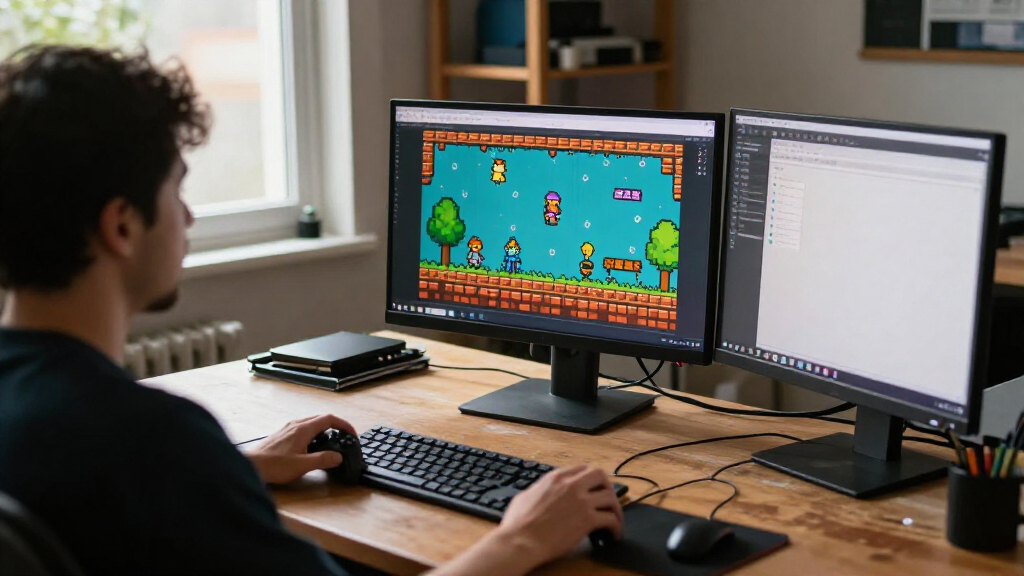
Take-Two Interactive CEO Strauss Zelnick said AI companies should protect other companies’ intellectual property, responding to an IGN question about tools that could help users recreate games. His comments came as Anthropic’s Claude Code had added a rule against recreating a specific existing game; they do not establish that Anthropic or OpenAI tools were used to clone a Take-Two title.
In the interview, published by IGN on November 9, 2026, managing editor Wesley Yin-Poole asked Zelnick whether he welcomed Anthropic’s new rule and wanted OpenAI to take similar steps. Zelnick replied: “I think all companies should be protecting intellectual property, their own and everyone else’s.” He added that it seemed “ironic” for companies in the intellectual-property business to “stomp on someone else’s IP” while expecting their own rights to be protected.
The exchange followed a question about AI-assisted game cloning and piracy. Zelnick said he did not see it as a financial threat to Take-Two’s business, but called it a creative matter and said the company protects its intellectual property. On the company’s earnings call that day, he said piracy would become “more of a challenge” and that Take-Two was enhancing technical defenses and legal work.
Anthropic’s Claude Code instructions, in place since version 2.1.317, published November 2, tell the model not to build a recreation of a specific existing game, including one with its name, characters, art, music, levels or look—even if renamed or described as original. OpenAI’s usage policies bar attempts to infringe others’ intellectual-property rights. The source review found no game-specific instruction in the open-source code of OpenAI’s Codex CLI.
AI coding agents and existing games · as of Nov 14, 2026
Prompt in, game out: where the line runs
Three example requests (illustrative, not real cases) and what each vendor’s published rules say about them.
- Example request
“An original racing game with my own art”own idea, own assets
Claude Code (Anthropic)AllowedRule text: build original games and games from the user’s own designs and assets
Codex / policies (OpenAI)No objectionNothing in the published usage policies against it
- Example request
“A heist game with mechanics like [a named hit]”a game named as a reference
Claude Code (Anthropic)Allowed since v2.1.317Builds an original game in that genre, per Anthropic
Codex / policies (OpenAI)No game rule foundNo game-specific instruction in the Codex CLI code
- Example request
“Rebuild [a specific game], just rename it”a copy under a new name
Claude Code (Anthropic)Not allowedCovers its name, characters, art, music, levels or look; offers to build something similar
Codex / policies (OpenAI)General IP banUsage policies bar attempts to infringe IP; no game-specific rule found
Outside the tools: Take-Two says it relies on its own “technical defenses” and “legal activities”. Copyright and trademark law apply whichever tool writes the code.
The requests are our own illustrations. The rows summarize published rules, not tests of how the tools behave. ChatGPT’s and Codex Web’s server-side instructions are not public.
Sources: Claude Code program text, versions 2.1.317 to 2.1.325, and Anthropic’s statement of Nov 4, 2026 (via Tom’s Hardware); OpenAI usage policies, version effective Nov 20, 2026 (Internet Archive copy of Oct 28, 2026); Codex CLI repository on GitHub, checked Nov 14, 2026; Take-Two fiscal Q2 2027 earnings call, Nov 9, 2026.
Graphic: Powered by Thorsten Meyer AI
AI Game Cloning Meets IP Rules
The exchange highlights a practical and legal question for game publishers: how far AI tools can assist in recreating a recognizable game before the result infringes protected material. A tool’s written policy can set limits on how its model should respond, but that policy alone does not settle whether a particular output violates copyright or other rights.
For players and developers, the distinction matters because a game’s identity can involve many elements—such as characters, art, music and levels—while a broad genre or mechanic may raise different questions. Zelnick did not identify a specific work or describe a particular alleged clone. His remarks therefore signal concern about the issue, not a finding about a named product or case.
Take-Two’s comments also distinguish commercial risk from creative impact. Zelnick said he did not view the issue as a financial threat to the business, while warning that piracy could become more challenging. The company’s stated response is to strengthen technical defenses and pursue legal measures as appropriate.
Popular right now

Hisense 40-Inch QD4SR Series Hi-QLED FHD Roku Smart TV

De'Longhi Classic Signature Espresso Machine

De’Longhi La Specialista Touch Semi-Automatic Espresso Machine with Grinder
As an affiliate, we earn on qualifying purchases.
What the Interview Actually Covered
The interview took place on the evening Take-Two reported results for the quarter ended September 30, 2026. Zelnick was first asked about AI-assisted cloning, piracy and the prospect of a Take-Two game appearing unofficially on PC. He said the company was focused on protecting its work, while describing the central concern as creative rather than financial.
The interviewer then brought up Anthropic and asked whether OpenAI should adopt a similar restriction. That framing is important: the interviewer named both AI companies, and Zelnick responded to the question. He did not identify a specific AI product, clone, legal dispute or alleged instance involving a Take-Two game.
The source material also distinguishes Anthropic’s actual instruction from the interview’s shorthand about blocking reverse engineering. The Claude Code rule addresses recreating a specific existing game; it does not explicitly mention reverse engineering or decompiling. On the earnings call, Zelnick separately discussed those activities, saying technical factors had historically made piracy difficult while acknowledging that it could become more challenging.
“I think all companies should be protecting intellectual property, their own and everyone else’s.”
— Strauss Zelnick, Take-Two Interactive chairman and CEO, speaking to IGN
The Limits of the Public Record
Zelnick did not specify what conduct he meant by “stomp on someone else’s IP”—whether that referred to user-generated outputs, the material used to train AI models, or another practice. He also did not say that a Take-Two game had been cloned using Claude, ChatGPT or another AI tool. No specific infringement allegation against either company was established in the interview.
The publicly described policies do not by themselves show how often their rules block requests, how consistently the restrictions apply, or how the companies handle edge cases. The source review reported no public response from Anthropic or OpenAI to Zelnick’s remarks as of 21:30 UTC on November 14. The legal status of any particular AI-generated recreation would depend on its facts and applicable law; the interview did not resolve that question.
Publisher and AI Company Responses
Take-Two has said it is strengthening technical defenses and legal activity as piracy risks develop. The company has not, in the cited material, announced a new lawsuit or a specific enforcement action tied to AI game recreation. No further response or policy change from Anthropic or OpenAI was reported by the source’s stated cutoff of November 14, 2026.
Further developments to watch include whether the AI companies clarify how their existing policies apply to game recreations, whether publishers report specific cases, and how courts or regulators address disputes involving AI-generated material. Until then, Zelnick’s comments are best understood as a broad statement of principle and concern, rather than evidence of a confirmed clone or a settled legal outcome.
Key Questions
Did Zelnick accuse Anthropic or OpenAI of cloning a Take-Two game?
No. He responded to a question that named the companies and said AI companies should protect others’ intellectual property. He did not cite a specific clone or allege that either company’s tools had been used to copy a Take-Two game.
What does Anthropic’s Claude Code rule prohibit?
The instruction says the model should not build a recreation of a specific existing game using elements such as its name, characters, art, music, levels or look, even if the result is renamed or called original.
Does OpenAI have a game-specific rule?
The source material identifies a general OpenAI policy against attempts to infringe others’ intellectual-property rights. Its review found no game-specific instruction in the open-source code of the Codex CLI.
Did Take-Two call AI cloning a financial threat?
Zelnick said he did not see it as a financial threat to Take-Two’s business, but described it as a creative concern. Separately, he said piracy could become more challenging.
Is it settled whether AI can legally recreate a game?
No. The interview and the cited company policies do not settle the legal status of a particular recreation. That would depend on the material used and the facts of the case.
Source: ThorstenMeyerAI.com