
In 2026, the gadget world revolves around seamless integration of wearable sensors and augmented interfaces. You’ll see health monitors embedded in clothing, offering continuous essential sign tracking and early illness detection. Digital info will layer into your environment and accessories, providing real-time updates and personalized insights. With AI-driven analysis, your devices will anticipate your needs and adapt effortlessly, making tech feel like a natural extension of you. Keep exploring to discover how these innovations will reshape your daily life.
Key Takeaways
- Wearable sensors will evolve into comprehensive health monitors integrated into everyday clothing and accessories.
- Augmented interfaces embedded in environments and clothing will enable seamless, natural interactions with digital information.
- Real-time data visualization through augmented devices will enhance perception, mood indicators, and contextual notifications.
- Sensor and interface synergy will personalize fitness, social, and emotional experiences with predictive AI analytics.
- AI-powered data analysis will enable proactive health management and smarter, more intuitive gadget interactions by 2026.
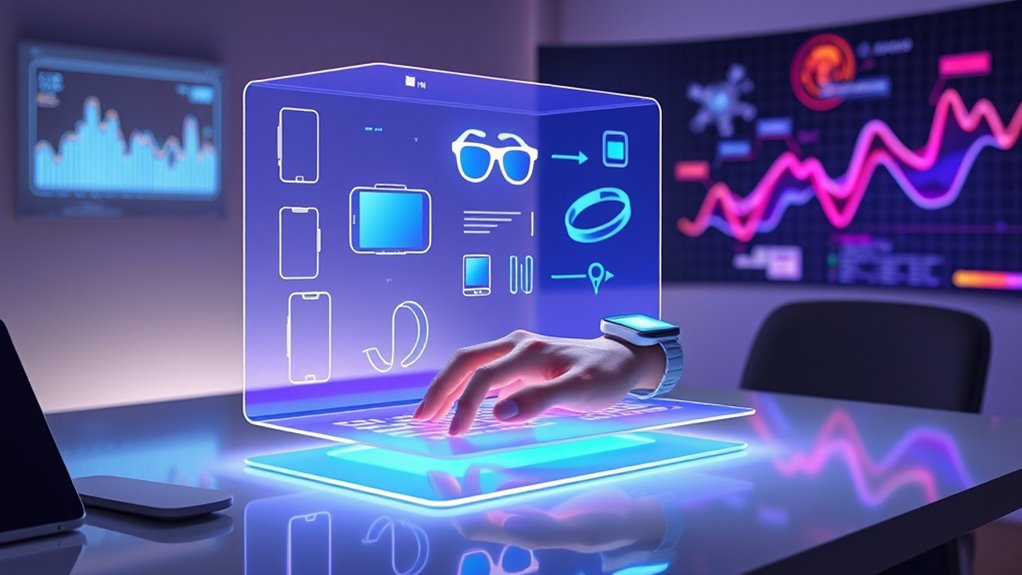
What will the future of technology look like in 2026? It’s an exciting question, especially as you start to see how wearable sensors and augmented interfaces are transforming daily life. By then, you’ll likely be surrounded by gadgets that seamlessly blend into your routine, providing real-time data and immersive experiences. Wearable sensors will no longer be just fitness trackers; they’ll become integral to health monitoring, environmental awareness, and even social interactions. Imagine a smart wristband that constantly tracks your vitals, detects early signs of illness, and adjusts your activity plans accordingly. These sensors will gather vast amounts of data, but it’s the way augmented interfaces interpret and present this information that will truly change how you interact with technology.
Augmented interfaces will go beyond screens and buttons. Instead, they’ll be integrated into your environment, clothing, and even your body, creating a layer of digital information that enhances your perception of the world. Think about walking into a room where your glasses or contact lenses project information about the people around you—background details, mood indicators, or even relevant notifications—without disrupting your natural vision. You won’t need to switch between devices or apps; instead, information will appear contextually, tailored to what you need at that moment. This level of integration makes interactions more intuitive and immediate, reducing friction and making technology feel like a natural extension of yourself.
You’ll find that wearable sensors and augmented interfaces will work together to create personalized experiences. For example, as you work out, sensors embedded in your clothing could track muscle engagement and fatigue levels, while your augmented interface provides real-time coaching, adjusting your routine on the fly. In social settings, sensors might analyze your emotional responses, helping you communicate more effectively by subtly guiding your expressions or gestures. The key is that these technologies won’t just collect data—they’ll interpret it in ways that enhance your decision-making, comfort, and productivity. Additionally, advancements in AI-powered data analysis will enable these devices to predict your needs and preferences with unprecedented accuracy, making interactions even more seamless.
Frequently Asked Questions
Will Quantum Computing Become Mainstream by 2026?
By 2026, quantum computing will likely become mainstream enough to impact your daily life, especially through advancements in quantum encryption and quantum sensors. You’ll notice more secure communications and smarter devices leveraging quantum tech. While full-scale commercial use might still be growing, these innovations will start transforming industries, making quantum-powered gadgets more accessible and practical for everyday applications. Expect a significant shift towards integrating quantum solutions in your tech environment soon.
How Will AI Impact Daily Consumer Gadgets?
AI will revolutionize your daily gadgets, making your smart home more intuitive and responsive. Voice assistants will become smarter, predicting your needs and simplifying tasks like adjusting thermostats or managing security. You might find your devices learning your routines, providing personalized experiences. This evolution will make your gadgets more seamless, saving time and effort, ultimately transforming how you interact with technology every day.
What Are the Privacy Implications of New Tech Trends?
You should be aware that new tech trends could impact your data privacy, making your personal information more vulnerable. Devices may collect more data, so it’s essential you give clear user consent before sharing anything. Stay vigilant about privacy settings, and question how your data is used. By staying informed and proactive, you can better protect your privacy amid these emerging gadgets and technologies.
Will Wearable Tech Fully Replace Smartphones?
You might wonder if wearable tech will fully replace smartphones. It’s possible, especially as augmented reality and biometric authentication become seamless. Imagine accessing everything through a sleek device on your wrist or glasses, eliminating the need for a bulky phone. The tech is advancing fast, and as security improves, wearables could soon handle all your communication and entertainment needs, making traditional smartphones a thing of the past.
How Sustainable Are Upcoming Gadgets for the Environment?
Upcoming gadgets are becoming more sustainable thanks to eco-friendly materials and energy-efficient designs. You’ll notice manufacturers focusing on recyclable plastics, biodegradable components, and low-power circuitry to reduce environmental impact. These innovations help minimize e-waste and conserve resources. As a consumer, choosing devices built with sustainability in mind supports eco-conscious practices and encourages companies to prioritize greener technology. Overall, the future of gadgets looks more environmentally friendly and responsible.
Conclusion
As you step into 2026, remember that the gadgets shaping your future aren’t just tools—they’re the heartbeat of innovation. With every new device, you’re invited to imagine a world transformed by technology. The question isn’t what’s next, but how you’ll embrace it. Because in this fast-paced digital era, isn’t it true that the future belongs to those who dare to innovate? Stay curious, stay bold—your next great adventure begins now.