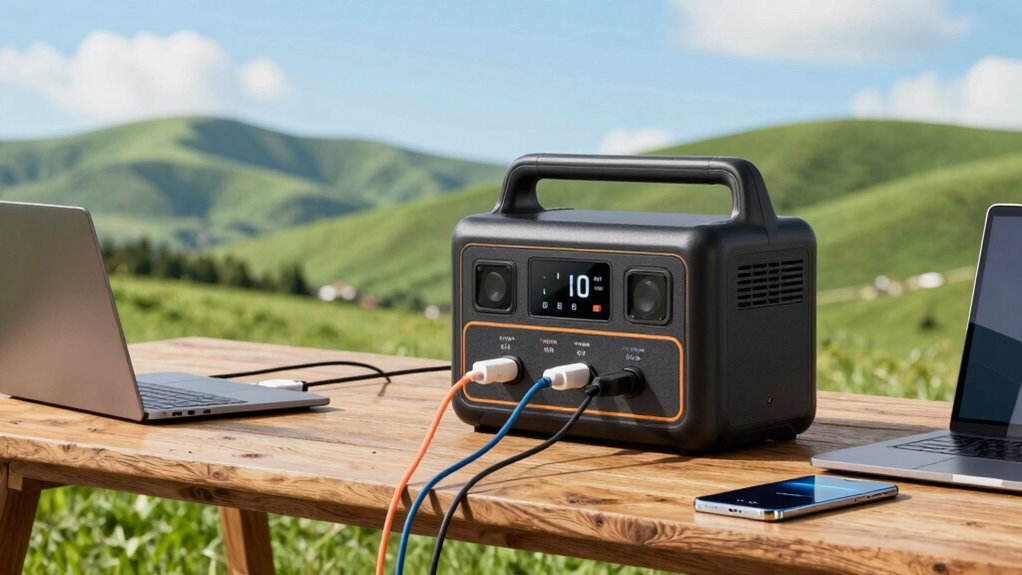

Understanding capacity in portable power stations helps you pick the right one for your needs. Capacity, measured in watt-hours, shows how long your devices can run—higher Wh means longer use. Battery chemistry also affects performance and size. Size influences portability, so balancing capacity with portability is key. If you’re clear on how capacity works, you’ll make smarter choices and avoid confusion. Keep exploring to learn how to choose and use your power station most efficiently.

Get the latest gadgets delivered free with Prime
- Fast, free delivery on millions of items
- Prime Video, Amazon Music and more included
- Member-only deals all year
Key Takeaways
- Capacity, measured in watt-hours (Wh), indicates how long a power station can run devices before needing a recharge.
- Battery chemistry affects energy density, cycle life, and overall capacity, influencing performance and size.
- Larger capacity units support longer runtimes but are less portable and more bulky.
- Proper maintenance and understanding usage patterns optimize capacity and extend the power station’s lifespan.
- Matching power station capacity to your device needs ensures reliable performance without unnecessary bulk.
Popular right now

Ninja DualZone Smart Air Fryer, 10 Qt, 6-in-1, DZ950

LG 85-inch QNED75B Mini LED Smart TV Bundle with HDMI and CPS Protection Plan

Sony WH-1000XM4C Wireless Noise-Cancelling Headphones, Black
As an affiliate, we earn on qualifying purchases.
What Does Capacity Really Mean for Portable Power Stations?
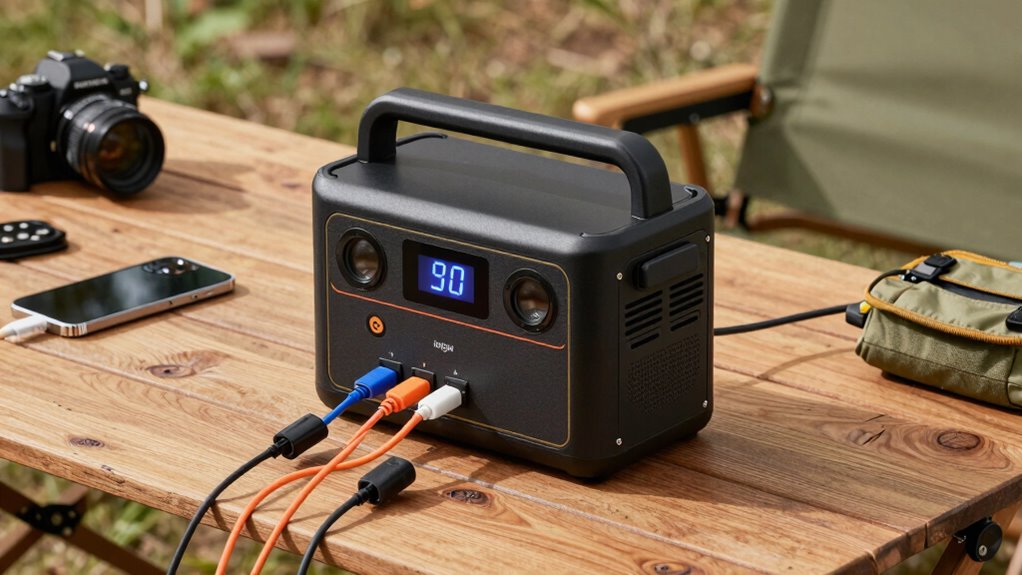
Have you ever wondered what the capacity of a portable power station truly signifies? It’s not just about how much energy it can store but also how its battery chemistry impacts performance. Different battery chemistries, like lithium-ion or lithium-polymer, influence how efficiently the station holds and delivers power. The capacity also relates to the number of charging cycles the battery can endure before its performance declines. A higher number of cycles means the station can be recharged more times without losing significant capacity. Understanding these factors helps you grasp why some power stations last longer or perform better over time. For example, battery longevity is affected by both the chemistry and how well the battery is maintained during use. Additionally, battery chemistry plays a crucial role in the overall energy efficiency and safety of the power station. Proper maintenance can extend battery life and preserve performance, making your investment more worthwhile. When evaluating different models, consider the performance factors that can affect your device’s reliability and lifespan. So, when choosing a model, consider both the chemistry and the expected charging cycle life to guarantee it meets your energy needs and longevity expectations. Recognizing the battery chemistry’s role in overall performance can help you select a more reliable and durable power station.
How Watt-Hours Show a Power Station’s Capacity
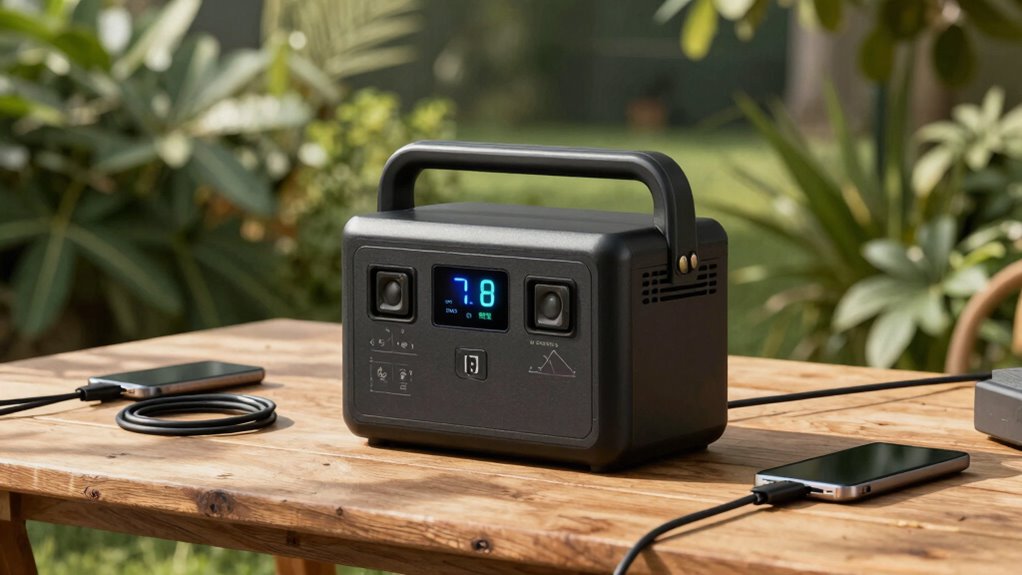
Watt-hours give you a clear way to measure a power station’s capacity, showing how much energy it can store and supply. By comparing watt-hour ratings, you can easily see how different models stack up in size and power. Practical examples help you understand what watt-hours mean for real-world use and how they match your energy needs. Understanding energy storage is key to choosing the right portable power station for your needs. A solid grasp of energy capacity can help you make smarter decisions when selecting a device that suits your specific requirements. Additionally, knowing how tax planning strategies relate to energy investments can provide insights into optimizing your overall energy management. Recognizing the importance of power quality ensures your devices perform reliably, especially during critical off-grid situations. In particular, battery technology advancements play a significant role in improving overall capacity and efficiency of these devices.
Understanding Watt-Hour Basics
Ever wonder how a portable power station measures its ability to keep your devices running? It all comes down to watt-hours (Wh), which show the total energy capacity. Think of it as the fuel tank size. Here are key points to understand:
- Higher watt-hours mean more energy storage, so your devices can run longer.
- Battery degradation over time reduces effective watt-hours, affecting performance.
- Charging cycles, the number of times you recharge the station, also impact overall capacity.
Knowing these factors helps you gauge how long your power station can serve you before needing replacement or maintenance. So, understanding watt-hours isn’t just about numbers—it’s about how well your station will perform over its lifespan.
Comparing Power Station Sizes
Curious about how to compare different portable power stations? It all comes down to understanding watt-hours, which show a station’s total capacity. The higher the watt-hours, the longer you can power devices. But don’t forget to take into account battery chemistry, as it affects longevity and safety—lithium-ion and lithium-polymer are common options. Charging speed also matters; some stations recharge faster, giving you less downtime. When comparing sizes, look beyond just capacity: a larger watt-hour count isn’t always better if the battery chemistry or charging speed don’t suit your needs. Knowing these factors helps you choose a power station that balances capacity, recharge time, and safety for your specific use.
Practical Capacity Examples
Understanding practical capacity examples can help you visualize what a certain watt-hour rating means in real-world use. For instance, a 500 Wh power station can:
- Charge a smartphone approximately 50 times, depending on battery size.
- Power a small fridge for about 8-10 hours, ideal for camping or emergencies.
- Run a laptop for roughly 8 hours, considering typical battery capacity.
- The type of backup gear you choose can influence how efficiently your power station performs and how well it suits your specific needs.
Keep in mind, battery longevity influences how well the power station holds its capacity over time. A higher watt-hour rating generally means longer usage before recharging. Charging speed varies too; larger capacities may take longer to recharge fully. Knowing these practical examples helps you select a power station that matches your needs, balancing capacity, battery health, and recharge time effectively.
How Capacity Affects Your Power Station’s Performance
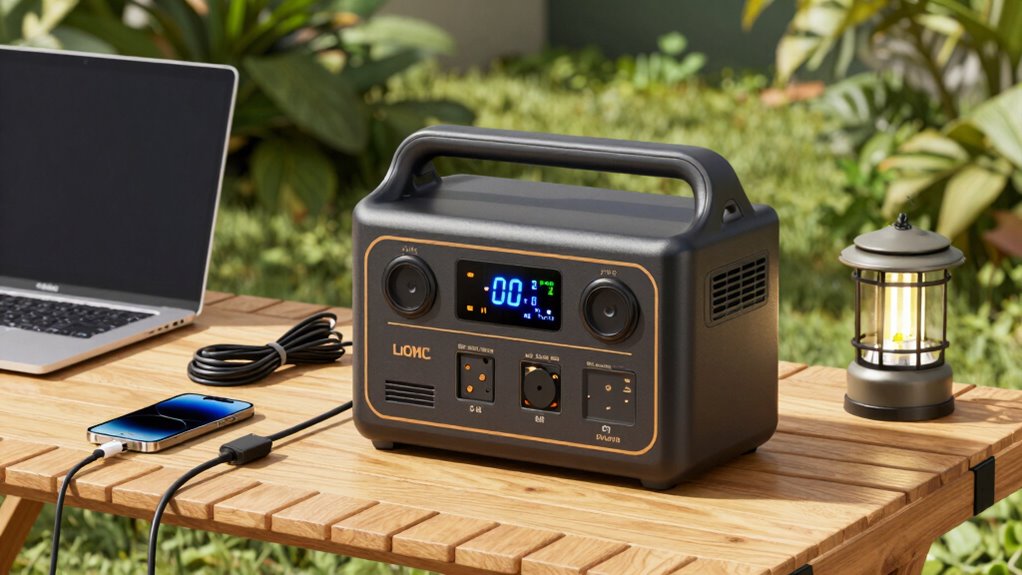
Understanding capacity metrics helps you choose the right power station for your needs, as it directly influences how long your devices can run. The more capacity a station has, the longer you’ll be powered without recharging. To get the best performance, you need to match your power needs with the station’s capacity accurately. Additionally, knowing how capacity metrics are measured can help you compare different models effectively. A clear understanding of energy storage and how it impacts runtime can further aid in selecting the most suitable option. Recognizing the importance of thermal management can also ensure your power station operates safely and efficiently over time. Being aware of factors such as power output can help optimize device performance and prevent overloads. Understanding how performance specifications translate to real-world use can further improve your decision-making process.
Understanding Capacity Metrics
Capacity metrics are essential because they directly influence how long your power station can run devices before needing a recharge. Understanding these metrics helps you choose the right unit for your needs. Here are three key points:
- Battery chemistry impacts capacity and longevity, with lithium-ion batteries offering high energy density and durability. A better understanding of battery chemistry can help you select a more reliable power station.
- Capacity ratings are usually measured in watt-hours (Wh), indicating total energy storage; higher Wh means longer runtime.
- Charging cycles affect overall capacity over time; more cycles can degrade performance, reducing available power.
- Proper battery maintenance can prolong the lifespan and performance of your power station, ensuring consistent energy output over time.
Impact on Usage Time
Ever wondered how long your portable power station can keep your devices running? Capacity directly influences usage time, but other factors matter. Battery chemistry affects how efficiently the station stores and releases energy, impacting overall performance. A lithium-ion battery, for example, offers a good balance of capacity and longevity, while others may degrade faster. Charging speed also plays a role; faster charging reduces downtime but can strain certain battery chemistries, affecting lifespan. Here’s a quick comparison:
| Battery Chemistry | Charging Speed | Typical Usage Time |
|---|---|---|
| Lithium-ion | Fast | 4-8 hours |
| Lead-acid | Moderate | 3-6 hours |
| Lithium-polymer | Fast | 5-9 hours |
| Nickel-metal hydride | Slow | 2-4 hours |
| Solid-state | Very fast | 6-10 hours |
Higher capacity generally means longer usage, but chemistry and charging speed also shape your experience.
Matching Power Needs
Choosing the right power station depends on matching its capacity to your actual power needs. If you pick one with too little capacity, you’ll run out quickly; too much, and you’re paying extra for unused power. To find your ideal match, consider these factors:
- Battery chemistry – Different chemistries affect longevity and safety, influencing performance and maintenance.
- Charging speed – Faster charging gets your station ready quicker, especially important if you need frequent recharges.
- Power output – Ensure the station’s capacity can handle your devices’ total wattage without strain. Understanding industry standards for capacity measurement helps you compare models accurately.
- Capacity matching involves understanding how your power needs relate to the station’s capabilities, ensuring optimal performance and avoiding waste. Knowing how industry standards define capacity helps you choose the right model for your specific requirements. Additionally, considering the typical usage patterns can help you select a power station that aligns with your daily or emergency needs.
Matching capacity guarantees your power station performs reliably, meets your demands, and maximizes efficiency. Understanding these aspects helps you select a model that aligns with your usage patterns and keeps your devices powered when you need them most.
Factors That Influence Power Station Capacity
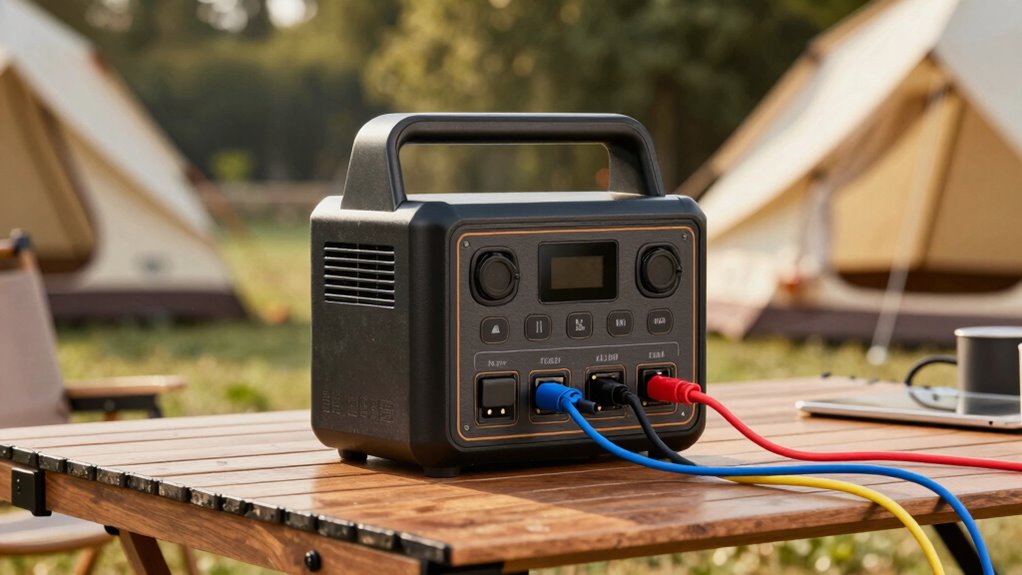
Several key factors determine a portable power station’s capacity, affecting how much energy it can store and deliver. Battery chemistry plays a significant role; different chemistries, like lithium-ion or lithium-polymer, impact energy density and longevity. A higher energy density means more capacity in a compact size. Charging speed also influences capacity; faster charging doesn’t increase total capacity but allows you to replenish the battery quickly, making it more practical for frequent use. Additionally, the design and quality of internal components, such as the inverter and circuitry, affect how efficiently the stored energy is used. Understanding energy storage technologies related to clocks and time can also provide insights into your energy needs and how you manage resources. Together, these factors shape the overall capacity, helping you decide which power station best fits your needs for power, portability, and convenience.
How to Calculate Your Power Needs Before Buying
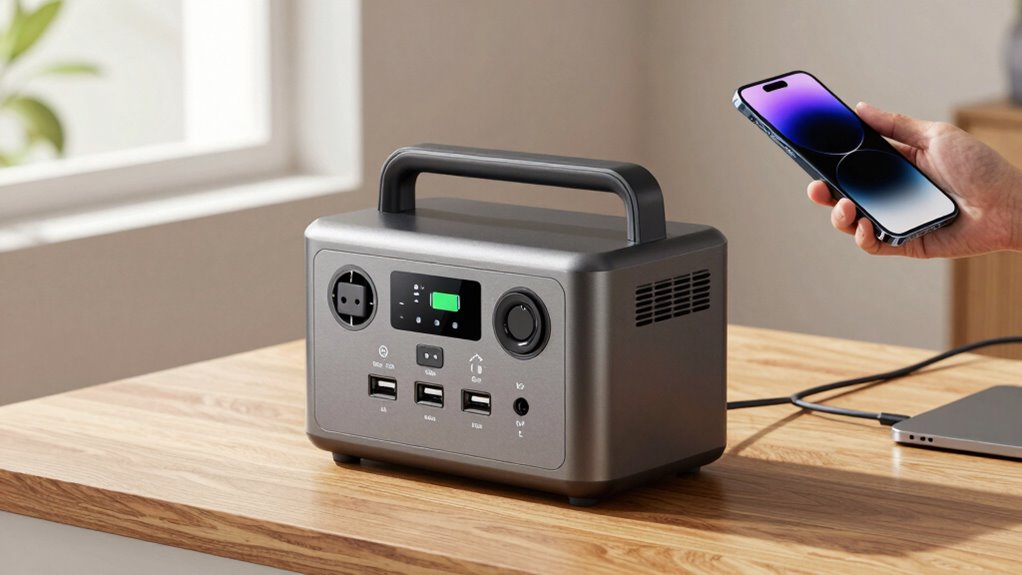
Before purchasing a portable power station, understanding your energy needs accurately is essential. Start by listing your essential devices and their power consumption in watts. Then, consider how long you’ll need them powered daily. Next, factor in the battery chemistry, which affects both capacity and lifespan, helping you choose a station that lasts. Additionally, pay attention to charging speed; faster charging stations get you back up quickly, saving time during emergencies. To determine what size station you need, calculate your total watt-hours by multiplying device wattage by usage time. Keep these steps in mind to match your power needs with the station’s capacity, ensuring you get the right balance of performance and convenience without overspending.
How Size and Portability Impact Your Choice
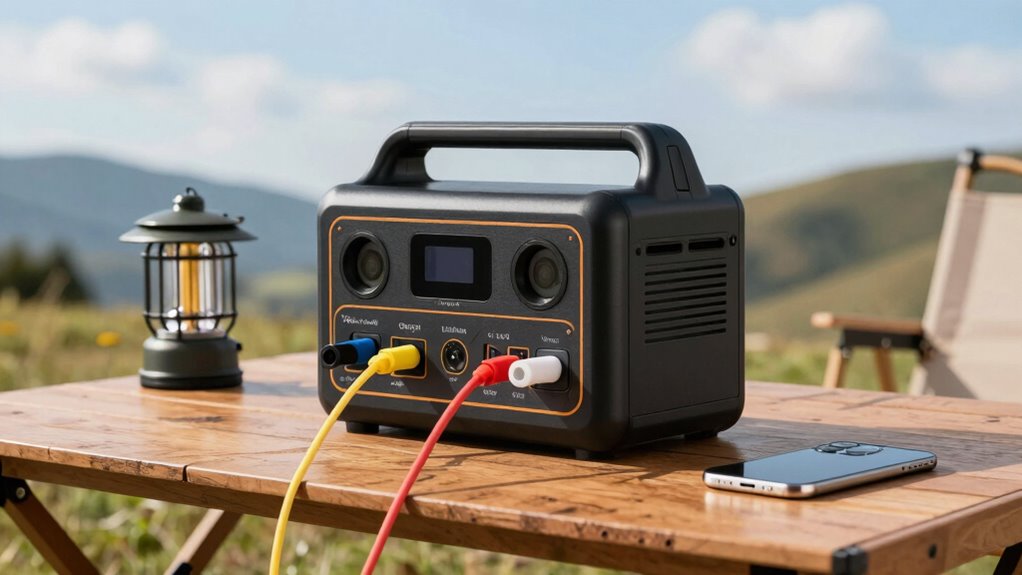
Size and portability are essential factors that directly influence how and where you can use your portable power station. Smaller units are lightweight and easy to carry, perfect for camping or emergencies, but often have limited capacity due to battery chemistry constraints. Larger models offer more power but can be bulky and harder to transport, making them less ideal for on-the-go use. The portability trade-offs involve balancing size, weight, and capacity to suit your needs. Visualize these options:
| Small & Lightweight | Medium & Versatile | Large & Powerful |
|---|---|---|
| Compact, easy to carry | Moderate size, versatile | Heavy, best for stationary use |
| Limited capacity | Balanced capacity | High capacity, less portable |
| Battery chemistry favors smaller size | Mix of chemistry types | Larger chemistry packs more power |
Choose based on where and how you’ll use it.
Common Myths About Power Station Capacity and Runtime
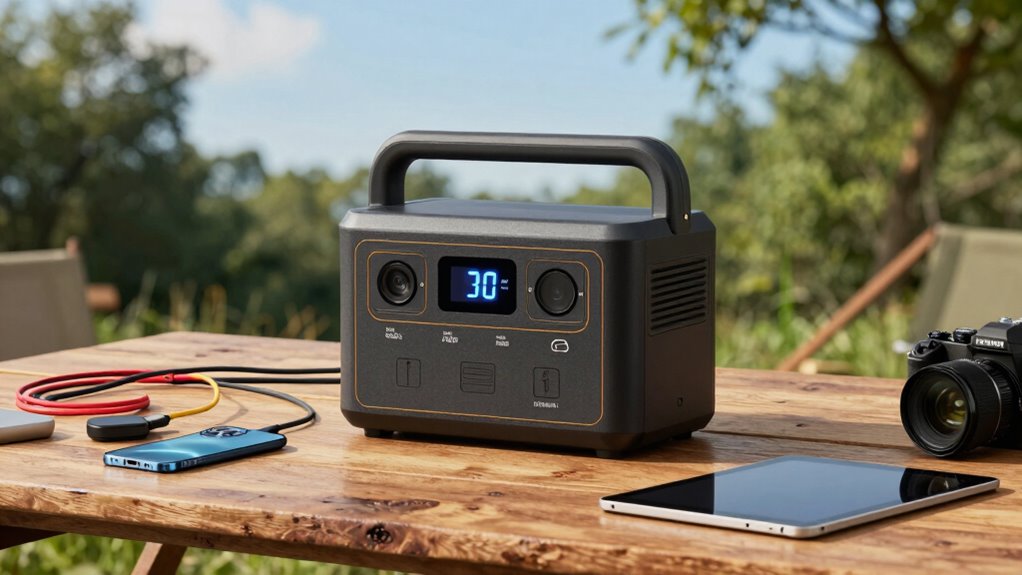
Many people assume that a larger power station always means longer runtime and more capacity, but that’s not quite true. Capacity isn’t the only factor affecting performance. For example:
- Battery longevity impacts how many charge cycles you get before performance declines, regardless of size.
- Charging speed varies between models; a bigger station doesn’t necessarily charge faster or provide longer use.
- Efficiency and power management influence runtime more than just battery size, meaning smaller units with smart technology can outperform larger ones.
Understanding these myths helps you avoid overestimating capacity. Bigger isn’t always better if battery longevity drops quickly or if charging speeds are slow. Focus on smart features that optimize runtime and lifespan instead.
How to Choose the Right Capacity for Your Devices
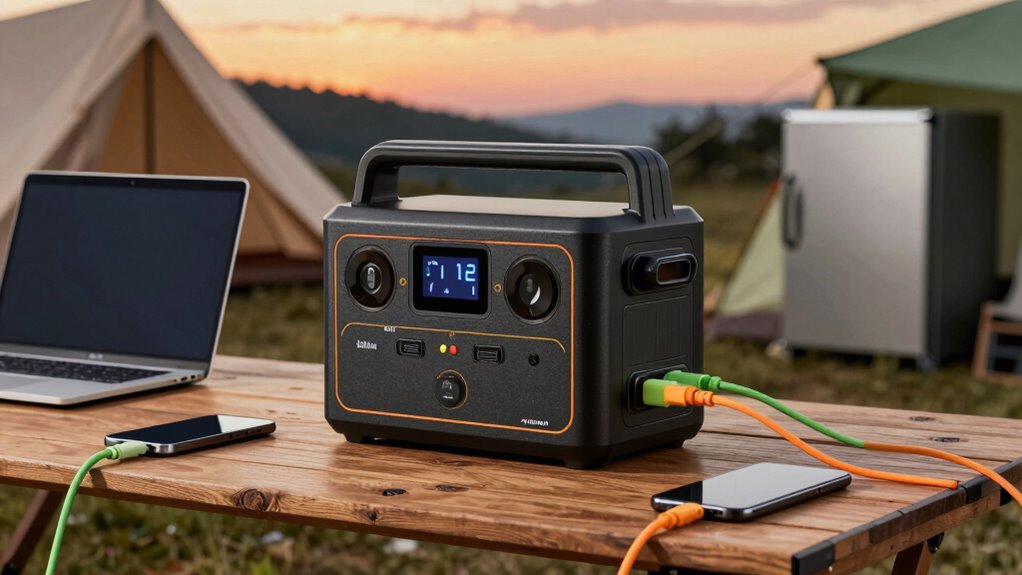
Choosing the right capacity for your devices depends on understanding their power needs and usage patterns. First, check each device’s wattage to determine the total energy required. Consider how long you’ll need power, whether it’s a few hours or several days. Battery chemistry plays a role here; lithium-ion batteries offer high energy density and faster charging speeds, making them ideal for quick recharges and lightweight setups. If you plan to recharge your power station frequently, prioritize models with faster charging speeds to save time. For longer trips or multiple devices, opt for a higher capacity station to guarantee ample power without constant recharging. Matching capacity to your devices’ demands prevents underperformance and maximizes efficiency, giving you reliable power when you need it most.
Tips to Maximize Your Power Station’s Efficiency
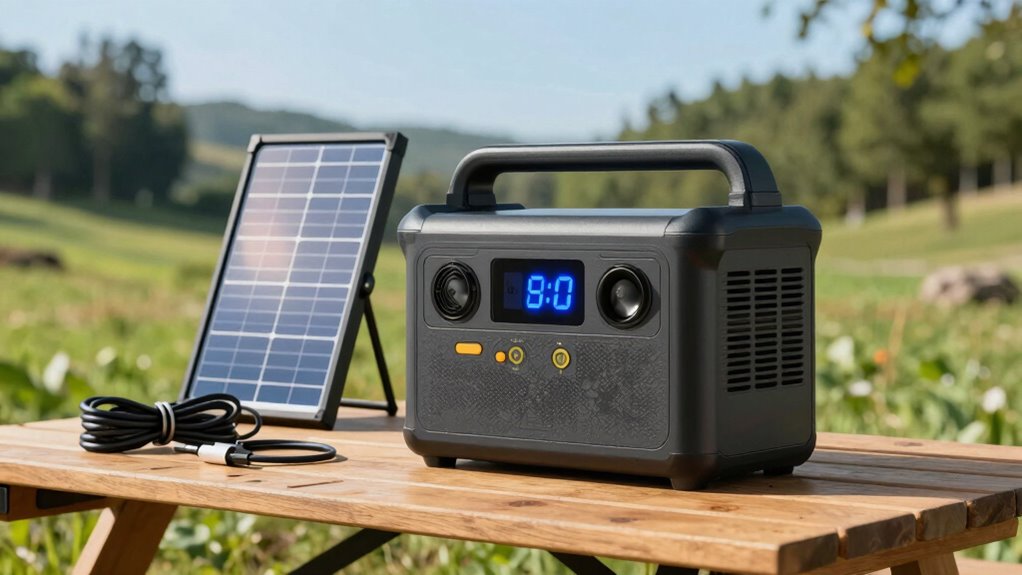
To get the most out of your power station, it’s essential to use it efficiently by managing your devices wisely. First, prioritize powering devices with lower energy demands to extend battery longevity. Second, use the right charging methods—prefer fast-charging when possible to boost charging efficiency without overheating the battery. Third, avoid leaving devices plugged in when fully charged, as this can reduce battery health over time. Additionally, consider limiting the number of devices running simultaneously to prevent overloading your power station. Regularly monitor your device’s power consumption and unplug unused gadgets. These habits help maximize your power station’s efficiency, prolong its lifespan, and ensure you always have reliable power when needed.
Frequently Asked Questions
Can a Higher Capacity Power Station Charge Faster?
A higher capacity power station doesn’t necessarily charge faster because factors like battery chemistry and charging cycles play a significant role. While larger batteries hold more energy, they often take longer to recharge because they need more time to fill up. Fast charging depends more on the charger’s wattage and battery chemistry, which influences how quickly the station can accept power. So, capacity alone doesn’t determine charging speed.
How Does Temperature Affect a Power Station’s Capacity?
If you’re in a hot climate, your power station’s capacity can decrease. For example, a lithium-ion battery’s chemistry is sensitive to high temperatures, risking damage and reduced efficiency. Good thermal management keeps batteries cool, maintaining capacity and performance. Conversely, cold temperatures slow chemical reactions, lowering capacity temporarily. So, temperature directly impacts your power station’s effectiveness, making proper thermal management essential for reliable energy.
Are Larger Capacity Stations Heavier and Less Portable?
Yes, larger capacity stations tend to be heavier, making them less portable. You need to take weight considerations into account when choosing a power station, especially if you plan to carry it frequently. While bigger stations offer more power, they come with portability trade-offs. If portability matters most, opt for a smaller, lighter model, but be aware you’ll sacrifice some capacity and runtime.
Does Capacity Decline Over Time With Use?
Yes, capacity declines over time with use. Imagine your portable power station as a glass of water; every recharge causes tiny cracks, leading to capacity degradation. Over months and years, these micro-damages reduce its battery lifespan, making it hold less charge. So, while it still works, its ability to power your devices diminishes gradually, reminding you that batteries, like all things, wear out with persistent use.
Can I Upgrade My Power Station’s Capacity Later?
Yes, you can often upgrade your power station’s capacity later, but it depends on the model. Battery longevity and charging efficiency are key factors. Some stations allow you to add extra batteries or modules, boosting capacity without sacrificing performance. However, check the manufacturer’s specs first, as compatibility varies. Upgrading can extend your station’s usefulness, but always consider how it impacts charging efficiency and overall battery health over time.
Conclusion
Understanding capacity isn’t just about numbers—it’s the key to revealing your power station’s true potential. Think of it as your energy compass, guiding you to the right device for your needs. Don’t let confusion dim your confidence; with the right knowledge, you’ll navigate your options like a pro. After all, in the world of portable power, what’s more important than having enough juice to keep your adventures alive?