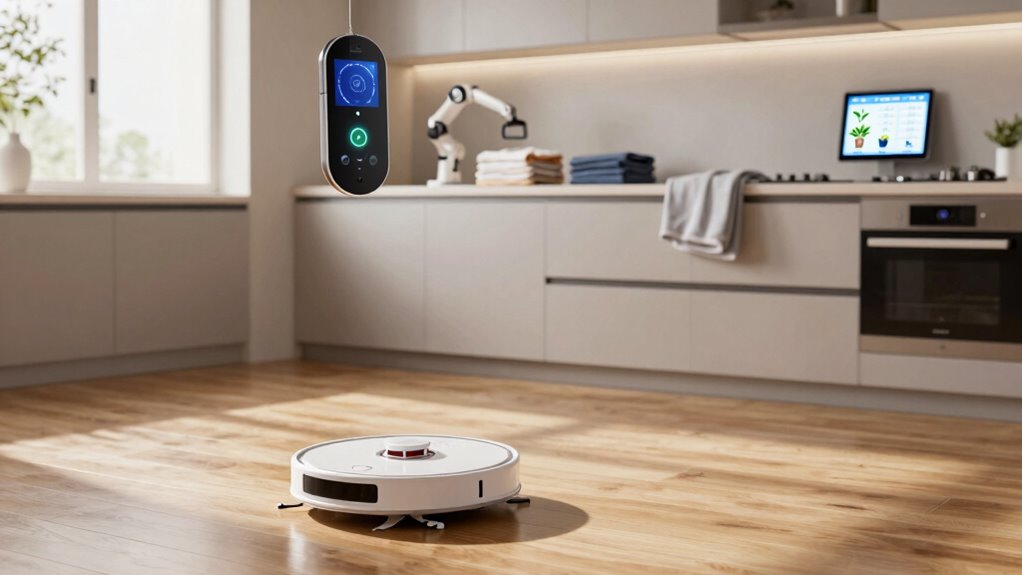

To simplify repetitive home tasks with automation, connect your smart devices like lights, thermostats, and appliances to a central system. Set routines that activate based on specific times or conditions, such as turning off lights at bedtime or adjusting the temperature during work hours. Use voice commands or a single app for effortless control. By automating these tasks, your home responds automatically to your needs, making daily life easier—keep exploring to discover how to optimize your system further.

Get the latest gadgets delivered free with Prime
- Fast, free delivery on millions of items
- Prime Video, Amazon Music and more included
- Member-only deals all year
Key Takeaways
- Connect and integrate smart devices for centralized control through apps or voice commands.
- Schedule routines for daily tasks like lighting, heating, or coffee brewing to run automatically.
- Set specific triggers based on time, environmental cues, or user presence to activate routines.
- Automate complex routines by combining multiple devices and conditions for seamless home responses.
- Continuously update and customize routines to adapt to changing schedules and preferences.
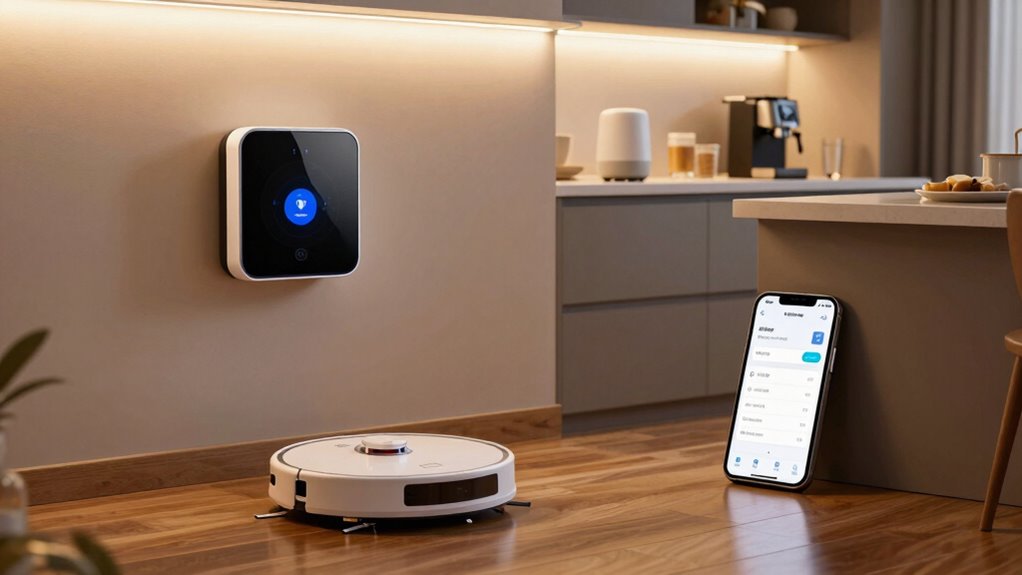
Many repetitive home tasks can feel tedious, but automation offers simple solutions to make your daily routines more efficient. By integrating smart devices and setting up routine scheduling, you can transform how you manage everyday chores. Instead of manually turning off lights or adjusting thermostats, you can automate these actions so they happen seamlessly, saving you time and mental energy.
Smart device integration is the cornerstone of home automation. You can connect various devices—such as smart bulbs, thermostats, security cameras, and even kitchen appliances—into a centralized system. With this setup, controlling multiple devices becomes effortless through a single app or voice command. For example, you can program your smart lights to turn on at sunset or your smart locks to automatically secure your doors at bedtime. This interconnectedness ensures your home responds intuitively to your needs without constant input.
Connecting smart devices creates an intuitive, centralized home system that responds seamlessly to your needs.
Routine scheduling takes automation a step further by enabling you to predefine actions at specific times or under certain conditions. Imagine waking up to your coffee brewing, your blinds opening, and your favorite playlist softly playing—without lifting a finger. Or picture your smart thermostat lowering the temperature during work hours and raising it before you return home, ensuring comfort without wasting energy. Routine scheduling allows you to set these automations once, then forget about them, trusting your devices to handle the tasks consistently. Understanding smart device integration is essential for creating a cohesive and responsive smart home environment.
Additionally, many systems support automated triggers****, allowing you to set specific conditions under which routines activate, further customizing your home automation experience.
Popular right now

Samsung 55-Inch S90H OLED 4K UHD Smart TV Bundle with Full-Motion Mount and Surge Protector

Bose QuietComfort Ultra Headphones Gen 1, Lunar Blue

Dyson V9 Motorbar Cordless Vacuum
As an affiliate, we earn on qualifying purchases.
Frequently Asked Questions
What Is the Initial Cost of Home Automation Devices?
The initial cost of home automation devices varies, typically ranging from $100 to $1,500 per device, depending on features and complexity. You should consider energy savings and device compatibility when budgeting, as more advanced systems may save money long-term by reducing energy use. Start with essential devices to fit your budget, then expand gradually, ensuring all devices work seamlessly together for maximum automation.
How Secure Are Home Automation Systems From Hacking?
Home automation systems are generally secure, but cybersecurity threats and privacy concerns exist. You should use strong, unique passwords and enable two-factor authentication to protect your devices. Regular updates patch security vulnerabilities, reducing hacking risks. Avoid connecting devices to unsecured networks and monitor system activity. By staying vigilant and following best practices, you can greatly minimize the chances of hacking and safeguard your privacy at home.
Can Automation Systems Be Customized for Specific Routines?
Think of automation systems as a blank canvas, ready for your personal touch. You can easily customize routines to fit your lifestyle, like programming lights to mimic sunrise or adjusting the thermostat for cozy evenings. With diverse personalization options, you shape your home’s automation to work precisely how you want. Routine customization lets you turn everyday tasks into seamless, tailored experiences, making your home truly feel like your own sanctuary.
Do Automation Devices Work During Power Outages?
Automation devices often don’t work during power outages unless you add a battery backup or uninterruptible power supply (UPS). These backups enhance power resilience, allowing your smart devices to operate temporarily without mains power. By installing a battery backup, you guarantee essential automation functions continue seamlessly, providing peace of mind and maintaining safety and convenience in your home even when the power goes out.
How Difficult Is It to Install Home Automation Equipment?
Installing home automation equipment is like assembling a puzzle—you connect the pieces step by step. It’s usually straightforward, especially if your devices support voice control and are compatible with your existing system. Many kits come with clear instructions or apps to guide you. While some setups may require basic wiring or app configuration, most homeowners find the process manageable, turning their homes into smart, responsive environments with a little patience and effort.
Conclusion
Embracing automation for your home tasks is like having a helpful robot sidekick that frees up your time and energy. By setting up simple devices and routines, you’ll turn mundane chores into effortless moments. Remember, the more you automate, the more you’ll enjoy your home and focus on what truly matters. So go ahead, take the leap—your smarter, more relaxed home awaits just around the corner, ready to work for you like a loyal assistant.