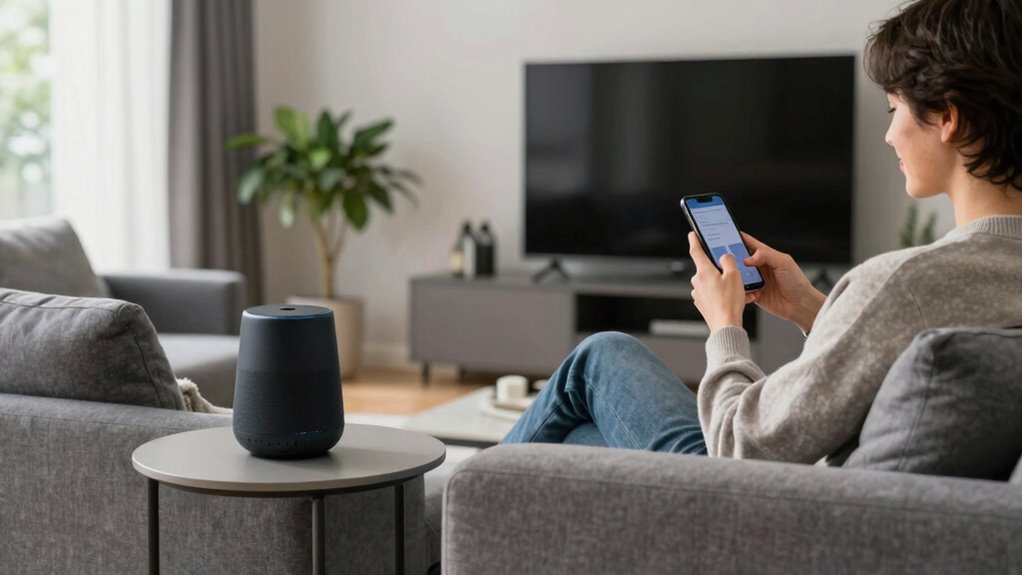

To start using a voice assistant for everyday help, first choose one that fits your needs like Alexa, Google Assistant, or Siri, and guarantee your devices are compatible. Download the corresponding app, connect your device to Wi-Fi, and log in to personalize your experience. Practice using wake words and simple commands, then regularly update your software and tweak privacy settings. As you become more comfortable, you’ll discover new ways to automate routines and streamline tasks—keep exploring to make the most of these smart helpers.

Get the latest gadgets delivered free with Prime
- Fast, free delivery on millions of items
- Prime Video, Amazon Music and more included
- Member-only deals all year
Key Takeaways
- Choose the right voice assistant (Alexa, Google, or Siri) based on your device compatibility and needs.
- Download the appropriate app and set up your device with Wi-Fi and account login.
- Practice wake words and simple commands to familiarize yourself with basic functionalities.
- Regularly update software and review privacy settings to ensure security and new feature access.
- Customize voice commands and device integrations to enhance daily assistance and streamline routines.
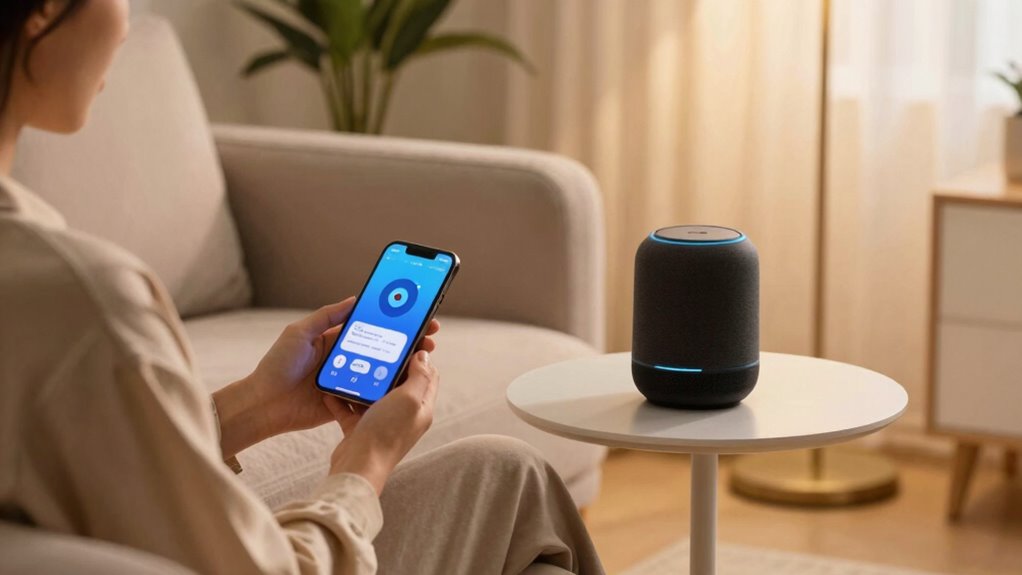
Voice assistants have become an essential part of modern life, helping you stay organized, get quick answers, and control smart devices with just your voice. To get started, you’ll want to choose a voice assistant that fits your needs, such as Amazon Alexa, Google Assistant, or Apple’s Siri. Before diving in, consider your device compatibility—check if your smartphone, smart speakers, or other gadgets support the assistant you prefer. Compatibility is key to guaranteeing smooth functionality across your devices, so verify that your existing tech can connect effortlessly.
Choose the right voice assistant by checking device compatibility for seamless smart device integration.
Once you’ve selected your voice assistant, the next step is setting it up. Usually, you’ll need to download the relevant app on your smartphone or tablet. During setup, you’ll be prompted to connect your device to your Wi-Fi network and log into your account. This process helps personalize your experience and allows your voice assistant to access your preferences. As you set up, pay attention to privacy settings. Many assistants collect data to improve their services, but you can tailor these settings to protect your privacy. For example, you might choose to disable voice recordings or limit what information is stored. Taking control of your privacy settings from the start makes your experience both safer and more tailored to your comfort level.
After setup, it’s time to familiarize yourself with the voice commands. Most assistants respond to wake words—like “Hey Siri,” “OK Google,” or “Alexa”—so practice activating your assistant and asking simple questions or giving commands. For example, you can ask about the weather, set reminders, or control compatible smart home devices. To get the most out of your assistant, explore its capabilities by browsing available features and integrating your favorite apps. This might include linking music streaming services, calendars, or smart lights, which enhances your daily routines. Additionally, understanding device compatibility is crucial for ensuring your smart appliances and gadgets work seamlessly together with your voice assistant. Regularly updating your software is equally important as it ensures you benefit from the latest features and security improvements.
To keep your experience seamless, regularly update your device’s software and review your privacy settings. Updates often include new features, security patches, and improvements that make your voice assistant more reliable. Being aware of software updates helps you stay informed about the latest functionalities and security enhancements. Monitoring your privacy options ensures you remain in control of your data and prevent any unwanted sharing. As you become more comfortable, you’ll find ways to personalize your voice commands further, making your AI assistant a true extension of your everyday life. With a little initial setup and ongoing management of privacy and device compatibility, your voice assistant can become an invaluable tool, simplifying tasks and providing quick access to the information you need.
As an affiliate, we earn on qualifying purchases.
Frequently Asked Questions
Can Voice Assistants Understand Multiple Languages Simultaneously?
Voice assistants can understand multiple languages, thanks to multilingual support, but they often struggle with seamless language switching. You can typically set preferred languages, and some assistants recognize when you switch languages mid-conversation. However, the effectiveness varies depending on the device and software. To improve your experience, check if your voice assistant supports your desired languages and practice clear language switching to guarantee smoother interactions.
How Secure Are Voice Assistants With Personal Data?
Voice assistants have improved security, but your personal data’s safety depends on the company’s privacy policies and data encryption practices. They encrypt your data during transmission, protecting it from unauthorized access. However, always review privacy policies to understand how your data is stored and used. Be cautious about sharing sensitive information, and enable security features like two-factor authentication when available, to keep your personal data safer.
Do Voice Assistants Work Offline or Require Internet Connection?
Imagine a world where your voice assistant is your loyal sidekick. Some voice assistants offer offline functionality, allowing you to perform basic tasks without internet dependency. However, most rely heavily on an internet connection to access cloud-based services, updates, and data processing. So, while offline options exist, for full capabilities and seamless experience, you’ll want a stable internet connection. Your digital helper thrives on being connected, just like you.
Can Voice Assistants Control Smart Home Devices From Different Brands?
Yes, voice assistants can control smart home devices from different brands, thanks to smart device compatibility and brand integration. You can connect devices like lights, thermostats, and locks from various manufacturers, all managed through a single voice platform. Just make certain your voice assistant supports the specific brands you own. This seamless control makes managing your smart home easier, regardless of the brands involved.
How Can I Customize Voice Assistant Responses and Settings?
You can customize your voice assistant responses and settings through its app or voice commands. Explore the settings for response personalization options like preferred voice, language, and voice tone. Many assistants allow you to set routines or specific commands, tailoring the experience to your needs. Regularly update your preferences and enable personalization features to make your interactions more natural and aligned with your daily routines.
Google Assistant compatible smart home devices
As an affiliate, we earn on qualifying purchases.
As an affiliate, we earn on qualifying purchases.
Conclusion
Getting started with voice assistants can truly simplify your daily routine. With a quick setup, you’ll be amazed at how much easier your day becomes—whether it’s setting reminders, playing music, or controlling smart devices. Did you know that 71% of smart speaker owners say their device makes their lives easier? So go ahead, give it a try and experience the convenience firsthand. Voice assistants are ready to help—are you ready to make your life simpler?
As an affiliate, we earn on qualifying purchases.
As an affiliate, we earn on qualifying purchases.
Halloween Picks
halloween
As an affiliate, we earn on qualifying purchases.