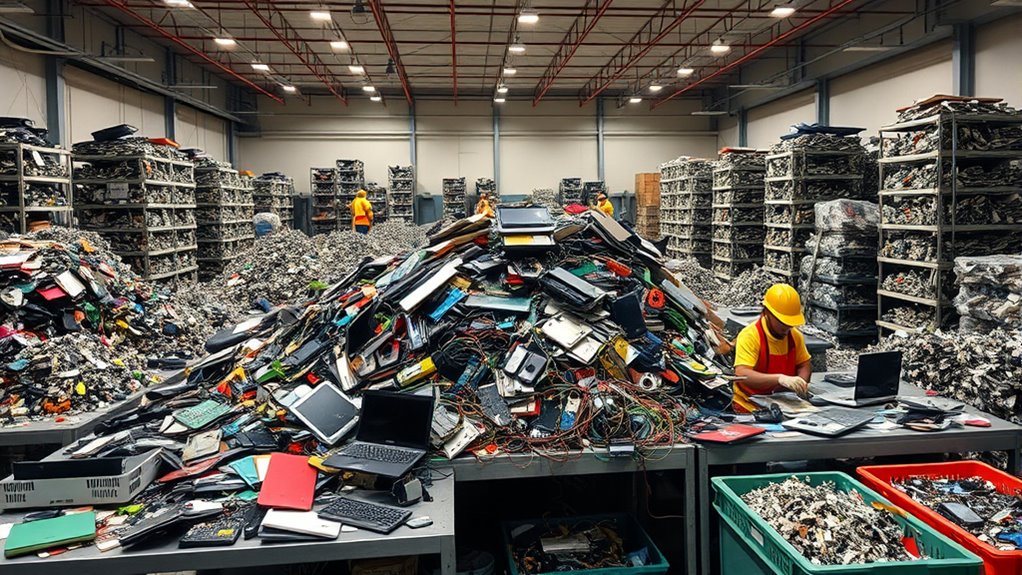

To recycle your old electronics, first find certified e-waste recycling centers or collection events nearby. Be sure to wipe your data and remove any batteries before dropping off your devices. Many manufacturers and retailers also offer take-back programs for responsible disposal. Recycling properly helps prevent environmental harm from hazardous materials and recovers valuable resources. Keep learning about safe disposal practices to help protect your community and the planet.

Get the latest gadgets delivered free with Prime
- Fast, free delivery on millions of items
- Prime Video, Amazon Music and more included
- Member-only deals all year
Key Takeaways
- Identify local e-waste collection centers or drop-off points for responsible recycling.
- Remove batteries and wipe personal data before recycling electronics.
- Use manufacturer take-back programs or certified e-waste recyclers for proper disposal.
- Properly handle hazardous substances, such as mercury or lead, to prevent environmental harm.
- Recycle electronics to recover valuable materials and reduce environmental pollution.

As electronic devices quickly become outdated or break down, the amount of e-waste generated worldwide continues to rise. This growing pile of discarded gadgets, from smartphones to laptops, creates a significant environmental challenge. Proper e-waste recycling is essential to prevent harmful substances from polluting the environment and to recover valuable materials. When you decide to recycle your old electronics, it’s important to understand how to handle specific components, especially batteries. Battery recycling is vital because many batteries contain hazardous materials like lithium, cadmium, or lead. If improperly disposed of, these substances can leak into soil and water, posing health risks to communities and wildlife. Look for certified recycling centers that accept batteries separately and make sure they follow proper hazardous waste disposal protocols. That way, the toxic elements are safely managed and, whenever possible, recycled into new products.
Many electronic devices contain components with hazardous substances, and improper disposal can lead to serious environmental damage. Hazardous waste disposal involves more than just throwing electronics into the trash. It requires specialized handling to prevent the release of harmful chemicals, such as mercury in older screens or brominated flame retardants in circuit boards. When you bring your devices to a certified e-waste recycler, they are typically dismantled by trained professionals who sort out hazardous parts. These are then processed according to strict environmental standards, ensuring that toxic materials are contained and safely disposed of or recycled. This not only protects the environment but also keeps your community safe from contamination.
Recycling your old electronics is straightforward once you know where to go. Many cities offer designated e-waste collection events or drop-off points at local recycling centers. Some manufacturers and retailers also provide take-back programs, making it easier for you to responsibly dispose of your devices. Before recycling, you should wipe your personal data and remove any batteries, if possible. This prevents identity theft and guarantees that battery recycling and hazardous waste disposal are properly managed. By choosing certified recyclers, you’re helping to recover valuable materials like precious metals and plastics, reducing the demand for virgin resources. This process also minimizes the environmental footprint of manufacturing new electronics. Additionally, understanding the importance of air purifier technology can help you maintain a healthier indoor environment while responsibly managing electronic waste.
electronic device data wipe tools
As an affiliate, we earn on qualifying purchases.
As an affiliate, we earn on qualifying purchases.
Frequently Asked Questions
Can I Recycle Broken or Damaged Electronics Easily?
Yes, you can recycle broken or damaged electronics easily. First, check if repair options are available to extend your device’s life. If not, locate a nearby recycling center that accepts e-waste. Many centers handle damaged electronics safely and responsibly. You just need to drop off your device at the right place, ensuring it’s disposed of properly and preventing harmful materials from polluting the environment.
Are There Any Costs Involved in E-Waste Recycling?
You might encounter some cost implications or recycling fees when recycling your electronics. Many recycling centers offer free drop-off for certain items, especially old phones and small gadgets, but larger electronics like TVs or computers may have fees. It’s a good idea to check with local facilities beforehand, so you’re aware of any costs involved. Often, recycling is affordable and helps ensure your e-waste is properly handled.
How Long Does the Recycling Process Typically Take?
You might worry about how long recycling takes, but it’s usually quick. The recycling timeline varies depending on the facility and the device, but most processes take anywhere from a few days to a few weeks. The processing duration includes collection, transportation, and actual recycling. Rest assured, efficient centers aim to minimize wait times, so your old electronics get recycled responsibly without unnecessary delays.
What Items Are Considered E-Waste Besides Electronics?
Besides electronics, e-waste includes items like batteries, fluorescent lights, and certain appliances that contain hazardous materials. These items are considered electronic waste because they often have hazardous components that need proper disposal. You should handle them carefully and recycle them through specialized e-waste programs to prevent environmental harm. Proper recycling guarantees hazardous materials are safely managed, reducing pollution and health risks associated with improper disposal of electronic waste.
Is It Safe to Dispose of Batteries Through E-Waste Recycling?
Yes, it’s safe to dispose of batteries through e-waste recycling, but you should prioritize battery safety. Proper recycling prevents harmful chemicals from leaking and contaminating the environment. Always handle batteries carefully, avoid puncturing them, and use designated collection points. Recycling facilities are equipped to manage harmful chemicals safely, reducing health and environmental risks. Don’t throw batteries in regular trash; instead, find a local e-waste recycling center that accepts batteries.
As an affiliate, we earn on qualifying purchases.
Conclusion
Now that you know the essentials of e-waste recycling, it’s time to take action. Don’t let your old gadgets gather dust like forgotten relics in a dusty attic. Instead, find a nearby recycling center and do your part to protect the environment. Think of it as stepping into a future where technology and nature coexist harmoniously, just like the pioneers crossing the frontier with hope in their eyes—your small effort can make a big difference today.
certified e-waste recycling centers
As an affiliate, we earn on qualifying purchases.
As an affiliate, we earn on qualifying purchases.
electronic waste disposal containers
As an affiliate, we earn on qualifying purchases.
As an affiliate, we earn on qualifying purchases.
Halloween Picks
halloween
As an affiliate, we earn on qualifying purchases.