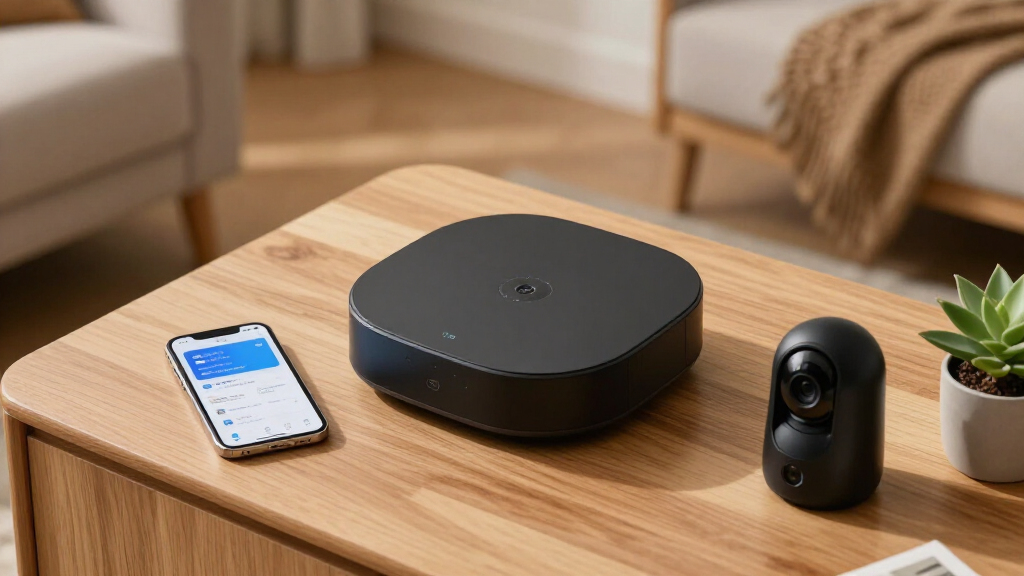

Choosing the right smart home security system involves balancing cost, convenience, and professional support. The Ring Alarm Security System caters to homeowners seeking a budget-friendly, DIY approach with broad customization options. Conversely, ADT offers a traditionally monitored, professionally installed system that emphasizes reliability and ongoing support. Both aim to secure your home but do so through different models — one emphasizing affordability and flexibility, the other prioritizing professional oversight and integration. This comparison highlights their core differences, helping you determine which aligns better with your needs, whether you’re a tech-savvy renter or a homeowner seeking comprehensive security.

Get the latest gadgets delivered free — and shop member deals
- Fast, free delivery on millions of items
- Access to Prime Big Deal Days deals on October 6–7
- Prime Video, Amazon Music and more included

Ring Alarm 8-Piece Kit (Newest Model) – Home & Business Security System
- ✔ Included Items: Base station, keypad, 4 contact sensors, motion detector, range extender
- ✔ Compatibility: Ring Protect Plan, Alexa voice control (sold separately)
- ✔ Suitable for: 1-2 bedroom homes

Ring Alarm 5-Piece Kit (Newest Model) – Wireless Smart Home Security System
- ✔ Includes: Base Station, Keypad, Contact Sensor, Motion Detector, Range Extender
- ✔ Compatibility: Alexa
- ✔ Monitoring: 24/7 Professional Monitoring

Ring Alarm 14-Piece Kit (Newest Model) – Wireless Smart Home Security System
- ✔ Includes: Base Station, 2 Keypads, 8 Contact Sensors, 2 Motion Detectors, 1 Range Extender
- ✔ Compatibility: Alexa
- ✔ Monitoring: 24/7 Professional Monitoring
At a Glance
| Criteria | Ring Alarm Security System | ADT Smart Security System | Winner |
|---|---|---|---|
| Cost & Pricing Model | Lower initial cost, DIY setup, pay-as-you-go monitoring options | Higher upfront cost, professional installation included | A |
| Installation & Setup | Simple self-installation, minimal tools required | In-home installation by technicians, sometimes intrusive | B |
| Monitoring & Support | Optional professional monitoring, flexible plans | 24/7 professional monitoring, rapid response | B |
| Features & Customization | Basic to advanced sensors, motion detection, app control | Advanced sensors, environmental monitoring, keypad control | B |
| Ease of Use | User-friendly app, mobile alerts | Intuitive, professionally supported app | A |
| Smart Home Integration | Integrates with Amazon Alexa, Google Assistant | Deep integration with smart home devices, voice assistants | B |
| Reliability & Security | Depends on Wi-Fi, cloud-based security | High reliability, dedicated cellular backup | B |
| Subscription & Ongoing Costs | Monthly fees vary, no long-term contracts | Monthly monitoring fees, long-term contracts possible | Depends |
Ring Alarm 8-Piece Kit (Newest Model) – Home & Business Security System
<p>The <strong>Ring Alarm 8-Piece Kit</strong> stands out for its user-friendly setup tailored to 1-2 bedroom homes. It includes essential sensors—base station, keypad, contact sensors, motion detector, and range extender—making it a comprehensive starter package. Compared with larger kits, it’s less overwhelming and more budget-conscious, but it does require a separate subscription for professional monitoring and voice control, which can increase ongoing costs. This kit is ideal for those who want straightforward security without the complexity of extensive sensors or home automation.</p>
Pros:
- Easy to set up and use with mobile notifications
- Includes all essential sensors for basic security
- Supports professional monitoring and Alexa voice control
Cons:
- Requires separate subscription for professional monitoring
- Additional sensors and accessories are sold separately
Best for: Small homes or apartments seeking a simple, reliable security system with optional professional monitoring
Not ideal for: Larger households or those wanting extensive coverage without additional sensors or subscriptions
Bottom line: A straightforward, reliable system perfect for small homes that prioritize simplicity and ease of use.
“A straightforward, reliable system perfect for small homes that prioritize simplicity and ease of use.”
Ring Alarm 5-Piece Kit (Newest Model) – Wireless Smart Home Security System
<p>This <strong>Ring Alarm 5-Piece Kit</strong> is designed for condos and apartments, with a compact, expandable setup. It includes a base station, keypad, contact sensor, motion detector, and range extender—enough to secure smaller living spaces effectively. Its key advantage is the ability to add sensors as needed, making it flexible for evolving security needs. It offers mobile app control and professional monitoring, but requires a subscription for voice control via Alexa. Compared to the larger kits, it’s less comprehensive out of the box but easier to install in tight spaces.</p>
Pros:
- Expandable system with additional sensors available
- Mobile app control for remote management
- Compatible with Alexa for voice commands
- Includes professional monitoring
Cons:
- Requires a subscription for professional monitoring
- Alexa voice control needs a Ring Protect subscription
- Additional sensors are sold separately
Best for: Apartment dwellers or small space residents wanting a flexible, expandable security system
Not ideal for: Large homes or those looking for a complete, all-in-one security solution without expansion
Bottom line: An excellent choice for apartment residents seeking a compact, expandable security solution with smart features.
“An excellent choice for apartment residents seeking a compact, expandable security solution with smart features.”
Ring Alarm 14-Piece Kit (Newest Model) – Wireless Smart Home Security System
<p>The <strong>Ring Alarm 14-Piece Kit</strong> offers extensive coverage for 2-4 bedroom homes, making it ideal for larger households. It includes a base station, two keypads, eight contact sensors, two motion detectors, and a range extender—providing a robust security footprint. Its modular design allows for easy expansion, and it integrates seamlessly with Alexa for voice control. While it includes many sensors, the system still requires a subscription for professional monitoring and voice features, which can add to the total cost. Compared to smaller kits, it’s more complex but provides peace of mind for bigger homes with multiple security zones.</p>
Pros:
- Easy to set up and expand with additional sensors
- Comprehensive security coverage for larger homes
- Mobile app control for remote monitoring
- Compatible with Alexa for voice commands
Cons:
- Requires separate subscription for monitoring and voice control
- Additional accessories sold separately
Best for: Larger homes needing extensive, expandable security with professional monitoring
Not ideal for: Small apartments or users seeking a minimal setup
Bottom line: The best pick for homeowners who want extensive, customizable security coverage across a larger property.
“The best pick for homeowners who want extensive, customizable security coverage across a larger property.”
As an Amazon Associate we earn from qualifying purchases.
Key Differences
The core distinction between Ring and ADT lies in their approach to security. Ring prioritizes affordability and DIY flexibility, allowing homeowners to customize their system with a range of sensors, cameras, and smart controls at a lower initial investment. Its reliance on Wi-Fi and cloud storage makes it accessible but potentially vulnerable to network issues or hacking. ADT, on the other hand, focuses on professional installation and 24/7 monitoring, providing a sense of security through dedicated support and cellular backup. This results in higher upfront costs but offers a more seamless, reliable security experience, especially for those who prefer not to handle installation or ongoing technical management themselves.
In practical terms, Ring suits renters, tech enthusiasts, or budget-conscious homeowners comfortable with DIY setup and managing their own ongoing support. ADT appeals to homeowners prioritizing reliability, professional oversight, and a comprehensive security plan, often with the backing of a long-term contract. The decision ultimately hinges on whether you value flexibility and lower costs over assured support and enhanced reliability.
Detailed Comparison
Cost & Pricing Model (Ring Alarm Security System wins — major)
Ring’s lower entry point and pay-as-you-go monitoring make it attractive for those unwilling to commit to high initial costs. ADT’s higher upfront fee includes professional installation and usually involves a contract with ongoing monthly costs. For budget-conscious users, Ring offers a more flexible, less costly path. Conversely, users seeking a set-it-and-forget-it solution may find ADT’s comprehensive package worth the investment.
Installation & Setup (Ring Alarm Security System wins — moderate)
Ring’s DIY approach allows homeowners to install the system at their own pace with minimal tools, ideal for renters or those comfortable with technology. ADT’s professional installation ensures system calibration and a neat setup but involves scheduling and potentially intrusive in-home work. The ease of setup can be a decisive factor for users without technical skills or those who prefer to avoid in-home visits.
Monitoring & Support (ADT Smart Security System wins — major)
ADT offers 24/7 professional monitoring with rapid response, making it more reliable for users who prioritize immediate security response. Ring provides optional professional monitoring, relying largely on user management, notifications, and app alerts, which may be sufficient for less critical needs. For those who want peace of mind and quick emergency response, ADT’s support is clearly superior, though at a higher ongoing cost.
Features & Customization (ADT Smart Security System wins — moderate)
ADT’s system includes advanced sensors, environmental monitoring, and keypad controls, appealing to users seeking extensive features with integrated security. Ring offers a variety of sensors, cameras, and smart controls that are customizable but may lack some of the advanced environmental features. Users with specific security needs or smart home integrations might prefer ADT’s more comprehensive offerings.
Ease of Use (Ring Alarm Security System wins — minor)
Ring’s app is straightforward, suitable for tech-savvy users comfortable managing their system independently. ADT’s app benefits from professional support, often providing more refined user experience and troubleshooting. While both systems are user-friendly, Ring’s simplicity appeals to DIY users, whereas ADT’s support is better for those wanting minimal hassle.
Smart Home Integration (ADT Smart Security System wins — moderate)
Both systems integrate with popular voice assistants, but ADT offers deeper, more seamless integration with broader smart home ecosystems, including Z-Wave devices and extensive automation. Ring also supports voice assistants and smart controls but may have more limited integration depth, depending on the device ecosystem.
Reliability & Security (ADT Smart Security System wins — major)
ADT’s cellular backup and professional oversight provide higher reliability, especially during network outages. Ring’s reliance on Wi-Fi and cloud storage introduces potential vulnerabilities but is generally sufficient for everyday security needs. For high-stakes security, ADT’s system offers a more dependable solution.
Subscription & Ongoing Costs (Ring Alarm Security System wins — moderate)
Ring’s monitoring plans are flexible and less costly, with options to pay monthly or annually without long-term commitments. ADT’s monthly fees are higher, often tied to long-term contracts, but include professional support and monitoring. Budget-conscious users may favor Ring’s flexible pricing, while those valuing full-service security might accept the higher ongoing costs of ADT.
Ring Alarm Security System: Pros and Cons
Pros:
- Lower initial cost and flexible payment options
- DIY installation, no need for in-home technician visits
- Customizable sensors and smart controls
- No long-term contracts required
- Good for renters and tech-savvy users
Cons:
- Less reliable during Wi-Fi outages
- Limited professional support
- Potential security vulnerabilities with cloud reliance
- Requires user management and self-monitoring
ADT Smart Security System: Pros and Cons
Pros:
- Professional installation ensures proper setup
- 24/7 monitored response with rapid emergency support
- Deep smart home integration and environmental sensors
- High reliability with cellular backup
- Less user management required
Cons:
- Higher upfront and ongoing costs
- Long-term contracts may restrict flexibility
- In-home installation can be intrusive
- Less DIY flexibility
Who Should Choose What
Choose Ring Alarm Security System if:
- You want an affordable, flexible system that you can install yourself
- You are comfortable managing your security and don’t need professional monitoring
- You prefer a system with no long-term contracts and lower monthly costs
- You are renting or in a situation where DIY installation is preferred
Choose ADT Smart Security System if:
- You prioritize reliability and professional support
- You want comprehensive security features and environmental monitoring
- You prefer a system with professional installation and 24/7 monitoring
- You are willing to pay more for peace of mind and seamless integration
Value for Money
Paying more for ADT makes sense if security reliability and professional support are top priorities, especially for homeowners with valuable assets or high-security needs. For those on a budget, or who are comfortable managing their own system, Ring offers a cost-effective solution with sufficient features for everyday security. The decision hinges on whether you value premium support and reliability over flexibility and lower costs.
Final Verdict
For homeowners seeking a dependable, professionally monitored security system with extensive features, ADT remains the clear choice. Its higher upfront cost is justified by its reliability, integration, and support. Conversely, renters or budget-conscious users who prefer a flexible, DIY approach should select Ring, which provides a solid, customizable system at a lower price point. The key factor is your comfort with self-management versus the need for professional oversight and advanced security features.
Frequently Asked Questions
Is professional installation necessary for a smart home security system?
Not always. DIY systems like Ring are designed for easy self-installation, suitable for most users. However, professionally installed systems like ADT ensure proper setup, especially for complex or large-scale security needs.
Can I upgrade a DIY system later to include professional monitoring?
Yes. Many DIY systems, including Ring, offer optional professional monitoring plans that you can subscribe to at any time, providing flexibility as your security needs evolve.
How secure are smart home security systems against hacking?
All connected devices carry some risk. Systems like ADT with cellular backup tend to be more secure due to dedicated communication channels, while DIY systems depend heavily on Wi-Fi security practices. Regular updates and strong passwords are essential regardless of choice.
Does smart home security replace traditional alarm systems?
Smart systems can replace traditional alarms when they include reliable monitoring and sensors. However, some users prefer hybrid solutions combining both for maximum security.
What happens if my internet goes down?
ADT’s cellular backup ensures continued security during outages, while DIY systems like Ring may lose connectivity unless additional backup measures are in place.
Halloween Picks
halloween
As an affiliate, we earn on qualifying purchases.