
📊 Full opportunity report: The Switch: You Never Owned the AI You Depend On on ThorstenMeyerAI.com — validation score, market gap, and execution plan.

Get the latest gadgets delivered free with Prime
- Fast, free delivery on millions of items
- Prime Video, Amazon Music and more included
- Member-only deals all year
TL;DR
In 2026, both government and corporate actions demonstrated that AI models are dependent on access points that can be turned off instantly. This highlights the fragility of relying solely on APIs without ownership of the models.
In 2026, both the U.S. government and private companies demonstrated the ability to instantly disable AI models through access controls, underscoring a fundamental vulnerability: users do not own the models they depend on but rely on controllable access points.
On June 12, 2026, the U.S. government issued an export-control directive that forced Anthropic to disable its latest models, Fable 5 and Mythos 5, worldwide within approximately ninety minutes. The directive cited national security concerns, and the move left the company no choice but to shut down these models entirely. This event marked a rare instance where a government directly pulled the plug on a deployed AI model, illustrating how export controls can serve as an emergency off-switch in software, not just physical goods.
Earlier in February 2026, OpenAI retired GPT-4o and several related models from ChatGPT, with API shutdowns scheduled over two weeks. Unlike the government action, this was a product decision driven by economics—phasing out older models due to cost and performance considerations. However, for users with integrated systems dependent on these models, the deprecation represented a sudden loss of access, effectively turning off the AI without ownership rights.
Both cases reveal that access to AI models is controlled through APIs managed by labs and cloud providers. These access points are susceptible to being throttled, geofenced, or shut down, often with little notice, exposing a critical vulnerability: reliance on a controllable access layer rather than ownership of the models themselves.
The Switch: You Never Owned It
In 2026 a government turned off a frontier model worldwide in ~90 minutes — and a company retired a beloved one with ~2 weeks’ notice. You don’t own the model you build on. You access it. Access can be revoked.
Access is the only chokepoint that flips in an afternoon — and the version that hits you won’t be Washington, it’ll be a deprecation. Open weights you host can’t be deprecated, geofenced, repriced, or revoked. Short of that: route through a provider-agnostic gateway, keep a tested fallback, and treat every model string as a dependency that will be pulled.
Implications of Instant AI Model Disabling in 2026
This development highlights a fundamental dependency on external access points for AI deployment, making users vulnerable to sudden disruptions. Governments and companies can disable models instantly, raising questions about reliance on proprietary API access rather than ownership or open deployment. For industries integrating AI deeply into their operations, this fragility could impact security, compliance, and continuity, emphasizing the need for more resilient ownership models or decentralized alternatives.
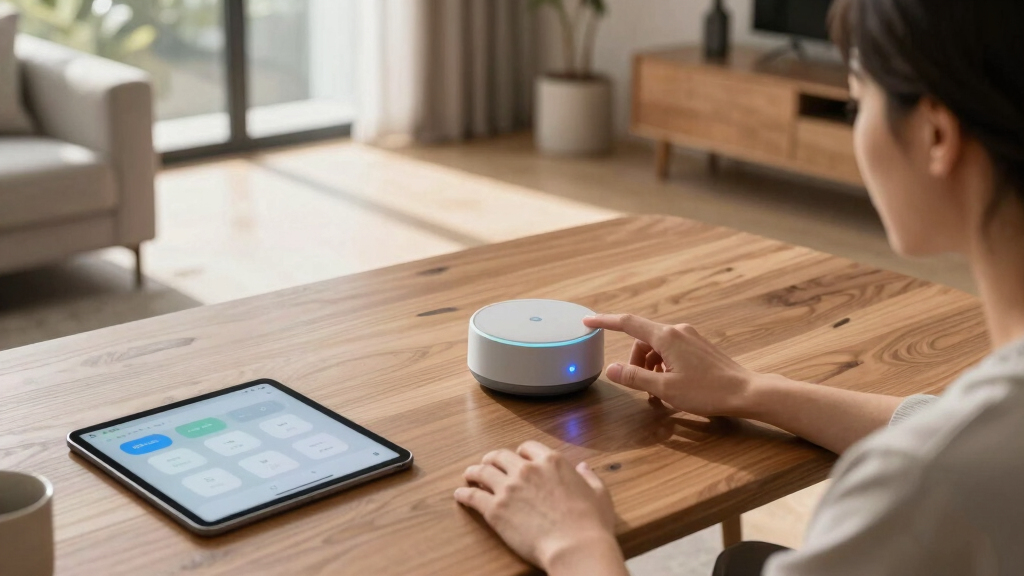
personal AI model ownership device
As an affiliate, we earn on qualifying purchases.
As an affiliate, we earn on qualifying purchases.
Recent Events Demonstrate Vulnerability of AI Access
Throughout 2025 and 2026, AI providers have increasingly deprecated older models and implemented regional restrictions, often citing economic or regulatory reasons. The June 2026 government directive marked a significant escalation, showing that access can be revoked swiftly at the state level, not just through corporate decisions. This pattern underscores a shift from owning and controlling models to managing access points, which are susceptible to sudden shutdowns.
“The move to use export controls as an off-switch for AI models is baffling, especially when it affects allies and cyber defense tools. It shows how easily access can be cut, revealing a fragility in reliance on APIs.”
— former U.S. administration AI adviser
As an affiliate, we earn on qualifying purchases.
Remaining Questions About Future AI Access Controls
It remains unclear how widespread or coordinated future government actions will be, and whether companies will develop more resilient ownership or deployment models. The long-term implications of this dependency, especially for critical infrastructure, are still developing as industries and regulators respond to these vulnerabilities.
As an affiliate, we earn on qualifying purchases.
Next Steps in Addressing AI Access Vulnerabilities
Expect ongoing regulatory discussions around AI model ownership and access rights, along with industry efforts to develop decentralized or open-source alternatives. Companies may also invest in local deployment strategies to reduce reliance on external APIs, aiming for more control over their AI infrastructure.
As an affiliate, we earn on qualifying purchases.
Key Questions
Can AI models be owned outright to prevent sudden shutdowns?
Ownership of AI models is complex; most models are proprietary and hosted externally. Developing local or open-source models can provide more control, but involves significant costs and technical challenges.
How do government export controls affect AI deployment?
Export controls can be used to restrict access to certain models, effectively turning off AI services for specific regions or entities, as seen with the June 2026 directive targeting Anthropic’s models.
What risks does reliance on APIs pose to industries?
Dependence on external APIs makes industries vulnerable to sudden shutdowns, regulatory bans, or pricing changes, which can disrupt operations and compromise security.
Are there alternatives to API-based AI deployment?
Yes; options include deploying open-source models locally, building proprietary models, or using decentralized frameworks to reduce reliance on external access points.
What can users do to protect themselves from sudden AI model shutdowns?
Users can diversify their AI sources, develop in-house models, or implement contingency plans to mitigate risks associated with access revocation.
Source: ThorstenMeyerAI.com
Halloween Picks
halloween
As an affiliate, we earn on qualifying purchases.