TL;DR

Get the latest gadgets delivered free with Prime
- Fast, free delivery on millions of items
- Prime Video, Amazon Music and more included
- Member-only deals all year
Siemens has revealed a strategic push into industrial AI, partnering with NVIDIA to develop a platform that integrates AI into manufacturing processes. The move aims to leverage proprietary industrial data and domain expertise to reshape factory automation.
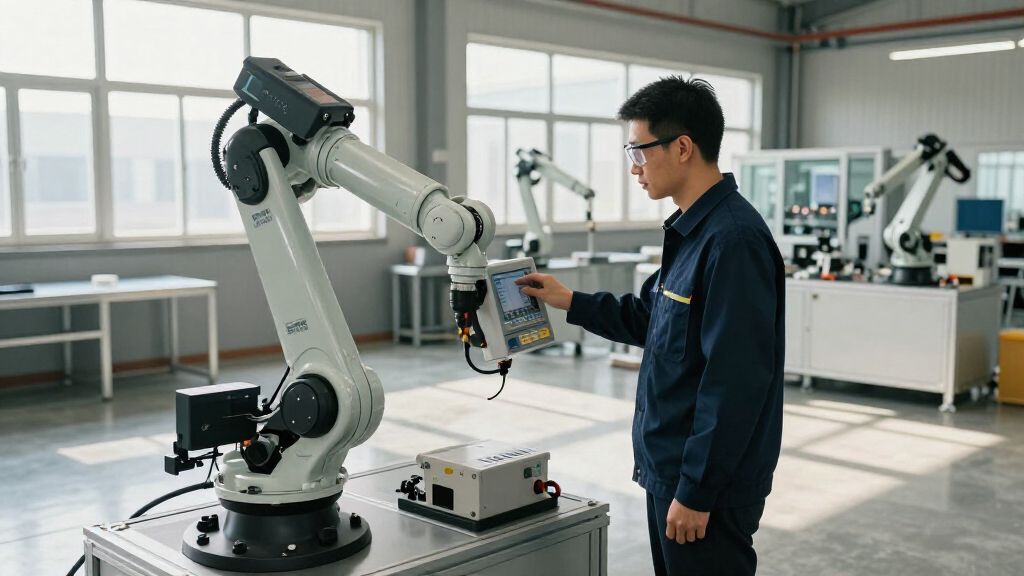
Siemens has unveiled a strategic partnership with NVIDIA to develop what they call an Industrial AI Operating System, aimed at embedding AI across manufacturing and industrial processes. This marks a significant shift toward physical AI, emphasizing real-world factory data over chat-based AI, and signals a major investment in transforming factory automation and design.
The core of Siemens’ strategy is the Industrial Foundation Model (IFM), announced at Hannover Messe 2025, designed to process complex industrial data such as 3D models, engineering drawings, sensor telemetry, and automation logic. Siemens claims this model will optimize engineering, automation, and maintenance by contextualizing physical data, rather than relying on general-purpose language models.
The partnership with NVIDIA involves GPU-accelerated simulation, with plans to support NVIDIA’s CUDA-X libraries and physics-based AI models. Siemens is working to enable faster, more accurate simulations across its entire software suite and is developing digital twins that actively engineer and optimize systems in real time, moving beyond passive models.
A key project is the launch of a fully AI-driven, adaptive manufacturing site at Siemens’ Electronics Factory in Erlangen, Germany, scheduled for 2026. Additionally, Siemens plans to introduce Digital Twin Composer and deploy nine industrial copilots to improve supply chain and production efficiency, with early customer pilots including PepsiCo.
Implications of Siemens’ Physical AI Approach
This initiative underscores a major shift in industrial AI, positioning Siemens as a leader in applying AI directly to physical manufacturing processes. By leveraging proprietary data, domain expertise, and strategic partnerships, Siemens aims to create more efficient, adaptable factories, potentially redefining industrial automation and supply chain management. For industry stakeholders, this signals a move toward AI systems that understand and optimize physical operations in real time, rather than relying solely on textual or digital data.
As an affiliate, we earn on qualifying purchases.
Background of Siemens’ Industrial AI Investments
Since announcing the Industrial Foundation Model at Hannover Messe 2025, Siemens has emphasized the importance of physical data and domain expertise in AI development. The company has long been a leader in factory automation and industrial software, with decades of operational telemetry and engineering models. Its recent partnership with NVIDIA builds on this foundation, aiming to embed AI into the entire manufacturing lifecycle, from design to supply chain management. While general-purpose large language models dominate consumer AI conversations, Siemens’ focus on physical AI represents a different approach tailored specifically to industrial needs.
“Industrial AI is no longer a feature; it’s a force that will reshape the next century.”
— Roland Busch, Siemens CEO
As an affiliate, we earn on qualifying purchases.
Unconfirmed Performance Metrics and Deployment Timelines
While Siemens has announced ambitious plans and partnerships, specific hardware configurations, performance benchmarks, and detailed deployment timelines remain undisclosed. The Erlangen lighthouse factory is scheduled for 2026, but the actual performance and scalability of the AI systems are still unverified by independent sources. The extent of AI integration in operational environments will depend on future validation and customer adoption.
As an affiliate, we earn on qualifying purchases.
Next Steps in Siemens’ Industrial AI Rollout
Siemens plans to launch the fully AI-driven factory in Erlangen in 2026, with pilot projects like Digital Twin Composer rolling out mid-year. The company will also continue developing and refining its AI models and tools, seeking validation through customer deployment and performance metrics. Industry analysts will monitor how quickly these systems can be adopted in real-world manufacturing settings, given the long sales cycles typical of industrial equipment.
As an affiliate, we earn on qualifying purchases.
Key Questions
How does Siemens’ industrial AI differ from consumer AI like chatbots?
Siemens’ industrial AI focuses on processing physical data such as 3D models, sensor telemetry, and automation logic, aiming to optimize manufacturing processes. Unlike chatbots, it is designed for real-world factory environments and relies on proprietary industrial data and domain expertise.
What role does NVIDIA play in Siemens’ AI strategy?
NVIDIA provides GPU-accelerated simulation libraries, physics-based AI models, and the underlying infrastructure for Siemens’ Industrial AI Operating System. Siemens’ models and domain expertise are integrated with NVIDIA’s hardware and software to enable faster, more accurate industrial simulations.
When will we see widespread adoption of Siemens’ AI-driven factories?
The first fully AI-driven factory is scheduled for 2026. Given the long replacement cycles in industry, widespread adoption will likely take several years beyond initial deployment, depending on validation and customer readiness.
Are there concerns about reliance on NVIDIA technology?
Yes, Siemens’ strategy heavily depends on NVIDIA’s hardware and software, which raises questions about vendor lock-in and geopolitical considerations, especially for European or sovereign buyers concerned about technology sovereignty.
What are the potential risks of Siemens’ physical AI approach?
The main risks include unproven performance in real-world settings, slow adoption due to long industrial sales cycles, and dependency on external hardware and software providers like NVIDIA.
Source: ThorstenMeyerAI.com
Halloween Picks
halloween
As an affiliate, we earn on qualifying purchases.