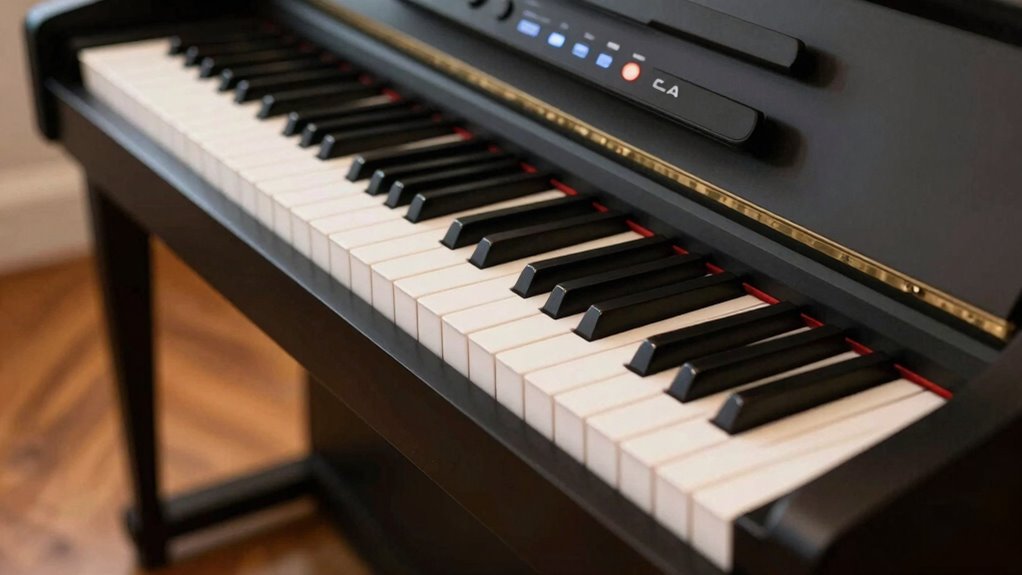

To choose a keyboard piano without getting overwhelmed, focus on features that match your musical goals and skill level. Prioritize simple controls, touch-sensitive keys, and built-in learning modes if you’re a beginner. Select a model with a manageable number of keys, like 61 or 76, suitable for practice and exploration. Keep portability and budget in mind, and avoid unnecessary bells and whistles. If you want clear guidance, there’s more to take into account to help you make the right choice.

Get the latest gadgets delivered free with Prime
- Fast, free delivery on millions of items
- Prime Video, Amazon Music and more included
- Member-only deals all year
Key Takeaways
- Focus on essential features like touch sensitivity and sound quality rather than every available function.
- Match the keyboard’s size and weight to your practice space and portability needs.
- Prioritize beginner-friendly controls and straightforward setup over complex, advanced options.
- Choose a model aligned with your musical style, whether classical, pop, or electronic.
- Set a budget and select a keyboard that offers the best value for core features without unnecessary extras.
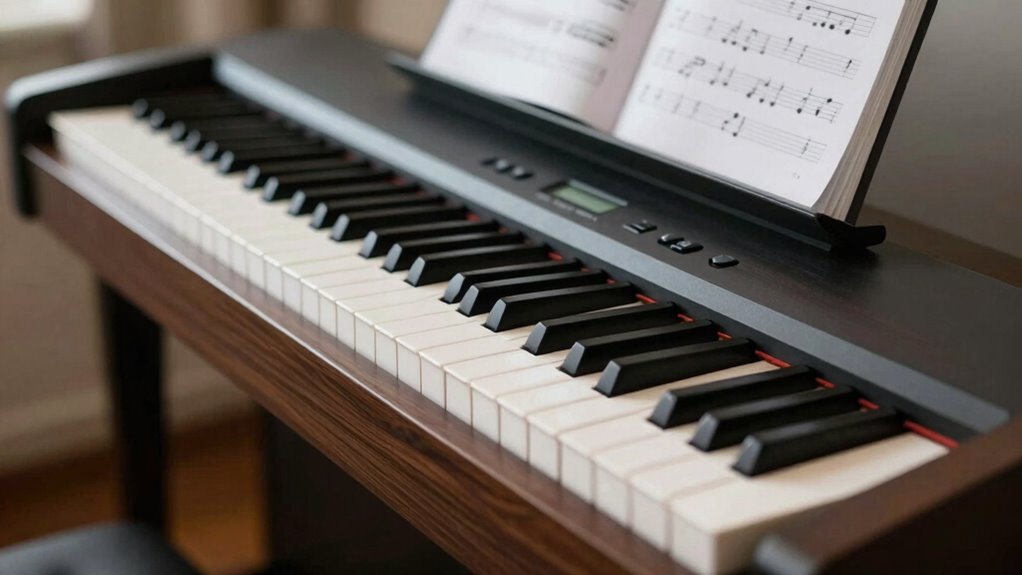
Choosing a keyboard piano can seem overwhelming with so many options available, but understanding your needs and preferences makes the process easier. When you’re just starting out, it’s helpful to think about the musical styles you enjoy or want to explore. For beginners, there are plenty of options designed specifically to make learning easier and more enjoyable. These beginner options often come with simple features, lightweight designs, and user-friendly controls, helping you focus on playing rather than navigating complex settings.
Start with simple, lightweight keyboards tailored for beginners to make learning enjoyable and stress-free.
As you consider your musical styles, think about the kind of sound you want to produce. If you’re into classical music, look for a keyboard with weighted keys that mimic an acoustic piano’s feel. If you prefer pop or electronic music, a keyboard with built-in rhythms and diverse sound options can inspire your creativity. Many beginner options come with preset sounds that cover a range of musical styles, so you don’t have to invest in multiple instruments at once. This versatility can help you experiment and discover your favorite genres without feeling overwhelmed by technical details.
When choosing a keyboard, it’s also important to focus on key features that support your learning journey. For beginners, simplicity is key. Look for models with straightforward controls, clear labels, and essential functions like metronomes, record options, and lesson modes. These features help you stay motivated and improve your skills without getting lost in unnecessary complexity. The number of keys is another consideration—most beginners find 61 or 76 keys sufficient, as they’re compact and cover a wide range of musical styles, while still being manageable to learn. Additionally, digital pianos often feature realistic sound quality and touch sensitivity, enhancing your overall playing experience. Choosing a model with touch-sensitive keys can greatly improve your playing accuracy and expression. Moreover, considering learning features like built-in tutorials and lesson functions can further support your growth as a musician. It’s also beneficial to look for models with adjustable touch sensitivity, allowing you to customize the response to your playing style, which can be particularly helpful as you develop your technique.
Don’t forget about your comfort and convenience. Portability can be a big plus if you plan to practice in different locations. Many beginner options are lightweight and come with built-in stands or are compatible with accessories that make setup easier. Budget is also an important factor—there are quality starter keyboards at affordable prices that don’t sacrifice sound or feel. Remember, you don’t need the most expensive model to get started; focus on features that align with your musical interests and skill level.
In the end, choosing a keyboard piano is about matching your musical aspirations with practical features. By considering your preferred musical styles and opting for beginner options that suit your needs, you’ll set yourself up for a rewarding and fun learning experience. Keep it simple, stay focused on what you want to achieve, and you’ll find the perfect keyboard to support your musical journey.
beginner keyboard piano with touch-sensitive keys
As an affiliate, we earn on qualifying purchases.
As an affiliate, we earn on qualifying purchases.
Frequently Asked Questions
What Is the Ideal Size for a Beginner’s Keyboard Piano?
For beginners, an ideal keyboard piano size is a 61 or 76-key model, offering enough range for learning music theory and practice routines without being overwhelming. These sizes are portable, affordable, and sufficient for most beginner exercises. As you progress, you can consider larger keyboards with 88 keys. Focus on touch sensitivity and key feel to enhance your practice routines, making learning more natural and enjoyable.
How Important Is Brand Reputation When Selecting a Keyboard?
Brand reputation matters, but don’t let marketing hype sway you. Imagine walking into a shop, feeling the smooth keys under your fingertips, and hearing the rich sound — that’s what truly counts. Brand loyalty can guide you, yet focus on the instrument’s feel and sound quality. A reputable brand often guarantees durability, but your personal experience and the instrument’s performance are the real keys to satisfaction.
Should I Prioritize Weighted Keys or Non-Weighted Keys?
You should prioritize weighted keys over non-weighted ones because they better mimic acoustic pianos, providing realistic touch sensitivity and key action. Weighted keys respond to your playing pressure, helping you develop proper technique. Non-weighted keys lack this feature, making them less suitable if you’re aiming for authentic feel. If you’re serious about playing seriously or learning, weighted keys are essential, ensuring your practice translates well to real piano playing.
What’s the Typical Lifespan of a Digital Keyboard Piano?
A digital keyboard piano typically lasts about 8 to 10 years, like a reliable friend in your musical journey. With proper care, it can even stretch beyond that. Your music theory knowledge and consistent practice routines help maximize its lifespan by reducing wear and tear. To keep it in top shape, avoid extreme temperatures and dust, and regularly update its firmware. This way, your investment continues to serve your musical growth.
Are There Specific Features I Should Avoid as a Beginner?
As a beginner, avoid advanced features like complex recording options, extensive sound libraries, or MIDI connectivity, which can be overwhelming and unnecessary at first. Focus on essential functions like touch sensitivity and built-in metronomes. Also, consider cost—paying for features you’ll never use isn’t wise. Stick to simple, straightforward models that help you learn without confusion, and upgrade later as your skills grow.
61 key digital piano for beginners
As an affiliate, we earn on qualifying purchases.
As an affiliate, we earn on qualifying purchases.
Conclusion
Choosing a keyboard piano is like finding the key to your musical journey. Focus on what truly matters—your playing style, feel, and sound—rather than getting lost in a sea of features. Trust your instincts, and remember that the right instrument will feel like an extension of yourself. When you find that perfect fit, you’ll discover melodies that resonate deep within, turning your passion into a symphony that echoes long after the last note.
portable beginner keyboard with built-in lessons
As an affiliate, we earn on qualifying purchases.
As an affiliate, we earn on qualifying purchases.
weighted key digital piano for classical music
As an affiliate, we earn on qualifying purchases.
As an affiliate, we earn on qualifying purchases.
Halloween Picks
halloween
As an affiliate, we earn on qualifying purchases.