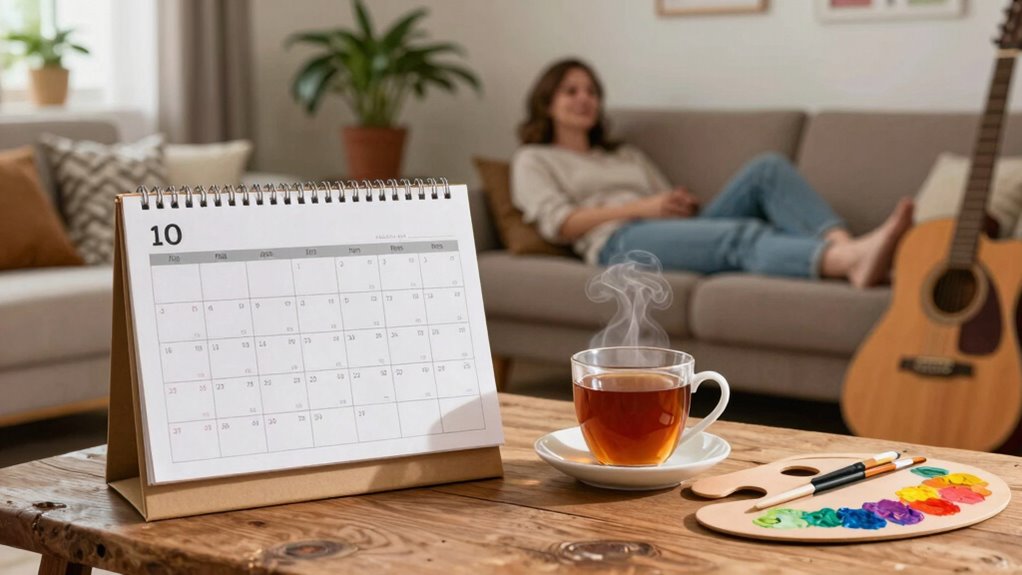

To make more time for hobbies without disrupting your week, start by tracking how you spend your days to identify wasted or underused moments. Prioritize what truly brings you joy and focus on one or two hobbies to stay consistent. Incorporate small blocks of time into your routine, like quick sessions or listening during commutes. Adjust routines, create dedicated space, and batch chores to free up more leisure hours. Keep exploring these strategies to find the perfect balance.

Get the latest gadgets delivered free with Prime
- Fast, free delivery on millions of items
- Prime Video, Amazon Music and more included
- Member-only deals all year
Key Takeaways
- Track your daily activities to identify and eliminate or trim time-wasting routines.
- Prioritize hobbies that bring the most joy, and schedule them consistently in your week.
- Use time-blocking and habit stacking to seamlessly integrate hobbies into existing routines.
- Batch chores and streamline routines to free up larger, dedicated leisure periods.
- Make small, deliberate adjustments to your schedule, ensuring hobbies are a natural and stress-free part of your week.

Finding time for hobbies can feel challenging amid busy schedules, but it’s entirely possible with a few strategic adjustments. The key lies in effective time management and prioritization techniques that help you carve out space without overwhelming your week. First, take a close look at how you currently spend your days. Track your activities for a few days to identify pockets of time that might be underutilized or wasted. Once you see where your time goes, you can make conscious decisions to reallocate some of those moments toward your hobbies.
With strategic adjustments and time tracking, you can find space for hobbies amidst your busy schedule.
Prioritization techniques are essential here. Decide what matters most to you and focus on those activities. Instead of trying to do everything, choose one or two hobbies that truly bring you joy or relaxation. This way, you’re more likely to stick with them, and they won’t feel like just another task to squeeze into your day. Be honest about your commitments and recognize which ones are non-negotiable and which ones could be adjusted to free up time. For example, cutting back on some social media browsing or reducing unnecessary errands can make a noticeable difference.
Time management isn’t just about finding free time; it’s also about creating it intentionally. Block out dedicated periods in your schedule for your hobbies just as you would for work meetings or appointments. Even 15 or 20 minutes can be enough to enjoy a quick sketch, read a few pages of a book, or practice meditation. Setting alarms or reminders can reinforce these new habits and keep you accountable. Remember, it’s not about squeezing hobbies into an already packed schedule but about integrating them seamlessly so they become part of your routine. Incorporating time-blocking can help you allocate time more effectively and stick to your plans. Additionally, developing habit stacking strategies can make integrating hobbies into your daily routine even easier and more natural. Creating a dedicated workspace can also help signal to your brain that it’s time to focus on your leisure activities, making it easier to switch gears. Recognizing efficiency techniques can further streamline your routines and free up more leisure time.
Another effective strategy is to combine activities. For instance, listen to your favorite podcast while commuting or do a quick workout that doubles as a hobby. Multi-tasking in this way maximizes your time without sacrificing enjoyment. Additionally, consider batching similar tasks or chores, so you free up larger blocks of uninterrupted time. For example, meal prepping for the week can save hours and give you more leisure time afterward. Recognizing time-saving techniques can further help you optimize your schedule and free up more leisure hours.
Ultimately, making more time for hobbies without disrupting your week requires deliberate planning and small adjustments. Use your understanding of your daily patterns to identify opportunities, apply prioritization techniques, and manage your schedule intentionally. By doing so, you’ll find that your leisure time increases naturally, enriching your life without adding stress or chaos.
Popular right now

Dyson Cyclone V10 Origin Cordless Vacuum

iRobot Roomba Max 715 Pet Robot Vacuum with AutoEmpty Dock

Samsung 42-Inch S90H OLED 4K Smart TV Bundle
As an affiliate, we earn on qualifying purchases.
Frequently Asked Questions
How Can I Stay Motivated to Pursue Hobbies Regularly?
To stay motivated to pursue hobbies regularly, focus on effective time management and clear goal setting. Break your hobbies into manageable tasks and schedule dedicated time for them, just like work commitments. Set specific, achievable goals to keep your enthusiasm high. Celebrate small victories, which reinforce your motivation. By prioritizing your hobbies and tracking your progress, you’ll find it easier to stay committed and enjoy the benefits of consistent pursuit.
What Hobbies Are Easiest to Fit Into a Busy Schedule?
You can fit quick hobby setups into your busy schedule easily. Time-efficient activities like journaling, listening to podcasts, or quick sketches take just minutes but refresh your mind tremendously—like a mini-vacation! These hobbies require minimal setup and can be squeezed into breaks or commutes. Choose activities that align with your interests, and you’ll find yourself rejuvenated without sacrificing precious time or energy.
How Do I Prioritize Hobbies Over Other Responsibilities?
To prioritize hobbies over other responsibilities, you need to balance commitments carefully and set clear boundaries. Recognize which tasks are essential and which can be delegated or postponed. Schedule dedicated time for your hobbies just like you would for work or chores, and communicate these boundaries to others. By doing so, you safeguard your leisure time and guarantee your hobbies stay a valued part of your life without overwhelming your week.
Can Involving Family or Friends Help Find More Hobby Time?
Did you know 70% of people find more motivation when involving loved ones? Yes, involving family or friends can help you carve out more hobby time. Family collaboration creates a support system, making it easier to stick to your goals. Plus, social accountability keeps everyone motivated and committed. When you share your hobbies, it becomes a shared experience, increasing your chances of making time for what you love.
What Tools or Apps Can Help Manage Time for Hobbies?
You can use time tracking apps like Toggl or RescueTime to monitor how you spend your day, helping you identify free slots for hobbies. App reminders, like those from Google Calendar or Todoist, prompt you to dedicate specific times for your hobbies, ensuring you stick to your schedule. These tools make managing your time easier, so you can enjoy your hobbies without sacrificing your responsibilities.
Conclusion
By prioritizing your hobbies and managing your time wisely, you can transform your schedule into a playground of passion and relaxation. Remember, even the busiest week can be reshaped into a masterpiece of balance—like turning a tiny pebble into a mountain of joy. So, take charge, cut unnecessary tasks, and carve out those precious moments. Your hobbies aren’t just activities; they’re the secret sauce to a happier, more vibrant life.