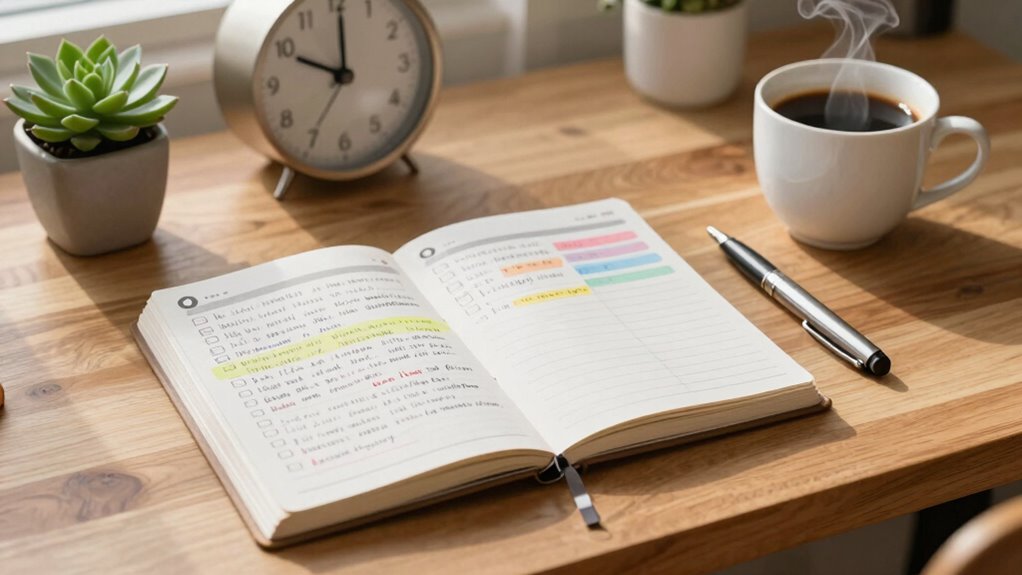
To create a weekly planning habit that sticks, choose a specific day and time each week to plan, making it a non-negotiable part of your routine. Turn off distractions, review your goals, and break tasks into manageable steps. Use digital tools for organization and reflect on your progress regularly. Share your goals with others and celebrate small wins to stay motivated. If you’re interested, you’ll discover more tips to keep your routine consistent and effective.

Get the latest gadgets delivered free — and shop member deals
- Fast, free delivery on millions of items
- Access to Prime Big Deal Days deals on October 6–7
- Prime Video, Amazon Music and more included
Key Takeaways
- Establish a consistent day and time each week dedicated solely to planning to build routine and accountability.
- Break large goals into manageable steps and prioritize important tasks to keep planning realistic and focused.
- Use digital tools and apps to organize tasks visually, set reminders, and streamline the planning process.
- Reflect weekly on accomplishments and setbacks to improve and adapt your planning strategy over time.
- Share goals with others and celebrate progress to reinforce accountability and motivation.

Building a weekly planning habit can transform how you manage your time and achieve your goals. When you regularly set aside time to plan each week, you gain a clearer picture of what needs to get done and how to prioritize it. This consistency helps you develop better time management skills, making it easier to avoid last-minute stress and missed deadlines. With effective goal setting baked into your planning, you can break down big ambitions into actionable steps, guaranteeing steady progress toward what matters most.
To start, pick a specific day and time each week dedicated solely to planning. Whether it’s Sunday evening or Monday morning, sticking to this schedule creates routine and makes planning a non-negotiable part of your week. When that time arrives, turn off distractions and focus solely on your agenda. Use this moment to review your goals, assess your progress, and identify any upcoming commitments. This regular check-in keeps you grounded and prevents tasks from slipping through the cracks.
When creating your weekly plan, be deliberate about setting priorities. Identify your most important tasks and allocate time for them first. This approach is vital for effective goal setting because it ensures that your efforts align with your bigger objectives. As you plan, consider using tools like to-do lists, calendars, or digital apps to organize your tasks visually. This not only enhances your time management but also gives you a sense of control, boosting your motivation to follow through. Developing a weekly planning routine can serve as a foundation for building more effective habits over time. Additionally, understanding the importance of time management can help you stay focused and make better decisions about how to allocate your efforts. Incorporating insights from artificial intelligence tools can also optimize your planning process by providing tailored recommendations and reminders. Recognizing the role of digital tools in streamlining your routine can further enhance your productivity and help you stay consistent. Furthermore, establishing a consistent routine reinforces positive behaviors that support your long-term success.
Another key to making this habit stick is to keep your planning sessions realistic. Don’t overload your week with an endless list of to-dos. Instead, break larger projects into smaller, manageable steps. Recognize your limits and be honest about what you can accomplish. This prevents frustration and helps you stay committed to your weekly routine. Additionally, review your previous week’s accomplishments and setbacks. Reflecting on what worked and what didn’t allows you to refine your approach, making your planning more effective over time.
Finally, hold yourself accountable. Consider sharing your weekly goals with a friend or colleague, or even journaling about your progress. Celebrate small victories and be forgiving when setbacks happen. Building this habit gradually, with patience and consistency, turns planning from a chore into an empowering routine. Over time, this weekly ritual becomes ingrained in your lifestyle, dramatically improving your time management and sharpening your focus on goal setting.
As an affiliate, we earn on qualifying purchases.
Frequently Asked Questions
What Tools Are Best for Weekly Planning?
You can choose between digital tools like Todoist, Notion, or Trello, which offer flexibility and easy editing for your weekly plan. Alternatively, paper planners provide a tactile, visual approach that many find more engaging. Both options work well; it’s about what suits your style. Digital tools are great for reminders and syncing across devices, while paper planners give you a tangible way to stay organized and focused throughout the week.
How Long Should a Weekly Planning Session Take?
A weekly planning session should take around 30 to 60 minutes. You want enough time to thoughtfully think through your tasks without feeling overwhelmed. This helps with time management and habit formation by establishing a consistent schedule. Set a specific day and time, and stick with it. Committing to this routine creates a rhythm that makes planning feel natural, necessary, and manageable, turning it into a sustainable weekly habit.
How Do I Stay Motivated to Plan Weekly?
To stay motivated to plan weekly, use motivation strategies like setting clear goals and rewarding yourself. Remember, consistent habit formation makes planning easier over time, so keep your sessions short and regular. Visualize the benefits of organized weeks, and track your progress to stay inspired. Connecting your planning to your larger goals helps reinforce why it’s worth the effort, turning planning into a rewarding part of your routine.
What if I Miss a Weekly Planning Session?
If you miss a weekly planning session, don’t get discouraged. Acknowledge the missed session and reschedule it as soon as possible. Use accountability partners to stay on track; they can help remind you and motivate you to stick with your plan. Remember, consistency matters more than perfection. Each missed session is an opportunity to refine your routine, so keep moving forward and stay committed to your planning habit.
How to Adjust Plans When Priorities Change?
When priorities shift, you should practice flexible scheduling and prioritize reassessment. Review your plans weekly, identify new or changing priorities, and adjust your schedule accordingly. Be open to reallocating time and resources, ensuring your plan aligns with your current goals. This ongoing process helps you stay adaptable and effective, making it easier to stay on track despite unexpected changes or evolving priorities.
As an affiliate, we earn on qualifying purchases.
Conclusion
By establishing a weekly planning routine, you set yourself up for success, clarity, and confidence. By dedicating time to plan, reviewing your goals, and adjusting your approach, you create consistency, build momentum, and foster growth. By making planning a habit, embracing flexibility, and staying committed, you turn a simple activity into a powerful tool. Remember, the key to lasting change is persistence, patience, and passion—so keep planning, keep improving, and watch your habits thrive.
As an affiliate, we earn on qualifying purchases.
As an affiliate, we earn on qualifying purchases.
Halloween Picks
halloween
As an affiliate, we earn on qualifying purchases.