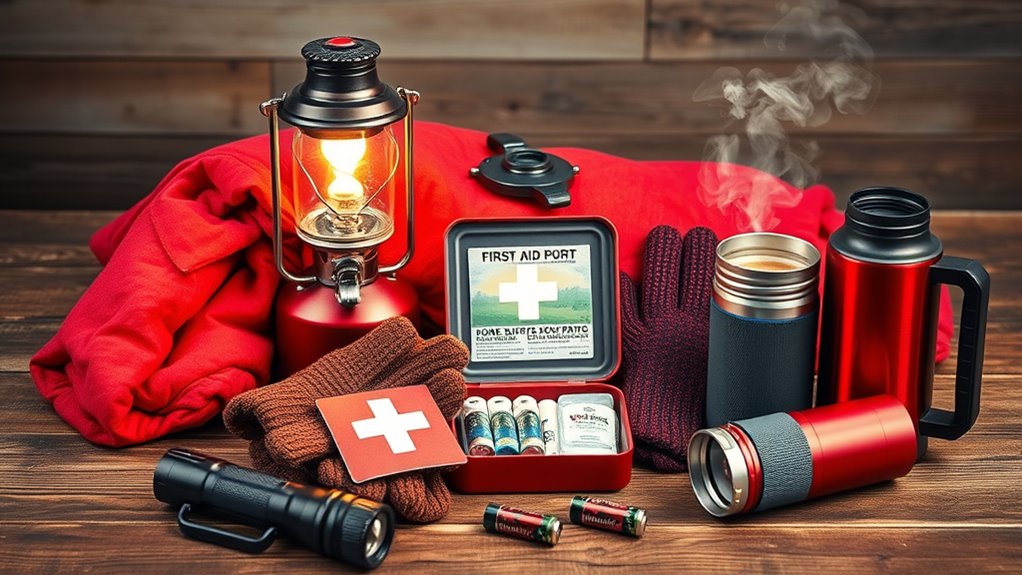

To prepare your winter home emergency kit, gather essentials like snow shovels, ice melt, and warm clothing to keep pathways safe. Include a portable heater, extra batteries, blankets, and non-perishable food to stay comfortable if outages occur. Equip yourself with flashlights, a first aid kit, and a weather radio to stay informed. Keep your supplies updated and tailored to your household’s needs, so you’re ready for whatever winter throws your way. Continue on to learn more.
Key Takeaways
- Include snow removal tools like shovels, ice melt, and brushes to keep pathways clear and safe.
- Stock portable heaters, extra fuel, blankets, and thermal clothing for reliable warmth during power outages.
- Store non-perishable food, bottled water, and supplies for pets and medications to ensure sustenance.
- Equip with flashlights, batteries, a weather radio, charged phones, and emergency communication devices.
- Regularly review and update your kit with fresh supplies, including blankets and survival gear, tailored to household needs.
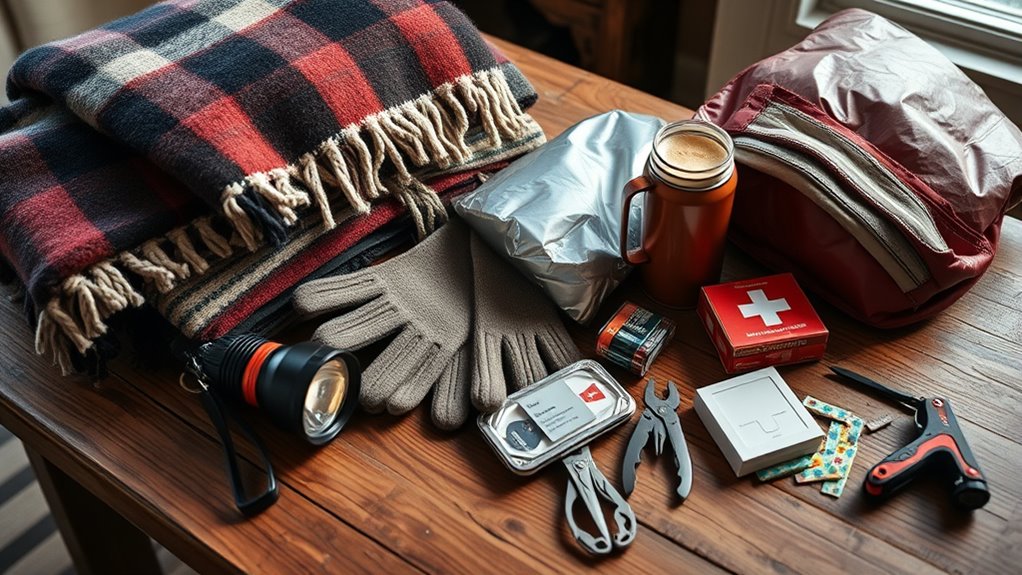
Are you prepared for winter emergencies? As the temperatures drop and snow begins to pile up, it’s essential to have a well-stocked winter home emergency kit. Preparing now can make all the difference when severe weather hits. One of the key aspects is guaranteeing you’re ready for snow removal. Snow can quickly block your driveway and walkways, creating hazards and making it difficult to go about your day. Keep a sturdy snow shovel or snow blower in your kit, along with rock salt or ice melt to help clear pathways safely. Also, consider including a small broom or brush for quick snow removal from steps and entrances. Having these tools on hand means you won’t be caught off guard or forced to scramble for supplies during a storm.
Another critical component of winter readiness is indoor heating. Staying warm is crucial to avoid hypothermia or frostbite, especially if your power goes out. Make sure you have alternative heat sources, such as a portable space heater or a generator, and keep extra fuel or batteries nearby. Stock up on warm blankets, thermal clothing, and insulated gloves to help retain body heat. It’s wise to have a backup plan in case your usual heating system fails—perhaps a wood stove or a propane heater, but always prioritize safety and proper ventilation when using these devices. Additionally, keep a supply of non-perishable food and bottled water because winter storms can last for days, trapping you inside.
Beyond snow removal and indoor heating, a detailed winter emergency kit includes other essentials. Flashlights with extra batteries will help you navigate dark, stormy nights. A first aid kit is necessary for treating minor injuries, and a battery-powered or hand-crank radio ensures you stay informed about weather updates and emergency alerts. Keep your cell phone charged, and consider investing in a portable charger or power bank. Emergency blankets, waterproof matches, and a multi-tool can also prove invaluable if you find yourself in unexpected situations.
Finally, don’t forget to personalize your kit based on your household’s needs. Include supplies for pets, medications, and any necessary special equipment. Regularly check and update your winter emergency kit, replacing expired items and replenishing supplies after each storm. Being proactive and prepared not only keeps you safe but also provides peace of mind during the coldest months of the year. Additionally, understanding the contrast ratio of your projector can significantly improve your viewing experience during long winter nights indoors. With the right tools and supplies, you’ll be ready to face winter head-on and keep your home safe and warm no matter what Mother Nature throws your way.
Frequently Asked Questions
How Often Should I Update My Emergency Kit?
You should update your emergency kit at least once a year to guarantee winter safety and kit maintenance. Check for expired food, water, batteries, and other supplies, especially before the cold season begins. Also, review your kit after any severe weather events or if you notice supplies are damaged or used. Regular maintenance keeps your kit reliable, so you’re prepared for winter emergencies and can respond quickly when needed.
What Should I Include for Pets?
Did you know that over 60% of pet owners feel unprepared for winter emergencies? To make certain pet safety, include emergency treats, plenty of water, and a warm blanket in your kit. Don’t forget a leash, a copy of vaccination records, and any necessary medications. These essentials help keep your furry friends safe and comfortable during cold weather crises, giving you peace of mind no matter what winter throws your way.
How Can I Prevent Frozen Pipes?
You can prevent frozen pipes by insulating your pipes with pipe insulation, especially in unheated areas. Don’t forget to insulate outdoor faucets with faucet covers or foam insulation to protect them from freezing. Keep a slow drip of water running through vulnerable pipes during extreme cold, and open cabinet doors under sinks to allow warm air to circulate. These steps help avoid costly repairs and water damage.
What Are Affordable Ways to Prepare?
Imagine you’re on a tight budget, but you want to stay prepared. You can create budget-friendly solutions by gathering DIY emergency supplies, like sealing drafts with affordable foam tape or using old blankets to insulate windows. You could also buy bulk supplies for flashlights, batteries, and first aid kits. These simple steps help you prepare without overspending, ensuring you’re ready for cold weather emergencies without breaking the bank.
How Do I Store My Emergency Supplies?
You should store your emergency supplies in a cool, dry place away from direct sunlight to prevent spoilage. Use clear plastic bins or airtight containers for easy supply organization and quick access. Label each container clearly, and keep essential items like batteries, blankets, and non-perishable food together. Regularly check and update your storage tips to guarantee your supplies stay fresh and ready for cold weather emergencies.
Conclusion
So, now that you’ve got your winter home emergency kit ready, you’re basically invincible—except, of course, from that inevitable snowstorm that always seems to sneak up on you. Remember, no kit can replace common sense or a good sense of humor when the power goes out. Stay warm, stay prepared, and maybe invest in a cozy blanket or two—because if the worst happens, you’ll thank yourself for not being caught off guard.