
To cut your utility bills this winter, start by upgrading to a smart thermostat that learns your schedule and optimizes home heating, saving energy and money. Use energy-efficient appliances and turn them off when not in use. Lower your thermostat a few degrees when you’re asleep or away, and guarantee your home is well sealed and insulated to prevent heat loss. Small habit changes like using ceiling fans and monitoring energy use can make a big difference; discover how more tips can help even further.
Key Takeaways
- Install a smart thermostat to learn your schedule and optimize heating, reducing unnecessary energy use.
- Seal leaks and insulate your home to retain heat and lessen the workload on your heating system.
- Lower your thermostat to around 68°F when home and awake, and lower it further when sleeping or away.
- Use energy-efficient appliances with smart controls to monitor and remotely manage energy consumption.
- Utilize ceiling fans and maintain good habits to distribute heat evenly and minimize energy waste.
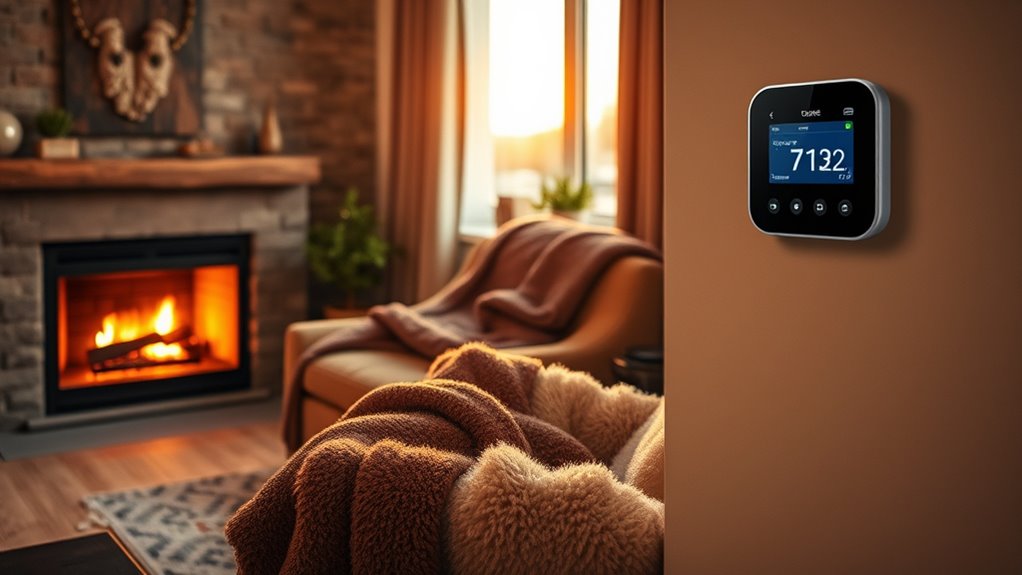
Ever wondered how small changes can make a big difference in reducing your energy bills? It’s easier than you might think. One of the most effective steps you can take is upgrading to smart thermostats. These devices learn your schedule and adjust your home’s temperature accordingly, ensuring you’re not wasting energy when you’re not home or when you’re asleep. With a smart thermostat, you can set your heating to run only when needed, making your home warmer during the day and cooler when you’re away or sleeping. This not only keeps your comfort levels steady but also substantially cuts down on unnecessary energy use. Pairing this with energy-efficient appliances can amplify your savings. Modern appliances are designed to use less power while maintaining the same performance, so replacing old refrigerators, washers, or dryers with newer models can make a noticeable dent in your utility bills. Plus, many energy-efficient appliances come with smart features that allow you to monitor and control their usage remotely, giving you more control over your energy consumption. Using energy-efficient appliances also helps reduce overall electricity demand, easing pressure on the power grid.
You should also consider smarter habits to maximize savings. For instance, lowering your thermostat a few degrees during the winter can lead to substantial savings without sacrificing comfort. Experts suggest setting your thermostat to around 68°F (20°C) when you’re home and awake, and lowering it when you’re asleep or away. Using ceiling fans can help distribute heat more evenly, so your home feels warmer without turning up the thermostat. Additionally, sealing leaks around doors and windows prevents warm air from escaping and cold air from entering, which means your heating system doesn’t have to work as hard. Proper insulation is another key factor; insulating your walls, attic, and floors keeps heat inside longer, reducing the need for constant heating.
Frequently Asked Questions
How Can I Tell if My Home Is Properly Insulated?
You can tell if your home is properly insulated by conducting an insulation inspection and draft detection. Check for cold spots or uneven temperatures on walls and ceilings, which indicate poor insulation. Use a thermal camera or simply hold a hand near windows and doors to feel drafts. If you notice these signs, it’s time for an insulation inspection to improve energy efficiency and keep your home warmer this winter.
What Are the Best Low-Cost Ways to Reduce Energy Use?
To reduce energy use, start with inexpensive insulation upgrades and draft sealing. You can add weatherstripping around doors and windows, seal leaks with caulk, and use door snakes to block drafts. These simple steps help keep warm air inside and cold air out, lowering your heating bills. Regularly inspect your home for drafts and address any gaps promptly, making your home more energy-efficient without a big investment.
How Often Should I Service My Heating System for Efficiency?
You should schedule a heating system tune-up annually for peak efficiency. Regular heating maintenance keeps your system in prime condition, preventing problems and prolonging lifespan. Ideally, plan your tune-up before winter hits, ensuring your system runs smoothly when you need it most. Consistent servicing helps catch issues early, conserving energy and cutting costs. Don’t delay—annual maintenance maximizes warmth, minimizes waste, and keeps your home comfortably cozy all season long.
Are Energy-Efficient Windows Worth the Investment?
Yes, energy-efficient windows are worth the investment because they considerably improve your home’s insulation. With window upgrades, you’ll notice reduced heating costs and increased comfort during winter. Conduct a cost analysis to compare the upfront expense against long-term savings. While the initial investment may seem high, the energy savings and added comfort make energy-efficient windows a smart choice for winter utility bill reduction.
Can Smart Thermostats Really Lower My Winter Utility Bills?
Yes, smart thermostat benefits can considerably lower your winter utility bills. They learn your schedule and adjust heating accordingly, saving energy when you’re not home. By using thermostat programming strategies, you can set temperatures to optimize comfort and efficiency, avoiding unnecessary heating costs. With a smart thermostat, you gain control and automation, making it easier to reduce your energy consumption and save money all winter long.
Conclusion
By following these tips, you’ll turn your home into a fortress against the winter chill, saving enough on utility bills to buy a small island—or even a private jet! Imagine never shivering or paying sky-high bills again, as your cozy home becomes a fortress of warmth and savings. So, get started now, and watch your energy bills shrink faster than a snowflake in summer, leaving you with more money—and comfort—than you ever dreamed possible.