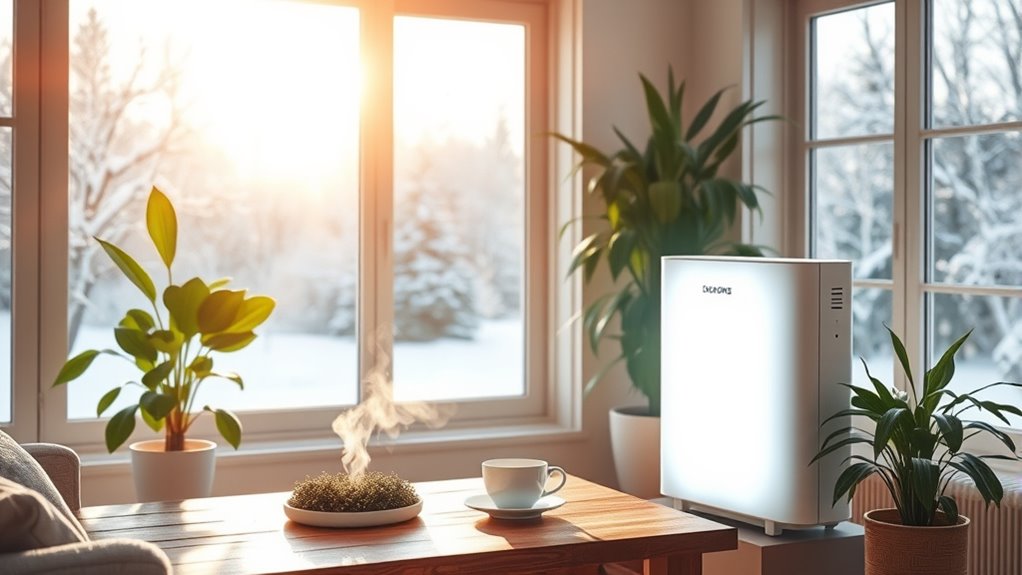

To keep your home healthy this winter, focus on improving indoor air quality by ensuring proper ventilation. Use exhaust fans in kitchens and bathrooms to remove excess moisture and prevent mold growth. Regularly maintain your ventilation system and consider air quality analysis to identify pollution sources. Controlling humidity and circulating fresh air reduces allergens and indoor pollutants. If you want practical tips and insights on creating a safer, more comfortable indoor environment, there’s more to discover.
Key Takeaways
- Ensure proper ventilation by regularly airing out your home to reduce indoor pollutants and stale air.
- Use exhaust fans in kitchens and bathrooms to control humidity and prevent mold growth.
- Maintain indoor humidity levels between 30-50% to inhibit mold and dust mites.
- Regularly clean and inspect ventilation systems for optimal performance and air quality.
- Conduct air quality analysis to identify pollution sources and optimize ventilation strategies for winter health.
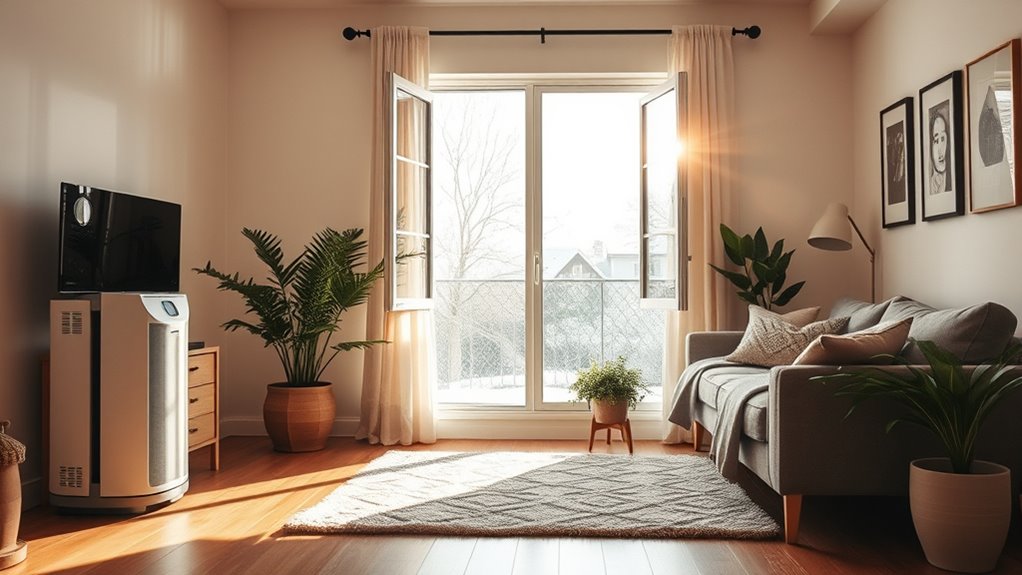
Indoor air quality substantially impacts your health and comfort, especially since most people spend the majority of their time indoors. During the winter months, indoor air can become stale, humid, and contaminated if you don’t take proactive steps. One of the most effective ways to improve your indoor air quality is by properly managing your ventilation systems. These systems help circulate fresh air into your home and remove indoor pollutants, such as dust, pet dander, and airborne chemicals. When your ventilation is inadequate, pollutants can accumulate, leading to stuffy air, allergies, or respiratory issues. Upgrading or maintaining your ventilation systems guarantees a steady flow of fresh air, reducing indoor air pollution and making your home a healthier place to be.
Proper ventilation is also essential for mold prevention. Winter creates ideal conditions for mold growth because of increased indoor humidity from activities like cooking, showering, and even indoor plants. When moisture becomes trapped and ventilation is poor, mold spores can thrive on surfaces such as walls, ceilings, and insulation. Not only does mold cause allergic reactions and respiratory problems, but it can also damage your home’s structure. Installing or improving your ventilation systems helps control indoor humidity levels, keeping them within a healthy range. For example, exhaust fans in bathrooms and kitchens are indispensable because they quickly remove excess moisture directly at its source, preventing it from settling and fostering mold growth. Additionally, understanding the importance of air quality analysis can help you identify pollution sources and optimize your ventilation strategies.
Frequently Asked Questions
How Often Should I Replace My Indoor Air Filters During Winter?
You should replace your indoor air filter every 1 to 3 months during winter. Regular filter maintenance guarantees ideal airflow and improves filter lifespan. If you have pets or allergies, consider changing it more frequently. Check your filter monthly and replace it if it looks dirty or clogged. Doing so keeps your indoor air quality high, prevents system strain, and maintains a healthy, comfortable home environment all winter long.
Can Indoor Plants Improve Winter Indoor Air Quality?
Indoor plants can boost air purification, with NASA studies showing they remove toxins like benzene and formaldehyde from your home. Plant benefits include increasing humidity and reducing airborne pollutants, which is especially helpful during winter when indoor air tends to be drier and more polluted. Adding a few houseplants not only enhances your space’s aesthetics but also actively improves indoor air quality, making your home healthier and more comfortable during the colder months.
What Are the Signs of Poor Indoor Air Quality in Winter?
You might notice signs of poor indoor air quality in winter like lingering odors, increased allergy symptoms, or respiratory irritation. Ventilation issues can make your home feel stuffy and trap pollutants, while mold growth often causes musty smells and visible patches. If these symptoms appear, it’s time to improve airflow, check for mold, and consider air purifiers to create a healthier indoor environment.
Are Air Purifiers Effective Against Winter Indoor Pollutants?
Yes, air purifiers are effective against winter indoor pollutants. HEPA filters, for example, trap allergens and dust, improving air quality, while activated carbon filters handle odors and volatile organic compounds. You should regularly maintain your air purifier by cleaning or replacing filters as recommended. This guarantees peak performance and keeps your home’s air clean and healthy during the winter months.
How Does Indoor Humidity Affect Air Quality in Winter?
You might think low indoor humidity is harmless, but it actually worsens air quality by causing dryness and irritation. Using a humidifier benefits you by maintaining a proper moisture balance, which helps reduce airborne pollutants and allergens. Keeping humidity levels between 30-50% guarantees your home stays comfortable and healthy. Proper moisture balance not only improves air quality but also protects your skin and respiratory health during winter.
Conclusion
By taking simple steps to improve your indoor air quality this winter, you’re not just making your home healthier—you’re protecting yourself from invisible threats more powerful than a hurricane. Regularly ventilate, keep humidity in check, and choose air purifiers wisely. Think of your home as a fortress; with clean air, you’ll stand invincible against winter’s sneakiest pollutants. Stay vigilant, breathe easy, and enjoy a winter where your home truly feels like the safest place on Earth.