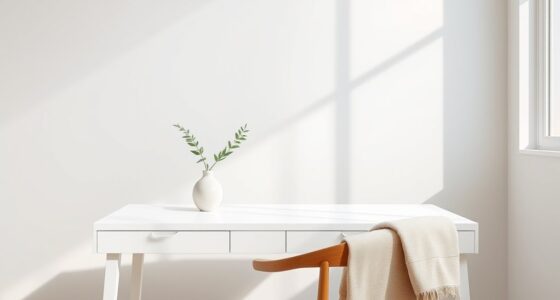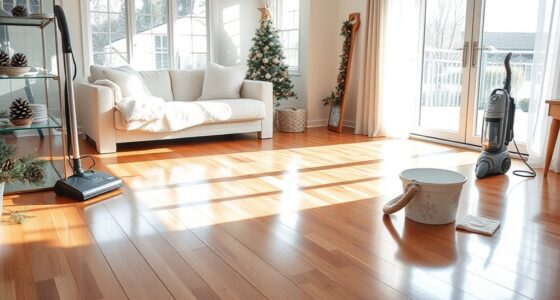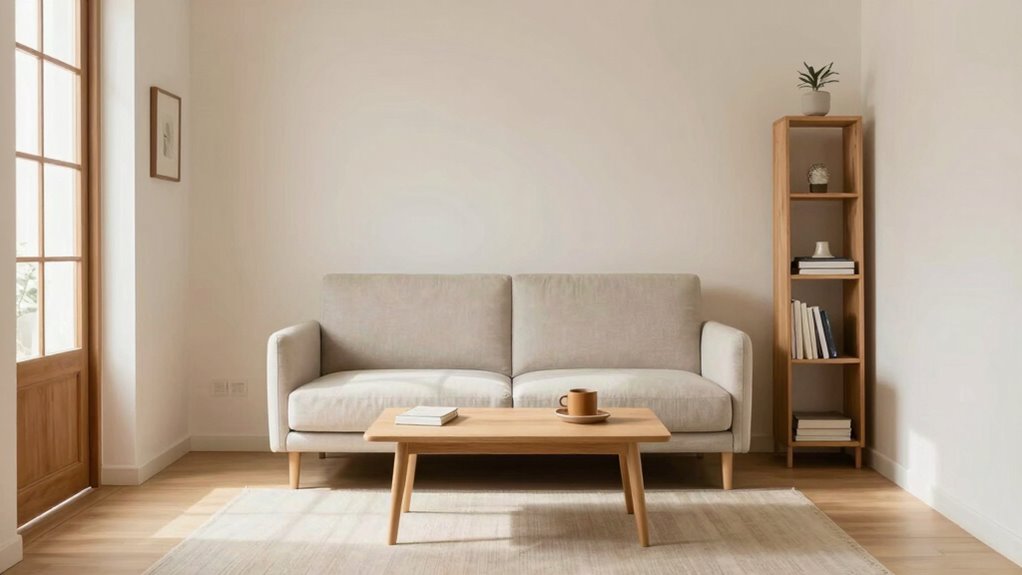
To improve flow in small spaces, start by moving larger furniture away from doorways and high-traffic areas to create clear pathways. Use light, neutral colors to reflect light and make the space feel larger. Position furniture to maximize natural sunlight and incorporate multiple light sources to eliminate dark corners. Define zones with rugs and accessories, and guarantee each piece serves a purpose without overcrowding. By considering these tips, you’ll discover more ways to create a functional, inviting layout.
Key Takeaways
- Shift large furniture away from doorways and high-traffic areas to improve movement flow.
- Use lighter colors and similar tones to create visual cohesion and make the space feel larger.
- Position furniture to maximize natural light and avoid blocking windows or vents.
- Divide the space into functional zones using rugs and accessories for clear visual cues.
- Maintain balanced proportions and avoid overcrowding for a cohesive, inviting layout.
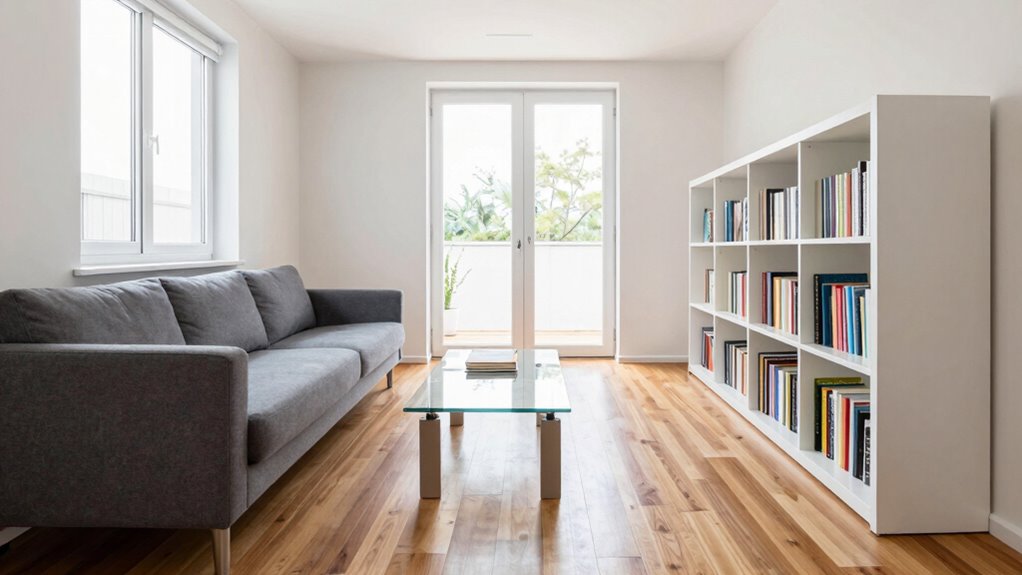
Rearranging furniture can considerably enhance the flow of your space, making it feel more open and inviting. When you shift your furniture thoughtfully, you create pathways that guide the eye and foot traffic naturally through the room. To do this effectively, start by considering the overall layout and how each piece interacts with the space. Remember, in small areas, every piece should serve a purpose and contribute to a sense of openness. Move larger furniture away from doorways and high-traffic zones, and avoid blocking windows or vents, which can make the room feel cramped.
Color schemes play a significant role in how spacious your room appears. Lighter, neutral tones tend to reflect more light, giving the illusion of a larger space. When rearranging, think about how your color choices complement the new layout. Keeping walls and furniture in similar shades or soft hues can unify the space, making it feel less cluttered. If you want to add some contrast, do so with small accent pieces rather than large, dark furniture pieces that can weigh down the room visually.
Lighting options are equally crucial in creating an open, flowing space. Natural light is your best asset, so position your furniture to maximize sunlight from windows. Avoid placing large pieces directly in front of windows, which can block light and make the room feel smaller. Incorporate multiple lighting sources—like floor lamps, table lamps, or wall sconces—to eliminate dark corners and add depth. Proper lighting enhances the perception of space by highlighting different areas and creating visual interest. It also encourages movement and exploration within the room, making the overall flow smoother. Additionally, understanding the concept of effective furniture placement can significantly impact how well your small space functions and feels. When you combine thoughtful furniture placement with strategic use of color schemes and lighting options, your small space transforms into a more functional and welcoming environment. Consider creating zones within the room, such as a seating area and a workspace, to define purpose without crowding the space. Using visual cues like rugs and accessories can help delineate these zones, but avoid overloading the room with too many items, which can disrupt flow. Incorporating spatial awareness into your design process can help ensure that each piece contributes to a cohesive, open layout. Being mindful of furniture scale can prevent the space from feeling overwhelmed and helps maintain a balanced proportion between pieces. Ultimately, the goal is to craft a layout that feels intuitive and open, where movement feels natural and inviting. With careful planning, small spaces can become surprisingly versatile and comfortable, reflecting your style while maintaining excellent flow.
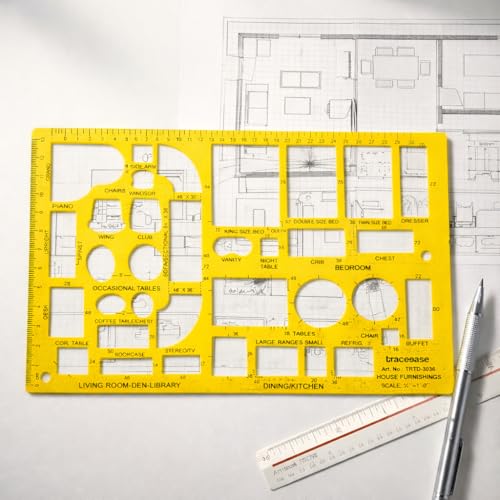
Traceease Furniture Layout Template Guide, House Furnishing Drafting Stencil with Beds Tables Chairs Couches and Home Decor Shapes for Interior Design, Room Planning, Architecture and Drawing
- Comprehensive Furniture Shapes: Includes beds, tables, chairs, couches, and decor
- Ideal for Professionals and Students: Suitable for architects, designers, and DIY users
- Portable and Lightweight: Measures 8.75 x 5.5 inches, easy to carry
As an affiliate, we earn on qualifying purchases.
As an affiliate, we earn on qualifying purchases.
Frequently Asked Questions
How Can I Maximize Storage With Limited Space?
You can maximize storage by using creative solutions like multi-functional furniture, such as beds with built-in drawers or ottomans with hidden compartments. Look for vertical storage options like wall-mounted shelves or hooks to free up floor space. Incorporate storage under stairs or furniture that doubles as seating. These strategies make the most of limited space, helping you stay organized without sacrificing comfort or style.
What Are the Best Furniture Sizes for Small Rooms?
The best furniture sizes for small rooms are compact, multi-functional pieces that suit your decorating style and color scheme. Opt for streamlined sofas, slim-profile tables, and multi-purpose storage options to maximize space. Choose furniture that complements your preferred decorating style, whether modern, minimalist, or cozy. Light-colored furniture can make the room feel more open, while choosing appropriately scaled pieces guarantees better flow and prevents the space from feeling crowded.
How Do I Create a Focal Point in a Small Space?
To create a focal point in a small space, choose a standout piece like a bold piece of furniture or artwork. Enhance it with decorative accents that draw attention, such as vibrant cushions or stylish lamps. Use a cohesive color scheme to highlight this area, making it pop without overwhelming the room. Keep surrounding decor simple to guarantee your focal point remains the main attraction and keeps the space feeling inviting and balanced.
What Lighting Options Improve Small Room Flow?
They say “light makes everything brighter,” and it’s true for small rooms. You can improve flow by combining ambient lighting, like ceiling fixtures, with task lighting, such as table lamps or under-cabinet lights. This layering creates a welcoming atmosphere and guides the eye naturally through the space. Proper lighting highlights your focal points and minimizes clutter, making your small space feel larger and more inviting.
How Can I Make a Small Space Feel Larger Visually?
You can make a small space feel larger visually by choosing light, neutral color schemes that reflect more light and create an airy feel. Incorporate wall art strategically—large, simple pieces or mirrors help open up the room and add depth. Keep clutter minimal, and arrange furniture to maximize open pathways. These steps work together to enhance the sense of spaciousness and make your small space feel more open and inviting.

SWTYMIKI Coffee Bar Cabinet for Home – Farmhouse Coffee Stand Station Multi-Purpose Buffet Sideboard Cabinet with Drawers – Kitchen Bar Table for Living Room, Corner, Small Space, Espresso
- Multiple Shelves and Storage: Includes shelves, cabinets, and drawers for organization
- Built-in Magnetic Closures: Magnetic doors for easy access and space maximization
- See-through Door and Drawer: Transparent door and hidden drawer for convenient viewing and storage
As an affiliate, we earn on qualifying purchases.
As an affiliate, we earn on qualifying purchases.
Conclusion
By rearranging your furniture thoughtfully, you can unleash the full potential of your small space, making it feel more open and inviting. Think of your room as a dance floor—each piece should move smoothly without stepping on toes. With a little planning and creativity, you’ll create a flow that feels natural and effortless. Remember, a well-arranged room isn’t just functional; it’s the heartbeat of your home, pulsing with comfort and style.

SCON 14W Dual-Round LED Magnetic Track Light Head, 24V DC Track Light Head
- 3CCT Lighting Modes: Adjustable warm, neutral, cool white
- Magnetic Track Compatibility: Designed for SCON 24V magnetic tracks
- Tool-Free Installation: Snap on and reposition easily
As an affiliate, we earn on qualifying purchases.
As an affiliate, we earn on qualifying purchases.
As an affiliate, we earn on qualifying purchases.