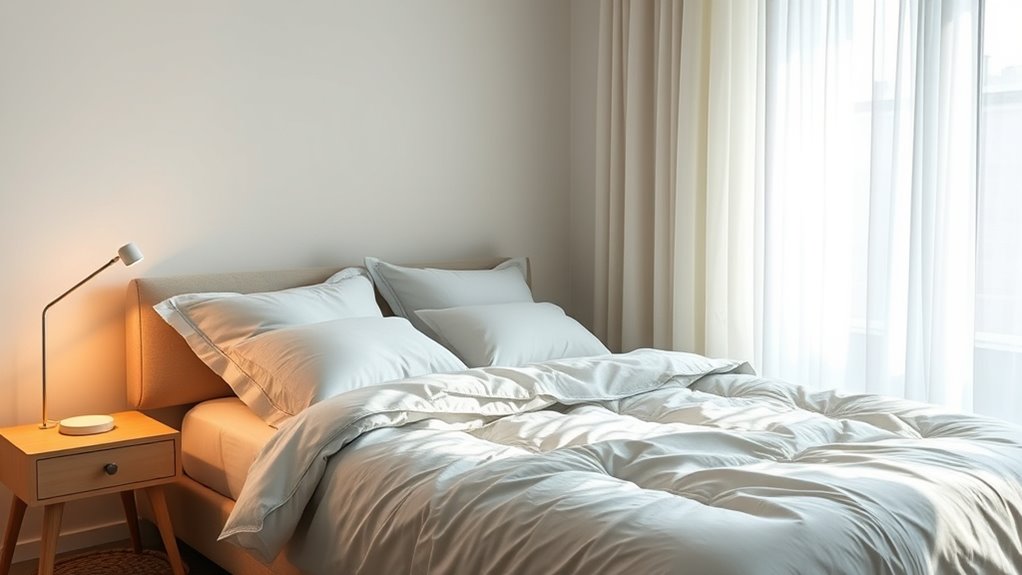

To design a bedroom for deep rest, focus on creating a dark and calming environment that supports your circadian rhythm. Use dim, warm lighting in the evening, install blackout curtains, and turn off electronic screens an hour before bed to boost melatonin production. Avoid bright lights or blue light from devices in the bedroom. Keeping your space cool and quiet also enhances sleep quality. Continue exploring ways to optimize your sleep environment to wake feeling truly refreshed.
Key Takeaways
- Create a dark sleeping environment using blackout curtains or sleep masks to support melatonin production.
- Use warm, dim lighting or low-wattage bulbs in the evening to signal your body to wind down.
- Install dimmer switches or adjustable lamps to control light intensity before and during sleep.
- Minimize external light sources and electronic screen exposure in bed to prevent circadian disruption.
- Maintain a consistent, cool bedroom temperature and reduce noise to promote restful, deep sleep.
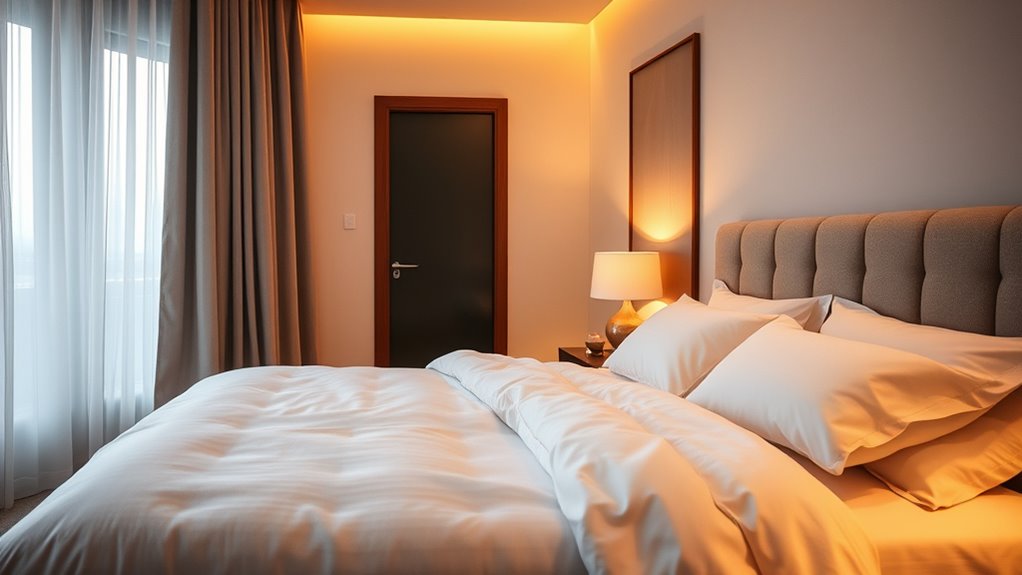
Creating an ideal sleep environment is essential for achieving restorative rest. Your bedroom should be a sanctuary that promotes relaxation and signals to your body that it’s time to wind down. One of the most important aspects of this is practicing good sleep hygiene, which involves habits and environmental factors that support quality sleep. Among these factors, bedroom lighting plays a pivotal role. Light levels directly influence your circadian rhythm, the internal clock that regulates sleep-wake cycles, so controlling your bedroom lighting is key to creating an environment conducive to deep sleep.
Controlling bedroom lighting is vital for supporting your circadian rhythm and achieving restorative, deep sleep.
Start by minimizing exposure to bright or blue light in the evening. Blue light, emitted by screens like phones, tablets, and computers, can suppress melatonin production—the hormone responsible for making you feel sleepy. To improve your sleep hygiene, consider dimming the lights an hour or two before bed. Use low-wattage bulbs or consider installing dimmer switches in your bedroom. If you need lighting for reading or other activities, opt for warm, amber-colored lights that emit less blue light. Blackout curtains or heavy blinds can block out external light sources, ensuring your room remains dark throughout the night. Even small amounts of light can interfere with your sleep cycles, leading to fragmented or less restful sleep.
Creating a sleep-friendly environment also involves controlling ambient lighting to prevent disturbances. Avoid leaving night lights on or using electronic devices with bright screens while in bed. Instead, incorporate a small bedside lamp with a warm bulb for nighttime reading, and turn it off once you’re ready to sleep. This consistent lighting routine helps reinforce your body’s natural sleep cues. Additionally, consider using sleep masks if you must sleep in a slightly illuminated room or if streetlights seep through your windows. Maintaining a dark environment is supported by research indicating that light exposure impacts melatonin production.
Good sleep hygiene extends beyond lighting control. Keep your bedroom cool, quiet, and free of distractions. A temperature around 60-67°F (15-19°C) is generally ideal for sleep. Use earplugs or white noise machines if noise disrupts your rest. Cultivating a calming pre-sleep routine, such as gentle stretching or meditation, further signals your body to prepare for sleep. Over time, these habits and environmental adjustments will reinforce your body’s natural rhythms, helping you fall asleep faster and enjoy more restorative, uninterrupted sleep. Remember, creating an environment that supports sleep is a continuous process, and small changes in bedroom lighting and sleep hygiene can make a significant difference in the quality of your rest.
Frequently Asked Questions
How Does Room Color Influence Sleep Quality?
Room color substantially influences your sleep quality through color psychology and sleep psychology. Soft, calming hues like blues and greens promote relaxation and reduce stress, helping you fall asleep faster and enjoy deeper rest. Bright or bold colors can be stimulating, making it harder to unwind. By choosing soothing shades, you create a sleep-friendly environment that supports your body’s natural rest cycles and enhances overall sleep quality.
What Role Does Natural Light Play in Sleep Regulation?
Natural light acts like a conductor, guiding your body’s circadian rhythms to stay in sync. When you get proper light exposure during the day, it helps regulate your sleep-wake cycle, making it easier to fall asleep at night and wake refreshed. Without enough natural light, your internal clock can become out of tune, disrupting sleep. So, make sure to soak up sunlight during the day for better rest tonight.
Can Specific Scents Improve Deep Sleep?
You might find that specific scents can enhance deep sleep through aromatic therapy. Lavender, chamomile, and sandalwood are known for their calming effects. Using scent layering—combining these aromas—can create a relaxing atmosphere that signals your brain it’s time to unwind. Incorporate essential oils into your bedtime routine or diffuse them in your bedroom to help improve sleep quality and promote deeper, more restorative rest.
How Does Airflow Affect Sleep Comfort?
Airflow acts like the gentle breeze guiding you into restful sleep. When you optimize air circulation and airflow regulation, you create a soothing environment that prevents stuffiness and temperature swings. Good airflow keeps the air fresh, helping you breathe easier and stay comfortable all night. By ensuring proper airflow, you allow deep rest to flow naturally, like a calm river, leading to more restorative and uninterrupted sleep.
Are There Optimal Mattress Materials for Better Rest?
You should consider mattress materials that promote better rest, like memory foam or organic latex. Memory foam contours your body, offering pressure relief and support, which helps you stay comfortable throughout the night. Organic latex is breathable and hypoallergenic, keeping you cool and reducing allergies. Both materials can enhance your sleep quality by providing a supportive, comfortable surface, so you wake up feeling refreshed and ready for the day.
Conclusion
As you step into your thoughtfully designed bedroom, imagine the gentle darkness wrapping around you like a cozy blanket, and the whisper of cool air lulling you into deep rest. Every element—soft lighting, calming colors, quiet ambiance—works together to create a sanctuary for restorative sleep. By crafting this peaceful haven, you invite tranquility and rejuvenation into your nights, ensuring you wake up refreshed and ready to embrace each new day with energy and clarity.