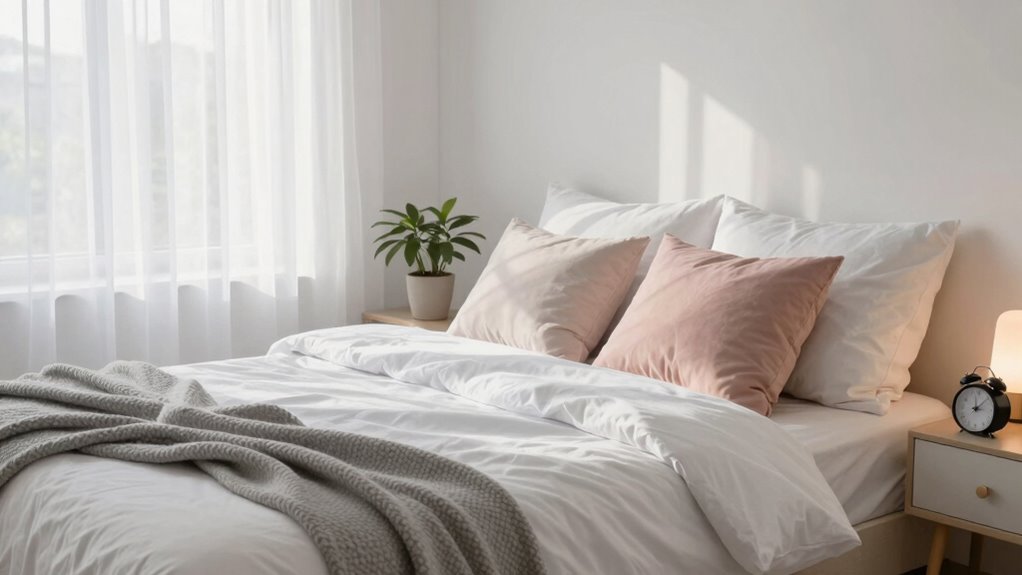

To improve your bedroom for better sleep, keep the temperature between 60-67°F, and use blackout curtains or eye masks to block out light. Reduce noise with earplugs or white noise machines, and make sure your mattress and pillows are supportive and comfy. Keep your space clutter-free and remove electronics, especially screens, before bed. Establish a relaxing routine and stick to consistent sleep times. Curious to learn more tips for creating the perfect sleep environment? Keep going!

Get the latest gadgets delivered free with Prime
- Fast, free delivery on millions of items
- Prime Video, Amazon Music and more included
- Member-only deals all year
Key Takeaways
- Keep the bedroom cool, between 60-67°F, and use blackout curtains or eye masks to block light.
- Minimize noise with earplugs or white noise machines for a quieter sleep environment.
- Use a comfortable mattress and pillows to support restful sleep.
- Remove electronics and screens at least 30 minutes before bed to reduce distractions.
- Keep the space tidy and clutter-free to create a calming, relaxing atmosphere.
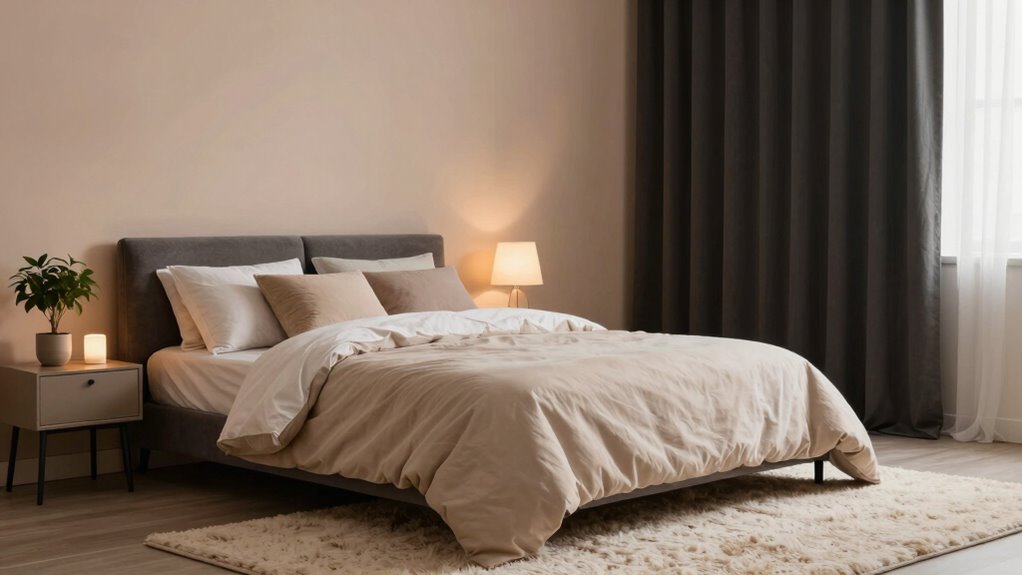
Are you tired of struggling to get a good night’s sleep? If so, the key might lie in making simple changes to your bedroom. Your sleep environment plays a huge role in how well you rest, and establishing effective nighttime routines can make a significant difference. When your bedroom is a sanctuary for sleep, falling asleep and staying asleep become much easier.
Start by creating a sleep environment that’s conducive to rest. Keep your room cool, ideally between 60 and 67 degrees Fahrenheit, to help your body relax. Darkness is equally important—consider blackout curtains or an eye mask to block out light that can interfere with your circadian rhythm. Noise can disrupt sleep, so if your environment isn’t quiet, try earplugs or a white noise machine. Invest in a comfortable mattress and pillows that support your body’s natural curves. A clutter-free space also promotes relaxation, so tidy up regularly and keep electronics out of the bedroom, especially screens, which emit blue light that suppresses melatonin production. Ensuring good indoor air quality with proper ventilation and purification can also significantly improve your sleep quality, as poor air quality has been linked to disrupted sleep and respiratory issues. Additionally, maintaining good air quality can reduce the presence of allergens and pollutants that may interfere with breathing during sleep. Incorporating air quality solutions like air purifiers and sensors can help monitor and improve the environment further. Paying attention to air circulation can further enhance sleep comfort by preventing stale air buildup. Proper ventilation can also reduce humidity levels, which is beneficial for comfort and health.
Create a cool, dark, quiet, clutter-free sleep sanctuary with supportive bedding and minimal electronics for better rest.
In addition to optimizing your sleep environment, establishing a consistent nighttime routine signals to your body that it’s time to wind down. Aim to go to bed and wake up at the same time every day, even on weekends. Before bed, avoid caffeine, heavy meals, and alcohol, as these can interfere with your sleep cycle. Instead, develop calming activities like reading, gentle stretching, or listening to soothing music. Dim the lights an hour before bed to encourage melatonin production, and try to disconnect from screens at least 30 minutes prior. Incorporating relaxation techniques such as deep breathing or meditation can help your mind unwind from daily stresses. Remember that sleep hygiene is essential for achieving restful sleep and maintaining overall health.
Making your bedroom a sleep-friendly zone isn’t just about the physical setup; it’s about creating a consistent routine that prepares your mind and body for rest. When you prioritize a comfortable sleep environment and stick to a calming nighttime routine, you’ll notice your sleep quality improves. Falling asleep will become easier, and you’ll wake up feeling more refreshed and energized. Small changes, like adjusting your room temperature, blocking out noise, or establishing a nightly ritual, can have a profound impact on your sleep health. Remember, good sleep is essential for your overall well-being, so invest a little time into making these simple adjustments—you’ll thank yourself in the mornings.
As an affiliate, we earn on qualifying purchases.
Frequently Asked Questions
How Does Room Temperature Affect Sleep Quality?
Your room temperature markedly impacts sleep quality. When the climate control is just right—usually between 60-67°F—you create an ideal environment that promotes better sleep hygiene. Too hot or cold can disrupt your rest, leading to tossing and turning. By maintaining a comfortable temperature, you help your body relax, fall asleep faster, and enjoy deeper, more restorative sleep. Proper climate control is essential for improving your overall sleep experience.
Can Certain Colors Improve Sleep Comfort?
Think of your sleep environment as a peaceful garden, where colors bloom into calming shades. Yes, certain colors can improve your sleep comfort through color psychology, creating a soothing atmosphere that signals relaxation to your mind. Soft blues and gentle greens are like lullabies for your senses, reducing stress and encouraging rest. Incorporating these hues into your bedroom design transforms it into a sanctuary where restful sleep naturally blossoms.
Is It Better to Have a TV in the Bedroom?
Having a TV in your bedroom isn’t ideal for a sleep-friendly environment. It can disrupt your bedroom decor and negatively impact your sleep environment by introducing light and noise, which may hinder your ability to fall asleep. If you want better sleep, consider removing the TV or placing it out of sight. Focus on creating a calm, dark, and quiet space that encourages relaxation and restful sleep.
How Often Should I Change My Bedding for Better Sleep?
You should change your bedding at least once a week to support good sleep hygiene habits. Regular bedding maintenance removes dust, sweat, and allergens that can disrupt your sleep. If you sweat heavily or experience allergies, consider changing your sheets more often. Fresh bedding helps create a clean, inviting sleeping environment, which can improve sleep quality and overall comfort. Consistent bedding changes are a simple step toward better rest.
Do Sleep Masks Really Help Improve Sleep?
A sleep mask is like a curtain closing on your bedroom window, blocking out distractions. Sleep mask benefits include improved sleep quality by blocking light and signaling your brain it’s time to rest. Choose mask material choices wisely—silk feels gentle on skin, while cotton offers breathability. Yes, sleep masks can help you fall asleep faster and enjoy deeper rest, especially in bright environments or if your sleep is light.
As an affiliate, we earn on qualifying purchases.
Conclusion
By making small changes, you can transform your bedroom into a peaceful retreat, much like a calm lake after a storm. Keep it cool, dark, and clutter-free, and your sleep will improve naturally. Think of your bedroom as your personal sanctuary—where relaxation flows as smoothly as a gentle breeze. With these simple tweaks, you’ll find it easier to drift off and wake up refreshed, ready to face each day with renewed energy.
As an affiliate, we earn on qualifying purchases.
As an affiliate, we earn on qualifying purchases.
Halloween Picks
halloween
As an affiliate, we earn on qualifying purchases.