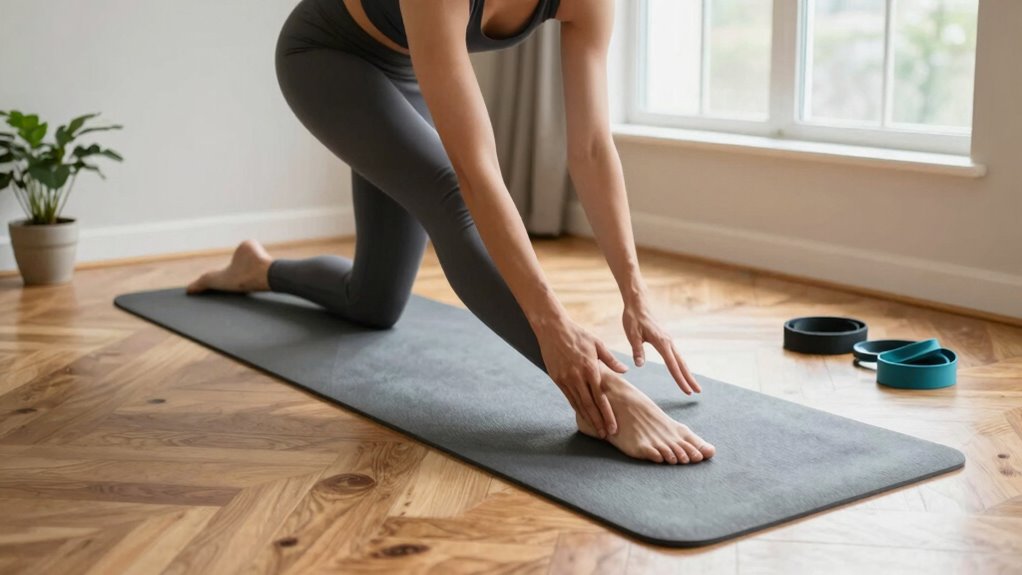

To build a realistic at-home stretching routine, start with just 5-10 minutes daily, focusing on foam rolling and dynamic stretches for major muscle groups. Keep movements controlled and avoid pushing into pain. Set achievable goals and progress gradually as your flexibility improves. Choose a comfortable space and wear loose clothing. Consistency is key, and small improvements add up over time. Keep going, and you’ll discover how simple adjustments can lead to lasting benefits.

Get the latest gadgets delivered free with Prime
- Fast, free delivery on millions of items
- Prime Video, Amazon Music and more included
- Member-only deals all year
Key Takeaways
- Start with a brief routine of foam rolling and dynamic stretches to prepare muscles effectively.
- Set achievable goals, aiming for 5-10 minutes daily, gradually increasing as flexibility improves.
- Focus on consistency over intensity, listening to your body’s signals to prevent injury.
- Create a comfortable, quiet space with minimal distractions for regular practice.
- Incorporate both dynamic and static stretches, progressing slowly to enhance flexibility safely.
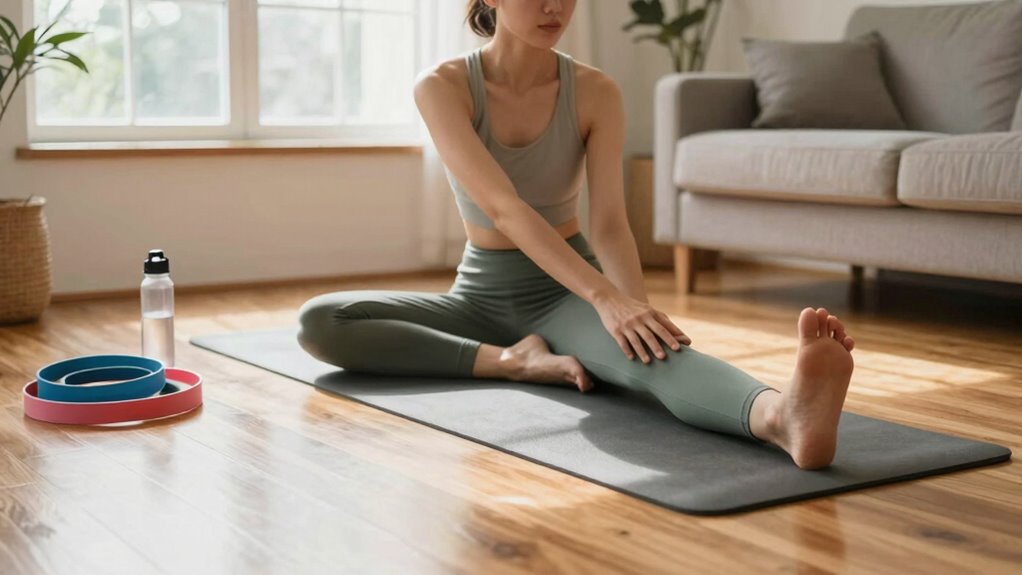
Starting a stretching routine at home can be a simple and effective way to improve flexibility and reduce muscle tension, but it’s important to set realistic goals. You don’t need fancy equipment or hours of time—just a few minutes each day can make a significant difference. To get started, focus on combining foam rolling and dynamic stretches, which work well together to prepare your muscles and increase blood flow. Foam rolling helps release muscle tightness and break up knots, making your stretches more effective and comfortable. Spend a couple of minutes rolling each major muscle group, such as your calves, quads, hamstrings, and back, using slow, controlled motions. This preps your muscles for movement and reduces the risk of injury. Incorporating muscle recovery techniques can further enhance your routine and prevent soreness.
Foam rolling prepares muscles, releases tightness, and reduces injury risk with slow, controlled motions.
Once you’ve foam rolled, incorporate dynamic stretches into your routine. Unlike static stretches, which involve holding a position, dynamic stretches involve moving parts of your body through a full range of motion. These are especially useful at the start of your session because they warm up your muscles and increase mobility. For example, leg swings, arm circles, or torso twists are simple, effective movements you can do in your living room. Perform each movement for about 10-15 repetitions, focusing on controlled, steady motion. This prepares your muscles for more intense stretching later on and helps improve your overall flexibility over time.
Keep your routine realistic by setting achievable goals. Don’t expect to become ultra-flexible overnight; instead, aim for consistency. Start with 5 to 10 minutes daily, and gradually increase as your body adapts. As you progress, you might add static stretches—where you hold a position for 20-30 seconds—to target specific tight areas. Remember to listen to your body and avoid pushing into pain. Stretching should feel beneficial, not painful.
Creating a sustainable routine also means choosing a comfortable, quiet space at home. Make sure you have enough room for your movements, and wear loose clothing. Incorporate foam rolling and dynamic stretches early in your routine to maximize benefits without overexerting yourself. Over time, these habits will help you build flexibility, reduce muscle tension, and increase your overall mobility. Stay consistent, be patient, and celebrate small improvements along the way. With a realistic plan and steady effort, you’ll see progress without feeling overwhelmed or discouraged.
As an affiliate, we earn on qualifying purchases.
Frequently Asked Questions
How Long Should Each Stretching Session Last?
You should aim for each stretching session to last about 15 to 30 minutes. Incorporate dynamic flexibility exercises at the start, lasting around 5-10 minutes, to warm up your muscles. Follow with static holds, holding each stretch for 20-30 seconds, and repeat 2-3 times. This balanced approach helps improve overall flexibility without risking overstretching, making your routine effective and sustainable.
Can Stretching Replace Regular Exercise?
Stretching alone can’t replace regular exercise, but it enhances muscle relaxation and flexibility gains. For example, Sarah, who incorporated daily stretching, noticed improved mobility and reduced stiffness. While stretching helps prevent injuries and relax muscles, it doesn’t elevate your heart rate or build strength like cardio or strength training. To stay healthy, combine stretching with aerobic and resistance exercises for a balanced routine that supports overall fitness.
What Equipment Is Necessary for At-Home Stretching?
You only need a few essentials for at-home stretching, like a yoga mat for comfort and stability during poses. Incorporate yoga poses to improve flexibility, and use foam rollers to target tight muscles and enhance recovery. Both tools are affordable, versatile, and easy to store. With just these, you can create an effective stretching routine that fits your space and schedule, helping you stay flexible and pain-free.
How Often Should I Update My Stretching Routine?
You should update your stretching routine every 4 to 6 weeks to keep progressing. As you improve, incorporate new stretching techniques to target different muscle groups and prevent plateaus. Staying consistent with your workouts is key, so adjust your routine gradually while maintaining workout consistency. Listen to your body, and if you notice increased flexibility or discomfort, tweak your stretches accordingly. Regular updates help you stay motivated and avoid stagnation.
Is It Safe to Stretch if I Have Injuries?
Stretching with injuries isn’t always safe because it can increase injury risks or interfere with your healing process. If you have an injury, consult a healthcare professional before stretching. Gentle, pain-free movements might be helpful, but aggressive stretching can worsen your condition. Prioritize rest and follow medical advice to support your recovery, avoiding any moves that cause pain or discomfort during your healing process.
As an affiliate, we earn on qualifying purchases.
Conclusion
Building a realistic at-home stretching routine is all about consistency and listening to your body. Remember, just 10 minutes daily can improve flexibility and reduce stress. Did you know that regular stretching can increase muscle length by up to 2% over time? Incorporate gentle, enjoyable stretches into your day, and you’ll likely notice better mobility and overall well-being. Stick with it, and you’ll make lasting progress toward a healthier, more flexible you.
As an affiliate, we earn on qualifying purchases.
comfortable loose-fitting workout clothes
As an affiliate, we earn on qualifying purchases.
As an affiliate, we earn on qualifying purchases.
Halloween Picks
halloween
As an affiliate, we earn on qualifying purchases.