
Starting meditation is simple and accessible for everyone. Focus on your breath, sensations, or sounds to stay present. When your mind wanders, gently bring it back without judgment. Practice regularly, even for a few minutes daily, to build awareness and relaxation. Techniques like diaphragmatic breathing and mindfulness can help reduce stress and boost clarity. If you keep exploring, you’ll discover more easy ways to incorporate meditation into your routine.
Key Takeaways
- Start with simple mindfulness practices like focusing on your breath or bodily sensations to build consistency.
- Use diaphragmatic breathing to promote relaxation and calmness during meditation sessions.
- When your mind wanders, gently redirect focus without judgment to strengthen present-moment awareness.
- Practice regularly, even for just a few minutes daily, to gradually improve mental clarity and reduce stress.
- Remember that patience and consistency are key; meditation is about gentle awareness, not perfection.
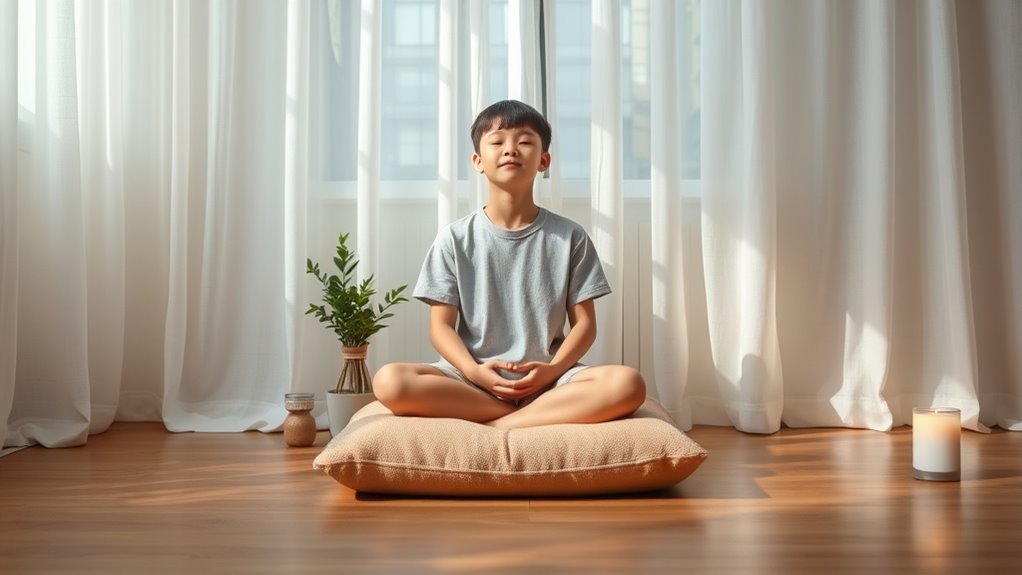
If you’re new to meditation, it might seem intimidating at first, but anyone can learn to calm their mind and find clarity. The key is to start simple and build a comfortable routine. One of the most effective ways to begin is by practicing mindfulness techniques. These involve paying close attention to your present experience without judgment. For example, you might focus on your breath, bodily sensations, or sounds around you. When your mind wanders—as it inevitably will—gently bring your focus back to your chosen point of attention. This process trains your mind to stay present, reducing stress and increasing awareness over time.
Breathing exercises are another foundational element of meditation for beginners. They are straightforward, accessible, and immediately calming. A popular breathing exercise is diaphragmatic breathing, where you breathe deeply into your belly rather than shallowly into your chest. To do this, sit comfortably, place one hand on your stomach, and inhale slowly through your nose, feeling your stomach rise. Then, exhale gently through your mouth or nose, noticing your stomach fall. Repeat this pattern for several minutes. This type of breathing helps activate your parasympathetic nervous system, encouraging relaxation and mental clarity. It’s especially helpful when feeling overwhelmed or anxious.
When you combine mindfulness techniques with breathing exercises, you create a powerful tool for managing daily stress. For instance, start your meditation by focusing on your breath, observing its natural rhythm. If your mind drifts, acknowledge the distraction without judgment, then gently return your attention to your breath. Over time, this practice enhances your ability to stay grounded during stressful moments outside of meditation. You don’t need special equipment or a quiet room—just a few minutes and a willingness to observe your experience. Incorporating consistent practice can also accelerate your progress and deepen your experience.
It’s important to approach meditation with patience and consistency. Even a few minutes daily can produce noticeable benefits. As you become more comfortable, you can explore different mindfulness techniques, such as body scans or noting sounds, to deepen your practice. Remember, the goal isn’t to achieve perfection but to cultivate a gentle awareness of the present moment. With regular practice of mindful breathing exercises, you’ll find it easier to stay centered and calm amid life’s chaos. Meditation isn’t about emptying your mind but about training it to be more aware and resilient. Start small, stay committed, and enjoy the journey toward greater mental clarity and peace.
Frequently Asked Questions
How Long Should I Meditate Each Day as a Beginner?
As a beginner, you should aim for a meditation duration of about 5 to 10 minutes daily. Follow beginner guidelines by gradually increasing your meditation time as you become more comfortable. Focus on consistency rather than length; even short sessions can make a difference. Over time, you can extend your practice to 15 or 20 minutes, but starting small helps build a sustainable habit.
Can Meditation Help With Specific Mental Health Issues?
Think of meditation as a gentle anchor in rough seas. It can definitely help with mental health issues like anxiety and depression. By practicing mindfulness benefits regularly, you can reduce anxiety and gain clarity amid chaos. Meditation helps you stay present and manage emotions better. While it’s not a cure-all, it’s a powerful tool to support your mental well-being and foster resilience in daily life.
Is It Necessary to Sit Cross-Legged During Meditation?
You don’t have to sit cross-legged during meditation. Seating arrangements vary, and you can sit comfortably in a chair, cushion, or even lie down. Focus on posture adjustments to keep your spine straight and relaxed, which helps maintain alertness. The key is to find a position that feels stable and comfortable for you, so you can meditate without distraction or discomfort. Experiment with different postures to discover what works best.
What Should I Do if My Mind Keeps Wandering?
Your mind is probably throwing a wild party, but don’t worry! When your thoughts wander, gently guide your focus back using mindfulness techniques. Think of distraction management as a superpower—each time you bring your attention back, you’re strengthening your mental muscles. Stay patient and kind to yourself. With consistent practice, your mind will settle down, and those distracting thoughts will become mere background noise in your meditation.
Are There Any Risks or Contraindications for Meditation?
You might wonder about meditation safety and contraindications risks, but generally, meditation is safe for most people. However, if you have severe mental health issues, such as trauma or psychosis, consult a healthcare professional before starting. Some contraindications risks include emotional discomfort or resurfacing past memories. Listen to your body, start slowly, and stop if you feel overwhelmed. Most beginners experience benefits without adverse effects when practicing responsibly.
Conclusion
Now that you’re starting your meditation journey, remember that each breath is a gentle wave washing over you, calming your mind and soul. Like a seed planted in hope, your practice will grow with patience and consistency. Embrace these simple techniques, and watch as your inner peace blossoms. Don’t rush the process—trust in the journey, for every moment you dedicate to meditation is a gift to yourself, guiding you toward serenity and clarity.