
📊 Full opportunity report: How GLP-1 Availability And Pricing Compare Across Channels on IdeaNavigator AI — validation score, market gap, and execution plan.
TL;DR
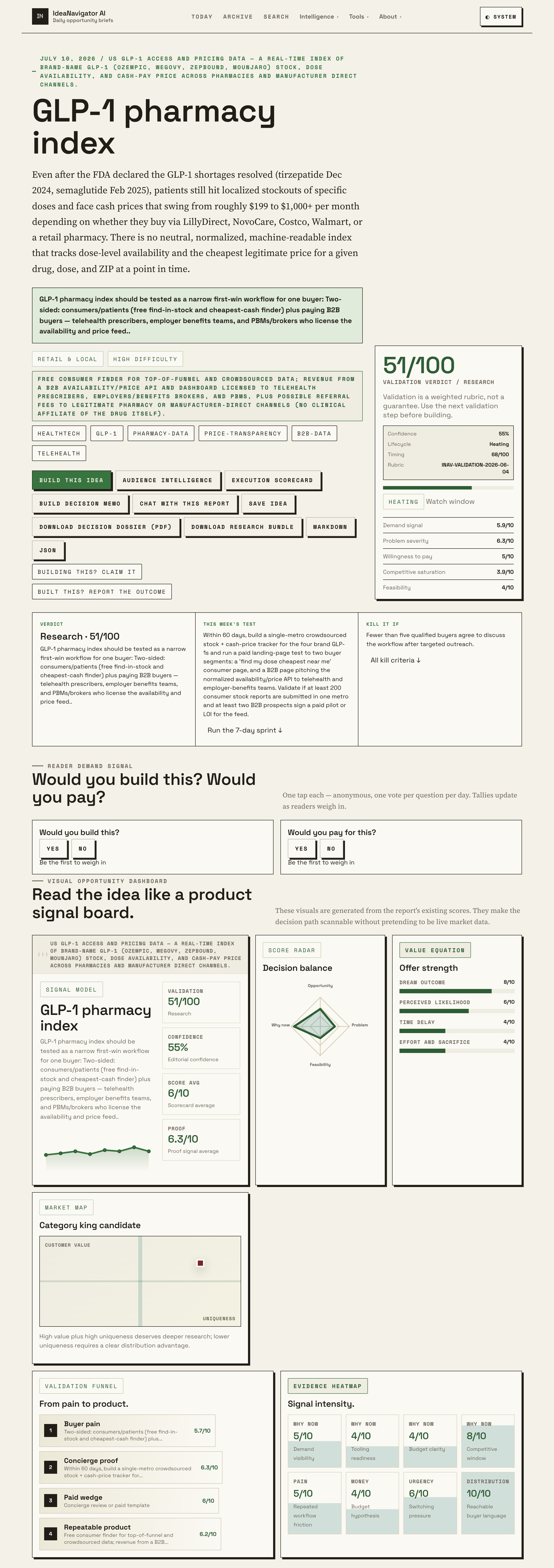
An IdeaNavigator AI proposal calls for a searchable index of brand-name GLP-1 availability and cash prices by drug, dose and ZIP code. It describes a fragmented market after FDA shortage-list changes, but provides no independently verified, current price survey or evidence that an index has been launched.
IdeaNavigator AI has proposed a pharmacy index that would let patients compare dose availability and cash prices for brand-name GLP-1 drugs by location. The proposal says prices can range from about $199 to more than $1,000 per month depending on the drug, dose and purchasing channel, and that specific doses may be difficult to find locally. It presents a product concept, not an operating service or a newly published price survey.
According to the IdeaNavigator AI proposal, the tool would cover Ozempic, Wegovy, Zepbound and Mounjaro, showing stock reports and cash prices for a specified dose and ZIP code. Its first version would draw on crowdsourced reports and public price information from manufacturer-direct services such as LillyDirect and NovoCare, retail channels including Costco and Walmart, and a discount-price layer similar to GoodRx. The proposal provides no dated comparison of prices at those sellers or method for independently checking each listing.
The proposal says patients would use the service at no charge to find a dose in stock or compare cash prices. It describes a business model based on selling a normalized availability and price feed, or dashboard, to telehealth prescribers, employer benefits teams, benefits brokers and pharmacy benefit managers. It also mentions potential referral fees for legitimate pharmacy or manufacturer-direct channels and says revenue would not come from clinical affiliations with the drugs themselves.
To test demand, IdeaNavigator AI proposes a single-metro pilot over 60 days. The proposal sets two targets: at least 200 consumer stock reports and at least two business prospects agreeing to a paid pilot or letter of intent for the data feed. These are proposed validation thresholds, not reported results. The material does not name a metro, identify prospective buyers or say that the test has begun.
Why Dose-Level Price Data Matters
The proposed tool could show patients whether a particular dose is reported at a nearby pharmacy and how listed cash prices differ across channels. Such information may be relevant when a prescription is difficult to fill or a patient is comparing out-of-pocket options. The proposal does not say the index would determine clinical suitability, guarantee pharmacy stock when a patient arrives or establish what insurance will cover.
IdeaNavigator AI’s proposal says employers report GLP-1 drugs account for roughly 20% of pharmacy spending and argues that benefits teams and other buyers need information to manage costs. The material provides no survey, employer sample, measurement period or spending definition for that figure, so it is an unverified claim in the proposal rather than an established industry-wide measure. The proposal’s business case would depend on the accuracy and timeliness of listings and buyers’ willingness to pay.
The proposal does not specify how the index would account for conditions that can affect the amount a patient pays, including eligibility, dose, quantity, savings offers, insurance status and pharmacy terms. It also does not say how listings would identify those conditions or the date a price was checked.
From Shortages to Scattered Prices
IdeaNavigator AI frames the opportunity as a shift from widespread shortage concerns to local gaps in particular doses and fragmented prices. The proposal says the FDA declared the tirzepatide shortage resolved in December 2024 and the semaglutide shortage resolved in February 2025. Those dates describe FDA shortage status; they do not establish that every pharmacy had every dose available afterward. The proposal says patients continued to encounter localized stockouts but provides no supporting data or examples.
The proposal also points to manufacturer-direct cash-pay options, retail programs and pharmacy discount pricing. It cites a TrumpRx portal launch in February 2026 as part of that mix. It gives no individual channel prices, price-check dates or detailed program eligibility, so its estimate of roughly $199 to more than $1,000 per month is not a like-for-like comparison for the four named drugs or any specific dose.
On compounding rules, the proposal says deadlines pushed compounders out of the market but gives no details about those deadlines or their effects on specific drugs and sellers. Its stated rationale is that changes in formal shortage designations may coincide with local variation in availability reports and payment options.
Price and Stock Data Still Unverified
The IdeaNavigator AI proposal contains no live inventory feed, audited price dataset or pilot findings. It does not specify how often listings would be refreshed, whether stock reports would be verified or how the service would distinguish a temporary stockout from a pharmacy that does not carry a dose. Crowdsourced reports could become outdated, and public prices may have conditions that complicate comparisons.
The proposal does not break down its cited monthly price range by drug, dose, seller, date, insurance status or eligibility. It also provides no evidence for its estimate of GLP-1s’ share of employer pharmacy spending. The material therefore does not establish current price differences among channels or potential savings from an index.
The proposal reports no company launch, partnership, buyer commitment or consumer adoption. It does not establish whether a single-metro test could attract enough reports to support the tool or whether telehealth providers or benefits buyers would pay for the feed. Its targets are proposed tests, not confirmed outcomes.
A Proposed 60-Day Market Test
IdeaNavigator AI proposes building a local tracker for the four brand-name drugs using consumer stock reports and normalized cash-price listings. The proposal calls for separate landing pages for patients seeking the lowest listed price nearby and business buyers evaluating an availability and price feed. It sets targets of 200 consumer reports and two paid pilots or letters of intent within 60 days.
The proposal gives no start date and does not say whether funding, a development team or a participating buyer is in place. To assess any results, a report would need to identify the metro, collection dates, price conditions and method used to verify availability.
Source: IdeaNavigator AI proposal
Key Questions
Is the GLP-1 pharmacy index already available?
No launch is reported. IdeaNavigator AI’s material outlines a proposed product and a possible local test; it does not identify an operating website or active data feed.
Which drugs would the proposed index cover?
The IdeaNavigator AI proposal names Ozempic, Wegovy, Zepbound and Mounjaro, with availability and cash prices organized by drug, dose and ZIP code.
What does the cited $199-to-$1,000-plus range mean?
The range is cited in the IdeaNavigator AI proposal as a broad monthly cash-price estimate across channels. The material provides no drug-by-drug or dose-by-dose breakdown, date, eligibility terms or comparison baseline.
Would a stock report guarantee a dose is available?
No. The proposal does not describe a verified inventory system. A crowdsourced report could be out of date, so a listing would need a timestamp and confirmation with the pharmacy.
Source: IdeaNavigator AI