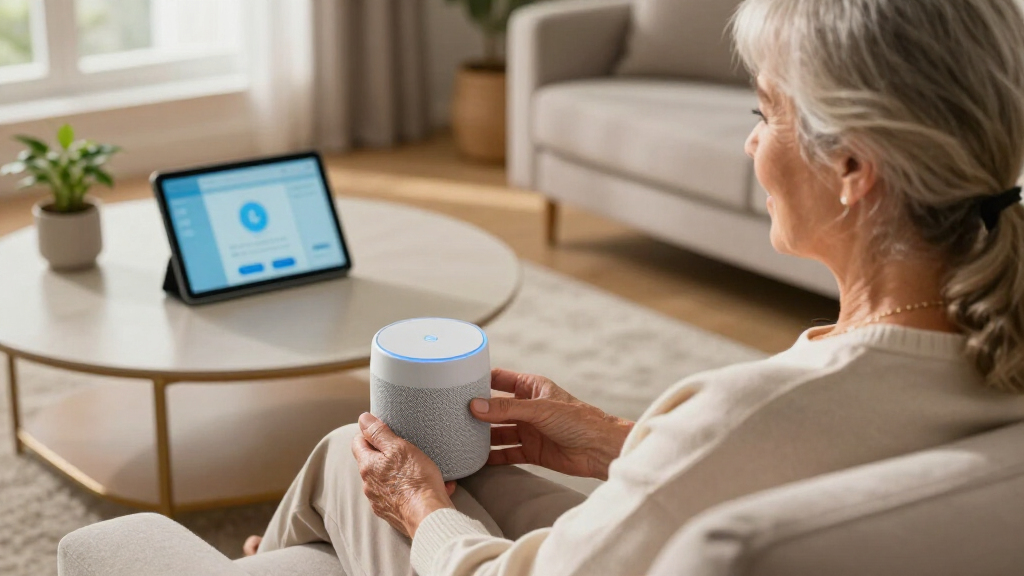

🔍 Read the full analysis: How AI Can Make Daily Tasks Easier For Older Adults on ThorstenMeyerAI.com

Get the latest gadgets delivered free with Prime
- Fast, free delivery on millions of items
- Prime Video, Amazon Music and more included
- Member-only deals all year
TL;DR
OpenAI released guidance on using AI to support older adults in daily activities, emphasizing accessibility and safety. The move aims to foster greater AI adoption among seniors, addressing their unique needs.
OpenAI has published a guidance document titled “Helping older adults use AI in everyday life,” emphasizing how AI assistants can make daily tasks easier for seniors. The initiative aims to increase AI adoption among people over 65, a demographic that is rapidly growing online but remains underserved by mainstream AI products. The publication underscores AI’s potential to support independence, health management, and social connection for older adults.
The guidance from OpenAI focuses on practical applications of AI for seniors, including managing health-related questions, staying connected with family, organizing schedules, and learning new skills at their own pace. The company highlights how conversational AI, such as ChatGPT, can serve as an accessible interface for users who face mobility, vision, or memory challenges that make traditional computing difficult. While specific program details, safety measures, or adoption metrics have not been publicly confirmed, OpenAI’s approach suggests a strategic move to make AI tools more inclusive for older adults.
It is important to note that the full text of the publication could not be independently verified, and no concrete statistics or partnerships were disclosed. The guidance appears to be part of a broader effort to produce audience-specific resources, similar to previous initiatives targeting students and educators, but specific features or product integrations for seniors remain unconfirmed.
Impact of AI Guidance on Senior Technology Use
This initiative addresses a large and growing demographic that increasingly uses digital tools. AI has the potential to help older adults maintain independence, reduce social isolation, and manage health more effectively. However, it also raises concerns about digital literacy, safety, and vulnerability to scams, making responsible deployment essential. OpenAI’s focus on accessible, conversational AI could help bridge usability gaps but also requires safeguards to protect this population.
voice-activated AI assistant for seniors
As an affiliate, we earn on qualifying purchases.
As an affiliate, we earn on qualifying purchases.
Growing AI Adoption Among Older Adults
Since the launch of ChatGPT in late 2022, surveys indicate a steady increase in AI usage among people over 50, mainly for search, writing, and health inquiries. Historically, technology companies marketed simplified devices or dedicated interfaces to seniors, but now the focus is on leveraging natural language as an intuitive interface. OpenAI’s publication reflects this shift, emphasizing conversational AI as a barrier-free way for older adults to engage with digital tools. The trend aligns with broader efforts across the tech industry to include seniors as active users of AI technology.
senior-friendly health management app
As an affiliate, we earn on qualifying purchases.
As an affiliate, we earn on qualifying purchases.
Unconfirmed Details About Specific Features and Safety Measures
As the full content of OpenAI’s guidance has not been independently verified, specific safety protocols, fraud warnings, caregiver controls, or accessibility certifications included in the document remain unknown. It is also unclear whether targeted programs or partnerships are being developed to facilitate adoption among seniors. The impact of these initiatives on health outcomes or social connection has not yet been demonstrated through rigorous research.
large button smartphones for elderly
As an affiliate, we earn on qualifying purchases.
As an affiliate, we earn on qualifying purchases.
Expected Developments in Senior AI Integration
Future developments may include age-specific AI features such as voice interfaces, memory aids, and family account controls. Regulatory agencies could also increase oversight to ensure safety for vulnerable users like seniors. Ongoing research will evaluate the effectiveness of AI tools in improving health, well-being, and social engagement among older adults, guiding future product and policy decisions.
As an affiliate, we earn on qualifying purchases.
Key Questions
Will there be dedicated AI products for seniors?
While OpenAI’s guidance emphasizes general-purpose AI tools, dedicated products or features tailored for seniors have not been publicly announced. Future innovations may include voice interfaces and safety features designed specifically for older users.
What safety measures are being considered for older adults using AI?
Specific safety measures have not been confirmed, but potential options include fraud alerts, caregiver controls, and accessibility enhancements aimed at protecting vulnerable users from scams and misuse.
Current evidence is limited, and comprehensive studies are ongoing. While AI has potential to support social interaction, definitive conclusions about its impact on loneliness or health outcomes are not yet available.
Will AI guidance help improve digital literacy among seniors?
Potentially, clear and accessible guidance can assist seniors in understanding and using AI tools safely. The actual effectiveness will depend on implementation and educational efforts.
Primary source: OpenAI · via ThorstenMeyerAI.com
Fall Picks
fall essentials
As an affiliate, we earn on qualifying purchases.