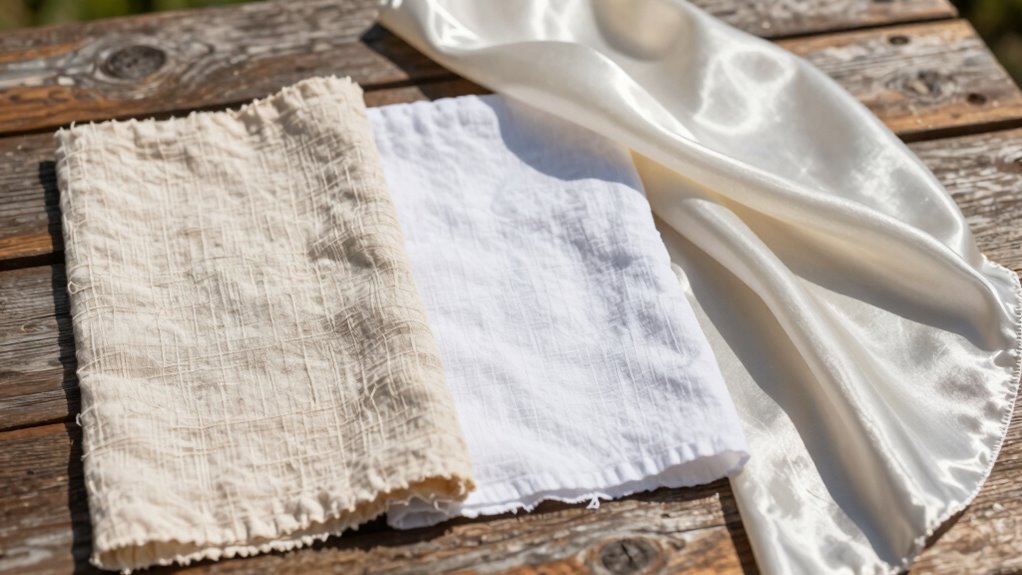

In summer, linen is your best choice for staying cool because it’s breathable, lightweight, and gets softer over time. Cotton is soft and versatile but varies in breathability depending on the weave, offering good comfort. Rayon drapes nicely and feels silky but isn’t as moisture-resistant, which can be uncomfortable in humidity. To discover more about how each fabric performs in hot weather, keep exploring the differences that make each one unique.

Get the latest gadgets delivered free with Prime
- Fast, free delivery on millions of items
- Prime Video, Amazon Music and more included
- Member-only deals all year
Key Takeaways
- Linen is the most breathable and lightweight, making it ideal for staying cool in hot summer weather.
- Cotton offers softness and comfort, but breathability varies with weave; high-quality cotton can be quite suitable.
- Rayon drapes well and looks stylish but is less moisture-resistant, which may affect comfort in humid conditions.
- Linen’s natural fibers and eco-friendly production make it a sustainable choice for summer clothing.
- Rayon’s chemical-intensive manufacturing and lower breathability make it less suitable for hot, humid environments.
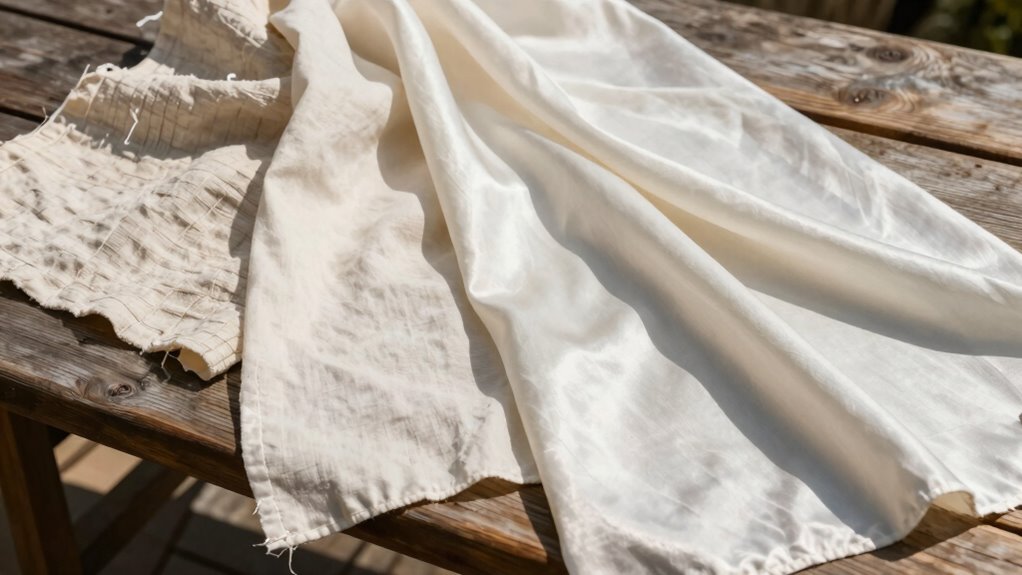
When choosing clothing for hot summer days, understanding the differences between linen, cotton, and rayon can help you stay cool and comfortable. Each fabric has unique qualities that influence how it feels, lasts, and impacts the environment. Knowing these differences allows you to make smarter choices that suit your needs and values.
Linen is a natural fiber made from flax plants. It’s known for its exceptional breathability and lightweight feel, making it a favorite during sweltering weather. Linen’s fabric durability is impressive; it tends to get softer over time, and with proper care, it can last for years. Its strength and resistance to wear mean you’re investing in long-term clothing that withstands frequent use. When it comes to environmental impact, linen scores well because flax plants require less water and pesticides compared to other crops. Growing flax is eco-friendly, and the fabric itself is biodegradable, making linen a sustainable choice if you’re conscious of your ecological footprint. Additionally, linen’s biodegradability ensures it decomposes naturally, reducing long-term waste. Its production process also typically involves fewer chemical treatments, further lowering its environmental impact. Choosing linen can also support more sustainable farming practices, which benefit the planet. In addition, linen’s natural properties can help regulate body temperature, keeping you cooler in the heat.
Cotton, another natural fiber, is widely used for summer clothing due to its softness and comfort. It’s versatile, available in countless styles, and tends to feel gentle against your skin. Cotton’s fabric durability varies depending on the weave and quality; high-quality, tightly woven cotton can last for years, especially if you follow proper washing instructions. However, conventional cotton farming can have a significant environmental impact. It often involves heavy water use, pesticides, and chemical treatments that harm ecosystems and farm workers. Organic cotton offers a more sustainable alternative, reducing environmental harm and using fewer chemicals. While cotton is generally durable, it may weaken over time with frequent washing, especially if not cared for properly. Choosing organic cotton can help minimize your ecological footprint and support environmentally friendly farming methods.
Rayon, a semi-synthetic fiber made from cellulose derived from wood pulp, provides a silky feel and drapes beautifully, making it a popular choice for stylish summer wear. However, rayon’s fabric durability is lower compared to linen and cotton; it’s more prone to wrinkling, shrinking, and tearing. It’s also less resistant to moisture, which can lead to faster wear and tear when exposed to sweat and humidity. Environmentally, rayon’s impact can be mixed. The production process involves chemical treatments that can pollute water sources if not managed responsibly, and it’s less biodegradable than natural fibers. Although rayon can mimic the look and feel of natural fabrics, its environmental footprint is generally higher, especially if produced unsustainably. Being aware of manufacturing processes and their environmental consequences can help consumers make more sustainable choices when selecting rayon garments. Furthermore, advancements in eco-friendly rayon production methods are emerging, aiming to reduce its environmental impact.
As an affiliate, we earn on qualifying purchases.
Frequently Asked Questions
Which Fabric Is Most Environmentally Sustainable for Summer Clothing?
You should choose organic cotton or linen for eco-friendly summer clothing, as they’re more sustainable. Organic farming reduces chemical use, protecting the environment, and eco-friendly dyes minimize pollution. Linen, made from flax, requires less water and pesticides than conventional cotton. Both fabrics are biodegradable, especially when combined with eco-conscious dyes. Rayon, often produced with chemical-intensive processes, isn’t as sustainable. Opt for organic options to stay cool and eco-friendly.
How Do Linen, Cotton, and Rayon Compare in Cost?
Linen tends to be the most expensive due to its fabric durability and natural production process, while cotton is generally more affordable, offering good durability and color retention. Rayon is usually the cheapest, but it may lack in durability and color retention over time. If you’re looking for a balance of cost, durability, and color retention, cotton might be your best choice, but linen provides a premium feel for those willing to spend more.
Are There Specific Care Instructions Unique to Each Fabric?
You need to follow specific care instructions for each fabric. For linen, wash in cold water and avoid fabric dyeing that can weaken fibers; stain removal is easiest when treated promptly. Cotton is durable, so you can usually machine wash and tumble dry, but watch for color fading. Rayon requires gentle washing—preferably hand wash or dry clean—since harsh detergents can damage the fibers and make stain removal more difficult.
Which Fabric Resists Wrinkles Best in Hot Weather?
If you want fabric that resists wrinkles best in hot weather, go for cotton. It offers excellent wrinkle resistance and is known for its durability, making it ideal for summer wear. Linen tends to wrinkle easily, giving it a relaxed look, while rayon wrinkles more than cotton but dries quickly. Choosing cotton guarantees you stay looking neat, comfortable, and cool, especially when the heat’s on.
How Do These Fabrics Perform in Humid Versus Dry Climates?
In humid climates, linen excels because of its high fabric breathability and moisture absorption, keeping you cool and dry. Cotton also performs well, offering good breathability, but it retains more moisture than linen. Rayon, however, struggles in humidity due to lower moisture-wicking abilities, making it feel damp and uncomfortable. In dry climates, all three fabrics feel comfortable, but linen and cotton remain cooler and more breathable overall.
As an affiliate, we earn on qualifying purchases.
Conclusion
Ultimately, choosing between linen, cotton, and rayon depends on your summer vibe. Each fabric offers its own gentle charm—linen whispers coolness, cotton offers soft familiarity, and rayon provides a silky allure. Whichever you lean toward, trust that your comfort and style will bloom effortlessly. After all, it’s the subtle details that make your warm-weather wardrobe truly shine, turning everyday moments into something a little more special.
As an affiliate, we earn on qualifying purchases.
As an affiliate, we earn on qualifying purchases.
Fall Picks
fall essentials
As an affiliate, we earn on qualifying purchases.