
TL;DR

Get the latest gadgets delivered free with Prime
- Fast, free delivery on millions of items
- Prime Video, Amazon Music and more included
- Member-only deals all year
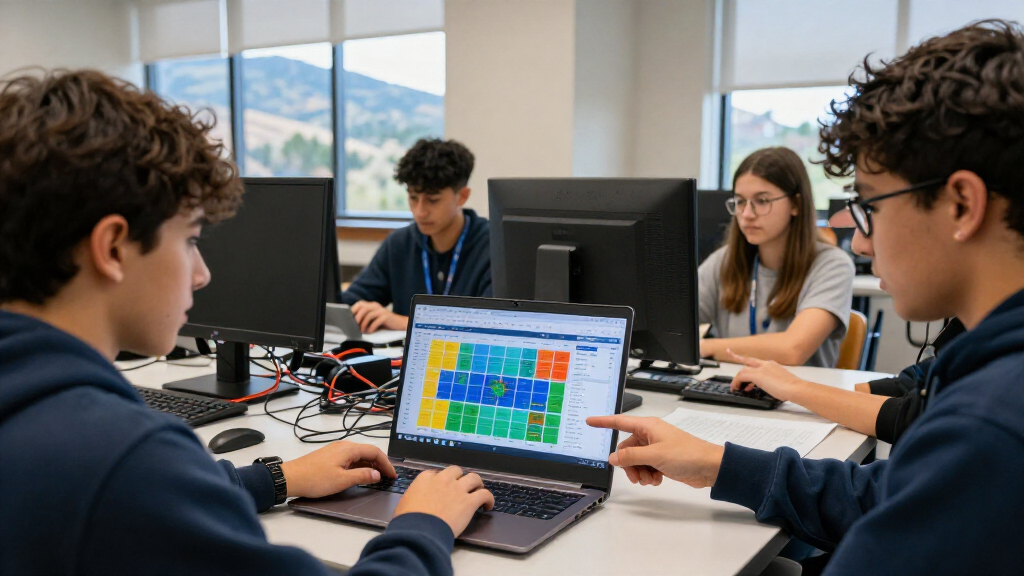
Google held its second annual Colorado Impact Hackathon at its Boulder offices on Oct. 29, 2026, in partnership with CU Boulder and the Colorado Energy Office. Student teams presented projects focused on home solar, battery storage during wildfire-related shutoffs, and predictive grid hardening; the source does not say whether any project will be deployed.
Students took on Colorado electric-grid challenges at Google’s second annual Colorado Impact Hackathon, held Oct. 29 at the company’s Boulder offices with CU Boulder and the Colorado Energy Office. The winning teams proposed tools for residential solar planning, battery storage during wildfire shutoffs and predictive grid hardening, though the published account does not say that any proposal will be put into use.
Google Senior Staff Data Scientist John Tribbia said the event asked participants how Colorado could build a clean, secure and resilient electric grid. The company’s account identifies three winning projects. First-place team SolarSnap created an AI app intended to help homeowners identify a suitable solar-panel setup using a phone camera.
Second-place project Grid Watch was described as an AI-managed battery network designed to maintain power during wildfire-related shutoffs while reducing electricity costs. Third-place project Grid Guard was presented as a tool offering predictive capabilities for targeted grid hardening. The account does not provide technical specifications, test results or details about the student teams.
Google reported that Colorado Attorney General Phil Weiser and CU Boulder Vice Chancellor for Sustainability Andrew Mayock spoke at the event about innovation and the state’s clean-energy future. The report does not include direct quotations from either official.
Student Ideas Target Grid Pressures
The projects address several pressures named in Google’s account: planning for rooftop solar, keeping electricity available during wildfire-related shutoffs and deciding where grid upgrades may be needed. These concerns connect household energy choices and emergency reliability with the broader task of maintaining electric infrastructure.
For Colorado residents, the concepts point to possible approaches to power continuity and energy costs, but the hackathon report documents proposals, not proven outcomes. It gives no evidence that the apps or network have been tested with utilities or homeowners, or that they have reduced outages, expenses or wildfire risk. The event’s significance at this stage is in bringing students, public officials and technology workers together around problems affecting the state’s energy system.
Popular right now

Bose QuietComfort Wireless Bluetooth Headphones with Active Noise Cancellation, Mic, USB‑C Charging, Deep Bass, 24‑Hour Battery – White Smok

Samsung 48-Inch S90H OLED 4K Smart TV (2026)

De'Longhi Magnifica Evo Fully Automatic Espresso Machine with Manual Milk Frother
As an affiliate, we earn on qualifying purchases.
A Second Colorado Impact Hackathon
Google described the Oct. 29 gathering as its second annual Colorado Impact Hackathon. It was held at the company’s Boulder offices in partnership with CU Boulder and the Colorado Energy Office. The event’s stated challenge focused on a clean, secure and resilient grid in Colorado.
Google framed the student work against concerns including wildfire risks and energy backlogs, but offered no figures or further explanation of those issues in its report. It also did not describe how teams were selected, how judging worked, or whether the winning concepts receive follow-up support. The available account is a report from Google, one of the event’s organizers.
“The winning projects addressed this head on”
— Google’s event report
Projects’ Path Beyond the Event
Google’s report does not say whether SolarSnap, Grid Watch or Grid Guard will receive funding, undergo further development or be tested outside the hackathon. It also gives no information about the projects’ technical performance, data sources, costs, partnerships with utilities or potential users.
The account names the institutional partners and two public officials who spoke, but does not identify the student participants or provide direct comments from them. The concepts’ likely effect on grid reliability, household bills or wildfire preparedness is not established by the published information.
Follow-Up on the Winning Concepts
The source does not announce a next stage, implementation schedule or additional event. Any future development would need to be confirmed by Google, the student teams or the partner organizations. Readers should look for details on whether the concepts advance to prototypes, utility trials or other practical testing before drawing conclusions about their impact.
Key Questions
What happened at the Colorado Impact Hackathon?
Google held its second annual event at its Boulder offices on Oct. 29, 2026, in partnership with CU Boulder and the Colorado Energy Office. Student participants worked on electric-grid challenges.
What were the winning projects?
Google listed SolarSnap, an AI solar-planning app, in first place; Grid Watch, a proposed battery network for wildfire-related shutoffs, in second; and Grid Guard, a predictive grid-hardening project, in third.
Will the projects be used in Colorado?
The published account does not say. It gives no deployment plans, trial dates or confirmation that any project will move beyond the hackathon.
Who organized the event?
Google held the hackathon with CU Boulder and the Colorado Energy Office. Google’s report also says Colorado Attorney General Phil Weiser and CU Boulder Vice Chancellor for Sustainability Andrew Mayock spoke at the event.
Source: blog.google