
TL;DR

Get the latest gadgets delivered free with Prime
- Fast, free delivery on millions of items
- Prime Video, Amazon Music and more included
- Member-only deals all year
Canadian YouTuber and software engineer Anthony Sistilli says two Peel Regional Police officers visited his home after he built a camera to identify and track police vehicles. The account comes from Sistilli’s video; the department did not immediately respond to Gizmodo’s request for comment, so the circumstances of the visit have not been independently confirmed.
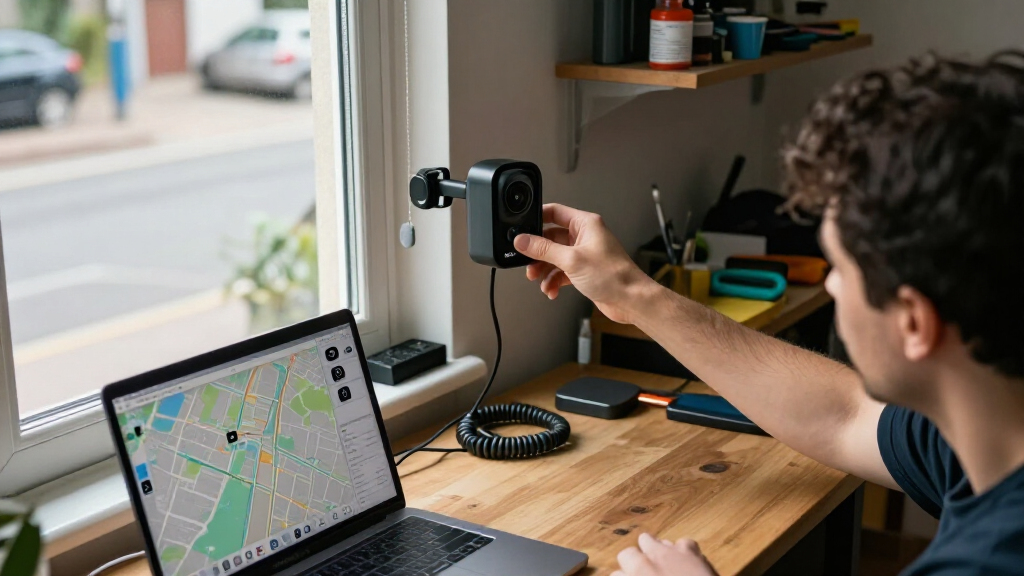
Canadian software engineer and YouTuber Anthony Sistilli says two officers from Peel Regional Police visited his home after he built a camera to identify and record police vehicles, raising questions about how authorities respond when residents use automatic license plate recognition (ALPR) technology themselves. The visit is described in Sistilli’s YouTube video and has not been independently confirmed; Peel Regional Police did not immediately respond to Gizmodo’s request for comment.
Sistilli, who lives in Brampton, Ontario, said he built the camera about a month before describing it online. He posted TikTok videos explaining its construction and operation, characterizing it as “a personal Flock surveillance camera to Flock the Flockers.” Flock refers to the company whose camera systems have become prominent in debates over police use of ALPR data.
In a YouTube video posted earlier this week, Sistilli said two Peel Regional Police officers came to his front door and asked about his intentions for the information his device collected. His account is the available description of the encounter in the source report; details such as the precise date, whether officers made a formal request, and whether they took any further action were not provided.
Sistilli said one officer described the potential risk of police officers’ movements being tracked. As Sistilli recounted it, the officer said people could learn where officers lived, when their shifts began, and what they did during the day, potentially putting them at personal risk. That wording is Sistilli’s account of the conversation, not a statement independently confirmed by the police service.
Public Scrutiny of Police Tracking
The reported visit highlights a tension around who can collect location data and how that information may affect personal safety. ALPR systems can record vehicle plates and associated locations over time. Police agencies use such technology for investigative purposes, while privacy advocates have raised concerns about the scale of collection, access to the records, and how long the data is retained.
Sistilli’s account also puts the risks cited by opponents of ALPR systems into sharper focus: if movement records can reveal routines and locations, that concern may apply to police vehicles as well as members of the public. The account does not establish that officers objected to the camera on that basis, or that the police service sought to stop its use. It does show why data safeguards and clear rules matter for any system capable of logging people’s movements.
The episode is also relevant to local accountability. Brampton recently spent C$2 million on high-resolution cameras and ALPR technology, according to Gizmodo. The source report does not specify the deployment’s coverage, retention policy, or outcomes, but the spending makes questions about oversight and public explanation pertinent to residents.
automatic license plate recognition camera
As an affiliate, we earn on qualifying purchases.
As an affiliate, we earn on qualifying purchases.
Brampton’s Camera Debate
ALPR technology reads vehicle registration plates and can create records linking a vehicle to a place and time. Systems may be used by police to locate vehicles connected to investigations, but the value and risks depend on how cameras are deployed and how their records are handled. The source report notes that Flock has become a leading company in the technology’s wider adoption and that its systems have prompted controversy.
Gizmodo describes concerns about possible misuse of ALPR data, including stalking and harassment, and questions about transparency around collection and retention. Those examples are background reported by the outlet; they do not establish that data from Sistilli’s camera or Brampton’s police cameras was misused. Nor does the source provide a detailed evaluation of whether Brampton’s systems reduce crime.
The immediate sequence reported is limited: Sistilli built and demonstrated his camera, then said officers visited and asked about his intentions. He used the video about the encounter to discuss ALPR technology, police deployment, and the handling of collected information. No official explanation of the visit was available in Gizmodo’s report.
“A personal Flock surveillance camera to Flock the Flockers.”
— Anthony Sistilli, describing his camera in TikTok videos
home police vehicle tracking camera
As an affiliate, we earn on qualifying purchases.
As an affiliate, we earn on qualifying purchases.
Police Account Still Pending
The officers’ purpose and the department’s position remain unconfirmed. Gizmodo reported that Peel Regional Police did not immediately respond to its request for comment. The source does not include a police statement, body-camera footage, or another independent account of the doorstep conversation.
It is also unclear what data Sistilli’s camera collected, how many vehicles it recorded, where it was installed, how long information was retained, or whether anyone else could access it. The report does not say whether the officers asked him to stop operating the device or whether any legal action followed. No conclusion about the legality of the camera or the officers’ conduct can be drawn from the information provided.
As an affiliate, we earn on qualifying purchases.
Awaiting Peel Police Response
The next key development would be a response from Peel Regional Police explaining whether officers visited Sistilli and, if so, what prompted the visit. Further information from Sistilli about the timing, conversation, and camera’s data practices could also clarify the account.
For now, the reported encounter remains based on Sistilli’s description. The source material identifies no announced investigation, formal complaint, or planned policy change. Questions about Brampton’s ALPR deployment—including data access, retention, and oversight—remain separate from the unresolved details of this particular visit.
As an affiliate, we earn on qualifying purchases.
Key Questions
Who is Anthony Sistilli?
Anthony Sistilli is a software engineer and YouTuber in Brampton, Ontario, who said he built an ALPR camera to record police vehicles.
Why did police visit him?
Sistilli says two Peel Regional Police officers asked about his intentions for the data collected by his camera. The police service had not responded to Gizmodo’s request for comment in the report, so its explanation is not available.
What does an ALPR camera do?
An automatic license plate recognition camera reads vehicle plates and can record where and when a vehicle was observed. How the information is stored, accessed, and retained depends on the system and its operator.
Did the officers order Sistilli to stop using the camera?
The report does not say that officers ordered him to stop, and it does not describe any formal action against him. The terms of the conversation remain unclear.
Has Peel Regional Police confirmed the visit?
Not in the source report. Gizmodo said the department did not immediately respond to its request for comment, and the account of the visit comes from Sistilli’s video.
Source: hn
Columbus Day / Indigenous Peoples' Day Picks
long weekend sales
As an affiliate, we earn on qualifying purchases.