
📊 Full opportunity report: VigilSAR: The Object That Isn’t Transmitting on ThorstenMeyerAI.com — validation score, market gap, and execution plan.
TL;DR
VigilSAR is a new radar-based system that detects vessels without transponder signals, addressing gaps in maritime surveillance. Its core capability is demonstrated using European Space Agency data, with broader integration still in development.
VigilSAR is a radar-based intelligence platform that detects vessels not broadcasting transponder signals, addressing a key gap in maritime surveillance. The system’s core capability is demonstrated using publicly available European Space Agency SAR data, marking a significant step in all-weather, day-and-night vessel detection.
The platform uses synthetic-aperture radar (SAR) to identify objects on the surface regardless of weather or lighting conditions. Its main innovation involves fusing radar detections with signals from AIS and ADS-B transponders to identify vessels that are intentionally or unintentionally ‘dark.’ When a radar detects a vessel and there is no corresponding transponder signal, VigilSAR flags this as an anomaly, which could indicate illegal activity, smuggling, or distress.
VigilSAR’s detection pipeline pairs established radar detection techniques with neural network classifiers to categorize objects. Its fusion process subtracts explained signals (those with transponder reports) from the radar detections, isolating unknown or suspicious vessels. The core capability relies on publicly accessible Sentinel-1 SAR data, with broader commercial and government integration still under development. Pricing and deployment details remain undisclosed, as the platform is positioned within defense and intelligence markets.
VigilSAR — the object that isn’t transmitting
Radar sees through cloud and darkness, when cameras can’t. Fuse it with transponder data and the signal is the one detection no transponder explains.
Independent commentary on public positioning, produced with AI assistance under human editorial oversight. The views are the author’s own and may change. This does not verify or endorse VigilSAR’s capabilities, contracts, or performance. Capabilities on Sentinel-1 / Copernicus reflect a free, public data foundation; commercial-constellation and air-gapped-deployment references reflect stated positioning, not independently demonstrated fact. ISR and related technologies may be subject to export controls and dual-use regulations — lawful, ethical use is solely the operator’s responsibility. Nothing here is an offer, pricing, or operational/safety/legal advice. AI detection and classification can err and require human verification. Product and company names are trademarks of their respective owners; mention does not imply endorsement.
Implications for Maritime Security and Safety
VigilSAR addresses a critical need in maritime domain awareness: detecting vessels that go dark to evade detection. This capability is vital for combating illegal fishing, sanctions evasion, and smuggling, as well as locating vessels in distress. Its ability to operate in all weather conditions and during night-time enhances the reliability of maritime surveillance, potentially transforming how coast guards, naval forces, and regulatory agencies monitor the oceans.
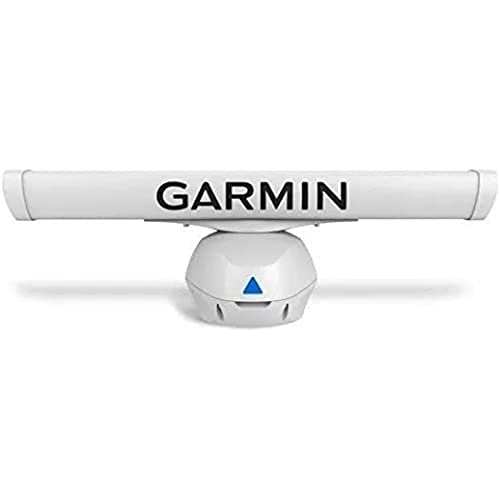
Garmin GMR Fantom 54-4 Open Array Radar
This open-array radar highlights moving targets in color and gives you excellent close- and long-range target detection —…
As an affiliate, we earn on qualifying purchases.
As an affiliate, we earn on qualifying purchases.
Maritime Surveillance Challenges and SAR Advancements
Traditional optical satellite imagery is limited by weather and daylight, making consistent maritime monitoring difficult. Synthetic-aperture radar (SAR) overcomes these limitations by providing all-weather, day-and-night imaging. The use of SAR for vessel detection is well-established, but the innovation lies in how systems like VigilSAR fuse radar data with transponder signals to identify ‘dark’ vessels. The platform builds on publicly available European Space Agency SAR data, with commercial and defense applications expanding as the technology matures.
“Our fusion approach isolates anomalies that would otherwise go unnoticed, providing a new layer of situational awareness for maritime operators.”
— VigilSAR product spokesperson
AIS transponder signal jammer
As an affiliate, we earn on qualifying purchases.
As an affiliate, we earn on qualifying purchases.
Unconfirmed Aspects of Commercial Deployment
While VigilSAR’s core detection capability is demonstrated using public SAR data, broader commercial deployment, integration with existing systems, and pricing remain undisclosed. It is not yet clear how widely the platform will be adopted or how it will perform in operational environments beyond initial demonstrations.

Optimus 3.0 GPS Tracker – Over 1 Month Battery – with Heavy Duty Waterproof Case and Powerful Magnets for Vehicles and Assets
Accurate, Discreet, Real-Time GPS Tracker with POWERFUL Twin Magnet Case.
As an affiliate, we earn on qualifying purchases.
As an affiliate, we earn on qualifying purchases.
Next Steps in Validation and Market Introduction
VigilSAR plans to conduct further testing with government and commercial partners to validate its detection and classification capabilities in real-world scenarios. The platform is expected to enter more formal demonstrations, potentially leading to pilot projects or contracts, but specific timelines have not been announced.

Cobra RAD 480i Laser Radar Detector – Long Range Detection, Bluetooth, Apple CarPlay and Android Auto Compatible, LaserEye Front and Rear Detection, Digital Signal Processing, Black
Front and Rear Detection – Cobra’s new LaserEye technology detects signals from both the front and rear of…
As an affiliate, we earn on qualifying purchases.
As an affiliate, we earn on qualifying purchases.
Key Questions
What makes VigilSAR different from traditional maritime surveillance?
VigilSAR uses synthetic-aperture radar to detect vessels regardless of weather or lighting, and it fuses radar detections with transponder signals to identify vessels that are ‘dark,’ which traditional systems may miss.
Is VigilSAR already in operational use?
Not yet. The core detection capability has been demonstrated using public SAR data, but broader deployment and integration are still in development.
Who are the intended users of VigilSAR?
Primarily defense agencies, coast guards, fisheries regulators, and search-and-rescue organizations seeking reliable, all-weather vessel monitoring.
How does VigilSAR identify ‘dark’ vessels?
By detecting objects with radar and then subtracting those explained by transponder signals, it isolates vessels that are not broadcasting AIS or ADS-B, indicating potential illicit activity or distress.
Source: ThorstenMeyerAI.com