
📊 Full opportunity report: Undervolting Your GPU for Local Inference: Lower Heat, Same Tokens/sec on ThorstenMeyerAI.com — validation score, market gap, and execution plan.

Get the latest gadgets delivered free — and shop member deals
- Fast, free delivery on millions of items
- Access to Prime Big Deal Days deals on October 6–7
- Prime Video, Amazon Music and more included
TL;DR
Undervolting GPUs via power limiting significantly lowers heat and noise during local AI inference without sacrificing tokens/sec. Tests show up to 90W savings with minimal speed impact, making it ideal for sustained workloads.
Recent tests demonstrate that undervolting GPUs through power limiting during local AI inference can substantially lower heat output and noise without significant performance loss, confirmed by multiple independent measurements.
Multiple developers and sources, including Thorsten Meyer, have confirmed that adjusting the power limit slider on modern GPUs like the RTX 4090 and RTX 5090 can reduce power consumption by up to 40-50%, leading to lower temperatures and quieter operation. For example, reducing power to 70% of maximum maintains approximately 93% of tokens/sec performance while dropping from 390W to 300W, a 17°C temperature decrease, and a notable reduction in noise.
This method is reversible, safe, and requires no complex testing; it is recommended as the first step for optimizing AI inference systems. The data indicates that most of the performance is unaffected because inference workloads are memory-bandwidth-bound, not compute-bound, meaning core clock reductions have minimal impact on speed.
Undervolt for inference:
lower heat, same tokens/sec.
Local inference is memory-bound — the GPU core spends much of its time waiting on VRAM, not maxing out compute. So when you cap its power, heat falls fast while throughput barely moves. Drag the slider in Part 2 to see the trade for yourself.
(the real limit)
(often waiting)
you pay for in heat
| Power limit | Power draw | Temp | Speed kept | Efficiency |
|---|---|---|---|---|
| 100% (stock) | 390 W | 72°C | 100% | baseline |
| 80% | 330 W | 70°C | 98.6% | +17% |
| 70%recommended | 300 W | 67°C | 93.4% | +22% |
| 60% | 260 W | 62°C | 91.5% | +37% |
| 55%peak efficiency | 240 W | 60°C | 89.2% | +45% |
| 50% | 220 W | 58°C | 82.6% | +46% |
| 40% (too far) | 180 W | 52°C | 61.3% | falls off |
- One slider, 100% → 70%. The card reduces voltage and clocks on its own.
- Can’t damage anything — you’re restricting the card, not pushing it.
- No stability testing needed.
- Captures most of the available benefit.
- Edit the voltage-frequency curve — hold a clock at lower voltage.
- Target around 0.9–0.95V to start; better chips go lower.
- Keeps more performance for the same heat cut.
- Test under your real workload — a curve stable for 10 min can fail on hour 3.
MSI Afterburner (works on any brand). Headless Linux: nvidia-smi or LACT.sudo nvidia-smi -pl 300.Impact of Undervolting on AI Inference Workstations
This development matters because it allows AI practitioners and system builders to significantly improve thermal performance, reduce energy costs, and lower noise levels in inference setups without compromising throughput. It offers an accessible way to optimize high-power GPUs, especially in environments where cooling and noise are concerns, and can extend hardware lifespan.
By adopting simple power limiting, users can achieve a more efficient and quieter operation, making AI inference more practical in office or home setups. The findings challenge the assumption that maximum GPU performance always requires maximum power, especially for inference tasks that are memory-bound.
As an affiliate, we earn on qualifying purchases.
Background on GPU Power and Inference Optimization
GPUs like NVIDIA's RTX 4090 and 5090 are factory-tuned for gaming and high benchmark scores, often with conservative voltage curves to ensure stability. These settings lead to high power draw and heat. However, during AI inference, the GPU's bottleneck is typically memory bandwidth, not compute power, meaning core clock speeds are less critical.
Previous guides for gaming focus on performance preservation, but for inference workloads, reducing power and heat can be done with minimal speed loss. The concept of undervolting and power limiting has been known in the PC enthusiast community, but recent data confirms its effectiveness specifically for AI inference workloads.
"Most local LLM work is memory-bandwidth-bound, so lowering core clocks and power limits barely affects tokens/sec."
— Thorsten Meyer
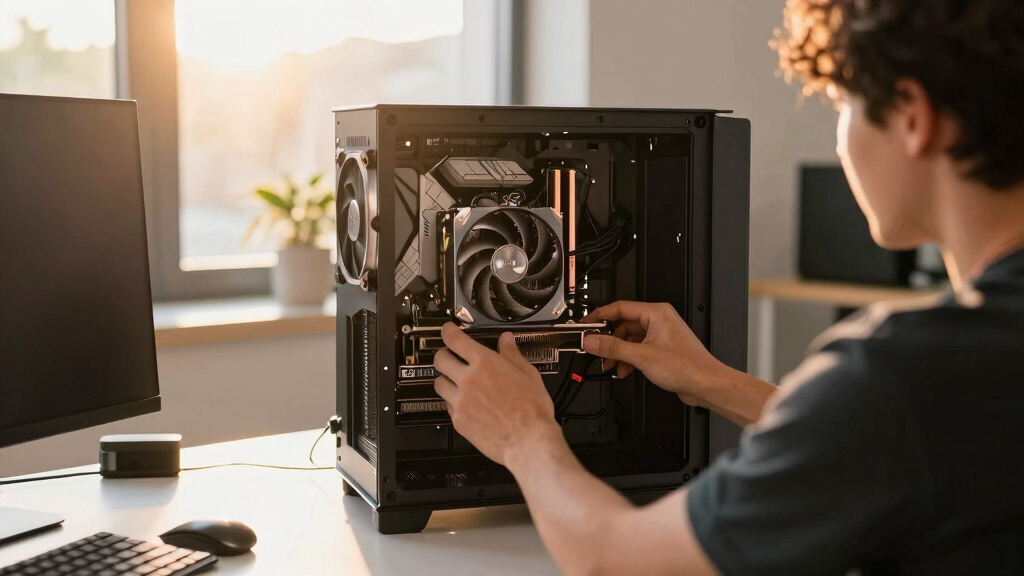
NVIDIA RTX 4090 power limit adjustment
As an affiliate, we earn on qualifying purchases.
As an affiliate, we earn on qualifying purchases.
Remaining Questions on Long-Term Stability and Compatibility
While initial tests show promising results, long-term stability of aggressive undervolting and power limiting across different GPU models and workloads remains less documented. Compatibility with various driver versions and custom firmware is also not fully established, and some users report potential stability issues when pushing settings too far.
As an affiliate, we earn on qualifying purchases.
Next Steps for Adoption and Further Validation
Further testing across diverse GPU models, workloads, and prolonged usage scenarios will clarify the limits and best practices for undervolting during inference. Hardware manufacturers might also refine tools for safer, more precise control over power and voltage settings. Users are encouraged to experiment gradually and monitor stability.
As an affiliate, we earn on qualifying purchases.
Key Questions
Does undervolting reduce GPU lifespan?
Undervolting generally reduces heat and voltage stress, which can extend GPU lifespan if done correctly. However, improper settings may cause instability, so gradual adjustments and testing are recommended.
Can I undervolt my GPU for gaming as well?
Yes, but gaming workloads are often compute-bound, so undervolting may impact frame rates more noticeably. The approach described here is optimized for inference workloads, which are memory-bound.
Is power limiting safe for my GPU?
Yes, using the built-in power limit controls via tools like MSI Afterburner is safe and reversible. It does not damage hardware but should be used with caution to avoid stability issues.
Will undervolting affect my training performance?
It depends on the workload. For training, which is compute-bound, undervolting can cause more performance loss. The current data applies mainly to inference workloads.
Source: ThorstenMeyerAI.com
Halloween Picks
halloween
As an affiliate, we earn on qualifying purchases.