

Mesh Wi-Fi might sound technical, but it’s an easy way to fix common home internet problems. If you’ve experienced dead zones, slow spots, or dropped connections, a mesh system can help. It uses multiple devices, or nodes, to create a seamless network that covers your entire home. Devices connect automatically to the strongest node, ensuring reliable access wherever you are. Keep exploring, and you’ll discover how simple this smart solution really is.

Get the latest gadgets delivered free — and shop member deals
- Fast, free delivery on millions of items
- Access to Prime Big Deal Days deals on October 6–7
- Prime Video, Amazon Music and more included
Key Takeaways
- Mesh Wi-Fi uses multiple devices to provide consistent coverage across large or complex homes.
- It automatically connects devices to the strongest node, eliminating dead zones and slow spots.
- Setup is simple with user-friendly apps, making advanced technology easy to use.
- It supports multiple smart devices simultaneously, reducing lag and buffering issues.
- Mesh Wi-Fi is scalable and reliable, adapting to changing home layouts and growing networks.
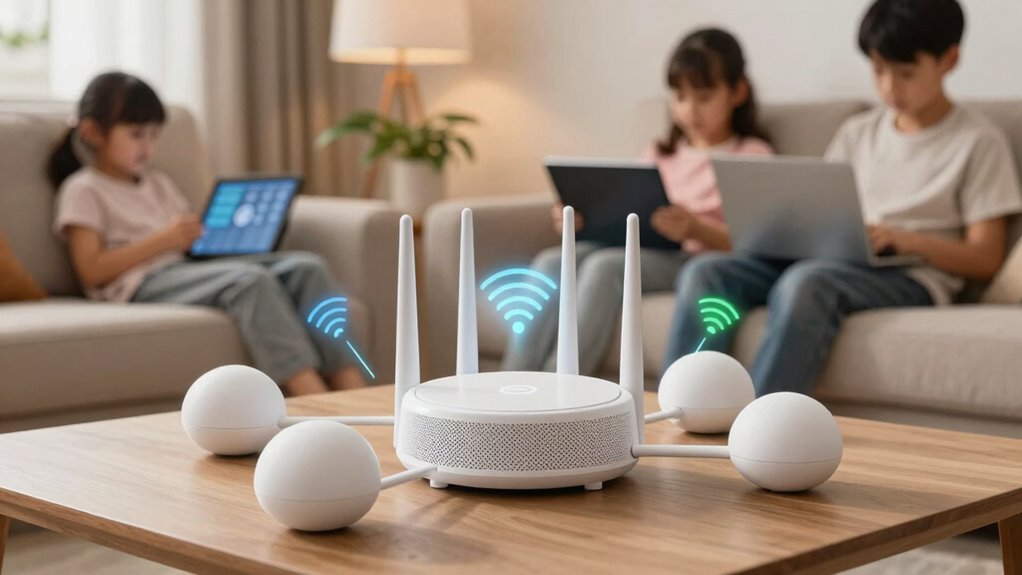
If you’ve ever experienced dead zones or slow internet in certain areas of your home, you’re not alone. Many people face this frustrating issue, especially as our homes become more connected with smart devices and streaming services. Traditional Wi-Fi routers often struggle to cover large or complex spaces, leaving you with weak signals or dropped connections. That’s where mesh Wi-Fi systems come in, offering a smart solution to a very common problem. At first glance, mesh Wi-Fi might sound technical or complicated, but it’s designed to be straightforward and user-friendly, giving you seamless coverage without the hassle.
Struggling with dead zones? Mesh Wi-Fi offers a simple, seamless solution for reliable home coverage.
A mesh Wi-Fi setup uses multiple devices, called nodes, that work together to blanket your entire home in reliable internet. Instead of relying on a single router, you place these nodes strategically around your house to eliminate dead zones. This creates a unified network where all devices connect seamlessly, with no need to switch networks or deal with weak signals. As you move from room to room, your device automatically connects to the strongest node, ensuring stable internet wherever you are. This is particularly useful if you have a large home or a multi-story property, where traditional routers often falter.
One of the key advantages of mesh Wi-Fi is its compatibility with smart home integration. As you add more smart devices—like smart thermostats, security cameras, or voice assistants—you want a network that can handle the load smoothly. Mesh systems are built to support multiple devices simultaneously, reducing lag and buffering. They also make managing your smart home easier, often through intuitive apps that let you control and monitor your network, set parental controls, or prioritize devices for better performance. Plus, with the increased focus on Wi-Fi security, many mesh systems come with robust encryption and guest network options to keep your smart home devices protected from cyber threats. Additionally, these systems often incorporate advanced network security features, providing extra peace of mind. The ability of mesh networks to adapt to changing network demands makes them an ideal choice for modern, connected homes.
Furthermore, mesh Wi-Fi systems utilize multiple nodes to create a more resilient and reliable network, minimizing disruptions caused by interference or hardware failures. The scalability of mesh systems means you can easily expand coverage as needed without replacing your entire setup. Additionally, the cost-effectiveness of mesh systems can be advantageous in the long run by reducing the need for multiple separate extenders or additional hardware. Setting up a mesh Wi-Fi system is typically quick and simple. Most come with straightforward instructions and companion apps that guide you through the process. Once in place, you won’t need to fuss with configurations or worry about weak spots. Overall, while mesh Wi-Fi might sound technical at first, it’s an accessible solution that takes care of a problem many of us face—poor coverage—and enhances your entire home’s connectivity. It ensures your devices stay connected, your smart home runs smoothly, and your Wi-Fi security remains tight—all with minimal effort on your part.
Mesh Wi-Fi system for large homes
As an affiliate, we earn on qualifying purchases.
As an affiliate, we earn on qualifying purchases.
Frequently Asked Questions
How Does Mesh Wi-Fi Differ From Traditional Routers?
Mesh Wi-Fi differs from traditional routers by using multiple nodes to create a seamless network throughout your home. This setup improves coverage, reducing dead zones, and guarantees stable internet for smart home integration and parental controls. With a mesh system, you don’t need to switch between networks or deal with weak signals, making it easier to manage devices and keep your family connected securely and efficiently across large or multi-story homes.
Can Mesh Wi-Fi Improve Internet Speed for All Devices?
Ever wonder if mesh Wi-Fi can boost your internet speed? It can, by improving signal strength across your home and reducing dead zones. Mesh systems are generally compatible with most devices, so you won’t need new gadgets. With better coverage, your devices get a more stable connection, making streaming, gaming, and browsing faster and smoother. Isn’t it time your Wi-Fi worked as hard as you do?
Is Setup of Mesh Wi-Fi Complicated for Non-Tech Users?
Setting up mesh Wi-Fi is generally user-friendly, even if you’re not tech-savvy. Most systems offer straightforward installation guides, often with app-based instructions that guide you step-by-step. Troubleshooting is simple too, as many mesh systems automatically identify and fix common issues. So, you won’t need to worry about complex configurations or technical jargon, making it accessible and easy to implement for anyone looking to improve their internet coverage.
How Does Mesh Wi-Fi Handle Multiple Users at Once?
Imagine your Wi-Fi as a busy highway, and multiple users as cars racing through. Mesh Wi-Fi manages this traffic smoothly by intelligently balancing bandwidth, so no one gets stuck in traffic jams. It creates signal redundancy, so if one route is blocked, others take over effortlessly. This way, your devices stay connected, streaming, gaming, and browsing without delays, even when everyone’s online at once.
Are There Security Concerns With Mesh Wi-Fi Systems?
Yes, there are security concerns with mesh Wi-Fi systems, but you can stay protected. Make certain your system uses strong encryption protocols like WPA3 to safeguard your data. Regularly update the firmware on your mesh nodes, as updates fix vulnerabilities and improve security. By staying proactive with these steps, you minimize risks and keep your network safe from potential threats, making mesh Wi-Fi a reliable and secure choice for your home.
best mesh Wi-Fi router with multiple nodes
As an affiliate, we earn on qualifying purchases.
As an affiliate, we earn on qualifying purchases.
Conclusion
So, if you’re tired of dead spots and Wi-Fi frustrations, mesh Wi-Fi is like a magic wand that smooths out the bumps in your network. It’s a simple fix for a common problem that can make your home feel connected and stress-free. Once you set it up, you’ll wonder how you ever managed without it—like finally finding the missing piece to your digital puzzle. Say goodbye to Wi-Fi woes and hello to seamless streaming and browsing.
As an affiliate, we earn on qualifying purchases.
mesh Wi-Fi with smart home device support
As an affiliate, we earn on qualifying purchases.
As an affiliate, we earn on qualifying purchases.
Halloween Picks
halloween
As an affiliate, we earn on qualifying purchases.