
You can easily boost your fiber intake by swapping white bread for whole-wheat options, choosing fresh fruits like apples and pears instead of processed snacks, and adding vegetables such as carrots and broccoli to your meals. Switching to oatmeal topped with berries or chia seeds is another simple step. Using fiber supplements can fill dietary gaps but should complement whole foods. Keep going to discover more practical tips for making sustainable, healthy changes that fit into real life.
Key Takeaways
- Swap white bread for whole-grain or whole-wheat options to effortlessly boost fiber intake.
- Replace processed snacks with fresh fruits like apples or pears for quick, high-fiber snacks.
- Incorporate more vegetables such as carrots, broccoli, and snap peas into meals and snacks.
- Use fiber supplements in smoothies or water to meet fiber needs when food sources are limited.
- Make small, sustainable food swaps over time to improve digestion and overall health easily.
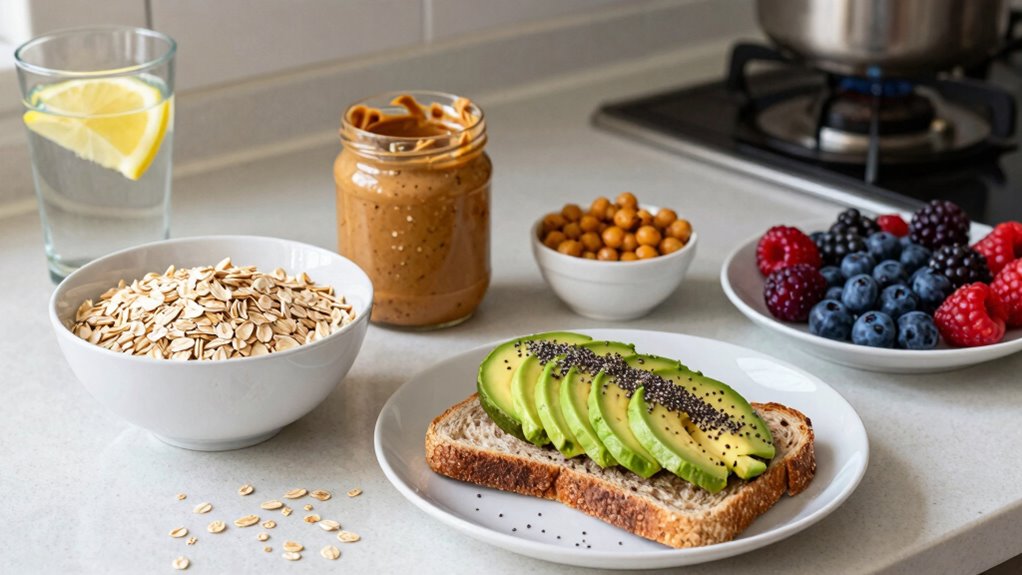
Adding more fiber to your diet doesn’t have to be complicated. Small changes can make a big difference, especially when it comes to improving your digestive health and maintaining overall wellness. One easy way to boost your fiber intake is by swapping out less nutritious options for high-fiber foods you already enjoy. For example, if you usually eat white bread, consider switching to whole-grain or whole-wheat bread. These options are richer in dietary fiber, aligning with dietary guidelines that recommend increasing fiber intake to support digestion and heart health. You don’t have to ditch your favorite foods—simple substitutions can make your meals more nutritious without feeling like a sacrifice.
Small swaps, like choosing whole-grain bread, can boost your fiber intake effortlessly and support overall health.
Incorporating fiber supplements is another straightforward strategy, especially if you find it challenging to meet your daily fiber needs through food alone. Fiber supplements are convenient and can easily be added to your daily routine, such as mixing a scoop into your morning smoothie or stirring it into water or juice. They’re a quick way to bridge any gaps in your diet, especially on busy days when preparing high-fiber meals isn’t feasible. Just keep in mind that fiber supplements should complement, not replace, whole foods. The goal is to create a balanced approach to increase your fiber intake responsibly, in line with dietary guidelines that emphasize a variety of fiber-rich foods.
Switching from processed snacks to whole food options is another effective swap. Instead of reaching for a bag of chips, try snacking on fresh fruits like apples or pears, which are naturally high in fiber. Vegetables like carrots, broccoli, and snap peas are also great options, whether raw or cooked. For breakfast, swap out sugary cereals for oatmeal topped with berries or chia seeds. These small changes are easy to implement and can considerably boost your daily fiber intake without overhauling your entire diet. Incorporating high-fiber foods into your meals can help you enjoy the benefits of fiber more naturally and sustainably. Additionally, choosing fiber-rich foods supports not only your individual health but also promotes more sustainable food choices that minimize environmental impact.
Making such swaps isn’t just about adding fiber—it’s about creating sustainable habits that fit into your life. You don’t need to overhaul your entire diet overnight; instead, focus on gradual changes that feel manageable. These simple substitutions and the inclusion of fiber supplements when necessary can help you meet dietary guidelines comfortably. Over time, these tweaks will become second nature, helping you enjoy the benefits of a high-fiber diet—better digestion, improved energy levels, and overall health—without the hassle. Additionally, choosing high-fiber options aligns with the dietary guidelines that promote a balanced intake of fiber-rich foods for optimal health.
As an affiliate, we earn on qualifying purchases.
Frequently Asked Questions
Can High-Fiber Foods Cause Digestive Discomfort?
Yes, high-fiber foods can cause digestive discomfort, especially if you have fiber intolerance or digestive sensitivity. You might experience bloating, gas, or cramping when introducing more fiber into your diet too quickly. To avoid this, gradually increase your fiber intake and stay well-hydrated. Listening to your body helps you find the right balance, preventing discomfort while still benefiting from the digestive health perks fiber provides.
How Much Fiber Should I Aim for Daily?
You should aim for about 25 to 30 grams of fiber daily, depending on your age, sex, and activity level. Tracking your fiber intake helps you meet your daily goals and avoid digestive discomfort. Incorporate a variety of high-fiber foods, like fruits, vegetables, whole grains, and legumes, to reach your target comfortably. Remember, gradually increasing your fiber intake allows your digestive system to adjust smoothly.
Are There Fiber Supplements I Should Consider?
Yes, fiber supplements can help if you’re not getting enough from your diet. When choosing a supplement, consider how it affects fiber absorption and take it at the right time—usually with meals or plenty of water. Supplements like psyllium husk or methylcellulose are popular options. Always follow your healthcare provider’s advice to avoid digestive discomfort and guarantee maximum absorption, especially if you’re combining supplements with high-fiber foods.
Can I Increase Fiber Intake if I Have Digestive Issues?
Sure, you can boost your fiber intake even with digestive issues—just don’t go all-in like a fiber-fueled tornado. Start with gentle dietary modifications, slowly introducing fiber-rich snacks that won’t send your stomach into chaos. Opt for soluble fiber options like oats or bananas, which are easier to digest. Remember, moderation is your best friend here; too much, too fast, and you’ll regret it!
Do High-Fiber Foods Affect Blood Sugar Levels?
High-fiber foods can affect blood sugar levels because fiber influences how your body processes glucose. Soluble fiber, in particular, slows digestion and helps stabilize blood sugar, making it easier for blood sugar management. However, eating too much fiber too quickly might cause spikes or digestive discomfort. You should focus on a balanced intake, incorporating fiber-rich foods gradually to support steady energy levels and better blood sugar control.
As an affiliate, we earn on qualifying purchases.
Conclusion
Making simple swaps to boost your fiber intake doesn’t have to be complicated. With a few easy changes, you can enjoy healthier meals that fit into your busy life. Remember, small adjustments can lead to big health benefits over time. So, why not give these high-fiber swaps a try? Are you ready to feel more energized and satisfied with every bite? Start today, and watch how these simple changes transform your eating habits!
As an affiliate, we earn on qualifying purchases.
As an affiliate, we earn on qualifying purchases.