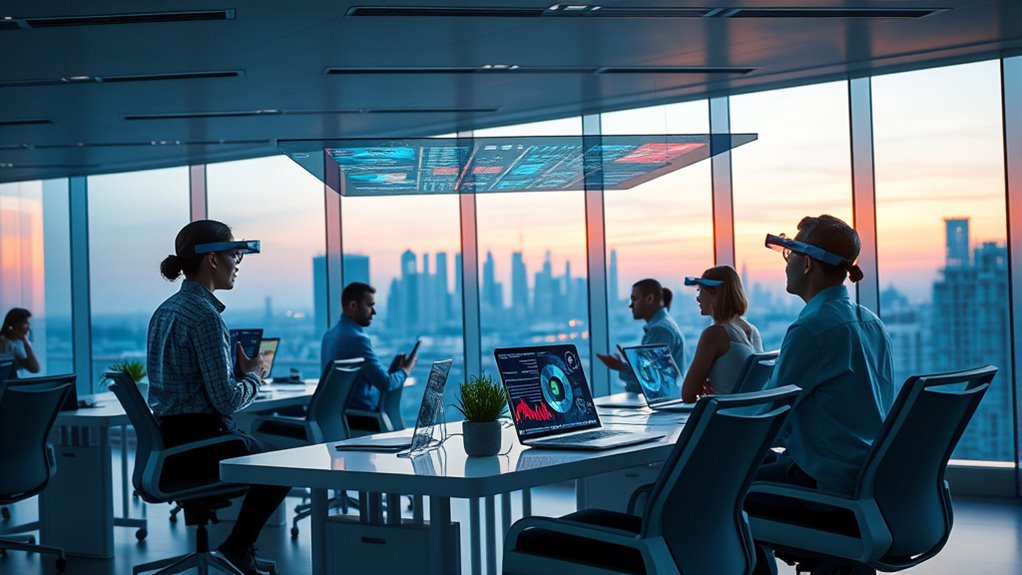

In 2026, your office will rely on advanced tech tools like immersive virtual workspaces, AI-driven project management, and seamless video collaboration to boost productivity and inclusivity. Remote onboarding will become more engaging with VR and personalized digital mentors, while AI will help optimize workflows and scheduling. This shift creates more flexible, connected environments that foster innovation and growth. Keep exploring, and you’ll uncover how these technologies will transform your work experience even further.
Key Takeaways
- Advanced virtual collaboration platforms will enable seamless real-time communication and immersive virtual workspaces.
- AI-driven onboarding and onboarding VR/AR experiences will streamline remote employee integration.
- Integration of VR/AR and AI tools will enhance face-to-face interaction and optimize workflows.
- Offices will be transformed with technologies supporting remote work, fostering a connected, efficient environment.
- Talent acquisition will expand globally, driven by streamlined workflows, virtual community-building, and innovative tech adoption.
How will remote work shape the future of your career and daily life? It’s a question many are asking as technology continues to evolve rapidly. In 2026, the office landscape will look vastly different, largely thanks to advanced tech tools that facilitate seamless virtual collaboration and streamline remote onboarding processes. These innovations will not only redefine how you work but also how you connect with colleagues, learn new skills, and grow professionally.
Virtual collaboration tools will be at the heart of this transformation. Imagine working on projects with team members spread across different continents, yet feeling as though you’re in the same room. Platforms like enhanced video conferencing apps, real-time document editing, and immersive virtual workspaces will make this possible. You’ll be able to brainstorm, share ideas, and execute tasks efficiently without geographic barriers. These tools will incorporate AI-driven features such as smart scheduling, automatic note-taking, and task prioritization, making your workflow smoother and more productive. As a result, you’ll experience less friction in communication and more clarity in project execution, regardless of where you or your team members are located.
Virtual collaboration tools will revolutionize remote work with seamless communication and AI-driven productivity features.
Remote onboarding will also undergo a significant overhaul. When you join a new company remotely, the process will be more engaging and integrated. Expect interactive virtual orientation sessions, AI-powered onboarding assistants, and digital mentorship programs that help you acclimate faster. These systems will provide personalized learning paths, ensuring you understand company policies, tools, and culture without feeling lost. The use of virtual reality (VR) and augmented reality (AR) might even allow you to explore a virtual office environment, meet colleagues face-to-face in a simulated space, and get hands-on training for your role—all from your home. This immersive approach will foster a sense of belonging and community right from the start, which is vital for remote workers. Additionally, the understanding of eye patch benefits in skincare routines highlights how targeted tools can enhance appearance and confidence, paralleling how tech tools will boost remote work experiences.
As these tools become more sophisticated, your daily routine will become increasingly flexible. You’ll have the ability to collaborate effortlessly with global teams, participate in onboarding processes that feel engaging and personalized, and access resources instantly—no matter where you are. This shift will likely lead to a more inclusive workplace, where talent isn’t limited by geography. Your career growth could accelerate as companies leverage these advanced tech platforms to foster innovation, streamline workflows, and reduce onboarding times. Ultimately, the future of remote work promises a more connected, efficient, and flexible professional environment—one that adapts to your needs and expands your opportunities in ways you might not have imagined.

Scaling Remote: The Enterprise Toolkit: Robust Solutions for Growing Distributed Teams, Project Management, and Virtual Culture (Small Business)
As an affiliate, we earn on qualifying purchases.
As an affiliate, we earn on qualifying purchases.
Frequently Asked Questions
How Will Remote Work Impact Global Economic Inequality?
Remote work could widen the digital divide, increasing economic disparity if access to necessary tech remains unequal. You might find that those with reliable internet and modern devices gain more opportunities, while others fall behind. To avoid deepening inequality, you should promote equitable tech access and digital literacy programs. Embracing inclusive policies ensures remote work benefits everyone, helping to bridge economic gaps rather than widen them.
What Cybersecurity Measures Will Be Standard in Future Remote Offices?
You’ll see cybersecurity protocols becoming standard, with nearly 80% of remote offices adopting multi-factor authentication by 2026. Data encryption will be essential, ensuring sensitive information stays protected during transmission and storage. You’ll also implement automated threat detection and regular security audits, making your remote workspace safer. Staying proactive with these measures helps prevent cyberattacks, keeps your data secure, and maintains trust in your remote operations.
How Will Remote Work Influence Corporate Culture and Employee Engagement?
Remote work transforms your corporate culture and employee engagement by emphasizing virtual collaboration and digital onboarding. You’ll find teams more connected through seamless communication tools, fostering a sense of belonging. Digital onboarding makes new hires feel welcomed and integrated quickly, boosting morale. As you adapt to these changes, your organization becomes more flexible, innovative, and inclusive, ensuring employees stay engaged and committed regardless of their physical location.
Will Remote Work Reduce the Need for Physical Office Spaces Permanently?
Yes, remote work will reduce the need for physical office spaces permanently. You’ll find virtual collaboration tools enable seamless communication, making decentralization more practical. As teams work across various locations, companies will downsize or rethink their office footprints, focusing on flexible work environments. This shift promotes efficiency and cost savings while supporting diverse work styles, ultimately transforming traditional office concepts into more dynamic, distributed spaces that suit modern needs.
How Might Ai-Driven Tools Personalize Remote Work Experiences?
AI-driven tools will personalize your remote work experience by offering adaptive interfaces that adjust to your preferences and work style. They enable personalized learning, helping you develop skills efficiently. These tools analyze your habits and provide tailored suggestions, making your workflow smoother. As a result, you’ll feel more engaged and productive, with technology seamlessly supporting your unique needs and optimizing your remote work environment.
As an affiliate, we earn on qualifying purchases.
Conclusion
As you embrace the future of remote work, remember that over 70% of employees now prefer hybrid or fully remote roles, highlighting a major shift in workplace culture. With new tech tools making collaboration seamless, your office experience will continue to evolve in exciting ways. Stay adaptable, and you’ll thrive in this changing landscape, harnessing innovations that bring teams closer together no matter where you are. The future of work is flexible—and it’s happening now.

Building AI-Powered Products: The Essential Guide to AI and GenAI Product Management
As an affiliate, we earn on qualifying purchases.
As an affiliate, we earn on qualifying purchases.

Extended Reality Workspaces for Immersive Collaboration: Transforming Collaboration Through Immersive Virtual Environments and Innovative Workflow Integration
As an affiliate, we earn on qualifying purchases.
As an affiliate, we earn on qualifying purchases.