
To cope with winter blues and post-holiday lows, focus on increasing your natural light exposure by going outside or using a light therapy box. Stay active through regular outdoor walks and keep connected with friends, even virtually, to combat loneliness. Maintain a balanced diet rich in omega-3s and vitamins D and B12, and establish a routine with consistent sleep. Small adjustments can make a big difference—if you want to learn more, continue exploring effective strategies.

Get the latest gadgets delivered free with Prime
- Fast, free delivery on millions of items
- Prime Video, Amazon Music and more included
- Member-only deals all year
Key Takeaways
- Increase exposure to natural light by opening curtains and spending time outdoors to regulate mood and circadian rhythms.
- Engage in regular physical activity, such as outdoor walks, to boost endorphin levels and improve energy.
- Maintain social connections through virtual or in-person interactions to combat feelings of isolation.
- Prioritize a balanced diet rich in omega-3s, vitamins D and B12, and ensure consistent sleep routines for mental resilience.
- Use light therapy and self-care routines to manage winter blues and support overall emotional well-being.
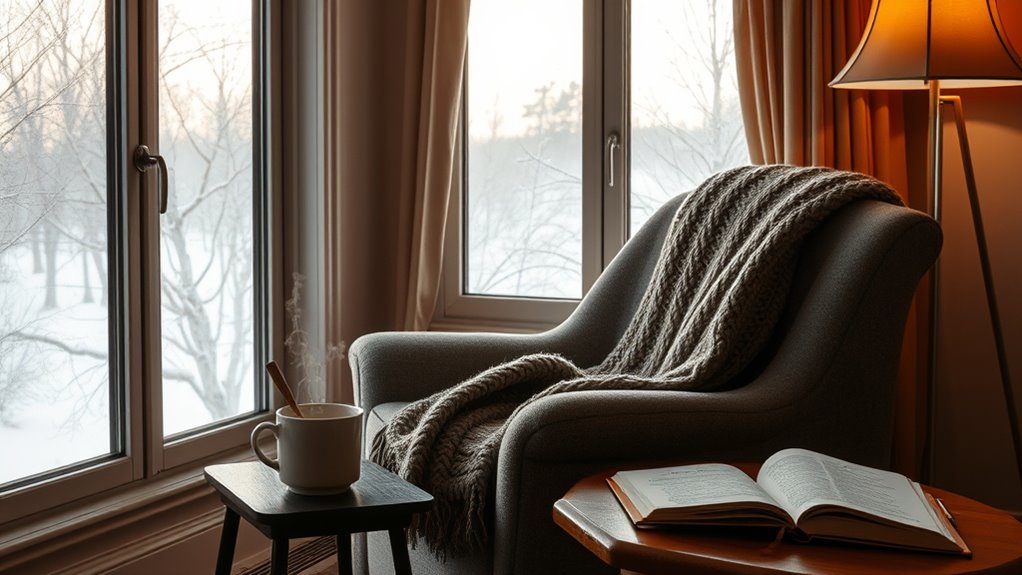
Have you ever noticed how your mood dips during the winter months? It’s a common experience, and for some people, it’s more than just the winter blues. You might be dealing with seasonal affective disorder (SAD), a type of depression that occurs at the same time each year, usually during the fall and winter. This condition is often linked to reduced sunlight, which throws off your body’s internal clock and affects your mood, energy, and sleep patterns. Recognizing SAD is the first step toward managing it. Cold weather adjustments can play a big role here—by making some simple changes, you can help your mind and body cope better with the darker, colder months.
First, it’s essential to understand how your environment influences your mental health. Shorter days and less sunlight can leave you feeling sluggish and less motivated. To counteract this, try to maximize natural light exposure during the day. When you wake up, open your curtains and spend a few moments outside if the weather permits. If daylight is limited, consider using a light therapy box, which mimics natural sunlight and can help regulate your circadian rhythms. Maintaining a consistent sleep schedule is also important; going to bed and waking up at the same time each day helps keep your internal clock in sync, reducing the severity of winter-related mood dips. Light therapy can be especially effective in combating the effects of reduced sunlight.
Engaging in regular physical activity is another effective way to combat the winter blues. Exercise releases endorphins, your body’s natural mood lifters, and can boost your energy levels. Even a daily walk outside, bundled up against the cold, can make a significant difference. Don’t forget to dress warmly—layering your clothing helps you stay comfortable and encourages you to get outside more often. Additionally, staying connected with friends and loved ones can provide emotional support and help you feel less isolated during the colder months. Social interactions, even virtual ones, can lift your spirits and remind you that you’re not alone.
Adjusting your diet might seem minor, but it can have a strong impact. Incorporate foods rich in omega-3 fatty acids, vitamins D and B12, which support brain health and mood regulation. If you’re feeling particularly down, talk to a healthcare professional about whether supplements or other treatments might be appropriate. Remember, managing cold weather adjustments is about creating a routine that supports your mental well-being. By making conscious choices—maximizing light, staying active, maintaining social connections, and eating well—you can better navigate the post-holiday blues and step into the winter months feeling more balanced and resilient.
light therapy box for seasonal affective disorder
As an affiliate, we earn on qualifying purchases.
As an affiliate, we earn on qualifying purchases.
Frequently Asked Questions
How Can I Tell if My Winter Sadness Is Clinical Depression?
If your persistent sadness lasts for weeks, affects your daily life, and isn’t just seasonal affective disorder, it could be clinical depression. Notice if you experience deep fatigue, loss of interest in activities, changes in sleep or appetite, or feelings of hopelessness. Unlike seasonal affective disorder, clinical depression isn’t tied solely to winter months. If you suspect this, consider talking to a mental health professional for an accurate diagnosis and support.
Are There Specific Foods That Can Boost My Winter Mood?
Ironically, the best winter mood boosters might be comfort foods you already crave. Foods rich in mood-boosting nutrients like omega-3s, vitamin D, and antioxidants can help lift your spirits. Think fatty fish, dark leafy greens, berries, and nuts. These foods support brain health and combat winter gloom. So, indulge in nourishing meals to naturally boost your mood and keep those winter blues at bay.
How Does Lack of Sunlight Affect My Mental Health?
Lack of sunlight can considerably affect your mental health by triggering Seasonal Affective Disorder (SAD), which causes feelings of sadness, fatigue, and low motivation. Without enough sunlight, your body produces less serotonin and melatonin, disrupting your mood and sleep cycles. To combat this, try sunlight therapy, where exposure to bright light mimics natural sunlight, helping improve your mood and energy levels during darker winter months.
Can Exercise Really Improve Winter Mental Health?
While winter days can feel gloomy, exercise can lift your mood and combat the blues. Winter workouts, especially outdoor activities, boost your endorphin levels and expose you to natural light, helping regulate your circadian rhythm. Even simple activities like brisk walks or snowshoeing make a difference, turning the cold into an opportunity to improve mental health. So, don’t let winter keep you sedentary—get moving and feel better.
What Are Some Quick Ways to Lift My Spirits During Winter?
To lift your spirits during winter, try exposure to natural light or use a light therapy box, which helps combat seasonal affective disorder. Engage in physical activity, like a brisk walk, to boost your mood. Practice mindfulness or deep breathing exercises to reduce stress. Connecting with loved ones or enjoying cozy hobbies also works as effective winter blues remedies. These quick strategies can make a noticeable difference in your mental well-being.
outdoor walking shoes for cold weather
As an affiliate, we earn on qualifying purchases.
As an affiliate, we earn on qualifying purchases.
Conclusion
As winter settles in, remember that the post-holiday blues are common but manageable. Think of your mental health like a snow globe—shaken up but eventually settling. Engaging in sunlight, staying active, and connecting with loved ones can help clear your mind. Believe in the power of small steps; just like snowflakes, each effort adds up. You have the strength to weather this season—trust the process and keep moving forward.
vitamin D B12 supplement for winter blues
As an affiliate, we earn on qualifying purchases.
As an affiliate, we earn on qualifying purchases.
weighted blanket for anxiety and sleep
As an affiliate, we earn on qualifying purchases.
As an affiliate, we earn on qualifying purchases.
Columbus Day / Indigenous Peoples' Day Picks
long weekend sales
As an affiliate, we earn on qualifying purchases.