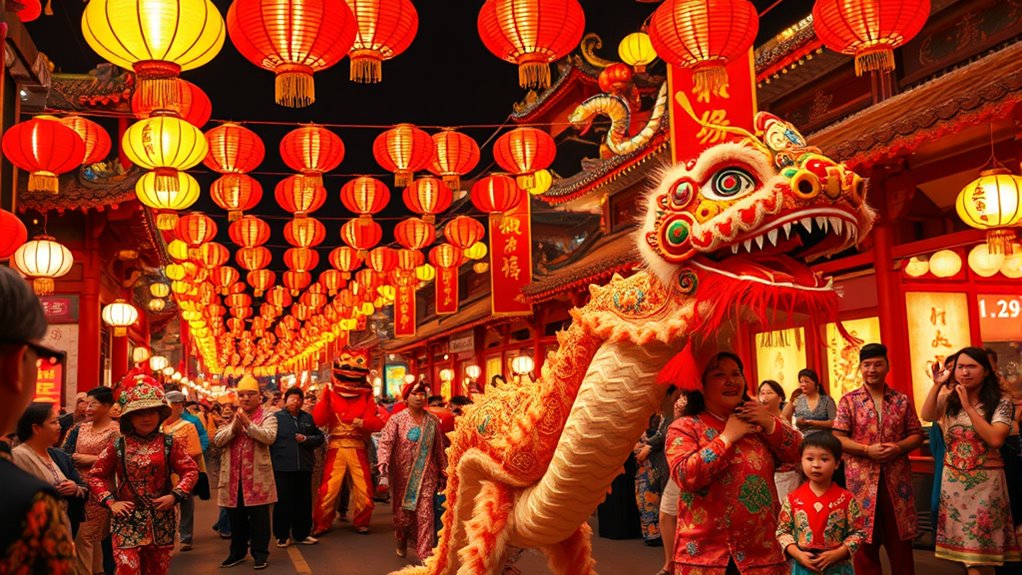

Around the world, people celebrate seasons, harvests, and life’s progressions with vibrant festivals beyond Christmas. You might witness colorful Lantern Festivals in Asia, honoring ancestors with light and fire, or enjoy Diwali’s illumination and renewal in India. Scandinavian Midsummer nights feature bonfires and dancing, while Native American ceremonies mark seasonal changes. These customs foster community, preserve traditions, and connect people to nature. Keep exploring to discover more unique celebrations that highlight cultural history and environmental bonds.

Get the latest gadgets delivered free with Prime
- Fast, free delivery on millions of items
- Prime Video, Amazon Music and more included
- Member-only deals all year
Key Takeaways
- Many cultures celebrate unique festivals like Diwali’s illumination and Lunar New Year’s dragon dances, emphasizing renewal and cultural identity.
- Seasonal festivals, such as Midsummer or harvest celebrations, honor natural cycles and community bonding across diverse societies.
- Rites of passage, including African beadwork and Native American ceremonies, showcase cultural heritage beyond Christmas traditions.
- Celebrations often incorporate sustainable practices, like renewable energy use, reflecting environmental interconnectedness and cultural preservation.
- Vibrant parades, costumes, and rituals worldwide highlight the importance of community participation and cultural expression beyond Christmas.

Have you ever wondered how different cultures celebrate special occasions? Every society has its unique way of marking important events, and these celebrations often reflect deep-rooted traditions and values. When exploring cultural celebrations around the world, you’ll find that they’re not just about the event itself but also about preserving history, fostering community, and expressing identity. Many of these festivities are tied closely to seasonal customs, aligning with the rhythm of nature and agricultural cycles. For instance, some cultures celebrate the changing seasons with elaborate rituals, feasts, and dances designed to honor the earth’s cycles and ensure prosperity. These seasonal customs serve as a reminder of the interconnectedness between people and the environment, creating a sense of continuity across generations.
In various parts of the world, holidays extend beyond the familiar Christmas or New Year’s festivities, revealing fascinating traditions that often involve vibrant parades, colorful costumes, and symbolic acts. Think of the Lunar New Year in East Asia, where families come together to welcome the new year with dragon dances, fireworks, and special foods believed to bring good luck. In India, Diwali — the Festival of Lights — illuminates homes and streets with lamps, symbolizing the victory of light over darkness, while also emphasizing themes of renewal and hope. Meanwhile, in Africa, celebrations like the Maasai rites of passage involve traditional dances, beadwork, and storytelling that pass cultural values from one generation to the next.
You’ll notice that many of these cultural celebrations are deeply intertwined with seasonal customs, marking harvests, solstices, or other natural phenomena. For example, in Scandinavia, Midsummer celebrates the longest day of the year with bonfires, singing, and dancing, paying homage to the sun’s return after winter. Similarly, Native American tribes hold ceremonies that coincide with seasonal changes, emphasizing harmony with nature. Additionally, modern renewable energy practices are increasingly integrated into some festivals, highlighting the importance of sustainable energy in preserving cultural heritage and environmental health. These festivities often include specific rituals that have been practiced for centuries, reinforcing cultural identity and community bonds.
Frequently Asked Questions
How Do Non-Christian Cultures Celebrate Winter Holidays?
You’ll find that non-Christian cultures celebrate winter holidays through unique cultural rituals rooted in winter folklore. For example, in Japan, people enjoy osechi-ryori, while in Iran, Yalda Night marks the longest night with storytelling and special foods. In some regions, communities light lanterns or hold traditional dances to welcome the season. These celebrations reflect rich traditions, emphasizing family, community, and the joy of winter’s beauty beyond Christmas.
What Are the Origins of Unique Holiday Foods Worldwide?
Ever wondered why certain holiday foods have such rich traditions? You find that traditional feast origins often trace back to ancient harvests or religious rituals, while festive dish symbolism reflects cultural values or stories. For example, gingerbread houses symbolize protection and prosperity, while mooncakes represent unity. These foods connect us to history, beliefs, and community, making every bite a celebration of shared heritage and timeless customs.
How Do Different Countries Mark the New Year?
You’ll find that New Year’s customs vary widely across countries. In many places, people celebrate with cultural fireworks, lighting up the sky to ward off bad luck and welcome prosperity. Some countries hold countdown parties, while others have traditional rituals like eating special foods or making resolutions. No matter the location, the common goal is to start fresh, embracing hope and joy as you ring in the new year.
Are There Any Global Traditions That Unite Diverse Cultures?
You’ll find that interfaith celebrations and shared rituals help unite diverse cultures worldwide. Events like global peace days, environmental festivals, and human rights rallies bring people together, emphasizing common values beyond religious or cultural differences. These collective activities foster understanding and harmony, showing that despite diverse traditions, shared goals and symbols can create a sense of global community. Participating in these global traditions helps you connect across cultures and promote unity worldwide.
How Have Modern Influences Changed Traditional Holiday Celebrations?
Modern influences have transformed holiday celebrations like a river carving new paths. You see, cultural adaptation and technology influence have made traditions more accessible and personalized. Social media spreads festive ideas worldwide, blending customs and creating hybrid celebrations. Smartphones capture moments, turning memories into digital treasures. These changes make your holiday experience more connected and dynamic, ensuring that, despite evolving, the spirit of celebration remains vibrant and inclusive across cultures.
Conclusion
As you explore these vibrant traditions, you might find yourself gently reminded that every culture has its own way of celebrating life’s special moments. Embracing these unique customs can open your heart to new perspectives and warm your spirit in unexpected ways. So, keep your curiosity alive and allow yourself to be subtly enchanted by the diverse ways people come together, share joy, and create meaningful memories—beyond just the familiar holiday scenes.
Fall Picks
fall essentials
As an affiliate, we earn on qualifying purchases.