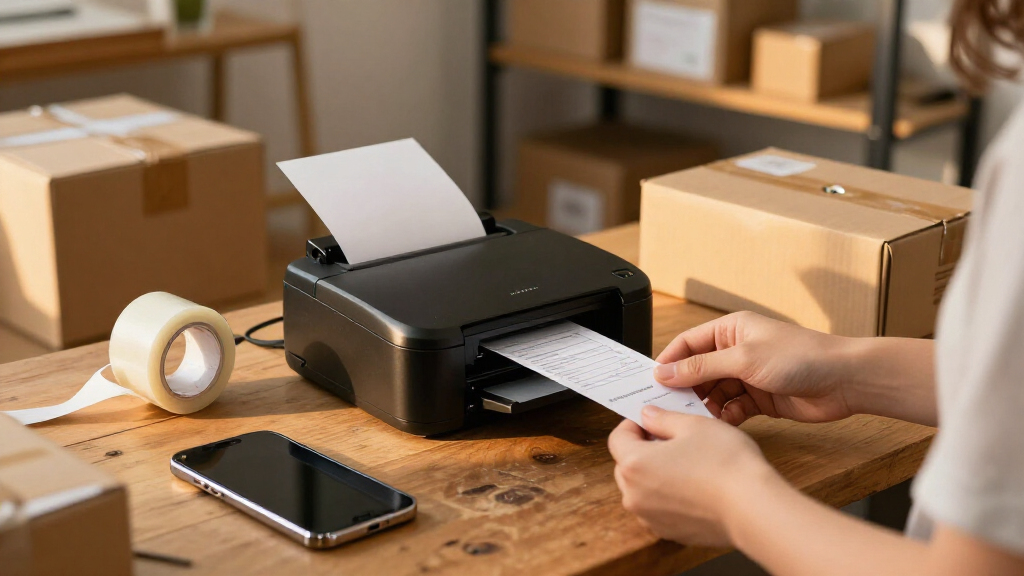

Among these wireless thermal label printers, I name the Rollo Wireless Shipping Label Printer best overall for buyers who want a dedicated wireless shipping setup, while the Omezizy D450BT stands out for its built-in label bin and the MUNBYN RW403B for shoppers comparing another established Bluetooth-style option. The main tradeoffs are phone and computer compatibility, how labels feed or store, and whether a printer’s wireless connection fits your shipping workflow. The lineup also includes several closely named Rongta RP425 and Labeer models, so checking the exact version matters. I compare the 14 options by their practical differences and buyer fit below; continue reading for the full breakdown.

Get the latest gadgets delivered free with Prime
- Fast, free delivery on millions of items
- Prime Video, Amazon Music and more included
- Member-only deals all year
Complete the kit



Key Takeaways
- The Rollo Wireless is the clearest premium-leaning pick in this lineup for buyers seeking a purpose-built wireless shipping printer, while shoppers focused on simpler Bluetooth models have more compact alternatives.
- The Omezizy D450BT’s built-in label bin is a distinct handling feature; it may suit a tidy desk setup better than models that rely on separately stored labels.
- Wireless does not mean the same thing across the roundup. Bluetooth-focused listings and the Rollo’s wireless positioning call for checking device, app, and computer compatibility before purchase.
- Several entries are near-duplicates by name, not automatically interchangeable. The two Rongta RP425 listings, the RP425A, and the two Labeer listings warrant careful model-number and package checks.
- Choosing by workflow is more useful than choosing by label size alone. Label storage, device pairing, and how often you print can matter more than the shared 4×6 shipping-label focus.
| Nelko PL70E Bluetooth Thermal Shipping Label Printer (4×6) | 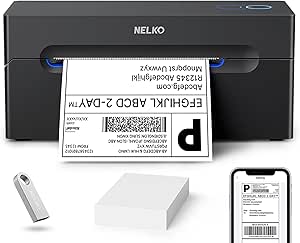 | Best for Fast, Compact Shipping | Print technology: Direct thermal; no ink or toner required | Resolution: 203 × 203 DPI | Print speed: 150 mm/s; up to 72 labels per minute | VIEW LATEST PRICE | See Our Full Breakdown |
| NULLTONEX 4×6 Bluetooth Thermal Shipping Label Printer |  | Best Starter Kit | Print technology: Direct thermal | Resolution: 203 DPI | Print speed: Up to 150 mm/s; up to 72 labels per minute | VIEW LATEST PRICE | See Our Full Breakdown |
| Omezizy D450BT Bluetooth Thermal Shipping Label Printer with Built-In Label Bin |  | Best for High-Volume Label Storage | Print technology: Thermal | Resolution: 203 dpi | Print speed: Up to 72 labels per minute | VIEW LATEST PRICE | See Our Full Breakdown |
| JADENS Bluetooth Thermal Shipping Label Printer (JD268BT-Pink) |  | Best Compact Pick | Model: JD268BT-Pink | Print technology: Thermal | Resolution: 203 × 203 dpi | VIEW LATEST PRICE | See Our Full Breakdown |
| MUNBYN Bluetooth Thermal Label Printer (RW403B) |  | Best for Shared Workspaces | Model: RW403B | Connectivity: Bluetooth and USB | Print width: 1.57–4.25 inches | VIEW LATEST PRICE | See Our Full Breakdown |
| Labeer Bluetooth Thermal Shipping Label Printer |  | Best for Flexible Label Sizes | Printer type: Direct thermal | Resolution: 203 × 203 dpi | Connectivity: Bluetooth, USB | VIEW LATEST PRICE | See Our Full Breakdown |
| Rongta RP425 Bluetooth Thermal Shipping Label Printer |  | Best for Label-Width Range | Model: RP425 | Printer type: Thermal | Connectivity: Bluetooth | VIEW LATEST PRICE | See Our Full Breakdown |
| Rongta RP425 Wireless 4×6 Thermal Label Printer |  | Best for Simple Wireless Shipping | Printer type: Thermal | Print output: Monochrome | Resolution: 203 × 203 dpi | VIEW LATEST PRICE | See Our Full Breakdown |
| KNAON Bluetooth Thermal Shipping Label Printer |  | Best for Faster Listed Print Speed | Printer type: Thermal | Print output: Monochrome | Resolution: 200 × 200 dpi | VIEW LATEST PRICE | See Our Full Breakdown |
| Rongta RP425A Bluetooth Thermal Shipping Label Printer |  | Best Compact Dual-Connection Pick | Model: RP425A | Printer type: Thermal | Connectivity: Bluetooth, USB, USB Type-C | VIEW LATEST PRICE | See Our Full Breakdown |
| JADENS Bluetooth Thermal Shipping Label Printer | 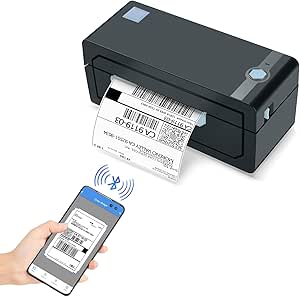 | Best for USB-and-app Flexibility | Model: JD268BT | Print resolution: 203 × 203 DPI | Print output: Monochrome thermal | VIEW LATEST PRICE | See Our Full Breakdown |
| Phomemo 241BT Bluetooth Thermal Label Printer |  | Best for Broad OS Compatibility | Printer type: Direct thermal | Print resolution: 203 × 203 DPI | Print speed: Up to 150 mm/s | VIEW LATEST PRICE | See Our Full Breakdown |
| Rollo Wireless Shipping Label Printer |  | Best for Wi-Fi and AirPrint | Model: X1040 | Printer type: Thermal | Connectivity: USB and Wi-Fi | VIEW LATEST PRICE | See Our Full Breakdown |
| Labeer Bluetooth Thermal Shipping Label Printer, Wireless 4×6 |  | Best for Automatic Media Handling | Printer type: Direct thermal | Print resolution: 203 × 203 DPI | Supported label widths: 1.57–4.41 inches | VIEW LATEST PRICE | See Our Full Breakdown |
| wireless thermal label printer | Connectivity | Print speed | Resolution | Dimensions |
|---|---|---|---|---|
| Nelko PL70E Bluetooth Thermal | Bluetooth and USB | 150 mm/s; up to 72 labels per minute | 203 × 203 DPI | 9 × 5 × 6 inches |
| NULLTONEX 4×6 Bluetooth Therma | Bluetooth and USB | Up to 150 mm/s; up to 72 labels per minute | 203 DPI | 8.08 × 4.73 × 6.9 inches |
| Omezizy D450BT Bluetooth Therm | Bluetooth and USB | Up to 72 labels per minute | 203 dpi | 7.3 × 6.3 × 5.35 inches |
| JADENS Bluetooth Thermal Shipp | Bluetooth and USB | 150 mm/s; up to 72 labels per minute | 203 × 203 dpi | 7.8 × 3.3 × 3.1 inches |
| MUNBYN Bluetooth Thermal Label | Bluetooth and USB | 72 labels per minute | — | 4.9 × 9.67 × 6.49 inches |
| Labeer Bluetooth Thermal Shipp | Bluetooth, USB | — | 203 × 203 dpi | 7.2 × 2.64 × 3.15 in |
| Rongta RP425 Bluetooth Thermal | Bluetooth | Up to 150 mm/s | 203 dpi | — |
| Rongta RP425 Wireless 4×6 Ther | Bluetooth, USB | 15 pages per minute | 203 × 203 dpi | 4 × 1 × 2 in (D × W × H), as listed |
| KNAON Bluetooth Thermal Shippi | Bluetooth, USB | Up to 180 mm/s | 200 × 200 dpi | — |
| Rongta RP425A Bluetooth Therma | Bluetooth, USB, USB Type-C | 15 pages per minute | — | 4 × 1 × 2 in (D × W × H), as listed |
| JADENS Bluetooth Thermal Shipp | Bluetooth and USB 2.0 | — | — | — |
| Phomemo 241BT Bluetooth Therma | Bluetooth and USB | Up to 150 mm/s | — | — |
| Rollo Wireless Shipping Label | USB and Wi-Fi | 150 mm/s | 203 × 203 DPI | — |
| Labeer Bluetooth Thermal Shipp | Bluetooth and USB | — | — | 7.2 × 2.64 × 3.15 inches |
More Details on Our Top Picks
Nelko PL70E Bluetooth Thermal Shipping Label Printer (4×6)
The Nelko PL70E suits sellers who want a small printer that can keep pace with a steady flow of parcels. Its stated speed of up to 72 labels per minute matches the NULLTONEX, while the 1.4 kg body and compact footprint make it easier to fit into a crowded packing area than a larger desktop setup. Bluetooth supports iOS, Android, and Windows; Mac and Chrome OS users connect by USB instead.
That Mac limitation is the main workflow tradeoff: Bluetooth printing requires the NELKO app, and shipping labels may need to be saved as PDFs and uploaded there. Compared with the Omezizy D450BT, the PL70E supports a narrower maximum label width and lacks a built-in bin, but it offers broad platform compatibility and a stated lifetime warranty. I’d choose it for compact, frequent shipping—not for Mac users seeking wireless printing or the fewest setup steps.
Pros:- Prints up to 72 labels per minute for frequent shipping batches.
- Compact, 1.4 kg design fits small packing stations.
- Bluetooth and USB connectivity, with compatibility across several desktop and mobile operating systems.
- Direct thermal printing avoids ink and toner.
Cons:- Mac and Chrome OS connections are USB-only according to the listed compatibility details.
- Bluetooth printing requires the NELKO app, and platform labels may involve PDF upload steps.
- Supports labels only up to 4.1 inches wide, narrower than the Omezizy D450BT’s stated 4.6-inch maximum.
Best for: Home-based sellers shipping regularly who want a compact printer and primarily use iOS, Android, or Windows devices.
Not ideal for: Mac users who need Bluetooth printing, or sellers who want to print platform labels without routing PDFs through a dedicated app.
- Print technology:Direct thermal; no ink or toner required
- Resolution:203 × 203 DPI
- Print speed:150 mm/s; up to 72 labels per minute
- Connectivity:Bluetooth and USB
- Label width:1.54–4.1 inches (40–104 mm)
- Compatible operating systems:iOS, Android, Windows 7+, Mac OS, Chrome OS
- Dimensions:9 × 5 × 6 inches
- Weight:1.4 kg
- Warranty:Lifetime
Our verdict“Choose the Nelko PL70E for fast, space-conscious shipping from a supported mobile or Windows device, but skip it if Mac Bluetooth or a simpler label workflow is a priority.”
NULLTONEX 4×6 Bluetooth Thermal Shipping Label Printer
The NULLTONEX 4×6 earns its place as a practical starter choice because its box includes 25 sheets of 4×6 thermal labels, a USB cable, and a power cord. That gives a new seller a basic print setup without sourcing every part separately. Its 203 DPI resolution and stated speed of up to 72 labels per minute are in line with the Nelko PL70E, and its supported width range extends slightly farther, to 4.3 inches.
Bluetooth and USB connections cover phones, tablets, and computers, but wireless printing depends on the FlashLabel Pro app. That app requirement is a real workflow constraint, much like the Nelko’s NELKO-app setup; the listed information does not establish a more direct Bluetooth route. Like the other options here, it prints monochrome only. I’d favor it over the JADENS JD268BT-Pink when an included label supply matters more than a specified compact form factor or one-year warranty.
Pros:- Includes 25 sheets of 4×6 thermal labels, a USB cable, and a power cord.
- Bluetooth and USB support for mobile devices and computers.
- Supports label widths from 1.57 to 4.3 inches.
- Direct thermal operation requires no ink or toner.
Cons:- Bluetooth printing requires the FlashLabel Pro app.
- Monochrome output does not support color labels.
- The supplied label sheets are a starter quantity, not a continuing label supply.
Best for: New online sellers who want a Bluetooth-capable 4×6 printer with starter labels and basic connection accessories included.
Not ideal for: Buyers who want wireless printing without a dedicated app, or anyone who needs color output from a label printer.
- Print technology:Direct thermal
- Resolution:203 DPI
- Print speed:Up to 150 mm/s; up to 72 labels per minute
- Connectivity:Bluetooth and USB
- Label width:1.57–4.3 inches
- Output:Monochrome, black and white
- Compatible platforms:Amazon, Shopify, Etsy, USPS, UPS, FedEx, DHL
- Dimensions:8.08 × 4.73 × 6.9 inches
- Included accessories:Power cord, USB cable, and 25 sheets of 4×6 thermal labels
Our verdict“Pick the NULLTONEX if you want an approachable starter bundle with labels included, but choose another model if app-dependent Bluetooth printing will interrupt your workflow.”
Omezizy D450BT Bluetooth Thermal Shipping Label Printer with Built-In Label Bin
The Omezizy D450BT is the most storage-focused choice in this group: its built-in bin holds up to 250 labels, reducing the need to keep a separate stack beside the printer. That capacity makes a difference for sellers printing batches or working in a compact packing area. It also accepts media from 1 to 4.6 inches wide, a broader stated range than the Nelko PL70E or MUNBYN RW403B.
Its Bluetooth and USB connections, 203 dpi output, and stated throughput of up to 72 labels per minute put it in the same general speed class as the NULLTONEX. The broader width range and built-in storage are its clearest advantages, not a different print output: it remains a monochrome, print-only device that requires thermal labels. Buyers should also confirm their preferred device and platform workflow before choosing, since the provided details list broad operating-system compatibility but not app or setup specifics. I’d pick it for label capacity over the JADENS JD268BT-Pink, which is specified for 4×6 media.
Pros:- Built-in bin holds up to 250 labels, helping keep batches ready to print.
- Supports media widths from 1 to 4.6 inches.
- Bluetooth and USB connections with broad listed operating-system compatibility.
- Prints without ink or toner.
Cons:- Monochrome output only.
- Print-only function; it does not replace a scanner or multifunction device.
- The supplied product details do not specify an app or explain the setup workflow.
Best for: Small shipping teams and frequent online sellers who want an onboard supply of up to 250 labels and support for varied label widths.
Not ideal for: Buyers who need color printing, scanning, or clear setup details for their particular app and device combination.
- Print technology:Thermal
- Resolution:203 dpi
- Print speed:Up to 72 labels per minute
- Connectivity:Bluetooth and USB
- Supported media width:1–4.6 inches (25.4–117 mm)
- Maximum label capacity:250 labels
- Compatible operating systems:Android, iOS, Windows, macOS, Linux, ChromeOS
- Dimensions:7.3 × 6.3 × 5.35 inches
- Weight:0.97 kg
Our verdict“Choose the Omezizy D450BT if built-in label capacity and a wide range of media widths matter more than color output or detailed setup guidance.”
JADENS Bluetooth Thermal Shipping Label Printer (JD268BT-Pink)
The JADENS JD268BT-Pink prioritizes a small desk footprint and straightforward 4×6 shipping-label duty. At 7.8 × 3.3 × 3.1 inches, it is the most compact option by the listed dimensions among these five, making it easier to tuck beside a laptop or packing supplies. Bluetooth and USB connections support phones, tablets, and computers, and its stated 150 mm/s speed matches the Nelko PL70E.
This is a more focused choice than the Omezizy D450BT: the JADENS is specified for 4×6 media, while the Omezizy accepts a wider range and stores up to 250 labels internally. The JADENS instead includes an app for creating and editing labels, which can suit sellers who need to make labels as well as print them. Its tradeoffs are monochrome-only output, the need for thermal paper, and a one-year warranty rather than the Nelko’s stated lifetime warranty. The pink finish is a style choice, not a substitute for broader media support.
Pros:- Compact listed dimensions suit crowded desks and small packing areas.
- Bluetooth and USB connections support mobile and computer use.
- Includes an app for label creation and editing.
- Prints at up to 150 mm/s without ink or toner.
Cons:- Specified maximum media size is 4×6 inches, less flexible than the Omezizy D450BT’s 1–4.6-inch range.
- Prints monochrome only and requires thermal label paper.
- One-year warranty is shorter than the Nelko PL70E’s stated lifetime warranty.
Best for: Home sellers with limited desk space who mainly print 4×6 shipping labels from a phone, tablet, or computer.
Not ideal for: Businesses that need varied label widths, a built-in large label supply, or color printing.
- Model:JD268BT-Pink
- Print technology:Thermal
- Resolution:203 × 203 dpi
- Print speed:150 mm/s; up to 72 labels per minute
- Connectivity:Bluetooth and USB
- Maximum media size:4 × 6 inches
- Compatible devices:Android, iOS, Windows, Mac
- Dimensions:7.8 × 3.3 × 3.1 inches
- Warranty:1 year
Our verdict“Choose the JADENS JD268BT-Pink for a compact 4×6 setup with label editing in an app, but look elsewhere if you need a wider media range or built-in label storage.”
MUNBYN Bluetooth Thermal Label Printer (RW403B)
The MUNBYN RW403B is a sensible fit when a label printer will sit near other people rather than in a separate shipping room. Its listed 60 dB noise level gives buyers a concrete point of comparison for a shared home office, while the DAC dynamic algorithm is intended to improve label alignment and reduce misprints. The two-year warranty is also longer than the JADENS JD268BT-Pink’s one-year coverage.
Its 72-labels-per-minute rate puts it in the same stated throughput class as the Nelko PL70E, but the MUNBYN’s appeal is quieter shared-space use and alignment—not a supplied label bin or especially compact dimensions. At 9.67 inches wide, it takes up more desk space than the JADENS. The 1.57–4.25-inch media range works for varied label sizes, though output remains monochrome. Bluetooth status-light behavior may confuse connection checks, so I’d favor USB if visible pairing feedback matters.
Pros:- Listed 60 dB noise level suits shared workspaces better than an unspecified-noise alternative.
- DAC dynamic algorithm is intended to improve alignment and reduce misprints.
- Supports label widths from 1.57 to 4.25 inches.
- Two-year warranty and stated lifespan of up to 970,000 labels.
Cons:- Monochrome output only.
- Bluetooth indicator-light behavior may make connection status harder to interpret.
- At 9.67 inches wide, it is less suited to tight desk setups than the JADENS JD268BT-Pink.
Best for: Small businesses and home-office sellers who print labels near coworkers and value alignment support and a two-year warranty.
Not ideal for: Buyers with very limited desk space, those who need color labels, or users who rely on an immediately clear Bluetooth status light.
- Model:RW403B
- Connectivity:Bluetooth and USB
- Print width:1.57–4.25 inches
- Print speed:72 labels per minute
- Noise level:60 dB
- Dimensions:4.9 × 9.67 × 6.49 inches
- Color:Grey
- Warranty:2 years
- Stated lifespan:Up to 970,000 labels
Our verdict“Choose the MUNBYN RW403B for a shared workspace where quieter operation, alignment support, and warranty coverage matter more than a small footprint or color printing.”
Labeer Bluetooth Thermal Shipping Label Printer
The Labeer earns its place for buyers who need more than standard parcel labels: it supports widths from 1.57 to 4.41 inches and common formats for shipping, addresses, barcodes, and inventory. Automatic label calibration and paper-out and jam detection can make repeated batches less fussy than a basic printer without those checks. It also offers Bluetooth and USB, though wireless mobile printing depends on FlashLabel Pro. Compared with the KNAON, Labeer supports a slightly wider maximum label width, while KNAON lists a faster print speed. The tradeoff is platform flexibility: Windows can print over Bluetooth, but Mac, ChromeOS, and Linux connections are via USB. Choose Labeer for varied label formats, not for app-free wireless setup across every device.
Pros:- Supports label widths from 1.57 to 4.41 inches and several common formats.
- Bluetooth printing is available for mobile devices and Windows PCs.
- Automatic calibration plus jam and paper-out detection can simplify batch printing.
- Accepts both roll and fanfold thermal labels.
Cons:- Mobile printing requires the FlashLabel Pro app.
- Mac, ChromeOS, and Linux connections are via USB rather than Bluetooth.
- Monochrome direct thermal output is not suitable for color labels.
Best for: Small sellers who alternate between 4×6 shipping labels and narrower address, barcode, or inventory labels.
Not ideal for: Mac, ChromeOS, or Linux users who need wireless printing, since those systems connect by USB.
- Printer type:Direct thermal
- Resolution:203 × 203 dpi
- Connectivity:Bluetooth, USB
- Supported label widths:1.57–4.41 in
- Supported label sizes:4×6, 4×4, 4×2, 2×1 in; custom sizes
- Media compatibility:Roll and fanfold thermal labels
- Compatible devices:iPhone, Android, Windows, macOS, ChromeOS, Linux
- Dimensions:7.2 × 2.64 × 3.15 in
- Weight:450 g
Our verdict“Pick the Labeer if you need a broad range of label widths and can work within its app and platform-specific connection limits.”
Rongta RP425 Bluetooth Thermal Shipping Label Printer
The Rongta RP425 is a practical fit for sellers who use labels narrower than standard 4×6 shipping stock: its listed range starts at 0.98 inches, broader at the small end than the Labeer’s 1.57-inch minimum. It supports Bluetooth from iOS and Android through the RONGTA app, plus several desktop operating systems, and its listed speed of up to 150 mm/s suits routine shipping batches. Automatic detection and feeding reduce the need to set each label manually. The main compromise is that the connection is Bluetooth-only in the supplied specs, unlike the USB option listed for the Labeer and KNAON. Mobile users also have to use Rongta’s app, and the conflicting dimensions provided make its footprint harder to judge before buying.
Pros:- Supports label widths from 0.98 to 4.37 inches.
- Bluetooth printing works with iOS and Android through the RONGTA app.
- Lists compatibility with Windows, macOS, and Chrome OS.
- Automatic label detection and feeding help reduce manual setup.
Cons:- The supplied specifications list Bluetooth but no USB connection.
- Mobile printing requires the RONGTA app.
- Product information gives conflicting dimensions.
Best for: Mobile-first sellers who print both standard shipping labels and narrow barcode or product labels.
Not ideal for: Buyers who want a USB fallback or need a clearly documented printer footprint before arranging a tight workspace.
- Model:RP425
- Printer type:Thermal
- Connectivity:Bluetooth
- Label width:0.98–4.37 in
- Print speed:Up to 150 mm/s
- Resolution:203 dpi
- Compatible systems:Windows 7 or newer, macOS 10.11 or newer, Chrome OS, iOS, Android
- Weight:0.65 kg
- Warranty:1 year
Our verdict“Choose this RP425 for its unusually narrow minimum label width, but skip it if USB backup or precise size information matters.”
Rongta RP425 Wireless 4×6 Thermal Label Printer
This RP425 keeps the proposition straightforward: Bluetooth for phones and tablets, USB for computers, and monochrome thermal printing up to 4×6 inches. That pairing makes it a more flexible connection choice than the Bluetooth-only RP425 listing in this group, though its product data does not spell out the same range of desktop operating systems. The stated 15 pages per minute gives a rough sense of pace, but the listing does not provide a label-per-minute figure, so buyers should not treat it as a direct comparison with the KNAON’s 180 mm/s claim. Its compact listed dimensions may appeal to desk-space-conscious sellers, but the unusually small measurements deserve checking against the actual printer before purchase. It also prints only one-sided monochrome output, a normal limitation for shipping-label work.
Pros:- Offers both Bluetooth and USB connections.
- Prints monochrome labels up to 4×6 inches.
- Supports phones, tablets, laptops, and PCs.
- Lists a 1-year manufacturer warranty.
Cons:- Monochrome output cannot produce color-coded labels.
- Simplex printing only; it does not print on both sides.
- The supplied dimensions are unusually small and may need verification.
Best for: Home-based sellers who want Bluetooth phone printing with a USB connection available for a computer.
Not ideal for: Businesses that need color output, two-sided printing, or clearly documented OS-specific driver support.
- Printer type:Thermal
- Print output:Monochrome
- Resolution:203 × 203 dpi
- Connectivity:Bluetooth, USB
- Maximum media size:4 × 6 in
- Print speed:15 pages per minute
- Compatible devices:Laptops, PCs, smartphones, tablets
- Dimensions:4 × 1 × 2 in (D × W × H), as listed
- Warranty:1 year manufacturer warranty
Our verdict“This RP425 suits sellers who want basic Bluetooth and USB label printing, provided its size and software details meet their setup needs.”
KNAON Bluetooth Thermal Shipping Label Printer
The KNAON is the speed-focused choice in this batch, with a claimed rate of up to 180 mm/s, higher than the Rongta RP425’s listed 150 mm/s. For a seller printing frequent batches, that may help keep label output moving, though actual results can vary with the job and setup. Its Bluetooth and USB connections cover phones and computers, while the app includes templates, icons, and fonts for more than shipping labels. The catch is workflow: Bluetooth printing requires FlashLabel Pro, and shipping labels must be saved as PDFs and imported into the app. That is more involved than the simpler phone-printing pitch of the Rongta RP425 Wireless 4×6. Conflicting dimensions and a listed weight of 2.8 pounds also make it harder to judge as a compact desk option.
Pros:- Lists print speeds up to 180 mm/s.
- Supports both Bluetooth and USB connections.
- App templates, icons, and fonts support varied label tasks.
- Compatible with major mobile and desktop operating systems.
Cons:- Bluetooth printing requires the FlashLabel Pro app.
- Shipping labels must be saved as PDFs and imported into the app.
- Supplied dimensions conflict, and the listed 2.8-pound weight may not suit buyers seeking a very light printer.
Best for: Small-business operators who print recurring label batches and want app templates for shipping, barcodes, and other label jobs.
Not ideal for: Buyers who want to send shipping labels straight from a phone without importing PDFs or installing a dedicated app.
- Printer type:Thermal
- Print output:Monochrome
- Resolution:200 × 200 dpi
- Connectivity:Bluetooth, USB
- Maximum paper width:4.2 in
- Print speed:Up to 180 mm/s
- Compatible systems:iOS, Android, Windows 7 or later, macOS, ChromeOS, Linux
- Weight:2.8 pounds
- Included:10 test printing papers
Our verdict“Choose the KNAON for its higher listed speed and app-based label tools, but avoid it if PDF importing would slow your shipping workflow.”
Rongta RP425A Bluetooth Thermal Shipping Label Printer
The RP425A is the clearest fit here for a small work surface: it is listed at 0.57 kg and pairs Bluetooth with USB and USB Type-C. That gives it more connection options than the Bluetooth-only Rongta RP425, while retaining support for labels up to 4×6 inches. Its 203 dpi monochrome thermal output suits ordinary shipping labels without ink, toner, or ribbons, but does not cover color or presentation-label needs. Setup takes some effort because the printer relies on dedicated apps or drivers, a drawback shared with other wireless models in this lineup. The supplied dimensions of 4 × 1 × 2 inches are notably small for a 4×6 printer, so I would verify the physical measurements before planning a snug printer nook.
Pros:- Lightweight listing at 0.57 kg suits a compact packing station.
- Bluetooth, USB, and USB Type-C offer several connection paths.
- Supports labels up to 4×6 inches.
- Inkless thermal printing avoids ink, toner, and ribbon supplies.
Cons:- Monochrome output cannot print color labels.
- Setup requires a dedicated app or driver.
- Listed dimensions are unusually small and should be checked before purchase.
Best for: Small-space sellers who want a lightweight 4×6 printer with wireless phone printing and wired connection choices.
Not ideal for: Users who want driver-free setup, color printing, or verified dimensions for a tight installation.
- Model:RP425A
- Printer type:Thermal
- Connectivity:Bluetooth, USB, USB Type-C
- Print resolution:203 dpi
- Maximum media size:4 × 6 in
- Print speed:15 pages per minute
- Compatibility:Windows, Mac, iOS, Android
- Weight:0.57 kg
- Dimensions:4 × 1 × 2 in (D × W × H), as listed
Our verdict“Pick the RP425A for a lightweight, multi-connection 4×6 printer, but confirm its dimensions and be prepared to install the required software.”
JADENS Bluetooth Thermal Shipping Label Printer
The JADENS JD268BT suits sellers who want a choice between a wired computer setup and app-based phone printing. It handles labels from 1.57 to 4.1 inches and prints 4 × 6 shipping labels without ink or toner, making it a practical fit for routine parcel dispatch. Unlike the Rollo Wireless, its wireless phone workflow runs through the Jadens app rather than Wi-Fi and AirPrint; Bluetooth printing from phones is not supported. USB remains an option for Windows and Mac computers, and the printer works with common shipping platforms. The tradeoff is extra setup friction when switching label sizes, since the media needs recalibration. I’d choose it for straightforward shipping tasks, but not for buyers who want an app-free mobile workflow.
Pros:- Prints monochrome labels without ink or toner.
- Offers both Bluetooth connectivity and USB 2.0.
- Supports fanfold and roll labels in a range of widths.
- Works with common shipping platforms and Windows and Mac devices.
Cons:- Mobile printing requires the Jadens app, and phones do not print over Bluetooth.
- Changing label sizes requires recalibration.
- 203 DPI monochrome output is limited to basic label printing, not color graphics.
Best for: Small online sellers who want USB printing from a Windows or Mac computer alongside app-based printing from an Android phone or iPhone.
Not ideal for: Phone-first sellers who expect to print directly over Bluetooth or frequently switch between label sizes and want automatic recalibration.
- Model:JD268BT
- Print resolution:203 × 203 DPI
- Print output:Monochrome thermal
- Label width:1.57–4.1 inches
- Maximum media size:4 × 6 inches
- Connectivity:Bluetooth and USB 2.0
- Mobile printing:Android and iOS through the Jadens Printer app
- Compatible operating systems:Windows 7 or newer; Mac OS 10.9 or newer
- Warranty:One-year limited warranty
Our verdict“Choose the JADENS if you want a capable USB printer with app-based mobile printing and can accept manual recalibration when changing media.”
Phomemo 241BT Bluetooth Thermal Label Printer
The Phomemo 241BT is the most flexible choice here for buyers who use less common computer platforms as well as phones: its listed support includes ChromeOS and Linux, alongside iOS, Android, Windows, and macOS. It prints labels up to 4.6 inches wide, a little broader than the JADENS JD268BT and Rollo Wireless, while retaining USB as a wired alternative to Bluetooth. A stated speed of 150 mm/s can help when a batch of orders needs labels quickly. The compromises are a driver download for computer setup and monochrome-only printing; it also does not offer the Rollo’s stated Wi-Fi and AirPrint workflow. I’d favor it for a mixed-device workspace, but buyers who want the simplest driver-free wireless setup may prefer Rollo.
Pros:- Supports iOS, Android, Windows, macOS, ChromeOS, and Linux.
- Provides Bluetooth and USB connection options.
- Prints at up to 150 mm/s for faster batches.
- Handles label widths from 1 to 4.6 inches.
Cons:- Computer setup requires downloading a driver.
- Prints monochrome labels only.
- The listed package includes just 20 labels, so it provides limited media for getting started.
Best for: Small businesses that print from a mix of phones, Windows or Mac computers, and ChromeOS or Linux devices.
Not ideal for: Buyers seeking driver-free computer setup, Wi-Fi printing, or color label output.
- Printer type:Direct thermal
- Print resolution:203 × 203 DPI
- Print speed:Up to 150 mm/s
- Label width:1–4.6 inches
- Maximum media size:4 × 6 inches
- Connectivity:Bluetooth and USB
- Compatible systems:iOS, Android, Windows, macOS, ChromeOS, and Linux
- Weight:720 g
- Included labels:20 pieces
Our verdict“Pick the Phomemo 241BT if broad operating-system support and fast batch printing matter more than driver-free setup.”
Rollo Wireless Shipping Label Printer
The Rollo Wireless stands apart from Bluetooth-led options such as the JADENS JD268BT by offering Wi-Fi and AirPrint, with driver-free setup listed for supported devices. That makes it a strong fit for sellers who want to send jobs from phones, tablets, or computers without relying on a phone-printing app. Its 150 mm/s speed and 203 DPI resolution suit recurring shipping-label batches, and the stated compatibility covers iOS, Android, Windows, Chromebook, Linux, and Mac. The tradeoffs are a 1.57–4.1-inch media range and monochrome direct-thermal output; labels may fade over time compared with thermal-transfer prints. I’d rank it ahead of the Phomemo for wireless convenience, but the Phomemo supports narrower labels and lists a broader maximum media width.
Pros:- Offers Wi-Fi and AirPrint for wireless printing.
- Lists driver-free setup across a broad range of device platforms.
- Prints at 150 mm/s with 203 DPI resolution.
- Direct thermal printing requires no ink or toner.
Cons:- Monochrome output cannot produce color labels.
- Direct-thermal labels may fade over time compared with thermal-transfer labels.
- Compatible media width is limited to 1.57–4.1 inches.
Best for: Online sellers who print from several Wi-Fi-connected devices and want AirPrint or driver-free wireless setup rather than an app-dependent phone workflow.
Not ideal for: Businesses that need color labels, thermal-transfer durability, or support for media wider than 4.1 inches.
- Model:X1040
- Printer type:Thermal
- Connectivity:USB and Wi-Fi
- Print speed:150 mm/s
- Resolution:203 × 203 DPI
- Compatible media width:1.57–4.1 inches
- Supported operating systems:iOS, Android, Windows, Chromebook, Linux, and Mac
- Print output:Monochrome
- Ink required:No
Our verdict“Choose the Rollo if Wi-Fi, AirPrint, and a driver-free workflow matter more than wider media support or long-term label durability.”
Labeer Bluetooth Thermal Shipping Label Printer, Wireless 4×6
The Labeer Wireless 4×6 is the choice in this group for buyers who change label formats and want the printer to handle more of the setup: automatic label calibration, jam detection, and paper-out detection are listed features. It supports standard 4 × 6 shipping labels plus smaller formats, with widths from 1.57 to 4.41 inches—slightly wider than the Rollo Wireless’s stated range. Bluetooth and USB give it both wireless and wired routes, while USB compatibility spans Windows, macOS, ChromeOS, and Linux. The limitation is the phone workflow: printing requires the FlashLabel Pro app, unlike the Rollo’s Wi-Fi and AirPrint approach. It also prints only in monochrome. I’d pick Labeer for varied media and sensor-assisted handling, but skip it if app-free mobile printing is the priority.
Pros:- Automatically calibrates labels and detects jams and paper-out conditions.
- Supports 4 × 6, 4 × 4, 4 × 2, 2 × 1, and custom label formats.
- Accepts roll and fanfold labels.
- Provides Bluetooth and USB connectivity across several operating systems.
Cons:- Phone printing requires the FlashLabel Pro app.
- Monochrome output cannot produce color labels.
- Wireless printing from a computer is not specified; listed computer connections use USB.
Best for: Small shipping operations that use several label formats and want automatic calibration plus jam and paper-out detection.
Not ideal for: Phone-first sellers who want Wi-Fi or AirPrint printing without a dedicated app, or users who need color labels.
- Printer type:Direct thermal
- Print resolution:203 × 203 DPI
- Supported label widths:1.57–4.41 inches
- Label formats:4 × 6, 4 × 4, 4 × 2, 2 × 1, and custom sizes
- Connectivity:Bluetooth and USB
- Compatible devices:Windows PCs, macOS, ChromeOS, Linux, iPhone, and Android
- Weight:450 g
- Dimensions:7.2 × 2.64 × 3.15 inches
- Print output:Monochrome
Our verdict“Choose the Labeer if you switch among label formats and value automatic calibration and error detection over app-free wireless printing.”
How We Picked
I compared the 14 listed printers through the practical needs behind the search for a wireless thermal label printer: wireless connection and device fit, support for common shipping-label workflows, label handling, and ease of setup. I also looked at whether a feature creates a meaningful difference for a buyer, such as the Omezizy D450BT’s built-in label bin or the Rollo’s positioning as a wireless shipping printer. Because the supplied product details are limited, I avoid treating unprovided specifications as confirmed facts.
The ranking favors options with a clear role and a distinctive reason to choose them, then places more similar listings lower when the available information does not establish a meaningful advantage. That is why closely named Rongta RP425 variants and duplicate-style Labeer listings should be checked carefully rather than assumed to offer different capabilities. Before buying, verify the exact model, supported devices, app requirements, and included accessories on the product page.
| wireless thermal label printer | Connectivity | Printer type |
|---|---|---|
| Nelko PL70E Bluetooth Thermal | Bluetooth and USB | — |
| NULLTONEX 4×6 Bluetooth Therma | Bluetooth and USB | — |
| Omezizy D450BT Bluetooth Therm | Bluetooth and USB | — |
| JADENS Bluetooth Thermal Shipp | Bluetooth and USB | — |
| MUNBYN Bluetooth Thermal Label | Bluetooth and USB | — |
| Labeer Bluetooth Thermal Shipp | Bluetooth, USB | Direct thermal |
| Rongta RP425 Bluetooth Thermal | Bluetooth | Thermal |
| Rongta RP425 Wireless 4×6 Ther | Bluetooth, USB | Thermal |
| KNAON Bluetooth Thermal Shippi | Bluetooth, USB | Thermal |
| Rongta RP425A Bluetooth Therma | Bluetooth, USB, USB Type-C | Thermal |
| JADENS Bluetooth Thermal Shipp | Bluetooth and USB 2.0 | — |
| Phomemo 241BT Bluetooth Therma | Bluetooth and USB | Direct thermal |
| Rollo Wireless Shipping Label | USB and Wi-Fi | Thermal |
| Labeer Bluetooth Thermal Shipp | Bluetooth and USB | Direct thermal |
Factors to Consider When Choosing Wireless Thermal Label Printers
Wireless label printers can look interchangeable when several listings share 4×6 printing and Bluetooth in their names. I would start with the way you create labels and the devices you use, then check how each printer handles the physical roll or stack. These choices can prevent compatibility surprises and help you avoid paying for a feature your setup will not use.
Match the connection to the device you print from
“Wireless” is not a complete compatibility description: a printer may pair with a phone through Bluetooth while requiring a different path for computer printing. Check the exact supported operating systems, app, and connection steps for the model you plan to buy. If you print from a desktop shipping platform, confirm that its label workflow supports the printer rather than assuming phone pairing proves computer support. Buyers who switch between phone and computer should prioritize explicit support for both. A cheaper printer can become inconvenient if its wireless method does not match the device that creates most of your labels.
Check the label supply and feeding method
Do not stop at the phrase “4×6”: confirm which label sizes and formats the printer accepts and whether it feeds rolls, fanfold labels, or both. The way labels sit beside or inside the printer affects desk space and how often you need to reload. A built-in bin, as advertised on the Omezizy D450BT, may appeal if you prefer a more contained setup, but check what label formats fit it. For occasional shipping, a basic feed arrangement may be sufficient; frequent batches make loading and label alignment more noticeable. Confirm whether the package includes labels or only the printer so your first print run does not require an unexpected supply purchase.
Prioritize workflow over headline print speed
Published speed can matter for high-volume packing, but it does little for a seller whose biggest delay is creating or correcting labels. Think about how many labels you print in one sitting, whether you print in batches, and how much setup each session requires. For a few parcels at a time, reliable pairing and straightforward label feeding may be more valuable than a speed claim. If your volume grows, look for clear documentation on sustained printing and the manufacturer’s recommended workflow. Avoid comparing speed figures unless they use similar conditions and label settings.
Decide whether a dedicated wireless printer is worth the premium
A higher-end choice makes sense when it solves a recurring problem, such as needing a dedicated shipping station or a more integrated wireless workflow. The Rollo Wireless is the roundup’s premium-leaning option, but buyers should still check that its connections and software fit their own setup. If you print infrequently, a simpler Bluetooth model may meet the need without adding features that sit unused. Compare the complete package, including required apps, cables, label supplies, and any accessories you would need to buy separately. Pay for a feature only when it saves time or reduces friction in your actual routine.
Verify the exact model and listing contents
Similar product names can hide differences in connectivity, accessories, or generation. This roundup includes multiple Rongta RP425-named printers and two Labeer listings, so compare the model number and product details line by line before ordering. Check the included power supply, any label holder or bin, supported label formats, and setup instructions. Do not assume a product image or shared family name confirms that two listings have the same features. This quick check is especially useful when replacing a printer or matching a device to labels you already own.
Account for ongoing supplies and workspace
Thermal printing avoids ink cartridges, but it still depends on compatible labels and a place to store them. Check the printer’s supported label dimensions and feed arrangement against the supplies you can readily obtain. Measure the space around your shipping station, including room for an external roll holder if one is needed. A compact printer may save desk space but offer less-contained label storage than a model with a bin. For home sellers, the best fit often balances printer footprint, label access, and the number of parcels handled in a normal week.
Frequently Asked Questions
Will a Bluetooth label printer work with both my phone and my computer?
Not automatically. Bluetooth pairing with a phone does not confirm that the printer supports your computer or the software you use to buy postage. Check the exact operating-system support and the manufacturer’s setup instructions for the specific model. If you switch devices, confirm that both are supported before ordering. When details are unclear, treat phone-only compatibility as a possibility rather than assuming universal wireless printing.
Are the Rongta RP425 and RP425A listings different printers?
The names indicate related models, but the names alone do not establish which features or accessories differ. Compare the exact model number, supported connections, label formats, and package contents on each listing. Pay special attention to whether the listing describes Bluetooth, another wireless method, or a particular label-feeding setup. If those details are not clear, contact the seller or manufacturer before choosing between them. Do not assume that a shared RP425 name means every part is interchangeable.
Do I need a built-in label bin, or is an external roll holder enough?
A built-in bin can make the printer area feel more contained, which may help on a busy or compact packing desk. An external holder can work well too, particularly if your preferred labels come on rolls that fit the holder. The right choice depends on the label format you buy, the space beside the printer, and how often you reload. Check which supplies the printer accepts before treating either setup as a convenience. In this roundup, the Omezizy D450BT is the standout listing for a built-in bin, but that feature is useful only if its label handling matches your routine.
Can these printers handle shipping labels from any postage platform?
Do not assume every thermal printer works with every shipping platform just because it prints 4×6 labels. Platform compatibility can depend on the printer driver, operating system, app, and how the label is downloaded or sent to print. Check the software instructions for the exact printer model and your account’s label workflow. If you print from a phone, verify that the service supports mobile printing to that model. Buyers who rely on a particular marketplace or postage service should confirm compatibility before choosing by hardware features alone.
Should I buy a wireless model if I mostly print from one computer?
Wireless can reduce cable clutter and make printer placement more flexible, but it may not improve a fixed, single-computer setup. Check whether the printer supports the connection you prefer and whether setup is simpler than using a direct wired connection. If you rarely move the printer, reliable compatibility with your computer may matter more than wireless flexibility. A dedicated option such as the Rollo Wireless may suit a shipping station, while a straightforward Bluetooth model may be enough for lighter use. Choose based on the workflow you will actually use, not the word “wireless” alone.
Conclusion
For an all-around wireless shipping setup, I would start with the Rollo Wireless, the roundup’s best overall and best premium-leaning choice. The best value is a simpler Bluetooth model whose confirmed device support and included accessories match your setup; I would compare the NULLTONEX, JADENS, KNAON, and Labeer listings closely rather than assume a shared feature set. For beginners, choose the listing with the clearest setup instructions and confirmed compatibility with your phone or computer, not merely the shortest product name. If tidy label storage is your priority, the Omezizy D450BT is the specific-fit pick for its built-in bin. Before settling on any model, verify the exact version and label workflow—especially among the repeated Rongta RP425 and Labeer listings.