I’d start with the Amazfit Active Max for its combination of a large AMOLED screen, GPS, onboard storage, and a claimed long battery life. The Garmin vívoactive 5 is a stronger fit for buyers who prioritize health and fitness features, while the Amazfit T-Rex 3 is built for a more rugged outdoor role. Across these smartwatches with AMOLED displays, the main tradeoffs are screen size, battery expectations, fitness depth, durability, and how much confidence you can place in each model’s listed features. A vivid display alone does not tell you whether a watch will suit your routine. Read on for the full breakdown and picks by buyer type.

Get the latest gadgets delivered free with Prime
- Fast, free delivery on millions of items
- Prime Video, Amazon Music and more included
- Member-only deals all year
Complete the kit



Key Takeaways
- Amazfit Active Max stands out as the most balanced choice in this lineup, pairing a 1.5-inch AMOLED screen with GPS, 4GB of storage, and a stated 25-day battery life.
- The Garmin vívoactive 5 is the clearest health-and-fitness-focused alternative, while its renewed condition may matter to buyers who prefer a new device.
- Amazfit T-Rex 3 has the most distinct rugged-outdoor role here; its appeal is more specific than the everyday versatility of the Active Max.
- The Amazfit Bip 6 offers the largest listed display at 1.97 inches, a useful distinction for readers who favor a roomier screen over a smaller watch face.
- Several less-established options emphasize AMOLED screens and Bluetooth calling, but buyers should weigh those headline features against their own need for detailed fitness tools, GPS, or long-term support.
| Amazfit Active 3 Premium GPS Smartwatch |  | Best for Scratch-Resistant Premium Build | Display: 1.32-inch AMOLED, 390 x 390 | Maximum brightness: 3,000 nits | Case: Stainless steel | VIEW LATEST PRICE | See Our Full Breakdown |
| iTouch Air 5 Smartwatch with 1.85-Inch AMOLED Display |  | Best for a Large AMOLED Screen | Display: 1.85-inch AMOLED, 390 × 450, 700 nits | Operating system: Proprietary OS | GPS: Via smartphone | VIEW LATEST PRICE | See Our Full Breakdown |
| Xiaomi Redmi Watch 6 Active Smartwatch |  | Best for Long Everyday Battery Life | Display: 1.96-inch AMOLED, 410 x 502 pixels | Battery capacity: 470 mAh | Battery life: Up to 18 days light use; up to 12 days typical use | VIEW LATEST PRICE | See Our Full Breakdown |
| Amazfit T-Rex 3 Smartwatch with 1.5-Inch AMOLED Display and GPS |  | Best for Rugged Outdoor Navigation | Display: 1.5-inch AMOLED, up to 2,000 nits | Operating system: Zepp OS 4.0 | Battery life: Up to 27 days typical use; up to 180 hours in GPS mode | VIEW LATEST PRICE | See Our Full Breakdown |
| iBesi Smartwatch with 1.43-Inch AMOLED Display |  | Best for Basic Phone-Connected Fitness | Display: 1.43-inch AMOLED touchscreen | Battery life: Up to 7 days | Sport modes: 120+ | VIEW LATEST PRICE | See Our Full Breakdown |
| Amazfit Active Max Smartwatch, 1.5-Inch AMOLED Display, GPS, 4GB Storage, 25-Day Battery |  | Best for Long Battery Life | Display: 1.5-inch AMOLED, up to 3,000 nits | Battery life: Up to 25 days | Storage: 4 GB | VIEW LATEST PRICE | See Our Full Breakdown |
| TOZO S4 AMOLED Smart Watch, 1.78-Inch Display | 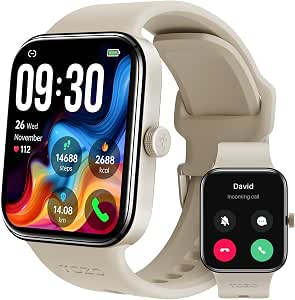 | Best for a Large AMOLED Screen on a Simple Smartwatch | Display: 1.78-inch AMOLED, 368 × 448 | Battery life: Up to 7 days; up to 30 days standby | Battery capacity: 300 mAh | VIEW LATEST PRICE | See Our Full Breakdown |
| AEAC Smartwatch for Women with 1.32-Inch AMOLED Display |  | Best Compact AMOLED Pick | Display: 1.32-inch AMOLED touchscreen, 390 × 390 | Battery life: Up to 10 days | Sports modes: 110+ | VIEW LATEST PRICE | See Our Full Breakdown |
| Rugged Smartwatch for Men with 1.43-Inch AMOLED Display and Bluetooth Calling |  | Best for a Rugged-Style AMOLED Watch | Display: 1.43-inch AMOLED, 466 × 466 | Battery: 410 mAh lithium polymer | Water resistance: 1ATM; listed depth 10 meters | VIEW LATEST PRICE | See Our Full Breakdown |
| IOWODO Smartwatch with 1.43-Inch AMOLED Display, Bluetooth Calling, and Fitness Tracking |  | Best for Calls and Swappable Straps | Display: 1.43-inch AMOLED, 466 × 466 | Connectivity: Bluetooth 5.3 | Battery capacity: 380 mAh | VIEW LATEST PRICE | See Our Full Breakdown |
| Garmin vívoactive 5 Health and Fitness GPS Smartwatch, AMOLED Display, Slate (Renewed) |  | Best for Health Tracking | Display: 1.2-inch AMOLED, 240 × 240 resolution | Battery life: Up to 11 days | GPS: Built-in | VIEW LATEST PRICE | See Our Full Breakdown |
| Military Smartwatch for Men with 1.6-Inch AMOLED Display |  | Best for Long Battery Life | Display: 1.6-inch AMOLED, 488 × 488 resolution | Battery capacity: 1,200 mAh | Battery life: Around 30 days normal use; up to 18 days heavy use | VIEW LATEST PRICE | See Our Full Breakdown |
| Blackview Smartwatch with 1.43-Inch AMOLED Display, Bluetooth Calling, Fitness Tracking, and Two Straps |  | Best for Strap Variety | Display: 1.43-inch always-on AMOLED | Battery life: Up to 7 days | Standby time: Approximately 25 days | VIEW LATEST PRICE | See Our Full Breakdown |
| Amazfit Bip 6 Smartwatch with 1.97-Inch AMOLED Display and GPS |  | Best for Maps and Outdoor Workouts | Display: 1.97-inch AMOLED | Operating system: Zepp OS | Battery life: Up to 14 days | VIEW LATEST PRICE | See Our Full Breakdown |
| smartwatches with AMOLED display | Display | Battery life | GPS | Water resistance |
|---|---|---|---|---|
| Amazfit Active 3 Premium GPS S | 1.32-inch AMOLED, 390 x 390 | Up to 12 days typical use; up to 7 days heavy use | Built-in GPS with six satellite systems | 50 meters |
| iTouch Air 5 Smartwatch with 1 | 1.85-inch AMOLED, 390 × 450, 700 nits | Up to 7 days typical use; 4 days heavy use; 14 days battery saver | Via smartphone | Water resistant to 1 meter |
| Xiaomi Redmi Watch 6 Active Sm | 1.96-inch AMOLED, 410 x 502 pixels | Up to 18 days light use; up to 12 days typical use | — | IP68 |
| Amazfit T-Rex 3 Smartwatch wit | 1.5-inch AMOLED, up to 2,000 nits | Up to 27 days typical use; up to 180 hours in GPS mode | Dual-band positioning with six satellite systems | 100 meters |
| iBesi Smartwatch with 1.43-Inc | 1.43-inch AMOLED touchscreen | Up to 7 days | Via smartphone | IP68 |
| Amazfit Active Max Smartwatch | 1.5-inch AMOLED, up to 3,000 nits | Up to 25 days | Built-in; BeiDou, GLONASS, GPS, and Galileo | 50 meters |
| TOZO S4 AMOLED Smart Watch | 1.78-inch AMOLED, 368 × 448 | Up to 7 days; up to 30 days standby | No GPS | IP68; listed depth 1 meter |
| AEAC Smartwatch for Women with | 1.32-inch AMOLED touchscreen, 390 × 390 | Up to 10 days | Via smartphone | 3ATM; 30 meters |
| Rugged Smartwatch for Men with | 1.43-inch AMOLED, 466 × 466 | — | No GPS | 1ATM; listed depth 10 meters |
| IOWODO Smartwatch with 1.43-In | 1.43-inch AMOLED, 466 × 466 | Up to 5 days | Via smartphone | Rating unspecified |
| Garmin vívoactive 5 Health and | 1.2-inch AMOLED, 240 × 240 resolution | Up to 11 days | Built-in | — |
| Military Smartwatch for Men wi | 1.6-inch AMOLED, 488 × 488 resolution | Around 30 days normal use; up to 18 days heavy use | None | IP68 listed; not suitable for swimming or sauna use |
| Blackview Smartwatch with 1.43 | 1.43-inch always-on AMOLED | Up to 7 days | Via connected smartphone | — |
| Amazfit Bip 6 Smartwatch with | 1.97-inch AMOLED | Up to 14 days | Built-in; BeiDou, GLONASS, GPS, and Galileo | 50 meters |
More Details on Our Top Picks
Amazfit Active 3 Premium GPS Smartwatch
I’d pick the Amazfit Active 3 Premium for buyers who want an AMOLED watch suited to regular outdoor training without giving up a polished, compact look. Its 1.32-inch, 3,000-nit display is the smallest here, but the high listed brightness and sapphire glass make it a more focused choice for visibility and screen protection than the larger-screen Redmi Watch 6 Active. Stainless steel adds a dressier feel, while built-in GPS, offline maps, and turn-by-turn directions make it more independent on a run than the phone-dependent iTouch Air 5. The tradeoff is battery life: 12 days of typical use is solid, but continuous GPS is listed at up to 24 hours, far below the T-Rex 3’s GPS endurance. I’d also check phone compatibility before relying on messaging features.
Pros:- Sapphire glass and stainless steel case
- Listed peak brightness of 3,000 nits
- Built-in GPS with offline maps and turn-by-turn directions
- Up to 12 days of typical-use battery life
Cons:- Continuous GPS use is listed at up to 24 hours
- Messaging features vary with phone compatibility
Best for: Runners and daily wearers who want a durable, bright AMOLED screen, built-in navigation, and a refined metal case.
Not ideal for: Buyers who prioritize a large display or long GPS sessions; its screen is compact and continuous GPS is limited to up to 24 hours.
- Display:1.32-inch AMOLED, 390 x 390
- Maximum brightness:3,000 nits
- Case:Stainless steel
- Battery life:Up to 12 days typical use; up to 7 days heavy use
- GPS:Built-in GPS with six satellite systems
- Water resistance:50 meters
- Workout modes:Over 170
- Connectivity:Bluetooth calling; compatible with iOS and Android
Our verdict“Choose the Active 3 Premium if screen durability and independent running navigation matter more to you than a large display or extended GPS runtime.”
iTouch Air 5 Smartwatch with 1.85-Inch AMOLED Display
The iTouch Air 5 makes sense if you want a roomy AMOLED panel for checking calls, activity, and wellness metrics at a glance. Its 1.85-inch display is substantially larger than the Active 3 Premium’s 1.32-inch screen, although its listed 700-nit brightness is less striking than the Amazfit’s 3,000-nit figure. Bluetooth calling and more than 100 sports modes cover everyday smartwatch needs, and typical battery life is listed at up to seven days. The main compromise is independence: GPS comes through a connected phone, unlike the built-in GPS and offline maps on the Active 3 Premium. I’d also keep its 1-meter water resistance in mind; it is a less suitable pick for swimming than the Redmi Watch 6 Active with IP68 protection.
Pros:- Large 1.85-inch AMOLED touchscreen
- Bluetooth calling from the wrist
- Tracks heart rate, blood oxygen, sleep, stress, and activity
- Up to 7 days of typical-use battery life
Cons:- GPS depends on a connected smartphone
- Water resistance is limited to 1 meter
Best for: People who prefer a broad screen for calls and daily tracking and usually carry their smartphone on walks or workouts.
Not ideal for: Swimmers and runners who want phone-free GPS, since GPS requires a smartphone and water resistance is limited to 1 meter.
- Display:1.85-inch AMOLED, 390 × 450, 700 nits
- Operating system:Proprietary OS
- GPS:Via smartphone
- Sports modes:100+
- Battery life:Up to 7 days typical use; 4 days heavy use; 14 days battery saver
- Water resistance:Water resistant to 1 meter
- Case and band:Aluminum case; silicone band
- Compatibility:Android and iOS smartphones
Our verdict“Pick the Air 5 if screen size and wrist-based calls matter more than standalone GPS or stronger water protection.”
Xiaomi Redmi Watch 6 Active Smartwatch
The Redmi Watch 6 Active stands out for combining a large 1.96-inch AMOLED display with a listed 12 days of typical-use battery life. That gives it a practical middle ground: more screen space than the compact Active 3 Premium, and longer typical-use endurance than the iTouch Air 5’s listed seven days. Its 18-day figure applies to light use, so I’d treat 12 days as the more useful planning point. Bluetooth calling and health tracking cover everyday use, while IP68 protection gives it a more convincing water-resistance claim than the iTouch Air 5’s 1-meter rating. The listed specs don’t include built-in GPS, so runners who want routes without a phone should look at the Active 3 Premium or the GPS-equipped T-Rex 3 instead. The TPU strap may also bother some skin.
Pros:- Large 1.96-inch AMOLED display with Always-On Display support
- Up to 12 days of typical-use battery life
- Bluetooth calling
- IP68 water resistance
Cons:- The 18-day maximum is for light use; typical use is listed at up to 12 days
- TPU strap may irritate some users
Best for: Everyday users who want a large AMOLED screen, frequent wrist calls, and fewer charging stops.
Not ideal for: Phone-free runners or buyers sensitive to TPU straps; the listed specs don’t specify built-in GPS, and the strap may irritate some wearers.
- Display:1.96-inch AMOLED, 410 x 502 pixels
- Battery capacity:470 mAh
- Battery life:Up to 18 days light use; up to 12 days typical use
- Connectivity:Bluetooth 5.3
- Water resistance:IP68
- Frame and strap:PC polymer frame; TPU strap
- Dimensions:44.5 x 39.4 x 9.9 mm
- Weight:30.6 g
Our verdict“Choose the Redmi Watch 6 Active for a generous screen and long everyday battery life if standalone GPS is not a priority.”
Amazfit T-Rex 3 Smartwatch with 1.5-Inch AMOLED Display and GPS
For outdoor users who want an AMOLED watch built around navigation and long outings, the Amazfit T-Rex 3 is the strongest fit in this group. Its 1.5-inch, 2,000-nit display, dual-band GPS, global maps, and up to 180 hours in GPS mode give it a more trail-oriented profile than the Active 3 Premium, whose GPS endurance is listed at up to 24 hours. The T-Rex 3 also lists up to 27 days of typical-use battery life and 100-meter water resistance, making it better suited to rougher trips than the iTouch Air 5. Its 48 mm design is a real fit tradeoff: buyers with smaller wrists may find it cumbersome, even though it weighs 2.4 ounces. I’d choose it for navigation and endurance, not for a discreet everyday watch.
Pros:- 1.5-inch AMOLED display rated up to 2,000 nits
- Dual-band GPS and global maps with turn-by-turn navigation
- Up to 180 hours in GPS mode
- 100-meter water resistance
Cons:- Large 48 mm design may not suit every wrist
- Some health-monitoring and calling claims in the description are not confirmed by the listed specifications
Best for: Hikers and outdoor athletes who need long GPS sessions, maps, and a rugged watch with a bright AMOLED screen.
Not ideal for: People with smaller wrists or anyone seeking a compact daily smartwatch; the 48 mm case may feel too large.
- Display:1.5-inch AMOLED, up to 2,000 nits
- Operating system:Zepp OS 4.0
- Battery life:Up to 27 days typical use; up to 180 hours in GPS mode
- GPS:Dual-band positioning with six satellite systems
- Workout modes:More than 170
- Water resistance:100 meters
- Case and band:Stainless steel case; silicone band
- Compatibility:Android and iOS
Our verdict“Choose the T-Rex 3 if outdoor navigation and extended GPS endurance outweigh a large case and less discreet styling.”
iBesi Smartwatch with 1.43-Inch AMOLED Display
The iBesi Smartwatch is a straightforward pick for buyers who want a round AMOLED screen, wrist calls, and a broad list of sport modes without needing advanced navigation. Its 1.43-inch display sits between the compact Active 3 Premium and the much larger Redmi Watch 6 Active, which may appeal if you want a more traditional round-watch shape. It lists more than 120 sport modes and IP68 water resistance, but GPS runs through a smartphone. That makes it less suitable for phone-free routes than the Active 3 Premium, while the Redmi Watch 6 Active offers a larger screen and a stated typical-use battery figure of up to 12 days. The iBesi lists up to seven days, with actual endurance varying by use. I’d treat it as a basic connected companion rather than a navigation watch.
Pros:- 1.43-inch round AMOLED touchscreen
- Bluetooth calling
- More than 120 sport modes
- IP68 water resistance
Cons:- GPS functionality requires a connected smartphone
- Battery life may vary with typical use
Best for: Buyers seeking a round AMOLED smartwatch for calls and routine activity tracking who keep their phone nearby.
Not ideal for: Runners wanting standalone route tracking or buyers who need a clearly stated typical-use battery estimate; GPS depends on a phone and battery life varies.
- Display:1.43-inch AMOLED touchscreen
- Battery life:Up to 7 days
- Sport modes:120+
- Water resistance:IP68
- Health monitoring:Heart rate, blood oxygen (SpO2), and sleep
- Connectivity and calling:Bluetooth; Bluetooth calling
- GPS:Via smartphone
- Compatibility:iOS and Android smartphones
Our verdict“Pick the iBesi for basic phone-connected workouts and wrist calls if you don’t need built-in GPS or a larger display.”
Amazfit Active Max Smartwatch, 1.5-Inch AMOLED Display, GPS, 4GB Storage, 25-Day Battery
The Amazfit Active Max makes its 1.5-inch AMOLED screen more useful outdoors with brightness up to 3,000 nits, built-in GPS and offline maps. That combination suits runners and hikers who want route guidance without relying on their phone at every turn. Its up to 25-day battery life also sets it apart from the IOWODO, which is rated for up to five days, while 4 GB of storage gives you room for music and downloads. The tradeoff is a more fitness-focused experience: some features depend on a connected phone, and hands-free message replies require Android. I’d choose it over the TOZO S4 for GPS-led workouts, but skip it if you mainly want a simple calling watch.
Pros:- Bright 1.5-inch AMOLED display rated up to 3,000 nits
- Built-in multi-system GPS and offline maps
- Up to 25 days of battery life
- 4 GB storage for music and downloads
Cons:- Hands-free message replies require an Android phone
- Some functions depend on a connected smartphone
Best for: Runners and hikers who want a bright AMOLED screen, built-in GPS, offline maps, and fewer charging stops
Not ideal for: iPhone owners who want hands-free message replies, or shoppers seeking a simple watch centered on calls and notifications
- Display:1.5-inch AMOLED, up to 3,000 nits
- Battery life:Up to 25 days
- Storage:4 GB
- GPS:Built-in; BeiDou, GLONASS, GPS, and Galileo
- Workout modes:170+
- Water resistance:50 meters
- Compatibility:iOS and Android smartphones
- Operating system:Zepp OS
Our verdict“Choose the Amazfit Active Max if long battery life and phone-independent GPS matter more than broad messaging support.”
TOZO S4 AMOLED Smart Watch, 1.78-Inch Display
The TOZO S4 centers the experience on its 1.78-inch AMOLED display, Bluetooth calling, and phone notifications. Its large screen gives messages and menus more room than the AEAC’s 1.32-inch display, which may suit buyers who prioritize readability over a compact watch face. More than 100 sports modes and sleep and stress tracking cover everyday activity, but there’s no built-in GPS; the Amazfit Active Max is a better fit for mapped outdoor workouts. The S4’s stated water resistance is IP68 with a listed depth of one meter, so I’d keep water use modest instead of treating it like a swim watch. Its seven-day battery rating is reasonable for a call-focused basic wearable, though the Active Max lasts much longer between charges.
Pros:- Large 1.78-inch AMOLED display with 368 × 448 resolution
- Bluetooth calling and message notifications
- More than 100 sports modes
- Up to seven days of battery life
Cons:- No built-in GPS
- Listed water resistance depth is only one meter
Best for: Buyers who want a roomy AMOLED screen, wrist calls, and basic activity tracking without needing GPS
Not ideal for: Runners who want phone-free route tracking or swimmers seeking a watch with clearly stronger water protection
- Display:1.78-inch AMOLED, 368 × 448
- Battery life:Up to 7 days; up to 30 days standby
- Battery capacity:300 mAh
- Sports modes:Over 100
- GPS:No GPS
- Water resistance:IP68; listed depth 1 meter
- Compatibility:iOS 11.0+ and Android 9.0+
- Weight:39 g
Our verdict“Pick the TOZO S4 for its large AMOLED screen and wrist calling if GPS and extended battery life are lower priorities.”
AEAC Smartwatch for Women with 1.32-Inch AMOLED Display
The AEAC is the compact-screen choice here, pairing a 1.32-inch, 390 × 390 AMOLED display with health tracking, calls, and more than 110 sports modes. Its smaller face may appeal to buyers who find the TOZO S4’s 1.78-inch screen too dominant, though it leaves less room for glanceable text. The listed battery life of up to 10 days sits between the TOZO S4 and the longer-lasting Amazfit Active Max. GPS comes through a connected smartphone, so outdoor route tracking depends on carrying your phone; the Active Max is the stronger option for phone-free navigation. A 3ATM rating supports everyday water exposure, but buyers wanting robust swim or dive capability should look elsewhere.
Pros:- Compact 1.32-inch AMOLED touchscreen with 390 × 390 resolution
- Tracks heart rate, blood oxygen, stress, and sleep
- More than 110 sports modes
- Up to 10 days of battery life
Cons:- GPS requires a connected smartphone
- 3ATM water resistance limits its suitability for demanding water activities
Best for: Buyers who prefer a smaller AMOLED watch face and want calls, health tracking, and everyday workout modes
Not ideal for: Phone-free runners who need built-in GPS, or swimmers who want water resistance beyond a 3ATM rating
- Display:1.32-inch AMOLED touchscreen, 390 × 390
- Battery life:Up to 10 days
- Sports modes:110+
- Water resistance:3ATM; 30 meters
- GPS:Via smartphone
- Health tracking:Heart rate, blood oxygen, stress, and sleep
- Compatibility:Android 6.0+ and iOS 9.0+
- Charging time:2 hours
Our verdict“Choose the AEAC if you want a smaller AMOLED watch with broad everyday tracking and can carry your phone for GPS.”
Rugged Smartwatch for Men with 1.43-Inch AMOLED Display and Bluetooth Calling
This model pairs a 1.43-inch, 466 × 466 AMOLED screen with an Always-On mode, Bluetooth calling, and a rugged-style design. Its sharp display offers more defined detail than the TOZO S4’s 368 × 448 panel, while the Amazfit Active Max is the better choice for GPS workouts and offline maps. The rugged styling doesn’t change the key limitation: there’s no GPS, so tracking routes requires another device. The listing gives both a 1ATM rating and a 10-meter depth, so I’d treat its water protection cautiously rather than assume it is ready for swimming. Heart rate, SpO2, and sleep measurements are intended for wellness reference, which makes this a basic activity companion rather than a health instrument.
Pros:- 466 × 466 AMOLED display with Always-On mode
- Bluetooth calling and app notifications
- Tracks heart rate, SpO2, sleep, and over 100 activity types
- Works with Android 9.0+ and iOS 9.0+
Cons:- No built-in GPS
- Water protection details are limited to a 1ATM rating and a listed 10-meter depth
- Health readings are for wellness reference, not medical diagnosis
Best for: Buyers drawn to a rugged-style watch with a high-resolution AMOLED screen, Always-On mode, and Bluetooth calls
Not ideal for: Outdoor athletes who need built-in GPS or anyone seeking clearly specified swim-ready water protection
- Display:1.43-inch AMOLED, 466 × 466
- Battery:410 mAh lithium polymer
- Water resistance:1ATM; listed depth 10 meters
- Sports modes:100+
- GPS:No GPS
- Health metrics:Heart rate, SpO2, and sleep
- Connectivity:Bluetooth BLE 5.2 / BT 3.0
- App:Da Fit
Our verdict“Consider this rugged-style pick for its sharp Always-On AMOLED screen and calls, but choose the Amazfit Active Max for GPS-led training.”
IOWODO Smartwatch with 1.43-Inch AMOLED Display, Bluetooth Calling, and Fitness Tracking
The IOWODO combines a 1.43-inch, 466 × 466 AMOLED display with Bluetooth calling, an AI voice assistant, and two included straps. That flexibility makes it a more style-conscious daily companion than the rugged-style watch in this lineup, while its 110+ sports modes cover casual activity tracking. The main compromise is endurance: up to five days is notably shorter than the Amazfit Active Max’s 25-day rating, so frequent charging is part of the deal. GPS also relies on a connected phone, unlike the Active Max’s built-in system. Water resistance is called “waterproof” without a rating, which leaves little guidance for swimming or other water use. I’d favor this model for calls and strap changes, not outdoor navigation.
Pros:- 466 × 466 AMOLED display with optional Always-On mode
- Bluetooth calling and AI voice assistant
- Includes silicone and nylon straps
- Tracks health metrics and more than 110 sports modes
Cons:- Up to five days of battery life is short beside the Amazfit Active Max
- GPS requires a connected smartphone
- Water-resistance rating is unspecified
Best for: Daily smartwatch buyers who want wrist calls, a voice assistant, and two strap options for changing the look
Not ideal for: People who want long battery life, phone-free GPS, or a clearly specified water-resistance rating
- Display:1.43-inch AMOLED, 466 × 466
- Connectivity:Bluetooth 5.3
- Battery capacity:380 mAh
- Battery life:Up to 5 days
- Sports modes:110+
- GPS:Via smartphone
- Water resistance:Rating unspecified
- Included bands:Nylon and silicone straps
Our verdict“Choose the IOWODO for calls, voice assistance, and interchangeable straps if you’re comfortable with frequent charging and phone-dependent GPS.”
Garmin vívoactive 5 Health and Fitness GPS Smartwatch, AMOLED Display, Slate (Renewed)
Garmin’s vívoactive 5 pairs a compact 1.2-inch AMOLED display with built-in GPS and health tracking for heart rate, sleep, stress, and HRV. Its up-to-11-day battery life means fewer charging interruptions than the Blackview smartwatch’s up-to-7-day estimate, while more than 30 sports apps and wheelchair activity tracking give it a clear fitness focus. The smaller screen may suit buyers who prefer a less bulky watch, though it offers less display space than the Amazfit Bip 6’s 1.97-inch panel. The tradeoff is its renewed condition, and the supplied water-resistance details conflict: they list IP67 but also say it is not water resistant. I’d choose it for Garmin’s health and activity mix, but only if that condition and water-use uncertainty fit my needs.
Pros:- Built-in GPS for tracking outdoor activities without relying on a phone
- Tracks heart rate, sleep, stress, and HRV
- Up to 11 days of stated battery life
- More than 30 sports apps and wheelchair activity tracking
Cons:- Renewed condition may not suit buyers who want a new device
- Water-resistance information is conflicting
- Smaller 1.2-inch screen gives less viewing area than the Amazfit Bip 6
Best for: Fitness-focused buyers who want built-in GPS, detailed everyday health tracking, and a smaller AMOLED watch face.
Not ideal for: Buyers who want a new watch or need clearly specified water resistance for swimming and water sports.
- Display:1.2-inch AMOLED, 240 × 240 resolution
- Battery life:Up to 11 days
- GPS:Built-in
- Sports apps:More than 30
- Storage:4 GB
- Compatibility:Android and iOS
- Case and band:Resin case; silicone band
- Color:Slate
Our verdict“Choose the renewed vívoactive 5 for Garmin health tracking and built-in GPS in a compact AMOLED watch, provided its condition and water-resistance caveat work for you.”
Military Smartwatch for Men with 1.6-Inch AMOLED Display
This rugged-style watch puts battery endurance ahead of GPS-led fitness tracking. Its 1,200 mAh battery is stated to last around 30 days in normal use, and the 1.6-inch, 488 × 488 AMOLED screen leaves room for notifications and customizable watch faces. Bluetooth calling, more than 110 sports modes, and an LED flashlight add everyday utility. Compared with the Garmin vívoactive 5, it has a larger display and a longer stated normal-use battery life, but the Garmin includes built-in GPS; this model has none, so route tracking depends on what a connected phone can provide. IP68 is listed, but swimming and sauna use are ruled out. Its 67 g weight also makes it less suited to buyers seeking a light, barely noticeable fitness watch.
Pros:- 1,200 mAh battery is stated to last around 30 days in normal use
- Large, high-resolution 1.6-inch AMOLED display
- Bluetooth calling, notifications, and an LED flashlight
- More than 110 sports modes and over 100 days of stated standby time
Cons:- No built-in GPS
- Not suitable for swimming or sauna use despite the IP68 listing
- At 67 g, it may feel heavy for buyers seeking a light watch
Best for: Buyers who prioritize long intervals between charges, a large AMOLED screen, and Bluetooth calls over independent GPS tracking.
Not ideal for: Runners and cyclists who want GPS route tracking from the watch, or swimmers seeking a watch for pool sessions.
- Display:1.6-inch AMOLED, 488 × 488 resolution
- Battery capacity:1,200 mAh
- Battery life:Around 30 days normal use; up to 18 days heavy use
- Connectivity:Bluetooth 5.3
- Sports modes:More than 110
- GPS:None
- Water resistance:IP68 listed; not suitable for swimming or sauna use
- Weight:67 g
- Compatibility:Android 5.0+ and iOS 9.0+
Our verdict“Pick this model if a large AMOLED display and long stated battery life matter more to you than built-in GPS or swimming use.”
Blackview Smartwatch with 1.43-Inch AMOLED Display, Bluetooth Calling, Fitness Tracking, and Two Straps
Blackview’s 1.43-inch always-on AMOLED screen keeps watch information visible, while included silicone and nylon braided straps let buyers change the look and feel. Bluetooth calling, notifications, and more than 100 sports modes cover daily use; health tracking includes heart rate, blood oxygen, stress, and sleep. GPS works through a connected smartphone, so the Amazfit Bip 6 is a stronger fit for people who want routes tracked by the watch itself. Battery life is stated at up to seven days, shorter than the Bip 6’s up-to-14-day estimate. Health readings are for reference only, not medical measurements. I’d favor this Blackview for its always-on display and two-band package, while buyers who prioritize longer battery life or independent GPS should look elsewhere.
Pros:- Always-on 1.43-inch AMOLED display
- Includes silicone and nylon braided straps
- Bluetooth calling and app notifications
- More than 100 sports modes with several everyday health metrics
Cons:- GPS requires a connected smartphone, unlike the Amazfit Bip 6
- Up to 7 days of stated battery life is shorter than the Bip 6’s up-to-14-day estimate
- Health measurements are for reference only, not medical data
Best for: Style-conscious buyers who want an always-on AMOLED screen, Bluetooth calls, and both silicone and braided straps in the box.
Not ideal for: Outdoor exercisers who need built-in GPS, or buyers who need medical-grade health readings and longer stated battery life.
- Display:1.43-inch always-on AMOLED
- Battery life:Up to 7 days
- Standby time:Approximately 25 days
- Sports modes:More than 100
- GPS:Via connected smartphone
- Health tracking:Heart rate, blood oxygen, stress, and sleep
- Included straps:Silicone and nylon braided
- Charging time:2.5 hours
- Compatibility:Android 6.0+ and iOS 9.0+
Our verdict“Choose the Blackview if you value its always-on AMOLED display and two included straps more than built-in GPS or longer battery life.”
Amazfit Bip 6 Smartwatch with 1.97-Inch AMOLED Display and GPS
The Amazfit Bip 6 makes its large 1.97-inch AMOLED display part of its outdoor appeal: built-in GPS supports downloadable maps and turn-by-turn directions, so route guidance does not depend on a phone’s GPS. More than 140 workout modes, AI coaching, and 24/7 health monitoring broaden its reach beyond navigation. Its up-to-14-day battery estimate also exceeds the Blackview’s up-to-7-day figure, though the Bip 6 description does not specify battery life during intensive GPS use. The Garmin vívoactive 5 has a smaller screen and fewer sports apps, but offers HRV tracking and wheelchair activity tracking. At 50-meter water resistance, this Amazfit is the more versatile water-use pick among these four. Buyers should check the Android and iOS version requirements before choosing it.
Pros:- Large 1.97-inch AMOLED display
- Built-in GPS with downloadable maps and turn-by-turn directions
- Up to 14 days of stated battery life
- More than 140 workout modes and 50-meter water resistance
Cons:- Full feature compatibility requires Android 7.0+ or iOS 14.0+
- Battery life during intensive GPS use is not specified
- Larger screen may be less appealing to buyers who prefer a compact watch
Best for: Outdoor exercisers who want a large AMOLED screen, built-in GPS with maps, and broad workout tracking in one watch.
Not ideal for: Buyers with phones below Android 7.0 or iOS 14.0, or those who need a stated battery estimate for frequent intensive GPS use.
- Display:1.97-inch AMOLED
- Operating system:Zepp OS
- Battery life:Up to 14 days
- GPS:Built-in; BeiDou, GLONASS, GPS, and Galileo
- Workout modes:More than 140
- Water resistance:50 meters
- Health metrics:Blood oxygen, breath rate, calories burned, heart rate, sleep, and stress
- Compatibility:Android 7.0+ and iOS 14.0+
- Memory and RAM:512 MB storage; 64 MB RAM
Our verdict“Choose the Bip 6 if you want a large AMOLED display and built-in map guidance for outdoor workouts, and your phone meets its compatibility requirements.”
How We Picked
I ranked these watches by how well their stated features support common buying priorities: a readable AMOLED screen, useful fitness and health functions, GPS availability, battery claims, and a design suited to the intended activity. I gave more weight to models that combine several practical strengths than to a large display or calling feature alone. Distinctive roles also matter: the rugged T-Rex 3 serves a different buyer from a compact women’s watch or a general-purpose fitness model.
The ranking reflects the information provided for each product, not hands-on testing. Where a listing gives a specific screen size, storage capacity, or battery claim, I use that detail to explain the choice; I do not treat a feature name as proof of performance. Models with less detail or a narrower stated feature set rank lower because buyers have less information for comparing them. The renewed Garmin is judged for its health and fitness focus, with its condition status included as a real ownership tradeoff.
Factors to Consider When Choosing Smartwatches With AMOLED Displays
AMOLED is a screen type, not a shortcut for judging a whole smartwatch. I’d match the display to the way I plan to wear the watch, then check the features and ownership details that shape daily use.
Choose Screen Size for How You Read
A larger screen can make notifications and workout data easier to scan, but it also takes up more room on your wrist. The lineup spans a 1.32-inch AEAC display to the 1.97-inch Amazfit Bip 6, so there is a meaningful fit difference even among AMOLED models. Compare the case dimensions and band fit where the listing provides them; diagonal screen size alone does not show how bulky the watch feels. Smaller wrists or buyers who wear a watch overnight may prefer a more compact case. If you often read messages or glance at several metrics, a bigger display may be worth the space. Think about readability and comfort together rather than picking the largest number.
Treat Battery Claims as a Starting Point
Battery life can change with screen brightness, always-on display settings, GPS use, calls, and notifications. A stated figure such as the Active Max’s 25-day claim is useful for comparing listings, but it may not reflect a routine with frequent GPS workouts or a bright screen. Ask whether the quoted duration describes typical smartwatch use, a low-power mode, or another specific setup. Buyers who track long outdoor sessions should prioritize how GPS use affects endurance, not just the headline battery number. Frequent charging may be fine for a feature-rich watch but frustrating if sleep tracking is part of the plan. I’d keep the features I expect to use enabled when comparing battery expectations.
Decide Whether You Need Built-In GPS
GPS in the watch can record an outdoor route without relying on a phone, which is useful for runners, cyclists, and hikers who travel light. Some watches may instead depend on a connected phone for location data, so check the listing carefully before assuming route tracking is independent. Built-in GPS can draw more power during workouts, tying this decision to the battery tradeoff. If you mainly exercise indoors or carry your phone on walks, paying extra attention to GPS may not change your routine. For outdoor training, look for clear details about supported activity tracking and route use. Do not confuse a fitness tracking label with confirmation of independent GPS.
Match Fitness Tools to Your Training
Basic activity tracking can cover steps and everyday movement, while dedicated health and fitness watches may offer a more focused set of workout and health features. The Garmin vívoactive 5 is positioned around health and fitness, which may suit a buyer who wants that emphasis more than a rugged build or oversized display. Before buying, list the measurements and workout modes you actually plan to use, then check that they are named in the product details. A long feature list is less useful if the watch does not support your sport or the data you care about. Also check whether the companion app and phone compatibility work with your devices. That extra check can prevent a capable-looking watch from becoming a poor fit for your routine.
Pay for Durability When Your Routine Demands It
Rugged styling can signal an outdoor-oriented design, but it does not replace checking specific durability ratings. If you expect rain, swimming, dust, or impact, look for explicit water resistance and material details rather than relying on words such as military or rugged. The T-Rex 3 has a clear rugged-outdoor position in this roundup, while several other watches focus more on calling or everyday fitness. Bigger, tougher cases can feel cumbersome during sleep or desk work. Match the protection claims to the activities you actually do, and confirm what the warranty covers. A tougher appearance alone is not evidence that a watch suits every sport.
Check Calling, Storage, and Device Support
Bluetooth calling can be convenient when your phone is nearby, but it does not necessarily mean a watch can make calls on its own. Check whether calls use the connected phone and whether the watch has a speaker and microphone if that feature matters to you. Onboard storage, such as the Active Max’s listed 4GB, may support saved content or other functions, but buyers should confirm what can be stored and how it is used. Also check phone compatibility, app requirements, and whether key features work with your operating system. For a renewed model like the Garmin, review the seller’s condition and return details before deciding. These ownership details often matter more than one extra screen feature.
Frequently Asked Questions
Which watch in this lineup is the best all-around choice?
I’d choose the Amazfit Active Max as the most balanced option based on its listed combination of a 1.5-inch AMOLED display, GPS, 4GB of storage, and a stated 25-day battery life. That mix gives it broader everyday appeal than a watch built mainly around a rugged design or calling. The battery claim should still be checked against your expected GPS and display use. If health and fitness depth matters more than storage and battery claims, compare it with the Garmin vívoactive 5. Your priorities determine which combination is most useful.
Is the Amazfit Bip 6 a better pick if I want the biggest screen?
The Amazfit Bip 6 has the largest listed display in this group at 1.97 inches, so it is the most direct choice for buyers who want more screen area. A bigger display can make text and workout information easier to glance at, but it may also feel large on a smaller wrist. Compare the case dimensions, not just the screen diagonal, before deciding. If you want a more balanced size with GPS and onboard storage, the Active Max is a useful comparison. Pick by wrist fit and readability rather than screen size alone.
Should I buy the renewed Garmin vívoactive 5 or choose a new watch?
The Garmin vívoactive 5 is worth comparing if you want a watch centered on health and fitness features, but its renewed status is part of the decision. Check the seller’s description for the device’s condition, included accessories, warranty, and return terms. If you prefer a new device with a more explicit battery and storage listing, the Amazfit Active Max may feel easier to evaluate. A renewed model can suit buyers comfortable with the listed condition and support terms. I’d decide based on the features you need and how much assurance you want about the device’s condition.
Can I use Bluetooth calling when I leave my phone at home?
Bluetooth calling usually connects the watch to a nearby phone, so the feature name alone does not confirm that the watch can place calls independently. Check each product listing for cellular connectivity or a clear statement that calls work without a paired phone. The TOZO S4, IOWODO, and several other watches highlight Bluetooth calling, but buyers should verify what that means for the specific model. If you mainly want to answer calls while your phone is in a bag, Bluetooth calling may be enough. For phone-free calls, confirm independent network support before buying.
What should I check before choosing an AMOLED watch for outdoor workouts?
Start with whether GPS is built in, since some watches may need a phone to record a route. Then compare how GPS use affects the battery, the supported workout modes, and any stated water or impact protection. The Amazfit T-Rex 3 has the clearest rugged-outdoor role here, while the Active Max combines GPS with storage and a long stated battery duration. Confirm explicit durability ratings rather than relying on rugged or military wording. If you run or hike away from your phone, independent GPS and realistic battery expectations should carry more weight than calling features.
Conclusion
For the best overall balance of screen, GPS, storage, and stated endurance, I’d choose the Amazfit Active Max. Buyers who want a fitness-focused premium option should compare the Garmin vívoactive 5, keeping its renewed condition in mind. For outdoor use, the Amazfit T-Rex 3 has the most distinct rugged role, while the Amazfit Bip 6 suits readers who want the largest listed screen. If you’re new to smartwatches, start by matching screen size, phone compatibility, and the features you’ll use; the iTouch Air 5 or TOZO S4 may be worth comparing for an everyday feature set, but check their listings closely. I’d choose a less-established calling model only after confirming the specific fitness, GPS, support, and compatibility details that matter to me.
Halloween Picks

Max Fun 10-Foot Halloween Dragon and Pumpkin Inflatable Archway with LED Lights

10 ft Halloween Inflatable Archway with Built-in LEDs

10ft Halloween Inflatable Archway – Pumpkin Skeleton Yard Décor
As an affiliate, we earn on qualifying purchases.